







Guest view: Stop giving away tax dollars to developers

Open letter to Mayor Steve Tate,On April 30, 2015, an article appeared in the Morgan Hill Times reciting “a lengthy April 28 e-mail blast” outlining various aspects surrounding City Ventures’ approaching acquisition of an existing “Purchase Option” related to 95 East Third Street or, as you all coin it, “The BookSmart Site.”Essentially your remarks provide a diversion from the issues germane, while attempting to do a great job of confusing a general reader. The fact is, the City of Morgan Hill RDA acquired the Purchase Option on the Book Smart Site for $1.7 million and has agreed to sell it to City Ventures (with additional covenants) for $100,000. That’s a $1.6 million dollar loss!Many local residents are very familiar with what they perceive as the past squandering of RDA money (with seemingly no oversight).What is necessary to define upon reflection is: Why the City Council is now willing to throw away $1.6 million of taxpayer money. I really do not believe this is what Governor Brown had in mind when dismantling the RDA statewide.Your email also noted the city “is committed to assisting the impacted businesses” but has “absolutely no obligation” to do so. The $1 million relocation package you describe is funded by leftover RDA cash. Why don’t you let the community know that the “leftover RDA cash” is TAXPAYER MONEY? The City Council seems to treat it as if it is MONOPOLY money!Under the existing agreement, City Ventures will be handed for $2.1 million (option sale price of the site plus the purchase cost of the property) what was once, according to various newspaper accounts and City Council commentary, an asset worth about $3.7 Million.Did anyone—the City Council, staff, or whoever was representing the City of Morgan Hill in this “transaction”—attempt to encourage City Ventures to pay a portion of its net profit from sales proceeds (it is indicated that they will be building “condominiums and townhouses”) up to the $1.7 million original option price? In the Asset Management industry, when we sell a property at a below-market price and/or a “deep discount,” we generally require a percentage of proceeds as a “kicker” in nearly all circumstances.For the Morgan Hill City Council to GIFT City Ventures a $1.6 million dollar equity stake in this property at taxpayer expense is a blatant slap in the face of every taxpaying resident. Add to that an additional $1 MILLION of relocation expense (although you claim it includes tenants of Granada and Downtown Mall as well), the cost for another boondoggle in the downtown now escalates to $2.6 million! And, add to that the proposed repair of Fourth Street, and the rework of Third Street—who knows the total cost.It is the City Council’s fiduciary responsibility that the sale of the Book Smart option to City Ventures be placed in abeyance, or cancelled outright, unless and until the total amount of $1.7 million which the city expended for the purchase option is recoverable under ANY option sale.If the property is appropriate for the planned improvements and the financial feasibility of the project is acceptable to them, then guess what: City Ventures will go along with a participatory agreement.Regardless, the City Council of Morgan Hill must, and I believe is required to safeguard and judiciously protect taxpayer assets.Richard KhanMorgan HillKhan is a banking, mortgage and finance professional who has served in various capacities in commercial finance, commercial real estate lending, asset management and consumer finance.
Our Town: Pop in at ‘pop-up’ park

I’ve just returned from a long week on the road, touring the great American Southwest where I saw the wide open spaces that crafted the world’s image of how the wild west should look. These places are stunning for their sometimes intense and sometimes subtle natural beauty. Man is still subordinate to nature here.After those many days on the road I returned home to something new in town, specifically downtown.Having stayed informed of a new temporary park being proposed for the downtown, I felt it could be something pretty special if it could actually be pulled off as discussed. This park would be temporary and located in the parking lot of the old liquor store at the corner of Third Street and Monterey Road. The planning was fast and furious. There would be a lot of donated time and materials from the private sector. There would be numerous departments at City Hall working side by side with the community to get this park done. This kind of cooperative effort can produce some pretty impressive results.I returned to find an incredible little park and it is now hard to imagine that this used to be a blighted corner of our downtown.This little park is known as a “pop-up” park because it is temporary and it literally popped up in just a few days. However, the impact on the users would appear to be anything but temporary. Families have adopted the park and it doesn’t look like they’ll want to let go of it soon. On my first visit I just wanted to sit and look at every little detail and watch the children play while parents watched and some even napped—right here in our downtown!I took in the large mural which is based upon a French cartoon about bicycling and the smaller one that is the impassioned work of a local artist.There is a cool old map which showed that bicycling was important at the turn of the last century and a modern “fix-it” station so you can fix your bike today. There is plenty of bike rack space for cyclists to leave their bikes to explore the downtown. You can even fill a water bottle right here.A huge blue chair is waiting for someone with a rear end as big as the imagination of those who dreamed up this park. There is a large ceramic basket of grapes with a bottle of wine which looks like it should sit next to that big blue chair, just waiting for that giant person and a wine glass. There are lots of little chairs to match the big one that look like cute little spawn.An artist turned old propane tanks into chairs and benches—another of the many works of park art commissioned by the city’s mini-grant program.There are plants in planters which also serve as chalkboards. These two walls of chalkboards entertain the children and, from the looks of things, adults too. There is even a bookcase with books to borrow.All of this is on artificial turf that makes this look like the only green grass in any park in this town.A couple huge trees have been brought in to add some nature, but there is no mistaking this for a man made effort.Not much is subtle about this park, but it is very comfortable. Come see for yourself before it’s gone.McKay is a longtime Morgan Hill resident, city planning commissioner and a co-founder of the Morgan Hill Tourism Alliance.
Preserve rate jumps ahead two full stars
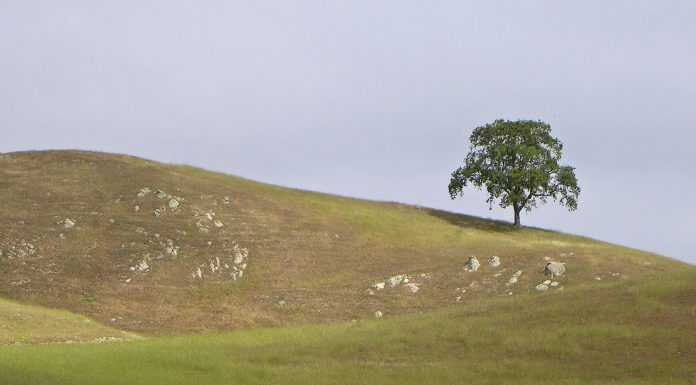
If I were to rate Sierra Vista Open Space Preserve based on my first visit, I would award it just two stars out of a possible five. But that was four years ago and things have changed.
Our Town: Wine Week a success

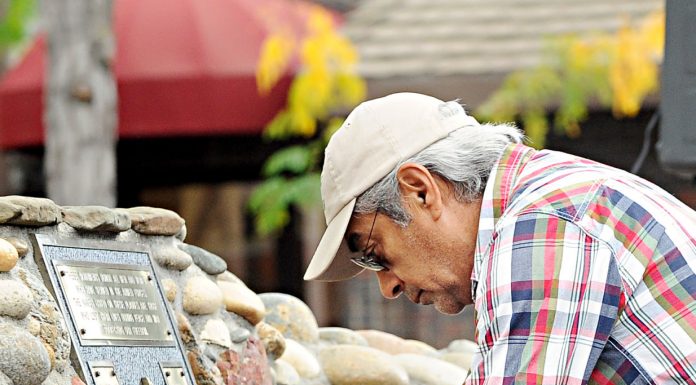
Starting April 19 the wife and I decided to take full advantage of the Morgan Hill Downtown Association’s Wine Week and attend one of the events each evening. I’ll admit that I am somewhat involved in organizing Wine Week but this in no way influenced me to participate in the week’s events. My desire to eat fine food and drink fine wines in the company of good friends was all I needed.Wine Week started Sunday, April 19 with most downtown restaurants offering no corkage charge so you could bring and enjoy one of your own bottles of local wine that first day. We started the week with a nice lunch at Ladera Grill downtown.The evening events started at Bubbles on Monday by meeting a friend, dining, and drinking local wines in the “Taste of Locals” wine flight (three nice samples of local wines). We chatted with co-owner David Dindak and learned about his plans to expand the offerings at his growing business. Since we were recent wine tasting class graduates of Cindy Adams (of Guglielmo) we skipped this evening’s classes but luckily one of the recent graduates joined us and filled us in on the wonderful class.Tuesday night presented a tough choice for us since both Ladera Grill and Odeum were hosting wine pairing dinners. We chose Odeum for their once-a-year event. As usual with our finest restaurants the food was incredible and Jason Stephens Winery brought out some of their newest releases and finest wines.I was informed by our friend, a graduate of the previous evening’s wine class, that the four winemakers hosted by Ladera Grill provided the usual fine wines. We won’t miss the last two winemaker dinners in their series this year.Wednesday again provided tough choices. We’re regulars at Rosy’s wine dinners so we chose the Good Fork which featured the wines of Madeiros Family Vineyards. The food and wine were incredible and the Good Fork seamlessly delivered their meals to an overflow crowd.Rosy’s had sold out and Vic Vanni with Solis Winery and Rosy’s food continued the trend and impressed their guests.Back to Bubbles Thursday night for a special dinner paired with wines from Calera. Although Calera is from San Benito County we looked forward to that evening and the “localish” wine offerings.Noah’s Bar and Bistro also hosted a wine maker dinner Thursday with Guglielmo that I am sure was a success with two local favorites.Friday night included “Our Award Winning Wine Region Celebration” event that offered truly spectacular wines and food from our locals. This new event will grow and I expect it to be worthy of the caliber of food and wine served while continuing to honor the local wine association’s award winning ways.The Morgan Hill Wine Shop and Cigar Company held a wine tasting that evening too.Saturday found me volunteering for the Wine Stroll as I started my recovery period.A lot of great food and great wine was consumed in downtown Morgan Hill that week. I hope you were one of the people who took the opportunity to get out and enjoy the fruits of our local region. I know I sure did and I will be back for more next year.John McKay is a longtime Morgan Hill resident, city planning commissioner and co-founder of the Morgan Hill Tourism Alliance.
Guest view: Hope can’t solve water supply problems
Dennis Kennedy’s water article listed Santa Clara Valley Water District’s efforts for weathering the drought. The term “weathering” implies that plentiful times will return. I disagree; I and others believe this is not a cyclical weather phenomenon but a rude awakening of our future of climate change. It is so important that we look at this drought with that ominous perspective.Climate change is here. I visited Glacier National Park in August 2014 and the glaciers are gone. Nine of the 10 hottest summers ever were recorded in the last decade. You have to go to the weather extremes to be visually impacted by its effects. Yet what happens outside Morgan Hill can and will affect our needs and it is not limited to just water.At the moment SCVWD relies on 55 percent of its water from sources outside our county. When those resources dry up (literally), you might have to buy water from as far as Canada, and even arctic glaciers under the Golden Gate Bridge. There are even considerations to build a dam under the bridge just to prevent delta salt water incursion as the oceans rise.The City of Morgan Hill is paving over farmlands for housing and considering adding 30,000 new residents in a mega effort of urban sprawl. We will add more residents to Morgan Hill in the upcoming decade than we did in the previous century. Where will you get the water to support that growth and the growth throughout the county when we don’t have water to sustain what we have? Sure you can build salt water desalination plants but those require great amounts of electricity. And where does California get 33 percent of its electricity? We get it from the sierra snowpack in the form of hydroelectric power. That snowpack is gone and unlikely to return to previous levels for any sustainable time.This drought does not mean that we temporarily water our lawns less or import our water from other resources such as Bakersfield as Dennis Kennedy suggests. It requires an entirely new approach to water conservation and management. It is going to require a change in our lifestyles, values, public policies, and a major investment in new projects and infrastructure. It requires a different way of thinking, a new mandate with different people leading that effort.To begin, we need an Adaptation and Mitigation Plan (AMP), which almost no one has or even understands. The AMP identifies how climate change will affect our region and city. It is not just greenhouses gases or a look at higher temperatures but a comprehensive view of all the effects from our economy and jobs to the invasions of insects and diseases which will prey upon heavily distressed flora and fauna. The plan helps us to understand and deal with the devastating effects of climate change. We can’t prevent it but we can adapt and mitigate its effects if we act now.Our elected officials are lost in translation and rely on myopic approaches with pleas of conservation and higher water rates. Doing more of what we are already doing is not going to solve this problem because it is not solvable. It is a new way of life. Adding 30,000 new residents to Morgan Hill in a sprawl approach would only exacerbate the effects of climate change. This is a foolish growth policy by the Morgan Hill City Council. A policy based on hope that rains will return is just as foolish. Hope is not a strategy, and urban sprawl that destabilizes our community is irresponsible leadership. Mark Grzan is a longtime Morgan Hill resident, former City Councilmember and Mayor Pro Tem.
Guest View: Remembering Coach Guthrie and Live Oak’s first football championship
Fifty Years Ago this spring will mark the beginning of an astounding march towards Live Oak’s very first Football Championship clinched in a dramatic last game of the season mud bowl 13-0 victory over San Lorenzo High School on November, 14th, 1965. While I was hiking last year with my good buddy and old teammate of that team Kim Moreno, we noted the 50 year anniversary would be upon us soon and that our ancient march towards that football championship in 1965 had actually begun 3 years earlier when Dr. Howard Nicholson, Superintendent of our huge rural school district, hired Darrell Guthrie as an English, Math, PE teacher and Head Football Coach. When Coach Guthrie assumed the football helm in 1963, Live Oak played in the Mission Trail Athletic league (MTAL) where the terms used to describe Live Oak Football was “the Live Oak Acorns were the perennial league doormats” winning only one league game for the entire decade of fielding a football team. Morgan Hill, then with a growing population of almost 4000, was the smallest town in the league with the football power houses of the day usually being Carmel, King City, San Lorenzo and Pacific Grove. Even our neighboring town of Gilroy, with our arch rival the Mustangs, was twice the size of Morgan Hill in those days.
Guest view: Abused horses: Not so happily ever after
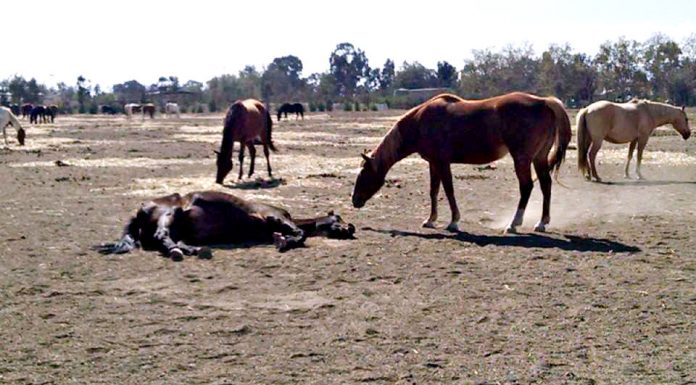
When word of the Morgan Hill/Gilroy neglected horse herd launched on Facebook in response to the mistreatment of more than three dozen horses on two South County ranches (in the summer of 2014), we knew that they needed the help of the equine community, so we stepped in.Since Santa Clara County Animal Care and Control was doing nothing to assist in the seizure, rescue, and placement of these horses, we worked side by side with the Center Horse advocates and San Martin Animal Shelter to ensure each horse found a safe rescue, sanctuary, foster or forever home. The whole thing was a huge debacle because of ACC’s negligence in addressing this case. Horses were taken off of the property, new horses appeared on the property, and most horses did not end up in rescues in Santa Clara County.We decided that with the help of a few friends, we could take on one of the pregnant mares. That’s when Cinder came into our lives.Cinder and several other horses from this herd used to belong to a local breeder in the performance horse industry. Most of these horses were registered Quarter Horses with outstanding pedigree and careers in the cutting industry. Cinder had a successful career as a cutting horse, but eventually this sport wore her down. They turned her into a broodmare for years, producing foal after foal, year after year.Eventually, they discarded her and that’s how she wound up with the South County herd. Cinder’s story began the day she was born to a 23-year-old mare, who died after her birth. Like so many of the horses from this herd, Cin came to us pregnant, her conception date unknown due to the fact that this herd was living with numerous stallions and mares together on a small lot on Center Avenue in Gilroy.Cin got the best care she could get in the months following her departure from Center Avenue. Her board was $315 per month for her to stay at Lakeview Stables in San Jose. The first thing we did was have a vet out to assess her. She was not only pregnant, but had a significant limp that was found to be caused by Navicular, a debilitating syndrome in horses, and fused hocks—most likely the result of the physical demands of being a cutting horse. The extra weight of her foal made her very uncomfortable so we purchased special boots for her to ease some of the pain. Cin adjusted to her new life at Lakeview. The owners agreed to let us build her a stall and a paddock on the hill where she and her new foal would live safely. All along, we knew Cinder was at risk.Our daily routine included taking her for walks, letting her graze, and feeding and grooming her. She loved to roll in sand arena, but even this was becoming too difficult for her. I still cherish the times I spent braiding her hair as she grazed on the hillside. She loved her life at Lakeview, and we loved her.On April 1, just before midnight, Cinder finally delivered a very large, very healthy filly. The delivery was quick and all seemed well. We were relieved, but this relief did not last long. Within hours CinCin started showing signs of distress. We rushed her to Steinbeck where she received several transfusions due to a ruptured uterine artery. She was bleeding internally. She fought all day to stay alive, getting up time and time again, calling to her foal. But they couldn’t save her. I can still see the pain and longing in her eyes…she’d fought so hard to deliver her foal despite the neglect and abuse she’d suffered. We decided to name the foal Belle because after all, she was Cinder’s belly.Belle required round the clock care with feedings every two hours. We managed to recruit our Lakeview family to help with the feedings and care of Belle that will go on for several months. We were able to find an older mare at the ranch to look after her in her stall and teach her how to be a horse. But Belle is still an orphan...no person or horse can replace her mom.Belle is a very healthy young filly who reminds us of her beautiful mother. She will grow up in our care and she will never go hungry. But raising an orphan foal is never easy; she will require a lot of extra time and effort. Her formula alone is averaging over $500 per month.This is the story of just one of the horses from the South County herd. We have spent countless hours rehabilitating and caring for this mare and her foal because we have a broken system that refused to recognize the need for tougher laws and enforcement. We cannot continue to expect the horse community to pick up the pieces. It has to be controlled at a state and county level.We MUST change the way we manage our horses in this county. We need to have our own county rescue and partnership so that we can take in horses in need sooner. It is time to reform Santa Clara County ACC.Loera will give a presentation on the aftermath of the 2014 South County abused horses case at the May 14 Santa Clara County Animal Advisory Committee meeting, which takes place 6:30 p.m. at the County Government Center, 70 W. Hedding Street, San Jose. Rivas, the owner of the nearly 40 malnourished horses, was convicted of felony animal abuse in January.

