






‘Kinky Boots’ kicks up a happy storm
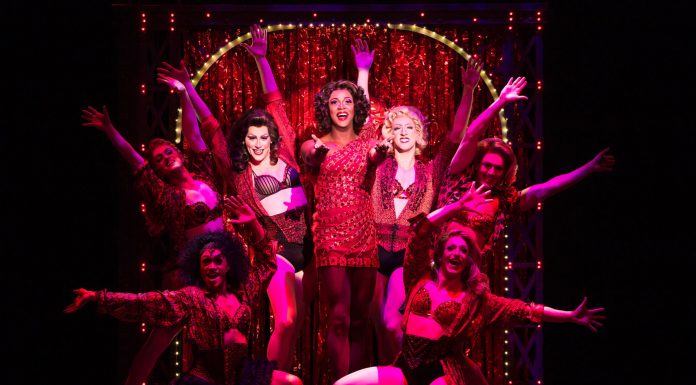
When Cindy Lauper, (music and lyrics) and Harvey Fierstein (book) started to create Kinky Boots they never imagined that they would walk away with six Tony Awards, making Lauper the first woman to win a solo Tony for best score.Kinky Boots is one of those feel-good shows that keeps you smiling throughout the performance. It sends a well-worn preachy message “to accept everyone for what they are,” and the show makes it a fun lesson because of the music, vigorous cast and wild choreography.The play is based on a true story and movie about a failing men’s shoe factory in a town near London. Charlie (a charming Adam Kaplan) leaves his father’s business to work in London, only to return to sell the business when his father passes away. He finds, of course, that the workers depend on their jobs. He accidently meets Lola (an amazing J. Harrison Ghee), a bright, wild in-control drag queen who needs boots with heels that will support him/her and his cast in his show. The story goes on to acceptance and unacceptance of the situation, of the workers and people in the business.The show moves at a break-neck pace with chorography by director/choreographer Jerry Mitchell and wild, eye-catching costumes by Gregg Barnes. The dexterous number that has everyone leaping from one moving assembly line machine to another was a unique, clever piece of business.Lola’s act at her club consists of six dancing drag queens that make the best looking women on the planet look drab.For an evening of just plain well-done fun, laughs and a life lesson Kinky Boots is extraordinary.Kinky Boots Where: Golden Gate Theatre, 1 Taylor Street, San FranciscoRunning Time: 2 hours, 20 minutes with one 15-minute intermissionPerformances Through May 22For tickets and information call 888-746-1799 or visit www.shnsf.com.
Our Town: Time to cycle in Morgan Hill
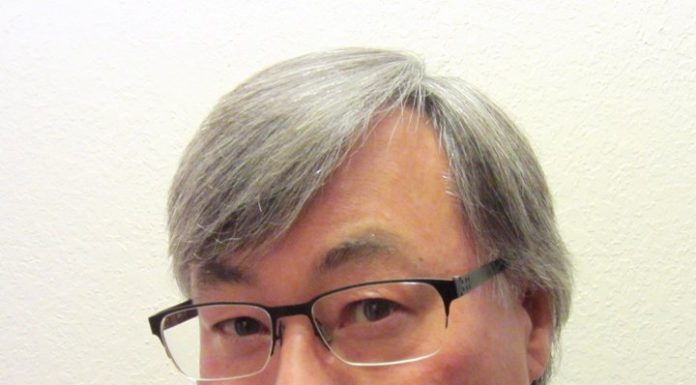
Hello, my name is John McKay and I am a bicyclist. I can’t ride 100 mile days in ease or climb the road to Henry Coe Park for lunch but I can wheel out my “Designed in Morgan Hill” bike (it says so right on the frame), and pedal between morning coffee and lunch in the same day.I don’t wear spandex tights and can’t keep pace with a group of riders who actually understand and use the aerodynamic advantage of the person in front of them. I can judge my health condition by how easy it is to get over any U.S. 101 overpass, proving I’m no elite athlete.I know that there is a health benefit from bicycling, but it has to be done with a regularity that I cannot commit to; so I treat my rides like little vacations and take anything else I get out of it as a bonus. I ride for the sheer pleasure of rolling around on two wheels in a community that has so much to see and do in such a small area.There is a social aspect to cycling for me. During most of the Monday Lunch rides, there is a mother with her toddler in a hitched-on half-a-bike, making it a family affair. Bicycling is one of those pursuits that appeals to a broad age group.I try to be careful and respectful of others I share the road with, and for the most part those others are very respectful and considerate right back. Few seem to respond negatively to my sometimes slightly wobbling vector down the side of the road.Our community is proving to be so many different things. One of these things is a great place to ride bicycles.There are plans afoot to work on defining the safest bikeways to get from one part of town to another, creating safe places for bike parking if you venture downtown, and generally to foster the safest and friendliest place to ride bicycles possible in our community. There are many partners working toward making Morgan Hill the most bike friendly town it can be. But here again, it is the community members themselves who are leading the charge.I believe the most successful efforts are led by those that care and embrace an effort with passion. Based upon this, I think we will have a very bright future as a bicycling community.Summer is coming, so it will soon be prime time to get out and ride. I look forward to the potential of some organized evening rides for all ages (hint, hint…) and other fun organized opportunities; but I’m personally going to get out and ride as much as I can right now.I was recently challenged when I said that there are a lot of bicyclists in Morgan Hill. I stand by that assertion and I think that most bicyclists in Morgan Hill are just as I described myself above—enthusiastic about bicycling but not shopping for a team jersey just yet…John McKay is a Morgan Hill resident, board member of the Morgan Hill Downtown Association, city planning commissioner and co-founder of the Morgan Hill Tourism Alliance.
Letter to the editor: City should explore safer weed abatement options

I am a Morgan Hill resident and have a question about the warning signs posted at Paradise park regarding Glyphosate (trade name: Roundup) spraying.Many people, including myself, walk this path everyday. There are kids being walked through the park to Paradise Valley Elementary School, people walking their dogs, squirrels, cats and other wildlife. Lots of ball games on the grounds, too. All that chemical poison and pollutant is going right into the groundwater and creek.Why is the city spraying with something so unhealthy when there are better alternatives? Not to mention the fact that we're enjoying seeing green after four years of drought!There’s an abundance of research on the dangers of Glyphosate.Experts at National Institutes of Health, Massachusetts Institute of Technology, World Health Organization and many countries are banning this based on medical evidence. WHO calls it "likely carcinogenic.” There are a number of cities in the San Francisco Bay Area and beyond this state that are going green. Integrated Pest Management, which substantially reduces the use of pesticides, has been implemented in San Jose, San Francisco, Boulder, Davis, Santa Monica, Isla Vista and other cities. Some of the so-called “inert” ingredients in Roundup appear not to be so in Argentina, where the miscarriage rate is 100 times the norm. Thirty thousand physicians there have asked to ban it.Given all the foot traffic in the park, especially the little ones, I would respectfully request that the city investigate healthier “green” alternatives, especially with the drought situation.Sincerely,Marilyn HawkeMorgan Hill
Letter to the editor: School board candidate can ‘bring back civility’

I recommend and endorse Pam Torrisi for election to the Morgan Hill Unified School District Board of Education on June 7, 2016. Pam is the one candidate to bring back civility, honest and open dialogue and good governance principles to our school board.Pam's service to our community and school district has been long and commendable. She came to Morgan Hill as a young girl, attended middle school and graduated from Live Oak High School in 1969. She took a position with our district as a Teacher's Aide working with Special Needs students, retiring 30-plus years later with the highest of accolades. During her long tenure she was recognized by her peers and elected President of the Classified Employees bargaining unit, serving more than 10 years in that position.I am a founding member of Community for Positive Governance (CFPG), a grassroots organization formed a few months ago in response to the resignation of Amy Porter Jensen from our Board of Education. Ms. Porter Jensen resigned because she was bullied and harassed by some members of the community and at least one board member. It was apparent to CFPG that there was a high degree of dysfunction on the BOE. We adopted a goal of reestablishing Positive Governance in the BOE through the election of candidates that adhere to the principles and philosophy of Positive Governance. The June 7 election (to fill the Porter Jensen vacancy) will be our first chance to make that happen.Pam also lives in the new district that the board voted to adopt and will run again for the full term in November. We request your support in that endeavor.Please consider Pam Torrisi for MHUSD BOE.Respectfully,Roger C. KnopfMorgan Hill
Guest view: Nothing like a mother’s love

There really is nothing like a mother’s love, right? I’d like to tell you a little story about how my mom helped forge me into the strong-willed, can-do man I am today.
Guest view: Shine a blue light for fallen police
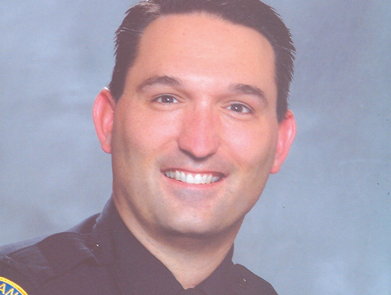
For many Californians, the term “Honor Roll” conjures up images of academic excellence and the proud feelings associated with seeing your name included on a prestigious list. For those of us in law enforcement, the “Honor Roll” is not a list on which we want to find our names. Although this list also gives rise to feelings of pride, it is the list of California peace officers killed in the line of duty. So far this year, 33 names have been added to the Honor Roll nationwide.Each year, the California Peace Officers’ Memorial Foundation holds a ceremony to honor the men and women in law enforcement who have made the ultimate sacrifice and joined the list that year. The numbers vary from year to year, but since 2001, the names of 159 California Police Officers have been added to the Peace Officers’ Memorial Monument in Capitol Park in Sacramento. Those names are also included in the National Law Enforcement Officers Memorial in Washington, D.C., and are joined by thousands of others. These brave men and women are honored each year in our nation’s capital during National Police Week in May. This year, May 15 will be recognized as National Peace Officers Memorial Day.Those of us who chose law enforcement as a career start each day with a desire to serve and protect our communities by putting the safety of others before our own. We are husbands, wives, fathers, mothers, sons, daughters, brothers and sisters. We are coaches, counselors, mediators and mentors. We dedicate ourselves to fighting crime and drugs to create a safe community for those we serve. We help at-risk youth in schools as well as parents in crisis, and connect the homeless and mentally ill with services. We show up when you call 911 to help you in a time need or an emergency. We do these things with the understanding that it’s part of our job and we are proud to serve our community.The men and women of our department care deeply for Morgan Hill and demonstrate that care through various community engagement efforts—often on our own time. We also strive to decrease crime and ensure a high quality of life through proactive and intelligence based policing strategies.We are grateful to serve a community that supports its police department. I encourage you to show your support during National Police Week, the week of May 15, by shining a blue light to honor those who have made the ultimate sacrifice in service to their community and to show your local heroes how much they are supported by those we serve.On behalf of the men and women of your Morgan Hill Police Department, thank you for the opportunity to partner with you to provide a safe environment in which to live, work and play.David Swing is the Chief of the Morgan Hill Police Department.
Guest view: Support public safety at April 30 Cops and Robbers Ball
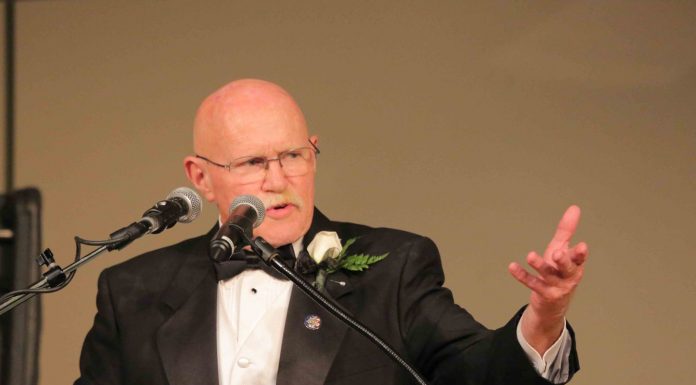
Like all communities, public safety is of utmost importance here in Morgan Hill. At the top of the public safety list is our police department. They not only enforce our laws; they do so much more to establish a feeling of safety in our community. By being out on patrol, officers establish a sense of comfort and safety for our residents. Our officers are in our schools, interacting with kids on a personal basis, forming personal relationships that pay dividends in avoiding gang involvement.Although our PD is fully staffed, we need all the help we can get to assure that the feeling of safety in Morgan Hill stays vibrant. Volunteers are a huge part of making that happen. Our volunteer CERT (Community Emergency Response Team) is trained and ready to help on emergency situations. The Explorer program trains and uses young adults to supplement our officers when additional personnel are appropriate. The Volunteers in Policing (VIP) program trains citizens to support the department by doing administrative tasks and supplementing them on patrol. The PD also relies on residents to form Neighborhood Watch groups and report any situations requiring police intervention.The notion of community policing is that everyone is involved in keeping our city safe.There is one other group that is extremely supportive of our policing efforts: the Community Law Enforcement Foundation, or CLEF. They raise money to donate to the PD for very specific purposes. The most notable example is our canine unit—the dog, Basco, his training and all his food and equipment is funded by CLEF. CLEF also funds equipment, like license plate readers, that allow our officers to take advantage of the latest technology for law enforcement. Another area of funding provided by CLEF is for training, not only for our officers, but for citizens as well, including the very successful Parent Program.So you are probably wondering where CLEF gets the funds it uses to support our PD? Well, take out your wallet and prepare to have a whole bunch of fun! The annual Cops and Robbers Ball is coming up April 30 and it is truly a BALL! What better cause can there be than to support public safety in your home town by providing funds to this great organization that does so much for the MHPD, making us all safe.And what a great evening it is. CLEF has been doing this for a number of years and event chair Sharon Daniel knows how to do it right. A great dinner followed by a brief but meaningful presentation of the annual Public Safety Award, honoring Mike Johnson and Frank Thomas for their stellar support of CLEF and our MHPD, followed by dancing. There is a live and a silent auction and some additional fun opportunities to spend money in support of this great cause.Please treat yourself to a really fun evening while helping to keep Morgan Hill safe.The Cops and Robbers Ball will take place 5:30 to 11 p.m. April 30 at the Community and Cultural Center, 17000 Monterey Road. Tickets cost $95 and are available online at morganhillclef.org or from Craig C. Van Keulen at Van Keulen & Van Keulen, 17600 Monterey Rd., Second Floor, Morgan Hill, CA, or by calling Sharron Daniel at (408) 891-7795. Steve Tate is the Mayor of Morgan Hill.
Our Town: April 30 Wine Stroll features only the best
We’re at it again. The Morgan Hill Downtown Association will be luring what we hope is about 1,000 wine aficionados to the downtown to sample some of the finest of our land’s bounty in a glass (yes, you’ve heard me use that line before...).On Saturday, April 30 the “Original local Wine Stroll” is proud to have our finest downtown businesses host the best in local winemaking for what should be a repeat of the success of the previous events.What’s really exciting is we now have the biggest event yet, and it will feature some new activities for our “Original Wine Stroll”—trying to make a great event just a little better.It was only a year ago that the local wineries were concerned that our Wine Stroll was not focusing on the best of the local wines because of the combination of compensation for their product, the number of tickets sold and the perceived low cost of the tickets.The Wine Stroll Committee listened to the Wine Association’s concerns and increased compensation, reduced the number of tickets sold by 250 and increased the price of the tickets.The reason we raised the ticket price was twofold. First, the price was low in comparison to that of other communities’ wine strolls. Second, we hoped that increasing the price would bring in a more discerning crowd who’d be more interested in sampling wine than seeing if they could consume 20-plus ounces of wine in four hours (that’s almost a bottle).We believe that our efforts paid off at last year’s event. The reduced ticket sales were almost offset by the increase in cost and we received positive comments about the crowd. It was different and perceived by many to be better, whatever that really means—I’ll take it.What was really heartening was to see a nearly complete reversal in attitudes of many of the wineries who now want to participate in our “Original Wine Stroll.” We ended up running out of merchant host locations and had to turn away wineries which we would have loved to include. We also now have the Wineries of Santa Clara Valley Wine Association as a sponsor, which helped in the event planning too.The special touches include shutting down the west end of Third Street to include the parking garage plaza in the event, and hosting an arts and crafts market. We will have an art competition hosted by the Morgan Hill Art Gallery, where we will select next year’s poster design from local artists’ submissions. Local musicians will set up on the corners to provide a nice background feel.And last but not least is the Wine and Food Week which starts April 24. We added food to this title because our local restaurants are really starting to stand out in the region for their menu offerings. This week of events will give restaurateurs an opportunity to shine with their special menus tailored around select local wines. I hope you will find your way downtown during the Wine and Food Week where you can get a little closer to the winemakers. I also have to warn you to get tickets and make dinner reservations because this year’s events are already selling quickly.See you downtown!For more information, visit morganhilldowntown.org.John McKay is a Morgan Hill resident, board member of the Morgan Hill Downtown Association, city planning commissioner and co-founder of the Morgan Hill Tourism Alliance.

