






Letters to the editor: Candidates’ views on Measure B

Measure B offers accountabilityJoin me in supporting Measure B, the 30-year, half-cent sales tax that will reduce traffic congestion in Morgan Hill by:• Completing and modernizing Hale Avenue/Santa Teresa Boulevard to provide a thoroughfare for the west side of Morgan Hill.• Increasing Caltrain capacity and service with more user-friendly schedules.• Providing more than $800,000 annually for road maintenance in Morgan Hill.• Providing direct access to Saint Louise Regional Hospital with a Buena Vista interchange.• Providing bicycle and pedestrian improvements near schools.While Measure B provides the traffic improvements Morgan Hill needs, it also provides the accountability improvements our voters deserve:• The two-thirds vote threshold (67 percent majority required for passage) assures that the Measure B projects are legally binding.• Changing a single word or sentence in Measure B requires a 75 percent (9 of 12 members) vote of the VTA Board.• Measure B requires Annual Independent Audits by a Citizens Oversight Committee to report on how every dime is spent.Please vote YES on Measure B.Steve TateMayor of Morgan Hill Sales tax measure has pros and consI have been given an opportunity to state my opinion on Measure B by Valley Transportation Authority for a half-cent sales tax on the purchases of goods and services in Santa Clara County. In return, VTA promises to distribute some of this money back to Santa Clara County and its cities for road repair and gridlock mitigation.I am conflicted as to whether I support this measure. I am not going to ask you to vote yes or no, but instead tell you what I feel are the pros and cons as I see them so that you can perhaps make an informed choice. First, Morgan Hill could use the money earmarked for improvements to our crumbling roads. South County needs the additional Caltrain service to and from Gilroy. Monies are supposed to be set aside for the west-side bypass from Hale to Santa Teresa. Extra money is always good if the people in charge of that money have a proven record of fiscal responsibility and fulfill their promises. For all of that I would say by all means, please consider voting for Measure B.However, we are being overtaxed. It seems so easy for government agencies like VTA to come around with their hand out. We face a backlog of street repairs and severe gridlock on 101. We have multiple taxes and fees from Santa Clara Valley Water District, property taxes, school bonds and state bonds, gas tax, water/sewer charges and garbage pickup.At this point, you the taxpayer are paying 8.75 percent sales tax in Morgan Hill. At some point our local government is probably going to need some type of tax to help with the backlog of infrastructure repairs. An additional .5 percent by VTA will bring us to 9.25 percent total sales tax.From this standpoint, I am inclined to vote No on Measure B. VTA does not seem to ever get control of the situation and give the relief that the people of Morgan Hill need. VTA has broken many such promises in the past, and I am having trust issues with VTA and our money.Would I trust VTA with $6 billion at this point? The answer is no I would not.So I hope this helps you make the best decision for you. Can you afford the tax increase? Will VTA fulfill their promise to use the money correctly? Do you trust VTA?These are your decisions. Please vote with your best interest and that of your community.Kirk R. BertoletCandidate for Mayor of Morgan Hill Editor’s note: Mayoral candidate Joseph Carrillo did not respond to a request for his opinion on Measure B.
Opinion: Vote Yes on Measure B
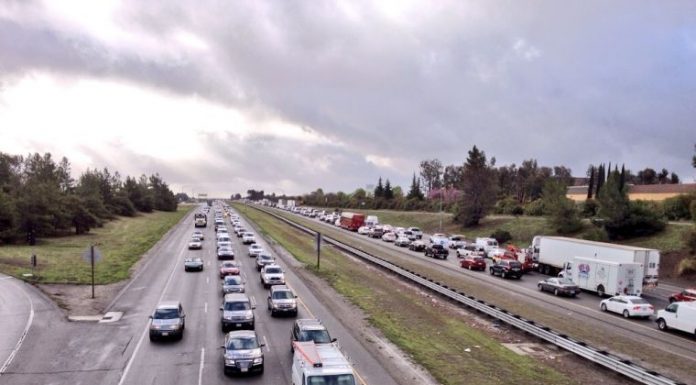
We heard a rumor the other day: Traffic congestion is back in Santa Clara County.That's why we both support Measure B—because the traffic challenges we face in South County and Silicon Valley have become so bad that it impacts every person, family and community, including Morgan Hill. Measure B has the transportation improvements we need, and the accountability provisions we deserve. For the past three years, private and public citizens have been working with traffic engineers and transportation directors to develop a comprehensive plan that would have a positive impact on traffic relief, transit options and road repairs. The result is Measure B. Since there is no single answer to our traffic problems, Measure B is more like a jigsaw puzzle, with each transportation improvement snapping into place to add up to a comprehensive, countywide plan:• First, Measure B funds interchange improvements and improves traffic flow at 24 key interchanges on all seven highways that run through Santa Clara County. In South County, that includes interchange improvements at 101 & 25, 101 & 152 at Tenth Street and a new interchange near Saint Louise Regional Hospital. • Second, it greatly improves our nine county expressways, which carry one of every two county residents every single day, with key interchange and safety improvements. For Santa Teresa, Measure B funds road and trail improvements between DeWitt and Main.• Third, nearly $1 of every $5 are for the basics—to improve the crumbling conditions of our local streets and roads in all 15 cities and towns. In South County, this totals more than $50 million. • Fourth, it funds lifeline service and core transit service for people with disabilities, seniors, students and the working poor who depend on that core service.• Fifth, Measure B improves bicycle and pedestrian safety, especially near our schools.• Sixth, it finishes the BART extension, with the final six miles and four stations in San Jose and at Santa Clara University.• Finally, It connects the BART extension with what will be an electrified Caltrain Commuter Rail Service. Together, BART connected with Caltrain finally creates a rapid-rail-network around the entire Bay Area, linked with Morgan Hill and Gilroy with additional Caltrain service each morning and evening.For us, a key provision of Measure B is accountability. Instead of a "General Purpose Tax" that only requires a 50 percent vote, but that can be changed at any time by elected officials, Measure B intentionally calls for a two-thirds vote. That’s because this is the only way the funds can be locked in for these specific transportation improvements. In fact, the VTA Board can't change a single sentence in Measure B without a supermajority vote of 9 of the 12 board members. That protects small communities like Morgan Hill and Gilroy from being "out-voted" by the VTA Board.Neither of us are big fans of taxes, but we hate traffic even more. On Nov. 8, join us in voting Yes on Measure B. For more details, visit YesMeasureB.comCarl Guardino is CEO of the Silicon Valley Leadership Council. John Horner is Executive Director of the Morgan Hill Chamber of Commerce.
Letter to the editor: City staff is listening

I would like to commend the City of Morgan Hill—in particular, the Public Works Streets Division for their prompt response to a citizen's request. On Thursday, Sept. 29, through the city website,morganhill.ca.gov, I reported a pothole problem in my neighborhood. A week later on Wednesday, it was filled in. Thank you.On that note, I urge citizens to report not just crimes, but ordinary items like potholes, burned out street lights, etc. These are items that are easily remedied by our local government. Every little action counts. If you see something, speak up. Do not wait for somebody to do it for you.Let us help city staff do their job of keeping our city a better place to live in. Our local government might have limited resources to monitor every corner of our town and/or to fix everything, but now I know that they are listening.Sincerely,Lourdes Reroma StoneMorgan Hill
‘Outside Mullingar’ a charmer

Outside Mullingar is a charming offering by the renowned TheatreWorks Company and loaded with award-winning actors, director and playwright. You can’t blink without looking at a prize winner from a Nobel to Oscars, Tonys and you can throw in a Lifetime achievement award. It’s never a question of “will it be “good?” You know if it’s TheatreWorks it WILL be good. So it is with Outside Mullingar, a captivating moment spent on an Irish farm with all of its humor, sadness and life decisions.
Guest View: Measure A brings housing opportunities to everyone
This November, Santa Clara County voters will vote on Measure A, a housing bond that will create new affordable housing for our most vulnerable community members and programs for our working people.That description sounds very impersonal, perhaps even bureaucratic. But it’s not. It’s very personal to me because I am a parent, because I am a local employer, because I am intimately aware of the struggles of the most vulnerable families and individuals in our community.Last year, one of my daughters moved to Idaho solely because of the high cost of housing in the Bay Area. She and her fiancé were tired of shared renting and knew they would never be able to buy a home in California. I miss her.Community Solutions employs more than 200 bright, talented and committed staff. While we offer competitive pay and benefits, the vast majority of them can’t buy a home here and many cannot afford escalating rents. They are commuting from farther and farther away. Or they are taking their talent and moving away, like my daughter. Local businesses and nonprofits are having a harder time filling positions due to the high cost of living.Community Solutions serves more than 4,000 residents across Santa Clara County. Every day I see our clients—our neighbors—struggling to survive because of our housing crisis: mothers leaving our domestic violence shelter unable to find affordable housing; students whose families live in their cars—even with a parent employed full-time; homeless men and women living with mental illness, for whom we don’t have the housing for them to continue on to better health and self-sufficiency.For all of these reasons…for all of these people, we must do better.Measure A will create new affordable housing for our vulnerable communities—for homeless families with children, veterans and seniors.Measure A also identifies housing solutions for working families. The measure funds affordable housing near workplace centers and transit. And it creates a First-time Homebuyer Program to support working people and families wanting to build their lives here, like teachers and nurses who cannot afford to live where they work.Measure A provides a holistic approach to addressing our housing challenges. It focuses on helping those most in need, but ensures that we don’t leave anyone behind.This year’s ballot may be the longest one ever. This election cycle has been one of the most exhausting ever. But we have a historic opportunity here in Santa Clara County—an opportunity we cannot squander. I urge you to join me in voting YES on Measure A for affordable housing.Erin O’Brien is the President and CEO of Community Solutions. She wrote this column for the Morgan Hill Times.
Guest View: Weigh in now on HSR route through Morgan Hill
High Speed Rail is moving ahead much more quickly than anyone anticipated. The decision on the preferred option through or around Morgan Hillis going to be made this fall by the HSR Authority, within the next month and a half.The California HSRA has currently identified four different options.Option 1: The “at grade” option adjacent to the Union Pacific line Monterey Road corridor.It is important to understand that the “at grade” proposal is not what you imagine based on the name.The tracks through Morgan Hill would be located on a berm with a retaining wall on both sides, up to 14 feet tall.That would place a 14 foot wall that divides the community. In areas where there is a concern about additional noise (i.e., adjacent to residential structures or other locations) there could be an additional 12 foot high sound wall.In addition, the wall may be located at up to 102 feet from the existing Union Pacific tracks, eliminating hundreds of homes and businesses on the east side of the UP tracks. If you can imagine a three-story building with no windows, activity, ornamentation, or life extending all the way through the community, from north of Cochrane to south of Tennant Avenue, you can visualize how the potential divide will impact the community.Option 2: The aerial approach adjacent to the Union Pacific line Monterey Road corridor.The aerial approach is a monorail-like structure with two tracks up to 50 feet wide. This would be substantially higher than Option 1, at a minimum of 30 feet and up to 60 feet above the area to the east of the tracks through the city. There may also be a 102-foot setback from the UP lines.This option would impact hundreds of new residential units, existing housing and businesses, and create a huge visual and sound division. Option 3: Along the east side of 101.The focus of option 3 is to shift the entire HSR to the east side of 101. The impact on the homes and businesses on that side is clear, especially considering the HSRA would need to cross the freeway twice, at minimum.Option 4: Along the west side of 101.The most recent option, and the one that seems to make the most sense, calls for an aerial approach that would come down Monterey Highway and then, to the north of Sobrato High School, angle off toward 101. HSR would then parallel 101 through Morgan Hill and, after passing Tennant Avenue, would return to connect again with the UP alignment and continue south to Gilroy. This option disrupts the least number of businesses and residents and co-locates noisy activities, freeway and train.We need to tell the HSRA our preferred option now! If we don’t weigh in, we will be completely disregarded by the HSRA. According to the HSRA timeline, by fall of 2016 (yes that's this year), their intent is to have selected two options to take through the environmental review process.It is important as a community that we immediately come together in a way that clearly identifies our preference. Option 4 may not be perfect, but it avoids channeling the HSR through the main part of town, and clusters like functions together.Use the High Speed Rail Comments form on the city website morganhill.ca.gov/forms.aspx?FID=212 to tell the HSRA your preference for the HSR route through Morgan Hill.Lesley Miles is co-owner of Weston Miles Architects in downtown Morgan Hill.
Our Town: Feasting on success
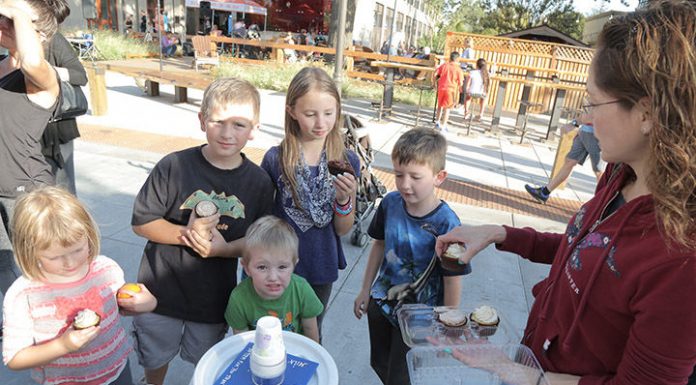
In case you haven’t heard, the Morgan Hill Downtown Association is hosting the gourmet food trucks of Moveable Feast Wednesdays on Third Street for a six-week trial.Approximately 2,000 people came downtown the first Wednesday (Sept. 14) and about 1,000 the second week. These numbers almost perfectly matched event predictions provided by Moveable Feast’s Ryan Sebastian and Gilroy’s Downtown Association’s Melanie Corona.Having empirical testimony provided by our neighbor to the south who promotes their downtown like we do was key to our decision to take the plunge in Morgan Hill. We had entertained the idea of bringing in the gourmet food trucks in the past but we needed to be sure that we would not harm the downtown’s existing businesses.We were told there were so many visitors to Gilroy’s events that crowds overflowed into the restaurants and bars. Apparently, not everybody finds what they want on a truck or wants to wait in line for their food, and many want an adult beverage before or after they eat. Gilroy’s businesses were so happy that they asked for their trial run to be extended.After hearing from Melanie, listening to Ryan again, and visiting Gilroy’s Moveable Feast event we felt that the time was right to give this a run of our own in Morgan Hill.We would bring in the trucks on a Wednesday evening since it is generally recognized as a slow night for downtown businesses. We would close down East Third Street and take advantage of the parking garage plaza for dining and gathering, with live local musicians providing background music. We would save parking spaces in the garage for the local residents and thank them for putting up with the inconvenience.Two weeks in, I think we can comfortably say this has been a success. Trucks are selling out and several restaurants have seen noticeable increases in business. The worst I’ve heard is there has been no business increase in some restaurants and most of the crowds show up too late for many of the retail shops.One of the things we were told was the event would be the place of social gathering with long lost friends meeting for the first time in ages. I didn’t buy it. Sure enough, there I was hearing over and over again the greeting of friends who hadn’t seen each other in a long time. I saw friends I hadn’t seen in ages.The social aspect is every bit a part of the gourmet food truck scene as the food itself.Another nice thing that happened was two of the truck operators showed an interest in looking for a brick-and-mortar home for their business in Morgan Hill. I wasn’t expecting that, but I shouldn’t have been surprised. We are developing a reputation for having a fun downtown.I hope the rest of the trial events go like the first two. Maybe we can make this a long-term series of events with the potential to become a regional draw.If you haven’t been to one of these events I encourage you to come down Wednesday night through Oct. 19 and see what it’s all about. You might just see an old friend you haven’t seen in ages or maybe make some new ones.John McKay is president of the Morgan Hill Downtown Association, city planning commissioner and co-founder of the Morgan Hill Tourism Alliance. He can be contacted by email at [email protected].
Guest view: Help end human trafficking

The commercial sexual exploitation of children is not new. Society has struggled with its existence and its damaging impacts throughout history. In 2000, the Trafficking Victims Protection Act (TVPA) became a cornerstone of federal anti-trafficking legislation to prosecute traffickers, prevent trafficking crimes and protect victims. TVPA recognizes there is no such thing as a “child prostitute,” and children cannot consent to sexual activity, much less the illegal act of prostitution/commercial sex.

