







Letter to the editor: More discussion of potential dam failure needed

I appreciated your Jan. 20 story on the Anderson Dam Retrofit, in which you summarized the report that the Santa Clara Valley Water District staff presented to their board Dec. 9, 2016. Because I live less than a mile from this huge structure and have a good view of it from my bedroom windows, I have developed a keen interest in this project. The prospect of a massive tidal wave coming from the direction of the dam has a way of getting your attention.I must admit that I was disappointed by the lack of any mention in your recent story of the catastrophic consequences of a failure of this structure, which has now been found to be so seriously compromised that the SCVWD has decided to tear it down and virtually replace it with a new dam.Since you have viewed the Dec. 9 staff presentation, I assume you know it has been determined that a large earthquake would cause the alluvial material that forms the base of the dam to undergo liquefaction, and this could cause the dam to “slump” by as much as 25 feet. The assumption here is that, if the dam is only two-thirds full, it would still have enough structural integrity to retain the contents of its reservoir. This seems to me to be a stretch. I have since confirmed with the chair of the SCVWD Board, John Valera, that a failure of this massive structure when it is completely full would create a 35 foot “wall of water” in downtown Morgan Hill, in 14 minutes. I have yet to determine how high the wall of water would be if the dam were to fail when it is only two-thirds full (between 60,000 and 70,000 acre feet of water), but I think it is fair to assume the water that would descend on Morgan Hill in such a scenario would be catastrophic.I think the people of Morgan Hill deserve to be informed of these potential dangers. But for reasons about which I can only speculate, there seems to be an unofficial wall of silence among city leaders. I have a meeting with Mayor Steve Tate coming up, and I plan to ask him why we have not heard more about these possible dangers. According to the U.S. Geological Survey, there is a 26 percent chance of a 6.7 earthquake on the Calaveras Fault (which passes just 2 kilometers east of the Jackson Oaks neighborhood), and a 37 percent chance of a quake of the same magnitude on the Hayward fault by 2044. What is more, a group of geophysicists at U.C. Berkeley recently demonstrated that there is a deep connection between the Hayward and Calaveras Faults which could result in an interaction that would create an earthquake as large as the one on the San Andreas Fault in 1906.The most obvious way to dissipate the dangers this dam and these seismic findings provide would be to have the SCVWD commence the “dewatering” of Anderson Reservoir now, rather than three years from now, as is envisioned in the latest plans.I would like your help in getting the word out regarding the dangers this compromised dam presents, along with the obvious solution for making them go away.Dave Elliott, Ph.D.Morgan Hill
Guest view: Why I Joined the Women’s March on Washington
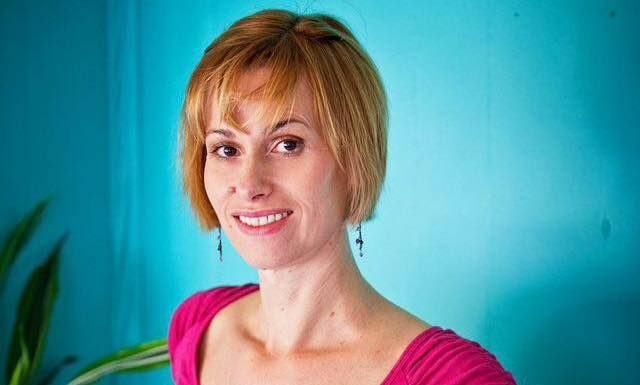
On Jan. 21, 2017, I joined what are now estimated to be 800,000 other people at the Women’s March on Washington, D.C. (and an estimated four million fellow marchers around the U.S. and the globe). The results of the Presidential election sunk my hopes for this great country, and inspired personal fear as a woman, a person of Jewish descent, as well as for the many marginalized folks whose rights Donald Trump staked his campaign on overturning.I felt alternating bouts of rage and despair that we elected a president who is on record making abusive and derogatory statements about women, people of color and the disabled, as well as bashing our venerated intelligence agencies, to name just a few. Not to mention he has no prior experience in any political office.At first, I was more nervous than excited—I feared reprisal from Trump supporters; I feared that in this frustrated and angry time, a tightly-wound lone shooter might express his dissent in bullets.Fortunately, that was not the case. If the counter-protesters were there, I never saw them. I was packed densely into the center of the National Mall, near Independence and Fourth Streets, with a direct view of the nation’s Capitol. My friend and I arrived by 8 a.m. Saturday morning, and by 8:30, you could no longer see streets in any direction—just bodies upon bodies carrying clever signs announcing their fears and concerns, many bedecked in the now-iconic pink hats.For five hours I stood and listened to fierce, passionate, committed speakers and artists plead for the rights of women, the disabled, the LGBTQ community, and against a Muslim registry and a wall at the Mexican border. Speakers included Gloria Steinem, Angela Davis, Michael Moore, Ashley Judd, Alicia Keys, Van Jones, California Sen. Kamala Davis, D.C. Mayor Muriel Brown, the mothers of slain black children and so many more activists, politicians and entertainers.Despite this enormous outpouring of energy and effort around the country, people are criticizing the movement. What did you want to say? What purpose did it have? Why can’t you all just shut up and accept things as they are?Last I checked, this country is still a democracy, albeit one that’s under threat. The Trump administration has already made clear it is hostile to media criticism. It has made steps to defund women’s health and climate science, and to repeal healthcare. Protest and demonstration are our Constitutional rights and one of the many ways we can create change.Change comes when we the people put pressure on our leaders to let them know what matters to us. As President Trump’s loss of the popular vote by nearly three million votes reveals, he doesn’t speak for many of us.The Women’s March was a fierce rallying cry as we launch into the beginning of many battles: for women’s bodily autonomy, for civil rights, for a decent world where we take care of our own and stay in good stead with the rest of the world.I’ll be bringing the same fierce energy to my own community in the days to come.Jordan Rosenfeld is a local freelance writer and author of seven books. She can be contacted at [email protected].
Our Town: Cycling options abound in MH
In my last column I mentioned that I should turn my focus away from food and more towards bicycling, so here we go...Most of us think about bicycling seasonally, but there is a group of local residents who think about it year-round. This group is the community based Bicycling and Pedestrian Advisory Group (BPAG). They’ve been working on all things bicycling and pedestrian oriented and have been providing direct feedback to the city’s Parks and Recreation Commission. This group was resurrected last year just in time to be helpful in the Bikeways, Trails, Parks and Recreation Master Plan update that’s underway right now, so their impact was felt immediately.The BPAG’s goal is to make Morgan Hill the most bicycle and pedestrian friendly community it can be. They are helping to plan more and better amenities in town for those who want to recreate outdoors; but just as importantly, they also want to better identify and promote what we already have.One example is to focus on getting bicyclists from the Coyote Creek Parkway to the core of the city. The Coyote Creek Parkway is like one of those trails you’d expect to see in a place where there is a pervasive focus on active lifestyles like Boulder, Colorado or Portland, Oregon. But this trail is right here, and it meanders 15 miles through beautiful scenery from San Jose to Morgan Hill. Many ride the trail from San Jose to where it ends at Anderson Lake County Park and head back, never knowing how close they were to so many wonderful destinations in Morgan Hill.The BPAG has been working on identifying the best and safest routes from the Coyote Creek Parkway to our downtown. It’s more complicated than you might think when you take into account all the different types of riders, but the common denominator should be that it’s safe for families. Our community needs more safe recreation opportunities for families, and this should be one of them.City staff and crews have been working on many bicycling and pedestrian related efforts. One of these is the installation of trailhead signage on the Madrone Channel Trail which could also tie into the trail from Coyote Creek Parkway.This wonderful trail, next to the percolation ponds and most visible from U.S. 101, is one of the routes between the Parkway and downtown. However, it is little used. This improved gravel trail, which is protected from city streets, is a wonderful place for families to get outside to walk or ride their mountain bikes together. Let’s get people out using this trail.I hear Specialized Bicycles and the city’s Recreation Department are working to resurrect their lunch rides. Sounds like they’re moving the ride from Monday to Thursday to accommodate the many who are overwhelmed on Mondays, so look for an even better turnout. Watch for these fun rides.I’m going to try and dodge the storms and start getting my rides in. I need to be ready for a summer full of riding.John McKay is president of the Morgan Hill Downtown Association, a city planning commissioner and co-founder of the Morgan Hill Tourism Alliance.
Letter to the editor: Wineries want to hear from you
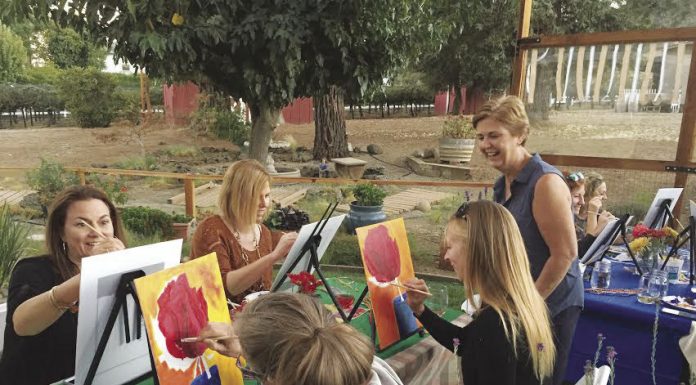
I am honored and pleased to serve our communities and region as President of the Wineries of Santa Clara Valley in 2017. With the new year comes an enhanced commitment to serving you, our guests. We want to hear from you: your suggestions, feedback, and other thoughts you may have to help us continue to improve your experience at our wineries.One of my personal goals is to reach out to you, our local communities on a more regular basis. We kicked off the year with a strategic planning session and began a journey toward defining our brand along with our strategic priorities. An important priority is to extend our visibility throughout the Bay Area, resulting in increased foot traffic and tourism to our communities and businesses.But we need your help.Please tell your friends and co-workers about the natural countryside, fields of grapevines and views of the mountain ranges that are so spectacular from many of our winery backyards. Let them know that very likely they will meet many of the winery owners, winemakers, and others wine lovers during a visit. And that they will leave with shared stories and a sense of belonging. Finally, and perhaps most importantly, they will enjoy superb wines. While the winemaking process varies from winery to winery, excellent results extend across the region, guaranteeing that there’s a wine for every palette.Thank you and I look forward to a year of connecting.Karen Seeker, Co-Owner Seeker VineyardPresident, Wineries of Santa Clara ValleyVisit Wineries of Santa Clara Valley’s website at santaclarawines.com

Our Town: Holiday season brings local feasting
It looks like I survived the holidays and I’m sitting here with a cherubic smile on my face—definitely more cherubic looking than before the holidays.
Letter to the editor: Council in a rush to appoint new member

Will the new Morgan Hill City Council with an appointed member try to represent all of us?Two years ago at a City Council meeting, I commented that the problem with our elections was that we had too few candidates.Councilmember Larry Carr responded that he was "troubled" by that view. He suggested that we do not have opposition candidates because the incumbents are all doing such a good job.We just had an election with two incumbents and three challengers for two seats. One incumbent and one challenger won, with total votes cast for challengers exceeding total votes cast for incumbents: 15,350 to 11,702.Some residents are arguing that a third place finish in a two-way race is the same as finishing third in a three-way race. I look at 15,350 votes cast for challengers and see a different message. We are looking for fresh eyes and fresh ideas.Will the incumbents on the council provide a platform for fresh eyes and fresh ideas in their appointment of the tie-breaking fifth member? Or will they seek someone who will vote in lock-step with the returning council members? Those members have repeatedly claimed that they are a collegial group as they mostly vote 5-0.A little more independence of thought would be welcome.Since no appointment will likely satisfy everyone, I repeat my suggestion that the current vacancy be filled by lottery from the candidates who apply for the council position with limited vetting by the current council. An election or even a pseudo-election would give our residents a voice.But the Council is in a rush to fill the position prior to their goal-setting Workshop at the end of January.Doug MuirheadMorgan Hill
Guest view: Swirl of emotions away from the battlefield

Some things turn out to be harder than you expect. For me, I like to go into things a little head strong and overly confident, then figure out I’m in over my head. Most times I like to think I figure it out and get the job done. Such was the case when Morgan Hill’s Eddie Bowers asked me to read the Honor Roll at the Veterans Day ceremony downtown just a few weeks ago. I couldn’t turn him down, as he has almost single handedly kept this tradition going. I’ll say that I was completely confident at the time that I would have no issues doing it.

