






Our Town: Fourth revelry turns to nightmare for pets
It’s the fifth of July, and it’s been a long and slow moving morning. Yesterday was the Fourth of July, and as a proud Morgan Hillan I enjoyed much of what our community and its hard working volunteers put together for us on this special holiday.I went to the July 3 Family Music Fest and saw Monterey Road filled with people of all ages out having a good time on a beautiful summer evening. This event is a huge undertaking by the Independence Day Celebrations organization, which started earlier that afternoon with the Patriotic Sing. The Family Music Fest fills the streets with tables and chairs, tents, bandstands and food trucks. It was all nice and tidy in time for the July 4 festivities, which includes the greatest Fourth of July parade in the region.The Music Fest also filled the streets with what has to be the best behaved group of people out having a good time. Most of these folks are from our community. For an event with adult beverages and a big crowd, we have to be proud of how well we celebrate together.I thought I got an early start on the Fourth, but by 9:30 the Freedom Run had been completed and the Freedom Fest cruise (rolling car show) was already underway.It was one of the nicest days I’ve ever seen for the July 4Parade. Not too warm and not too cool which was unusual for me. I’m used to roasting a bit.As usual, the parade was everything we expected and it set the tone for the rest of the Fourth of July. If you haven’t been out to the parade you just have to go next year.After the parade, the downtown clears out and becomes a virtual ghost town. There must be a way to keep some of the crowd—which numbers in the tens of thousands—busy downtown or nearby as we wait for the fireworks display. People are out with their families and friends having a good time, so this is a huge missed opportunity. Sounds like a project for someone out there.I have yet another project for someone out there…Every Fourth of July many of us sequester our pets in some quiet corner of the house so they won’t freak out at the Freedom Fest fireworks display, which we are also well known for. We love the planned fireworks and make this sacrifice for our pets’ well-being.What we can’t plan for are all of the illegal fireworks which startle our pets days before and after the Fourth.The evening of the Fourth, our dogs were fine through the official fireworks show as we cranked up the volume on the movie we watched with the house closed tight as a drum. The dogs were restless, but seemed fine.Then those idiots with those illegal fireworks got going all around us. I don’t know if these are alcohol fueled or stupidity fueled, but we need to do something about these inconsiderate scofflaws.I don’t know what these people were thinking with the dry hillsides all around us just waiting for a spark to send flames running across our open spaces. Seriously, this is just idiotic.Aside from the fire threat, what those fireworks do to our pets really angers me right now. I was up most of the night as one of our dogs would react to all of the nearby fireworks. Even after they stopped, she just couldn’t relax.Seeing what it did to one of my dogs, and my sleep, I am ready for some drastic measures. How do we fix this? I’m ready for some action.I really enjoyed my July 4 events, but the most vivid memory is of my dog huddled under the bed just shaking. I’m mad as hell and I’m not going to take it anymore. How about you?John McKay is president of the Morgan Hill Downtown Association, chair of the city planning commission and co-founder of the Morgan Hill Tourism Alliance. He can be contacted at [email protected].
Guest view: Budget invests in South County
The County of Santa Clara provides the services that hold the fabric of our society together, but are often invisible to the majority of our 1.9 million residents. My colleagues and I on the Santa Clara County Board of Supervisors recently approved the fiscal year 2017-18 $6.5 billion budget. For South County, I’m pleased to announce that we are funding some key projects including a new Urgent Care Center, a new Animal Shelter, funding for services provided by the South County Youth Task Force and the Fire Safe Council, as well as expansion of the Santa Clara Valley Wine Trail.The County’s $6.5 billion budget provides residents with vital medical services, public health protection, behavioral health care, food safety, environmental protection, child and adult protective services, senior services, family reunification, assistance to those in need, homelessness prevention and treatment, transportation, park and recreation, libraries, emergency response to disasters, the criminal justice system and scores of other services. Many of these are expected by our residents and taken for granted. However, they require a lot of work from a committed workforce of 20,000 employees including social workers, doctors, nurses, park rangers, engineers, firefighters, accountants, librarians, deputy sheriffs and so many more.A new 12,000-square-foot Urgent Care Center will soon be built within recently-vacated space in the existing Gilroy Valley Health Center, located at 7475 Camino Arroyo in Gilroy. The center will offer walk-in style urgent care, including night and weekend hours, and will serve up to 20,000 patients annually. Construction will begin later this year with plans to open the doors in summer 2018. The project is estimated to cost $5 million and will be funded with existing 2012 Measure A revenue.As an animal lover, I’m especially excited to announce that a new County Animal Shelter is on the way. It will be located at the Sig Sanchez County Government Center at Highland Avenue in San Martin. The new shelter will be approximately 34,600 square feet. It will feature multiple kennel and cage animal holding spaces, as well as spaces for administration, veterinary medicine, adoption, food preparation, laundry and storage. It will be able to house up to 90 cats, 70 dogs and multiple livestock on a daily basis. This shelter will cost $26 million, and is anticipated to open in late 2020.Public safety has always been my top priority. I was able to secure $266,000 of funding for the South County Youth Task Force after state budget cuts eliminated their funding. In just four years, the task force has helped to reduce juvenile arrests by an amazing 46 percent by reducing delinquent behaviors and preventing recruitment of youth into gangs. The task force has successfully reduced gang violence overall in Gilroy, Morgan Hill and San Martin.The Loma fire of the summer of 2016 gave many of us a renewed appreciation for fire services. We know that prevention is key. The Santa Clara County Fire Safe Council is a nonprofit organization dedicated to protecting communities at risk from wildfire. It is funded by private donations as well as local government agencies. The county is funding a new fully equipped tool trailer to perform hazardous fuel reduction and evacuation route clearing.Since we helped launch the Santa Clara Valley Wine Trail in 2013, it has been enormously popular with residents and visitors alike. The Wineries of Santa Clara Valley recently asked for my help after they identified the need to expand the Wine Trail (with increased signage) to provide better access to the wineries located inside the 29-mile Wine Trail loop. These new signs are scheduled to be installed in time for California Wine Month in September as well as Fall Passport Weekend in October.These new projects and services are just a few of the many ways that Santa Clara County government is providing what I like to call “Real Life Help” to South County residents every day.Supervisor Mike Wasserman was elected to the Santa Clara County Board of Supervisors in November 2010, and re-elected in 2014. He represents District 1, which includes Gilroy, San Martin, Morgan Hill, Los Gatos, Monte Sereno and portions of San Jose.
Guest view: Enjoy Independence Day in Morgan Hill
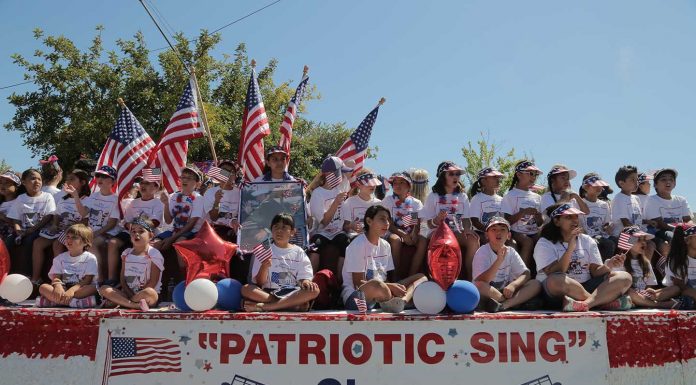
Happy Fourth of July from Freedom Fest!Yes, it's that time of year again, time to celebrate the birthday of our great nation. And, what better way to do so than to attend the events provided, free of charge, to our community, by Morgan Hill Freedom Fest.Begin on Monday by attending the 29th annual Patriotic Sing, 6 p.m., at the Morgan Hill Amphitheater, 17000 Monterey Road. Here, local children will be singing the songs of America and honoring our Armed Forces. Sing along as our children continue a tradition of performing patriotic songs on the eve of the Fourth of July! Please bring a lawn chair. Donations to our deployed troops will be accepted. (Check out southbaybluestarmoms.org for a list of soldiers' requests.)For those of you who are fans of Angeline Madriaga, she will be singing at this event as well as at the Family Music Fest in downtown Morgan Hill. The Music Fest begins immediately after the Sing, and features food, music and fun for all.On Tuesday, July 4, our events begin early (register at 6:30 a.m.) with the 1 Mile Children's Run and the 5K Adult Walk/Run. Then, find time to sit, at 9:30 a.m., and watch the Car Cruise along the parade route. At 10 a.m., you'll feel a sense of pride as our Freedom Fest Parade winds its way through Morgan Hill. Bands, horse units, community service groups and churches are represented in the entries.But wait, there's more! Our Freedom Fest events conclude at the Morgan Hill Outdoor Sports Center, 16500 Condit Road, with music and fireworks at dark. All in all, there are so many ways to make memories of a Hometown Fourth of July in Morgan Hill. Please see mhfreedomfest.com for complete details.Thank you to our Freedom Fest sponsors, to our members who work so passionately to present our events, and to all of you who will attend our celebration. We hope you are left with a renewed sense of patriotism and a new appreciation for Morgan Hill, this place we call home.Karen Ann Crane is the organizer of the annual July 3 Patriotic Sing, which is part of the Freedom Fest Independence Day festivities in Morgan Hill.
Our Town: Let innovation grow
On June 2, I had the opportunity to spend some time with visionaries. Not the type of visionaries that change a community or the landscape you live in—although I guess ones I’m talking about can do that too—but the kind that provides previously unimagined conveniences and change how we live and function.I have to admit that I may initially think about some of our local folks when I think about that kind of visionary. But my mind typically goes north to all of the innovation that has made Silicon Valley what it is today, which is not just a place but a way of thinking and behaving.That way of thinking just changed a bit for me after attending the first ”Morgan Hill Disrupt Forum.” This was a day where the focus was on innovation and how to bring more of those that innovate to Morgan Hill.Let’s make no mistake that there are already great innovators here right now. We have a visionary that dreams of hydrogen power for all, a company that has brought the technology of Formula 1 to human powered bicycles and one that protects the grey matter between our ears if we fall off that two-wheeled technology. But I don’t feel the buzz of innovation.I grew up on the Peninsula and worked building high tech facilities. In that environment, the buzz of innovation was everywhere. In a coffee shop, cafeteria, park bench, meeting room—there was all of this palpable energy that there was something happening or about to happen.I sensed that buzz in the room at the Morgan Hill Disrupt Forum. Please forgive me if there is already a buzz of innovation in town and I’m just missing it (spend some time with Mike Cox and you’ll feel that energy around him like a force field). But it was fantastic for me to see the focus on it that day.The group who worked to put that event together should be lauded for their vision too. As mentioned, I usually think of Silicon Valley as the place of innovation. Well, we are a part of Silicon Valley and the organizers brought in one of those people that makes a living recognizing innovation and trends, and has mountains of statistics to prove we lead the world in innovation: Russell Hancock.Hancock is the president of Joint Venture Silicon Valley. I’ve seen him speak on several occasions at the State of the Valley Conference. The man has his fingers on the pulse of innovation and trends in the Valley, and he was here June 2 stumping for innovation to take a more prominent role in our economic development.For some time, there has been a discussion amongst our local visionaries about being that friendly and encouraging place for those willing to take the chance to succeed, or fail, on a dream—to create an incubator for innovators. The seeds of innovation were already here with our cadre of established innovators. Maybe openly promoting Morgan Hill as a place friendly to innovation will act as a catalyst and fertilizer to push us to be known as the new home for innovation.Let innovation grow in a place known for its fertile fields.John McKay is president of the Morgan Hill Downtown Association, city planning commissioner and co-founder of the Morgan Hill Tourism Alliance. He can be contacted at [email protected].
Letters to the editor: District elections, Community Based Instruction

Many questions about district electionsDear Morgan Hill City Council,At the City Council meeting on June 7, you decided on your own to change to District elections for Council members.You had a very clear example that our residents will step forward on short notice and at a challenging time of the year to prepare applications and attend interview sessions. Over 20 well-qualified residents expressed their interest in filling the vacancy left by Gordon Siebert at the end of last year.Yet you claimed that the short time period and challenging time of the year prevented you from forming a Citizen Advisory Committee. So your direction to staff is to support workshops (which currently have no definition). Historically, most public comment at your meetings and workshops are one-way input to you, not actual discussion and debate.If a district has no candidates, does the council do an appointment? If so, would that be the same process that was used to replace Mr. Siebert?When you have formed districts, under what conditions could we still be sued for bias?How will district boundaries evolve over time? Does this become an issue with the city’s Residential Development Control System?What is the definition of equitable representation?Who represents those who are financially insecure?Who represents those who live in apartments or mobile home parks?Given the very different levels of resident involvement in our last election campaign and the following appointment process, we should have had a city-wide discussion on how to get more residents involved in selecting who decides how our city operates. Instead, we get a mandatefrom council to go to district elections for council members.More than once, Council member Rich Constantine stated that the city had done nothing wrong. Yet you chose to be stampeded by the lawyer trolls. And it was a choice for you to make, even though you claimed that the outcome was forced on you by the cost/benefit analysis.Thank you for your consideration,Doug MuirheadMorgan Hill Thanks for promoting WorkAbilityThe Morgan Hill Unified School District WorkAbility/TPP office would like to take a moment and thank those business who have signed on to open their doors to our students to assist them in learning and practicing new job skills. Please patronise these merchants and thank them for giving back to our community.If your business is interested in investing in the youth of Morgan Hill in this way, please give us a call at (408) 201-6300 ex. 42217. The student’s salary and workers compensation insurance are paid by the district, so it is a win-win!The following businesses have signed on so far: Ace Hardware/Johnson Nursery, Advance Haircuts, Bargain Hunters Outlet, Community Garage and Towing/Ponzinis, Goodwill of Silicon Valley, Granada Theatre / Willow Heights Mansion, GVA Cafe, Made in Japan/Europe/USA, Massive Sounds with DJ Guy, Maurizio's, Morgan Hill Foods, Prova California Table, Rosy’s at the Beach, St. Vincent de Paul’s Thrift Shop, TJ Maxx, Top Knot Salon and YMCA/CRC.WorkAbility I and the Transition Partnership Program of Morgan Hill Unified is a program for high school students in special education. For five weeks beginning June 19, a group of 14- to 21-year-olds will be hitting Morgan Hill for some Community Based Instruction (CBI).The purpose of CBI is to promote each student’s community knowledge through instruction, participation and real world experience.CBI combines functional academics, social skills and job skills. Students practice essential life skills like how to purchase items, order lunch and make sure they have received the correct change. They learn how to dress for work, fill out time cards complete with proper signature, and how to be independent and confident in their community.We hope to meet you while we are out and about this summer!Catherine CanoMHUSD Job Developer
Letter to the editor: Rally The Valley promotes unity in Morgan Hill, beyond
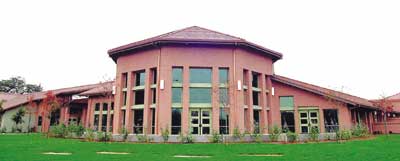
Rally The Valley launched its debut event with live inspirational music performed by Benji Cortez and his impressive band, setting the atmosphere for a joyous and powerful event.The azure skies and mild weather were ideal for the convocation of leaders from local government, military and spiritual sectors at the Morgan Hill Community and Cultural Center’s Amphitheater June 10.Acts Revival Center, located at 17555 Peak Ave., hosted the event with the purpose of bringing unity to the community. For two and a half months, Debra Osikominu, Diahann Soleno, Victoria Salcido and Pastor Michael-John of Acts Revival Center, along with a team of dedicated volunteers, worked tirelessly on Rally The Valley.Michael-John opened the event with a powerful prayer, then introduced Morgan Hill City Council members Rene Spring and Caitlin Jachimowicz who both offered their vision and passion for the city. Dr. Ed Silvoso of Harvest Evangelism decreed a dynamic, inclusive prayer over government officials, police, firefighters, first responders, entrepreneurs and the inhabitants of Silicon Valley.Army Sgt. First Class William Carter, who is stationed in Gilroy, officially represented the military and veterans. Pastor Adam Bernal from Jubilee Christian Center prayerfully shared his heartfelt appreciation for Morgan Hill and his excitement of being a new resident of the city.Father Randy Valenton of St. Catherine Church ministered a stirring message on God’s love. David Thompson with Harvest Evangelism prayed for the families in the South Valley. Rosie Guerro of Cathedral of Faith and Carmen Martinez of Acts Revival Center both poured out their hearts, expressing Christ’s love for the poor, disenfranchised and the broken hearted.Several leaders approached Michael-John after the event, sharing how impressed they were with the spirit of unity present. They offered to be a part of future Rally The Valley events.Michael-John echoed the same sentiment: “There was freshness in the atmosphere as God’s love permeated the grounds, and as if on cue, the fountains in the courtyard sprang to life, propelling jets of water high into the air . . . signifying new things to come.”The vision for Rally The Valley spawned from God because of His love for the community. The church meets 10 a.m. Sunday mornings in the Morgan Hill City Council Chambers, 17555 Peak Ave. The newly remodeled chamber is an ideal locale for the innovative church and its pastor, who isn't confined to stuffy religious methods. His pastoral ability goes beyond the realm of the traditional function of a minister because of his love for people, combined with his entrepreneurial and entertainment background.Some of the expanded benefits of the ministry include life coaching, business consulting, mentorship, counseling for married couples and deep teaching of God’s word, which draws the congregation closer to their creator. Acts Revival Center ministers to a wide range of people with various backgrounds and careers. It’s a creative church, designed for Silicon Valley. Attendees include doctors, high-tech security personnel, authors, engineers, game designers, artists, secretaries, retail managers, police, students, entrepreneurs, realtors and the homeless. The pastor helps guide each person to achieve their prophetic destiny with wisdom from the Word of God, touching their relationships and careers. Acts Revival Center has four locations: San Jose, Morgan Hill, Gilroy and Los Angeles.For more information, please visit actsrevivalcenter.com.Angela YoungMorgan Hill
Guest view: Teach your children about fire early
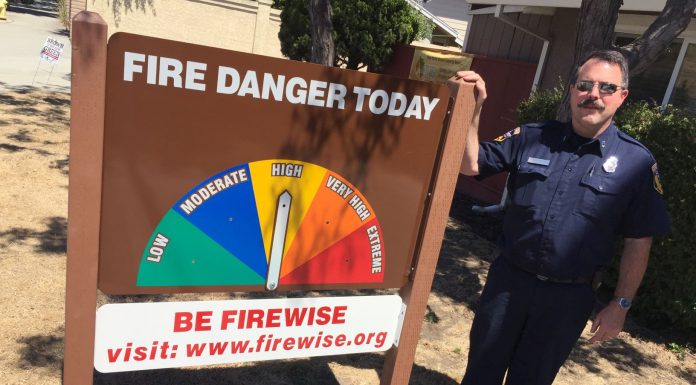
This guest view is part of a periodic series of opinion pieces on tips to prepare for wildfire season, which started May 1 in Santa Clara County.As our children enjoy the end of the school year and our open spaces transition into their seasonal amber waves, we encourage you to teach your children about fire safety. Curiosity is a vital part of a healthy childhood and children are naturally curious about fire. Last year, thousands of children “played” with matches. Only, they didn’t learn anything…Fire is the leading cause of death in the home for young children in the U.S. Tragically, one third of the children who died in home fires last year set the fires that killed them. Burns are also a major cause of accidental death for young children in our country, many of whom are burned when playing with matches or lighters.What’s most tragic about these deaths is that almost all of them could have been prevented. Teach your children about fire so that they, and you, don’t get burned.Teaching Your Child About Fire: ‘What is fire?’Fire is a strong natural force, like wind, water or electrical power, which produces heat. Like all energy sources, fire is a tool we use in our everyday lives: cooking food, heating homes, powering cars, and lighting candles are just a few examples of ways we use fire as a tool.Fire can be extremely dangerous, because the heat it produces can quickly get out of control if not handled properly. Because of this danger to people and property, only adults should use fire.Fire is useful, but it is not magic. It is powerful, but it is practical when used wisely. It is a fascinating process, but it’s also a part of everyday life. Fire is not a toy, and young children should never be allowed to use it like one.How do I know that my child is curious about fire?He may ask you questions, or he may stare at the fire, or point to or try to touch matches and lighters, or he may run to the window when fire trucks race by. But why wait for signs? Whenever you use fire, teach your child about it.What if my child has already begun experimenting with fire?Calmly, but firmly, explain that this is not an acceptable way to learn about fire. Explain—but do not overemphasize—the seriousness and danger of playing with fire and immediately begin teaching your child about the safe way to learn about fire. Someone said that if I burn his fingertips he’d learn the dangers…This is simply incorrect. It’s also child abuse. Burning your child will only injure him or her. It will not teach him or her anything positive about fire. It may even give him the dangerous idea to use fire in anger.Fire Marshal Dwight Good serves the Morgan Hill Fire Department and South Santa Clara County Fire Protection District and the CalFire Santa Clara Unit. He has 24 years of fire service experience. He can be contacted at [email protected].
Letter to the editor: Council violates development extension ordinance

On May 17, the City Council voted 3-2 (Caitlin Jachimowicz, Rene Spring against) to approve a time extension request for a construction project proposed for the corner of East Dunne and Murphy avenues. At face value, that may not seem like a big deal. But, since last December two significant actions occurred—one questionable, and one that shouldn't be legal.Last December, the developer requested an extension for this project. Even though it only fulfilled one of eight requirements to qualify for an extension, the Council (4-1, Spring against) determined there was enough potential impact to the neighboring residents and church that granting an unqualified extension was in the best interest of the city. At the urging of Councilmember Larry Carr, a stipulation was added to the amended agreement, Section #11 of Ordinance #2228, that "No further extension will be provided."On May 17, Mayor Steve Tate and Councilmembers Carr and Rich Constantine broke their word and approved another six-month extension for the project, violating the restriction they voted into the ordinance. I have a problem with that. I think the residents of Morgan Hill should have a problem with that, too. Not because a bunch of houses will be built where a bunch of houses will eventually be built, but because three members of the city council violated an ordinance to resolve their problem.The council says they have the authority to amend development agreements. That's true, but what makes this agreement different from other agreements is the council added a specific restriction in Section #11 prohibiting an extension. Ordinance language is legally binding, and the council had sufficient time to amend Section #11.The developer's request was in the city's hands at the end of March. There were two council meetings and one planning commission meeting prior to the May 17 vote, with included staff reports noting the extension request. I sent at least three emails questioning this extension. Tate, Carr and Constantine chose to put all that and Section #11 aside, and simply changed the agreement to approve the extension. Their only justification was a very convenient "what's best for the city" excuse.It's hard for me to trust members of our city council who feel comfortable violating ordinances, except in an emergency, by simply saying they're doing "what's best for the city." What’s best for the city is having leaders who stand behind the integrity they say they have, who demonstrate that the rules apply to them and developers as much as the rules apply to everyone else in Morgan Hill. I've heard no legal explanation allowing Mayor Tate, Mr. Carr or Mr. Constantine to circumvent the restriction in Section #11. In their "what's best for the city" excuse, I only heard them attempting to absolve themselves of guilty feelings for going back on their word.The council can still fix this. I hope they do. I think it's more important to build trust through integrity and credibility than to build a few houses.Chris MonackMorgan Hill
Guest view: Pride month celebrates diversity
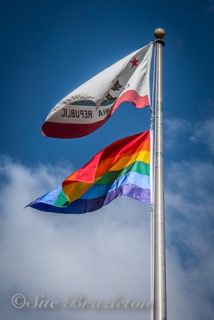
Morgan Hill City Councilman Rene Spring delivered the following comments at a June 1 rainbow flag raising ceremony at City Hall Plaza on Peak Avenue. “As I prepared for what I wanted to say at our local ceremony, I googled around and came across an amazingly well written speech by Senior Chief Hospital Corpsman Tom Guest. His words speak for themselves. I found them so fitting for our ceremony. He's one of my heroes!,” Spring said, including portions of Guest’s speech in his comments at the local ceremony. The flag will continue to fly over City Hall throughout June, commemorating the month as LGBTQ Pride Month in Morgan Hill.Good morning. My name is Rene Spring. I am Morgan Hill’s first openly gay councilmember.Thank you all for coming. We are here today to celebrate the beginning of LGBTQ Pride Month, as it’s being celebrated in many communities across our region, throughout the country and even in many countries all over the world.It is great to see so many of you joining this event today and to show your solidarity and respect for the LGBTQ community! I did not expect this great turnout! Homophobia, biphobia and transphobia still exist. Events like today are a signal that we need to change that and need to embrace each other even more.In my short speech today, I will use the generic term “gay” instead of the acronym “LGBTQ.”Partly because it is the word I am most comfortable with, it is the word I feel is most universal and it is the word I am least likely to get tongue tied over.PRIDE. What exactly do we mean by GAY PRIDE? Does that mean we are proud to be gay? Isn’t that sort of like being proud to be short, or proud to have blue eyes? We really have nothing to do with the fact that we are gay.I started to realize I was different at about the age of 12 or 13. By the age of 16 or 17, I was certain I was gay. I was never PROUD of it. I was ashamed; I was embarrassed; I was afraid. I came out to my family and friends at the age of 17, and to my surprise, their response was: “Well, finally, we knew!” I was lucky to be embraced by a loving family and wonderful friends, but I also realize not all are that lucky yet.We are born gay. And if you are gay, you can deny it, you can pretend, you can act. But you cannot change that fact.Gay pride is not about being proud of the fact that we happen to be gay. It’s about NOT allowing others to make us feel shame because we are gay. It’s about NOT allowing others to define our worth based on our sexuality,It’s about NOT allowing others to define the love we share as less pure, less real, less deserving of recognition.Gay pride is about owning who we are. Gay pride is about valuing the diversity that is humanity in all its varied presentations.According to the Flags of the World Project, which unravels the history behind many of the world's flags, the original Pride Rainbow Flag was designed by a San Francisco individual named Gilbert Baker who just recently passed away. The rainbow flag is also symbolic because of its diversity.As you know, Morgan Hill is a very diverse community, in many ways. I believe that strength and solidarity can be found in diversity. Through this strength and solidarity, we can build communities which are based on the foundations of acceptance and inclusivity. Diversity is not just about recognizing our differences; rather it is about acknowledging our uniqueness and individuality.In acknowledging this uniqueness, it's evident that we're actually very much the same. We are people with different identities and layers—but people nonetheless.Welcome to LGBTQ Pride month in Morgan Hill—the first one ever in Morgan Hill!
Our Town: Moveable Feast returns to Morgan Hill June 7
Right now I’m nursing a memory with a poor substitute: dinner leftovers from the past weekend. But I’m comforted knowing that next week I’ll get what I’m missing right now—tasty morsels delivered hot and fresh from a mobile kitchen parked on Third Street.Yes, it will be Wednesday, June 7, and I’ll be sitting on an upturned red 5-gallon bucket with about 1,000 other foodies in front of the Third Street Plaza. The Moveable Feast is back!It doesn’t get much easier to join in the fun. Park in the Downtown Parking Garage and walk out into the Third Street Plaza. Just beyond will be a string of food trucks surrounded by fans of the diverse range of cuisines being offered. Maybe we can start to get some of the feasters used to parking in the VTA Parking lot across the railroad tracks too…The feedback I’ve heard from the community about the gourmet food trucks has been overwhelmingly positive, usually followed quickly by the universal question, “When will they return?”Short answer is next week.It seems that most of the residents I’ve heard from like the Moveable Feast trucks on Wednesdays, but how about the downtown businesses and the residents?That’s a mixed bag, but still mostly positive.A few businesses do not support the Moveable Feast events at all, but that’s a small number. Some don’t feel they benefit, but still support it in light of the exposure brought to the downtown. Others experience a benefit and are happy these events take place. This last group is a small number that we hope will continue to grow this year. By the way, this is from a business survey undertaken by the committee that brought you the Moveable Feast trial last year.I am obviously a huge supporter of Moveable Feast on Wednesdays but I’m just hoping you end up downtown eating and hanging out.I hope you, your family and friends come downtown on Wednesdays and find that something special at one of the gourmet food trucks. But maybe you won’t. Maybe the lines are too long, you’re not in the mood for what’s being offered that week, or you run into some friends and decide it would be nice to sit down and be served. Maybe you just walked past a restaurant and saw the most incredible plate of barbeque and your stomach just changed your mind for you.So I want to tell everyone that the Moveable Feast is coming but I also want to say that the rest of your favorite restaurants are here too. Maybe make Wednesday night the night where you commit to trying something new, whether it be a different food truck or a different restaurant. Can you say you’ve been to all of our downtown restaurants?Consider that a challenge.Give the kitchen a break on Wednesdays and get out and eat. It doesn’t have to be downtown (that would be nice though)—just get out and enjoy yourself on hump day. The rest of the week will feel a lot shorter. I promise. Please dine out and shop often.John McKay is president of the Morgan Hill Downtown Association, co-founder of the Morgan Hill Tourism Alliance and a city commissioner. He can be reached at [email protected].

