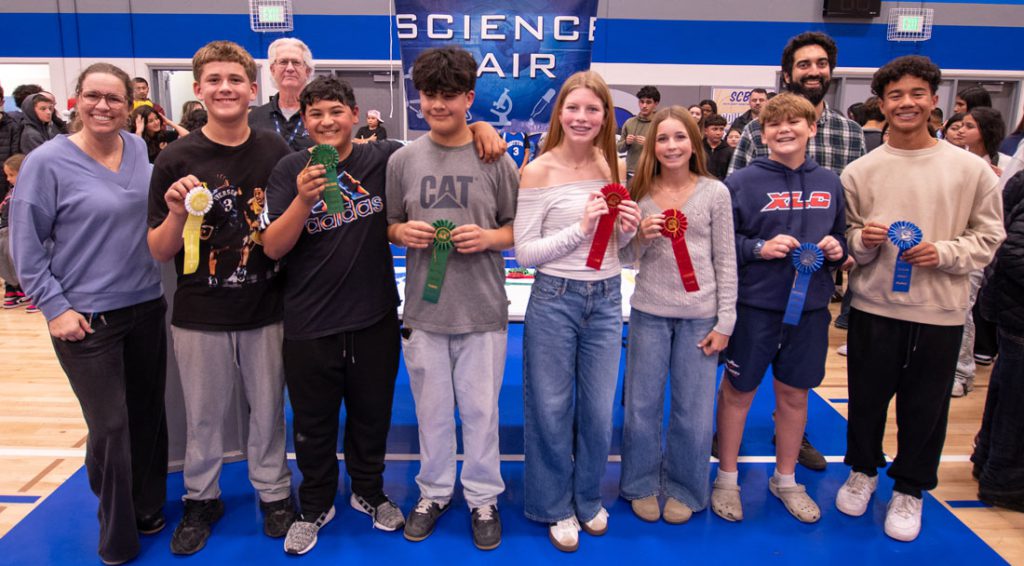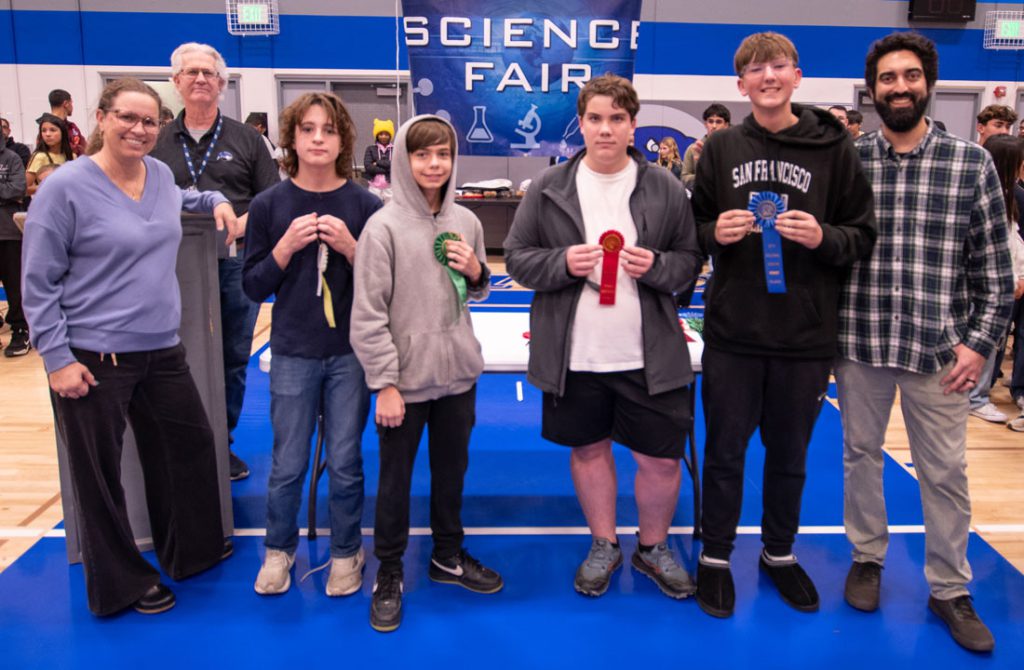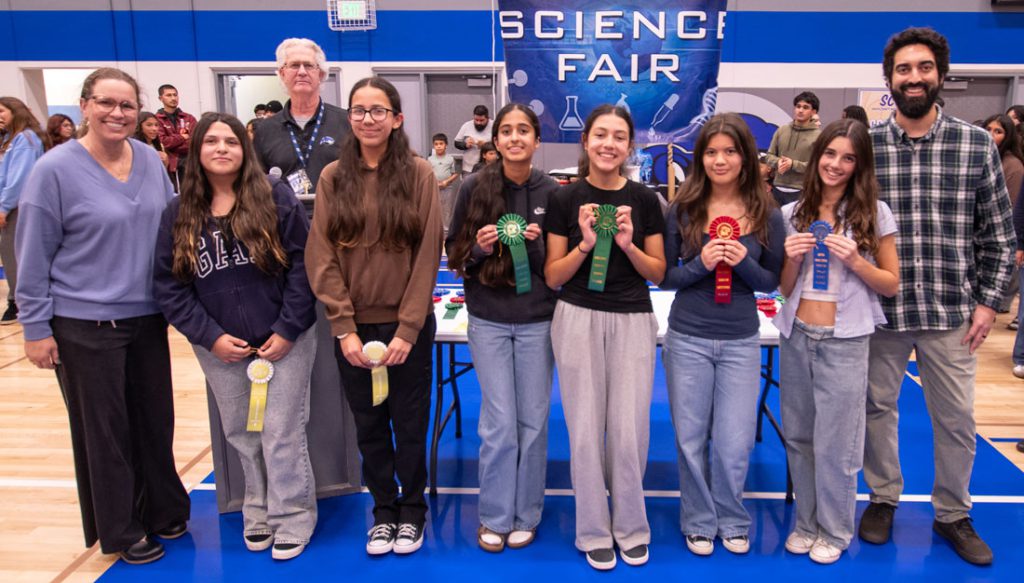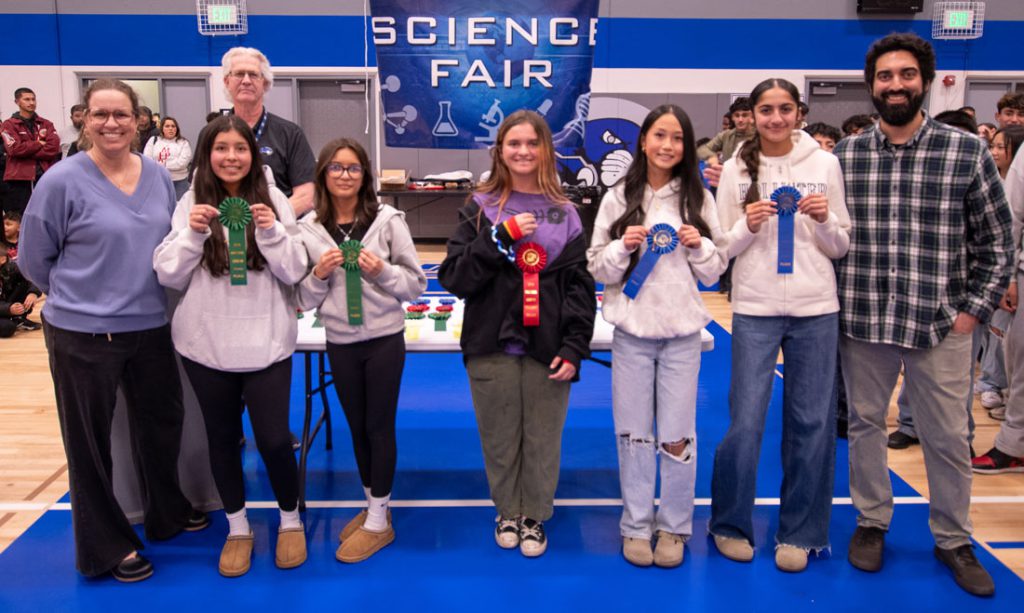
Eighth-graders at Britton Middle School transformed their gymnasium into a showcase of scientific inquiry Dec. 11, presenting projects ranging from lemon-powered batteries to studies on caffeine’s effects on heart rate.
The science fair hosted dozens of student projects along with 30 volunteer judges from local high schools to evaluate projects across seven categories: biology, chemistry, physics, behavioral science, engineering/electricity, botany and earth/environmental science.
“The goal for the science fair is really just to get the kids’ foot in the door on real world science, real applications of science, and kind of let them explore what they might find more interesting,” said Michael Levis, a substitute teacher at the school who helped coordinate the event alongside his father, Jim Levis, and fellow science teachers Mrs. Miller and Mr. Bruffey.
Jim Levis emphasized the educational value of allowing students to conduct their own experiments rather than following predetermined lab procedures.
“Students rarely have an opportunity to do real science experiments,” he said. “They got to pick their project, so they got to do a science experiment following the rules of science or engineering or something that they are interested in.”
The approach appears to resonate with students who might not typically excel in traditional classroom settings, according to Levis, who noted that some less-engaged students found success through the hands-on project format.
Physics dominated this year’s entries, with students exploring topics from bridge support structures to helmet effectiveness.
Eighth-graders Luca van Velthuysen and Oliver McEue tested whether triangular or square supports were better for holding up bridges. They found that square supports handled more weight in their experiment, though they acknowledged this contradicted typical engineering principles and identified confounding variables in their experiment including the number of supports and load distribution.
“Square supports were better in our experiment, but we do not believe this to be normally true, because normally triangles are better because they are able to distribute the weight better,” McEue, 13, said. “We believe that square supports were better in our experiment because there were more of them, and they were better placed.”
Biology projects attracted students with aspirations for careers in the medical fields.
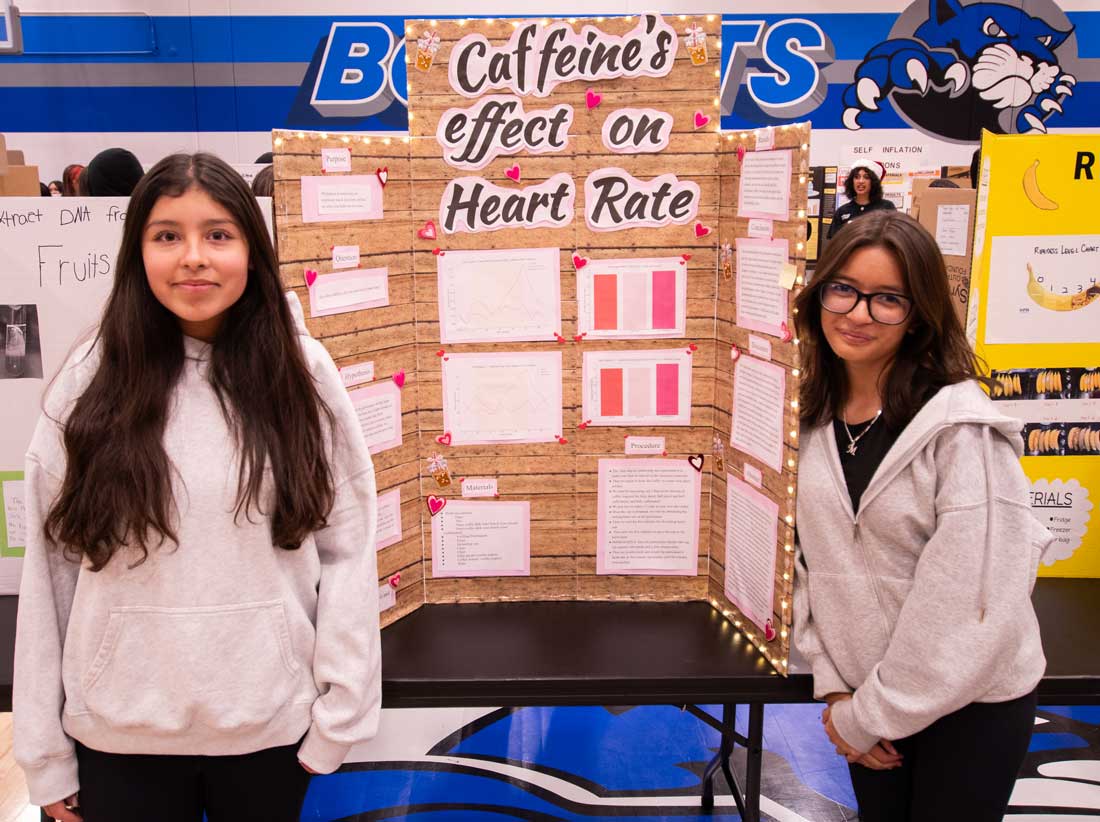
Elliana Cortez, 14, and Madison Lara, 13, studied caffeine’s effects on heart rate using three dosage levels with four participants. Their findings showed that 150 milligrams, the highest of the three doses, most effectively increased heart rate.
“From our data we concluded that 150 milligrams was the most effective in raising an individual’s heart rate,” Cortez said. “And it correlates. For example, if I gave you a higher dosage of caffeine rather than lower dosages, the higher dosages are going to be more effective in raising your heart rate.”
Other projects reflected students’ everyday interests.
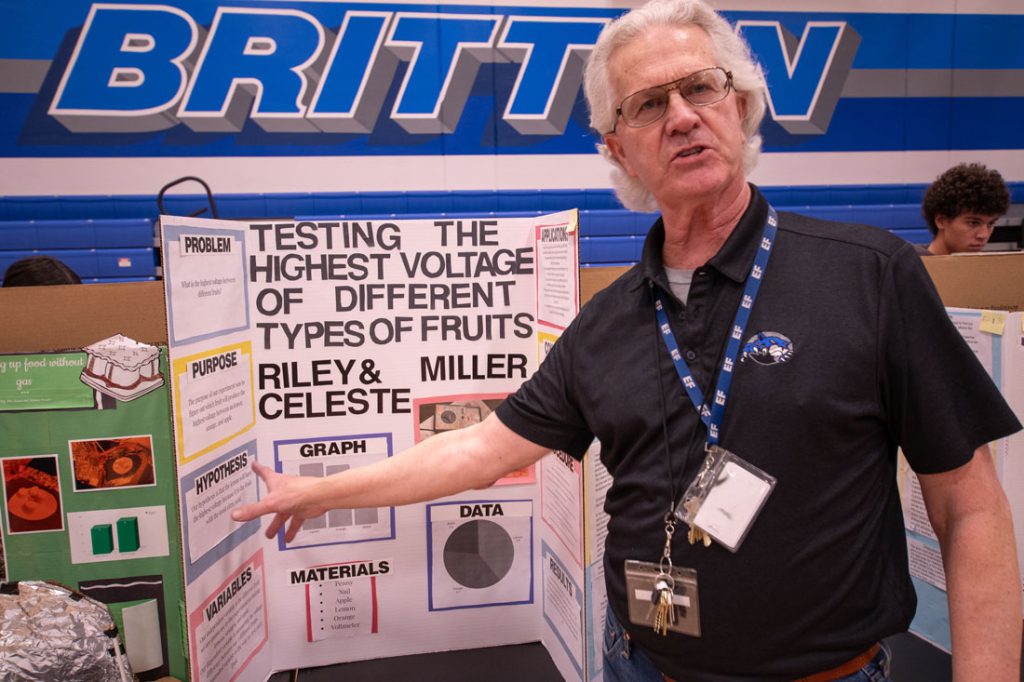
Jayden Espiritu and Emmanuel Perla created a battery using lemons, copper and galvanized nails, and wires to power an LED light on a breadboard—demonstrating knowledge of voltage and current.
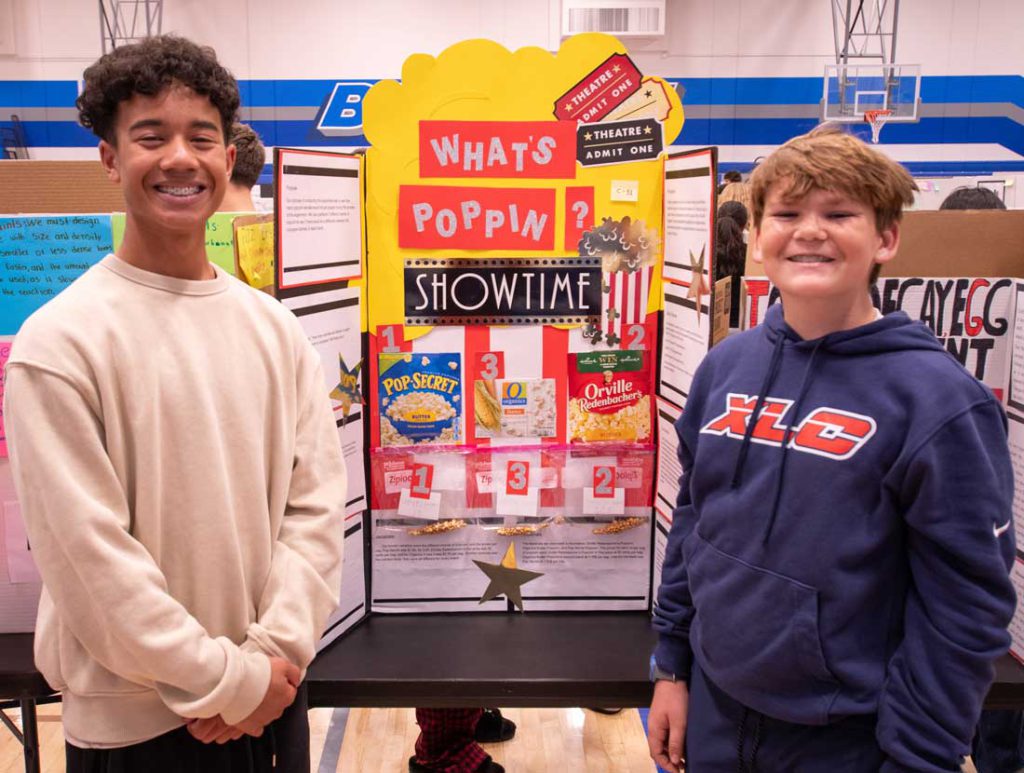
Hudson Ledwith and Mason Maningo investigated why different popcorn brands produced varying amounts of unpopped kernels.
“We learned that it doesn’t matter about the size or heat of the popcorn, there will be a difference in the amount of unpopped kernels,” Maningo said.
Projects were evaluated using two different rubrics. Traditional science experiments required students to form hypotheses and test variables, while engineering projects required students to identify problems, establish criteria and work within constraints.
High school students from Live Oak and Sobrato volunteered as judges, interviewing participants to assess their understanding of the scientific process and their results before collaborating to rank the projects.
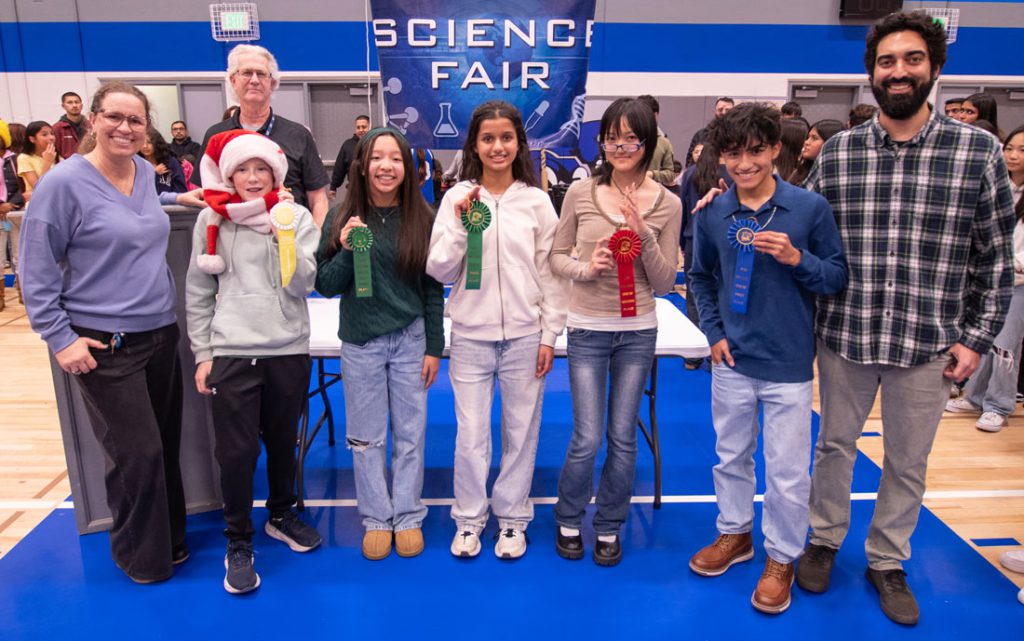
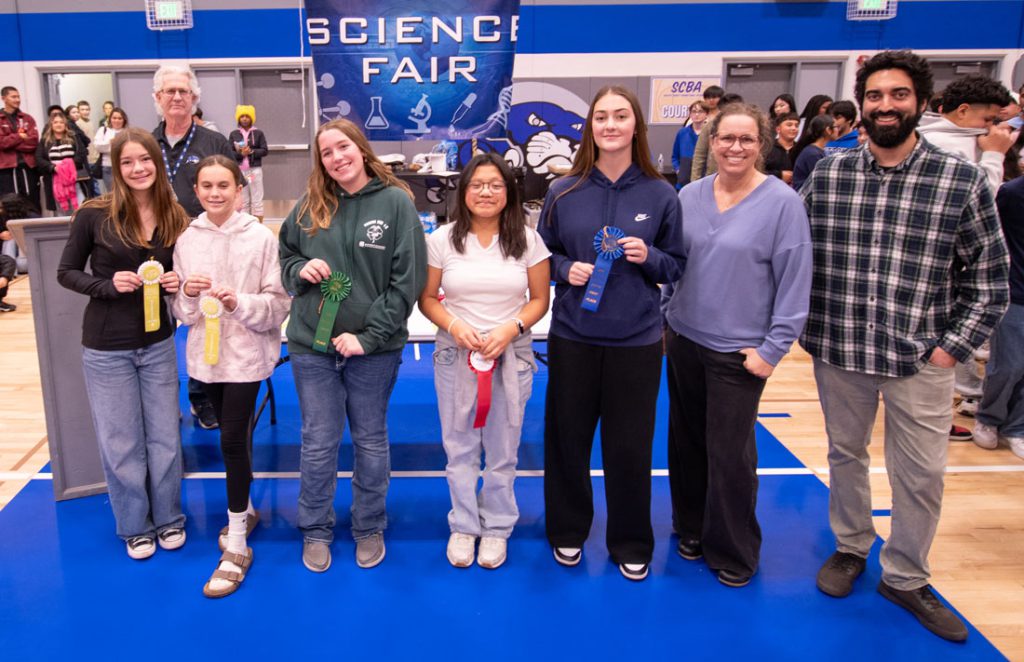
Winners were announced in each category, with first, second, and third place awards plus honorable mentions. In biology, Yifan He and Seerat Gill took first place, while Cortez and Lara earned third. Chemistry winners Hudson Ledwith and Mason Maningo topped that category with their popcorn project.
Michael Levis said the ultimate goal extends beyond competition.
“We’re just trying to get them excited as a whole. That’s really what we want from here at Britton, just to get them excited,” he said. “I’m blown away by a lot of them. I think that they did a really, really good job.”