

Guest view: Measure S lacks the facts
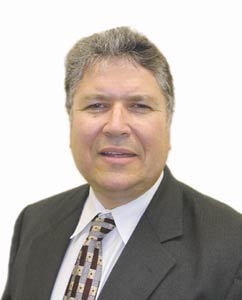
John McKay’s avocation for an “not perfect” Measure S is exactly the reason it should be rejected. It is this imperfection wrapped around vague and ambiguous language that leaves the measure open to interpretation. If passed, the measure at best will likely end up in the courts, resulting is costly and unnecessary litigation. At worst, it could lead to the destruction of our precious open spaces.For example, John cites in his article that 300 agricultural units can be set aside in Morgan Hill’s “developable areas” for preservation. But John, how do you define “developable?” As a Planning Commissioner, you know that when we define lands and boundaries we use terms such as the UGB (Urban Growth Boundary), City Limits or Sphere of influence, etc. These are legal terms. They are well known and there are maps with lines that define them. But none of these terms are used in the measure. Instead, we find the term, “developable lands.” All lands are developable and that includes county farm and agricultural lands. And therein lies the problem.The city has already spent over a decade in an effort to develop county farm and agricultural lands at a cost of hundreds of thousands of dollars, only to be rejected by the state regulatory agency—not once, but twice. There is good reason to distrust the ambiguity of the measure as a continued pursuit to pave over our open spaces.John’s article fails to mention that those 300 agricultural units are specifically identified for housing, encouraging urban sprawl and untold costs to our community. And again, I have to ask, what is a unit?Measure S doesn’t solve problems, it creates them. It is labeled to “conserve water and preserve open space,” but it does none of that. Measure S is a “smoke and mirrors” effort to undermine our slow growth policies and encourage excessive development.If you discount that, just look at where our pro-growth incumbents are getting their campaign funding: real estate companies, landowners and developers. Councilmember Marilyn Librers, the strongest advocate for sprawl, received $3,000 alone from a Cupertino developer with land interests and projects in Morgan Hill.John, you want facts, and so do I. But the wording in Measure S lacks factual language and likely by intent. It deserves a NO vote until it can be rewritten clearly and factually. Your comment that it is not perfect is correct and we agree but no measure such as this should have ever have been brought before the community unless it is openly clear as to its intent and impacts.Mark Grzan is a former Morgan Hill City Councilman and Mayor Pro Tempore.

