

Religion: Have a healthy summer—It’s the ‘religious’ thing to do!

Aah! Summertime! Here we are, many of us stretched out in front of the television set, munching on snacks, with our iPhones stuck in one hand while playing video games with the other. Perfect, right?
Actually, we should answer no! Summer has a higher purpose!...
Join the Mt. Hoffman Challenge
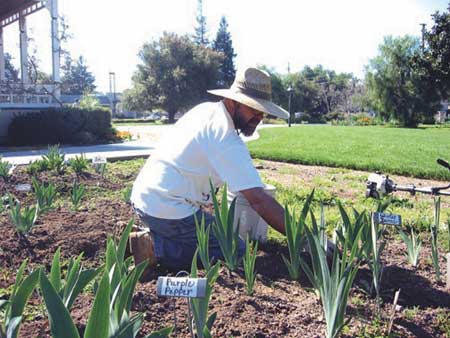
This is the year. No New Year's resolutions that fade in mid-January and disappear by February. Instead, make a bold commitment and accept a challenge to join me on a climb to the top of Yosemite's Mt. Hoffman on July 11, 2015.
Guest view: Human trafficking: recognize the signs

As the world’s fastest growing criminal enterprise, human trafficking is not something we can ignore. We hear news reports and wonder, how can this be happening in our region? What can ordinary citizens do about it? The following account, which details the victimization of a woman in Santa Clara County, sheds light on the problem. Names have been changed to protect privacy.Aesha is a 28-year-old woman from South Asia with a Master’s degree in Engineering. She left her home to live in Santa Clara County with her new husband, Robert. Before marrying Aesha and bringing her to the U.S., Robert promised her a wonderful home and opportunities to pursue a career. Shortly after arriving, Aesha discovered Robert had a fiancée and his real purpose in bringing Aesha was to have a cook and maid to serve his family, and a nanny to care for his younger brother.From day one, Robert and his live-in parents emotionally and physically abused Aesha. Her workday began at 6 a.m. and rarely ended before midnight. Robert raped Aesha regularly. His parents sometimes beat her. They kept her under constant surveillance. She had no car or money of her own. She became desperate to return to her home country but was not free to leave the house. She had no one she could turn to.Federal law defines human trafficking as the act of recruiting, harboring, transporting, obtaining or providing of a person by means of force, fraud or coercion, for the purpose of sex or labor exploitation.Act: Robert courted and married Aesha under false pretenses, transported her to the U.S., and harbored her in his house, denying her the means to leave or to communicate with her family.Means: Robert resorted to put-downs, threats and physical abuse to force Aesha to comply with his demands. He confiscated her passport and controlled her through isolation, constant surveillance and control of household finances.Purpose: Robert intentionally defrauded Aesha, then exploited her for labor, forcing her to act as a domestic servant and caregiver for his family, while denying her basic freedoms and rights.Even a well-educated person can fall prey to a situation where he or she is deceived, abused and exploited.In reality, the same factors that increased Aesha’s risk of being trafficked prevented her from leaving the situation. Nearly every aspect of Aesha’s situation was a red flag indicating that she was a victim of human trafficking. Robert ensured that Aesha was dependent on him for survival. Her lack of familiarity with U.S. systems, resources and protections further isolated her. Aesha was unable to attain financial independence, because Robert kept her from obtaining employment and didn’t pay her. Fortunately, a neighbor noticed bruises on Aesha’s arms when she was working in the yard and connected her with Community Solutions, a South County nonprofit with offices in Morgan Hill and Gilroy. The local organization provided Aesha with confidential services and a way out of exploitation.Learn more. Attend an anti-trafficking workshop at the Morgan Hill Library, 7 to 8:30 p.m. Sept. 27. To report a potential case of human trafficking, call the National Human Trafficking Hotline 888-373-7888 or text BeFree (233733).Perla Flores is Director of Solutions To Violence at Community Solutions. Sharan Dhanoa is Coordinator for the South Bay Coalition to End Human Trafficking. This guest view is part two in a three-part series on human trafficking in Santa Clara County. To read part one, visit morganhilltimes.com.
Guest view: Be sure to take advantage of state EITC tax rebate

A much deserved windfall is on its way to many low- and moderate-income California workers. For those who file state taxes and claim their benefit in 2017, the state is offering an Earned Income Tax Credit (EITC) that, combined with what is available through the federal government, could provide up to a $6,000 rebate to families who meet specific qualifications.Research has shown that the cash benefit from the EITC has been one of the single greatest contributors to move people and families out of poverty and to improve their financial security. Unlike other programs to assist low- and moderate- income families, this benefit applies only to those who are working but still remain in financial difficulty. For many of us, $6,000 could ease our financial challenges and it could make the difference between a family keeping a roof over its head or becoming homeless.In 2015, Gov. Jerry Brown and the legislature created California’s EITC program, CalEITC, as a way to help qualified working, low-income families. This cash-back credit is intended to complement a similar federal EITC that has existed since enactment by President Gerald Ford in 1975. In order to benefit from the state credit, eligible families need to claim it when they file their state tax returns.According to the California Department of Community Services and Development (CSD), the state agency that administers CalEITC, one out of five eligible workers does not claim the EITC on their state income tax return. On average, a qualified family that did not participate in 2016 lost $2,409 from the state and federal governments.The specific amount of cash-back credits for qualified working individuals and families depends on income and family size. Californians with an income of up to $53,505 annually may be able to receive cash-back by claiming the federal EITC on their tax return. Additionally, California families that earn up to $14,161 annually may be able to utilize the CalEITC to supplement the federal EITC when a state tax return is filed.If you meet the criteria, you must file federal and state income tax returns to claim the credits, even if you do not owe taxes or are not required to file a return.For more information, visit CSD’s website, www.csd.ca.gov/. During this tax season, I encourage you to find out if you are eligible to receive the benefits of the Earned Income Tax Credit. Monning represents the 17th Senate District, which includes all of San Luis Obispo and Santa Cruz counties, and portions of Monterey and Santa Clara counties.
Our Town: Toast to a holiday done right

Like the rest of our countrymen we celebrate the signing of the Declaration of Independence on July 4. The difference is that we add in a huge dose of local pride and make it a patriotic event done the Morgan Hill Way—and then we invite the world to come visit us.Back in the old days it was usually the local government that put on the big Fourth of July events. We’ve defined the Fourth with the imagery of parades and fireworks, and maybe a picnic with watermelon too.Most of those sources of funding are long gone and in most communities the parades and fireworks are gone too. But not in Morgan Hill! We now have more going on in our “little” community than ever.The grandest local events surrounding July 4 are put on by the Independence Day Celebrations (IDC) nonprofit organization. They have not only shouldered the work of organizing the parade but are also solely responsible for making sure that our nighttime sky is still filled with fireworks to complete the day of memorable patriotic images.I couldn’t go to all of the events but from all reports I can tell you that on the evening of July 3, the IDC started throwing a party!Sunday’s Patriotic Sing was punctuated by remembrances of former mayor, and dear friend, Dennis Kennedy, and local attorney William Brown. Both men are known for their giving to the community and are sorely missed.I was there for the Family Street Dance and I’m telling you that bringing it back to the downtown was the right thing to do—not easy but right. The move back downtown was for the benefit of the community, but it put a huge burden on the IDC staff. They needed to break down all of the stages and tents, and clean it all up before the next day’s parade—a huge job that doubtlessly leaves many volunteers sleepless that night.The next morning everything looked great; of course, it was a little difficult to tell since the streets were buried under tens of thousands of people (maybe 50,000 I heard?).Our 140-year-old parade is officially the epicenter of Santa Clara County on July 4. By extension I think we can claim that we are Silicon Valley’s official Fourth of July Parade. So it was an incredibly beautiful day and the parade had over 150 entries—it was the perfect day and place to sense that small town America still means a lot to everyone.I was on the Downtown Association float and I’m telling you that we had an incredibly cheerful crowd in attendance. We had decorated our float to look like the ever popular pop-up park, which everyone seemed to recognize, so it was almost a given that we would feel nothing but love. I’ll never forget that parade it was like being in an old-time movie.We missed the fireworks since we spend every Fourth of July evening with our dogs. They fear those loud explosions and stuffing them back into their skins can be mighty tough.We might have missed the fireworks but we got an opportunity to reflect on a great day and toast our community for countless reasons. Here’s a toast to Fourth of July done right.John McKay is a Morgan Hill resident, interim president of the Downtown Association, city planning commissioner and co-founder of the Morgan Hill Tourism Alliance.
Religion: What is your favorite Christmas song?

Methodists have long been known as “a singing people.” I am not a good singer, but I can say that I am a passionate and, hopefully in God’s ears, a beautiful singer. Singing is one of the important parts of my life and in...