64 parcels on Monterey Road will have restricted retail uses
Morgan Hill – New zoning rules that go into effect in January aim to prevent the spread of strip malls on Monterey Road.
The new zoning, tagged “light commercial-residential,” will block most retail uses for 64 parcels and 43 acres north and south of the city’s downtown.
The parcels are mostly located on Monterey Road between Edmundson and Bisceglia avenues and between Central Avenue and the Union Pacific Railroad over crossing.
The rules take effect Jan. 5, changing the parcels from “general commercial” or “administrative office” classifications.
Permitted uses include: arts and crafts galleries, antique stores, offices, business support services, daycare, dental clinics, hair salons and pet grooming shops.
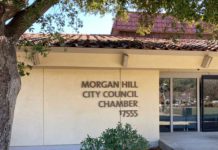
The Morgan Hill City Council voted 3 to 0 on Dec. 6 to create and implement the zoning on the parcels. Councilman Greg Sellers – who lives within 500 feet of the zoning change – recused himself. Marby Lee – whose term began that night – abstained.
The new zoning follows the concept of “non-retail commercial” areas mapped out in 1999 and 2000 during the last general plan update.
“We were looking at those areas on Monterey and trying to avoid some of the strip mall development that has occurred,” said City Councilman Larry Carr. “We were trying to focus more retail downtown.”
The zoning deliberately matches visions for Morgan Hill’s downtown by allowing mixed-use residential development, such as apartments above offices, to help create a neighborhood atmosphere.
“We wanted to have a nice lead into downtown,” said City Councilman Mark Grzan. “We didn’t want a strip mall environment.”
Craig van Keulen, a local lawyer who represents Ken Moreno, who owns the Candy Park Shopping Center on Monterey Road between Dunne and Tennant avenues, lobbied for leased retail space of 1,500 square feet or less to be exempt from the zoning rules. He also suggested to the Morgan Hill Planning Commission that up to 50 percent of commercial property be allowed for retail.
Overall, though, he feels the city did a “good job” by providing 20 permitted uses for the parcels.
The zoning’s limitations on retail will not apply to existing non-conforming businesses. Additionally, shops that primarily offer services, like hair salons and pet groomers, can sell products.
The ordinance does specify 17 “conditional” uses, such as funeral facilities, kennels, private clubs and auto repair shops. Conditional uses require a $5,111 application fee and a $442 environmental assessment fee.
“A few property owners wanted to see a higher retail concept,” said Robert Benich, chairman of the Morgan Hill Planning Commission “But we pushed forward because we are trying to create a different feel for our city. We are trying to have a friendly downtown that’s not one retail store after another.”
Kathy Molloy-Previsich, director of the Morgan Hill Community Development Department, said non-conforming stores and properties could change ownership and stay in business if the transition happens within six months.
“The things that exist there today, they are grandfathered in,” Carr said. “The current zoning doesn’t mean they are losing value in their property.”
But van Keulen disagrees, noting that once a grandfathered store switches to permitted use, it can never go back.
“To the extent that the zoning is restrictive,” he said, “it can limit property values.”
Tony Burchyns covers Morgan Hill for The Times. Reach him at (408) 779-4106 ext. 201 or tb*******@*************es.com.