





Council looks within for new city manager

The Morgan Hill City Council thinks their next city manager is already working at City Hall. The five-member council is conducting an internal search to promote an existing city employee to Morgan Hill’s top staff position before October.The current city manager, Steve Rymer, recently finalized a contract with the City of Rochester, Minn., to work as their city administrator starting Oct. 12, Rymer recently told the Times. He will continue to work in his current post until Sept. 30.Rymer has worked for the City of Morgan Hill since 2006, starting in the Recreation and Community Services Department. In 2013, the council appointed him to the city manager’s position.He decided to apply for and accept the position in Rochester due to his family roots in Minnesota, as well as the city’s up-and-coming status as a “very progressive,” growing community, Rymer said. Rochester is the third largest city in Minnesota, with a population of about 107,000.“All those pieces together made it an exciting professional and personal opportunity,” Rymer said.The council is moving quickly to find Rymer’s successor, but the mayor is confident they’ll find the right candidate without looking too far. At a July 31 closed session meeting, the council decided to begin an “immediate internal recruitment for the next city manager,” according to a press release from Morgan Hill Communications and Engagement Manager Maureen Tobin.And the city is reaching out to residents to determine what they would like to see in a new city manager. An online survey circulated by Tobin via email asks residents about their preferred qualities and capabilities in a new city manager for Morgan Hill.An internal recruitment is a sharply different strategy from the council’s search for a city manager when Ed Tewes retired from the position in 2013. At that time, the council hired executive search firm Ralph Andersen & Associates to conduct a nationwide search for a new city manager. That search ended with the appointment of Rymer.But now, Mayor Steve Tate said, “We’ve got more than one extremely well qualified candidate” already working at City Hall, and it’s going to be a difficult choice for the council to make. He added that he sent a note to all city employees just after the July 31 meeting, inviting those interested to submit applications and cover letters by Friday, Aug. 11. Shortly after that, the council will begin interviewing the top applicants.Tate declined to list the city manager candidates he has in mind before they submit applications.City employees who report directly to the city manager, in accordance with the city’s most recent organizational chart, are Assistant City Manager for Community Development Leslie Little; Assistant City Manager for Administrative Services Christina Turner; Police Chief David Swing; Fire Chief Derek Witmer; Community Services Director Chris Ghione; Engineering and Utilities Director; Administrative Analyst Hilary Holeman; and Tobin.The council’s search is not limited to these employees. And public safety chiefs are apparently not ruled out. When asked about his inclusion of Swing as a possible applicant at a recent community meeting—where he listed the city’s department heads and assistant city managers as likely candidates—Tate said, “Chief Swing is a very strong possible candidate, but one of several that are qualified.”Swing, who has worked for MHPD since 1995, cautiously told the Times he is “absolutely interested” in the city manager’s position, but he doesn’t want the process to become a distraction from his current responsibilities leading the police department. He added he is “honored” that Tate touted his qualifications, and agreed there are other city employees who are well suited for the position.“I have a police department that is an amazing department that does tremendous work for our community,” Swing said. “I have a tremendous fondness for our city, and what it looks like, and what it can look like in the future.”Other city employees contacted about their potential interest in the city manager search did not return phone calls before the Times’ print deadline.The council hopes to appoint the new city manager before Rymer’s last day on the job.Tate added about the process, “Appointing internally will ease and speed up the transition process while providing consistency for our staff to continue addressing the many complex issues we face. It will also boost the already high morale in the organization.”Rymer will ‘miss’ MHRymer, who submitted his formal resignation to the council Aug. 1, said working for the City of Morgan Hill has been a “fantastic experience.” He listed among his accomplishments as city manager—without taking full credit—the creation of a “dedicated, hard working” crew of colleagues at City Hall; a post-Redevelopment Agency settlement with the county that allowed Morgan Hill to rebuild its downtown; the completion of a General Plan update in 2016; the passage of the voter-approved Measure S growth control update; and the completion of the city’s new master plans for parks and public safety.The RDA settlement in 2013 freed up more than $19 million in bond proceeds previously acquired by the city’s agency, which was shut down by the state in 2012. These funds later went to use rebuilding Morgan Hill’s downtown with a new parking garage, resurfaced side streets, utility undergrounding and other investment.“One of the things I’m most proud of is the team we brought together throughout the entire organization,” Rymer said. “They are dedicated (and) hardworking.”This teamwork led to the RDA settlement with the county and state, which brought a collective $80 million worth of private and public investment into downtown Morgan Hill.“Professionally and personally, I’m going to miss Morgan Hill,” Rymer said. “This is a really great place, with a great council and a great team.”
Morgan Hill duo take on nation in bowling tournaments

Two Morgan Hill bowlers hit the lanes hard in Cleveland and came away with fantastic success.
Sobrato’s 1st basketball coach returns to become its newest AD

Sobrato has a new athletic director who is anything but new to the high school.
Former mayor hopeful goes for term limits
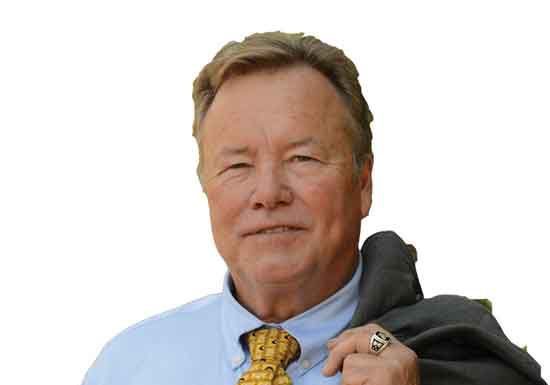
A former candidate for the Morgan Hill mayor’s seat says he is fulfilling one of his campaign promises by trying to place a local measure establishing term limits on the November 2018 ballot.
City, LAFCO spar over grand jury report

The City of Morgan Hill and the Santa Clara County Local Agency Formation Commission still don’t see eye to eye on an unsuccessful effort more than a year ago to annex hundreds of acres of farmland from the Southeast Quadrant into the city limits.The vast difference of perspective is illustrated in the two agencies’ responses to a Santa Clara County Civil Grand Jury report, published June 5, titled “LAFCO Denials: A high school caught in the middle.” The two parties can’t even agree, as the grand jury found, that there is a “strained relationship” between city staff and LAFCO staff.LAFCO’s response to the grand jury—posted to the commission’s website earlier this week and scheduled for discussion and approval at the Aug. 2 LAFCO states there is “no evidence” for this claim.“LAFCO staff has a professional working relationship with the City of Morgan Hill staff and has worked with city staff on a variety of matters during the city’s (SEQ annexation) application and following LAFCO’s denial of the proposal,” reads part of the response compiled by LAFCO staff. It adds that LAFCO staff is always willing to meet with city staff to discuss General Plan and other service boundary concerns.However, the Morgan Hill City Council’s response, presented at the July 26 meeting, agrees that there is tension between the staffs of the two agencies.“Morgan Hill staff are eager to work collaboratively and proactively with LAFCO for the benefit of our region and community,” reads the council’s response. It adds that the council and city staff are “eager to take immediate steps to improve our working relationship with LAFCO commissioners and staff.”The grand jury report investigated the city’s proposal to LAFCO in 2016 to extend its Urban Service Area around 229 acres of the Southeast Quadrant, in order to develop sports fields/facilities, as well as commercial projects, while preserving farmland through a new agricultural mitigation policy. The SEQ proposal, which also included a private Catholic high school near Tennant and Murphy avenues, was denied by the seven-member LAFCO board in March 2016 on a 6-1 vote.The city has put its SEQ plans on hold while it awaits a broader, regional effort by the county to implement an agricultural preservation strategy.The June 5 grand jury report’s list of 10 findings took LAFCO to task for what its panel perceived as inconsistently and subjectively enforcing its guidelines and applying undefined terminology to their annexation criteria. It also criticized the City of Morgan Hill for not including enough public participation in the SEQ process and ineffective communication with LAFCO staff.By state law, the city and LAFCO are required to respond to the grand jury’s findings that relate to them, and both agencies did so in recent days. The city council responded to and agreed with four of the grand jury’s 10 findings, while LAFCO disagrees with most of the findings and claims the June 5 report is “filled with numerous factual errors.”In addition to the claim of a strained relationship, the council agreed that the city’s ag mitigation program is in need of more funding for the purchase of agricultural easements; the city’s update of the 2016 General Plan, developed separately from the SEQ plans, “gave the appearance of special consideration for the property owners;” and that LAFCO deviated from the commission’s ag preservation policies when evaluating the Catholic high school proposal.The council’s response clarified that despite the appearance, the General Plan update did not give special preference to the property owners. Their letter to the grand jury argues that the city had an “obligation” to process the General Plan amendments and other requests related to the SEQ that dated back to 2008.LAFCO ‘disagrees wholly’LAFCO’s response to the grand jury states, “many allegations (in the June 5 report) are not appropriately substantiated by facts or details.” It further accuses the grand jury of failing to understand how LAFCO operates and what its responsibilities are.In fact, of the nine findings LAFCO responds to, it “disagrees wholly” with seven. The commission further responds that many of the grand jury’s recommendations, listed as a way to remedy the findings, are “not warranted or reasonable.”For example, the grand jury’s “Finding 5” states that LAFCO gained “the appearance of bias” by including incorrect information about the Catholic Diocese' previous plan to develop a private high school in Morgan Hill in 2002.LAFCO replied that the grand jury was suggesting the incorrect historical info was “deliberately or negligently misreported.” But in fact, according to the LAFCO response, nobody stepped forward to correct the error—which falsely stated the Diocese' ownership stake in a former prospective high school site—until the March 2016 LAFCO meeting on the SEQ.“The South County Catholic High School (SCCHS) representative provided testimony at the public hearing on March 11, 2016 about the inaccuracy of the ownership information, which was heard by the Commission prior to the vote being taken, and was documented subsequently in LAFCO’s minutes for the public hearing,” LAFCO’s response states.The grand jury report has drawn fire in recent weeks due to its own perception of bias, and a list of factual errors and omissions. A group of private, nonprofit environmental organizations that argued against the city’s SEQ annexation proposal sent a letter to the LAFCO board July 17 spelling out their “grave concerns” with the June 5 grand jury report. Topping their list is the “appearance of (grand jury) foreperson’s conflict of interest.”The foreman, Wayne Tanda, has been a Morgan Hill planning commissioner for several years, and was chair of the city commission in 2016. He made a motion to recommend submitting the city’s SEQ plans to LAFCO at the June 23, 2015 planning commission meeting, according to the July 17 letter signed by representatives of the Committee For Green Foothills, Greenbelt Alliance, American Farmland Trust, Thrive! Morgan Hill, Sierra Club and others.The LAFCO board will discuss the draft response to the grand jury at its Aug. 2 meeting.The grand jury report, along with its findings and recommendations, is not legally binding toward the city or LAFCO.
Police blotter: Petty theft

Petty theftA man and a woman walked out of Wal-mart, 170 Cochrane Plaza, carrying two cases of beer without paying for them. The couple left the parking lot in a gray Honda Civic “type car.” The theft was reported 4:41 p.m. July 22.Someone stole an iPhone 7 from an employee at McDonald’s, 135 Cochrane Plaza. The phone was stolen from the employee’s work locker at the restaurant. The crime was reported 12:36 p.m. July 23. A woman stole a pack of Marlboro cigarettes and a serving of ice cream from Rite Aid, 16000 Monterey Road. The crime was reported 1:55 p.m. July 22.A thief or thieves stole a tool collection from the back of a pickup truck at an unspecified location in Morgan Hill. The theft was reported 3:36 a.m. July 20.Someone stole a cart full of groceries worth about $100 from Safeway, 235 Tennant Station. The thief left in a black Chevrolet Avalanche. The crime was reported 6:28 p.m. July 20.Two people stole jewelry and other items from Hobby Lobby, 990 Cochrane Road, and ran away from the store on foot. The theft was reported 1:09 p.m. July 21.Stolen vehicleA thief or thieves stole a red Honda Civic from a parking space outside Starbucks, 251 Vineyard Town Center. The theft was reported 3:09 p.m. July 23.A white 1998 Honda Civic was stolen from a parking spot on Railroad Avenue. The crime was reported 10:19 p.m. July 24.BurglaryA resident of Cory Drive returned home from vacation to find a rear window of the home broken, and some jewelry missing from inside. The burglary was reported 4:06 p.m. July 22.All subjects are innocent until proven guilty. Information is compiled from public records.
CalFire responds to small vegetation fire in north MH

Firefighters responded to a vegetation fire in north Morgan Hill at lunchtime July 27, but little property damage and no injuries were reported.About 12 p.m., CalFire sent crews to a residential property on Paquita Espana Court, according to CalFire Capt. David Hori. San Jose Fire Department also responded to the report of a vegetation fire.The fire burned about a quarter-acre of grass and other plant matter, and damaged three vehicles on the property before firefighters extinguished the flames, Hori said.The cause of the fire is under investigation.
Former candidate: Districts could boost Latino turnout

While Morgan Hill officials and members of the public continue to question if the new council district election system will achieve its goal of obtaining more Latino representatives on the dais, one of the residents who threatened to sue the city insists the change will at minimum make it easier for marginalized voters to participate.Armando Benavides is one of three Latino Morgan Hill residents who hired the Oakland law firm Goldstein, Borgen, Dardarian & Ho, which sent the city a demand letter May 2 informing them that the current at-large voting system is in violation of the California Voting Rights Act.Benavides said one startling revelation brought to light during recent discussions of Morgan Hill demographics is that only 25 percent of the city’s Latino population voted in the 2016 election.“To me that’s a real serious concern,” said Benavides, a former candidate for Morgan Hill City Council and the Morgan Hill Unified School District board of trustees. “We need to find a way to fire up the base.”Morgan Hill has not elected a Latino mayor or council member since at least 2000.He explained that under a district election system—in which the city is divided into four geographic sections equal in population, each one represented by a single council member—candidates for office will have a much smaller area to campaign and get to know the voters and residents.“District elections will make it easier to go out and knock on doors at election time because the districts are smaller,” Benavides said. “It’s easier, less costly and more effective.”The current council voted in June to transition to a district election system, which is starkly different from the at-large elections the city has conducted since its inception. The council is in the process of hosting a series of public meetings and workshops on the district system. The city and demographer National Demographics Corporation—hired by the council to help with the process—created a website, drawmh.org, that allows residents to propose their own maps of the city divided up into four electoral districts.The council is expected to approve a four-district map in late August or early September. The district election system will start with the November 2018 election, when the seats occupied by Councilman Rich Constantine and Councilwoman Caitlin Jachimowicz will be on the ballot.Both these council members voted in favor of the change to a by-district system June 7, but only to protect the city from a costly lawsuit. They have been skeptical that the new system will be more equitable and inclusive of minority voters.Another advantage of district elections, according to Benavides, is that the residents of a particular neighborhood or district might share the same concerns and needs of the candidate or council member running for office within that district.Benavides also argued that since MHUSD transitioned to a by-district election system in 2015—also at the demand of Goldstein, Borgen, Dardarian & Ho—the board of education has already seen the election of good representatives. Specifically, he was referring to Trustees Tom Arnett (who was appointed to the board before he won the 2016 election), Teresa Murrillo and Mary Patterson. Murrillo is currently the only Latino member of the school board. She ran unopposed in her district in 2016.“I don’t think any of those would have been elected without district elections,” Benavides said.Benavides as well as Morgan Hill residents Sally Casas and Brenda Cayme hired the Oakland firm to send the city the May 2 demand letter, according to a June 19 letter from the firm to the city. Cayme ran for MHUSD school board in 2014, but lost.The initial demand letter explained that the city’s at-large election system dilutes minority representation on the council.Can MH keep citywide mayor?Attorneys continue to argue whether the citywide election of the city’s mayor would be in violation of the CVRA. Morgan Hill officials are planning to keep the city’s mayor position—currently occupied by Steve Tate—elected at-large.Attorney Mike Baller of the Goldstein, Borgen, Dardarian & Ho firm says such a system—with four council districts and one citywide mayor—would continue to be illegal. The alternative would be to create five council districts, and then those five council members would rotate year-to-year as mayor, or appoint one among them to serve as mayor for a specified term.However, Morgan Hill City Attorney Don Larkin noted that other laws are on the city’s side. Because the voters of Morgan Hill approved the change to a citywide mayor in a previous election, only the voters can change it to another method. Larkin estimated the voters adopted the citywide elected mayor system in an election in the mid-1990s.“The city can’t legally do what we demanded they do, which is to adopt five council districts by resolution,” Baller said. “The best they can do is (four council districts, one citywide mayor) and then have an election where the at-large system for mayor itself is changed by a vote of the people. That’s the bind the city is in, and I understand the position.”
Trio of Dub players qualify to represent Nor Cal

Dub Baseball put another feather in its cap after having three players chosen to represent Northern California at the 2017 National Team Identification Series in North Carolina.

