



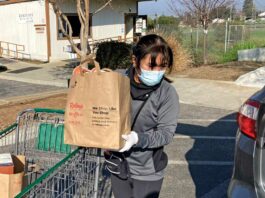


Morgan Hill runners go hard at state cross country finals

Kaylah Grant went out in her final cross country race of her high school career with an 18th place finish at the CIF State Cross Country Championships in Fresno.
Report finds $5M in old impact fees

The City of Morgan Hill has uncovered more than $5 million worth of unspent impact fees—paid by developers more than five years ago—that officials say will go toward long-planned, large-scale infrastructure and public facilities projects.
Police blotter: Fraud, burglary, petty theft

Stolen vehicleSomeone stole a 1997 Honda Civic from a spot on Del Monte Avenue. The theft was reported 4:46pm Nov. 20.FraudA customer of a hotel on Madrone Parkway told police that someone went into his room while he was staying there recently and stole checks, which were subsequently forged and cashed at Bank of America. The crime was reported 1:15pm Nov. 17.BrandishingA suspect was loitering in the back of a business on Monterey Road and pulled a knife on an employee when the employee confronted him. The suspect then fled southbound on Monterey Road in a green T-Bird. The incident was reported 6:18pm Nov. 17. Auto burglaryThe owner of a Chevrolet Suburban parked at Tennant Station caught an unknown male suspect inside the vehicle. The vehicle owner confronted the suspect, who fled on a bicycle. Quarters were missing from the vehicle after the suspect left. The crime was reported 2:37am Nov. 22.BurglaryA thief or thieves broke into a home at La Mar Drive and Via De Ninos and stole tools, a guitar and other items. The crime was reported 6:53am Nov. 22.Petty theftSomeone stole packages from the front porch of a home on Christeph Drive. The crime was reported 4:34pm Nov. 22.A thief or thieves stole a mountain bike worth about $600 from an open garage at a home on Sandalwood Way. The bicycle is described as a black Trek Marlin with green and yellow highlights and 29-inch wheels. A portable camera was affixed to the front of the bike. The crime was reported 8:42pm Nov. 22.Someone stole two cases of beer from AMPM Mini-Mart, 18605 Monterey Road. The theft was reported 5:52pm Nov. 23.FightNumerous witnesses reported a “huge fight” behind The Hill, 17330 Monterey Road, about 1:45am Nov. 23. Several hours later, a victim reported he was walking with a group of people about 3:30am and ran into some of the subjects who were reportedly fighting outside The Hill. The suspect attacked the victim with a tennis racquet, breaking a tooth and causing multiple facial injuries. Accident with property damageA motorist hit a metal plate placed in the roadway by construction crews to temporarily cover roadwork, resulting damage to the driver’s Toyota Camry. The plate, located at a road construction site at Spring Avenue and Monterey Road, came loose from the roadway and caught on the front of the Camry. The damage was reported 4:52pm Nov. 24.All subjects are innocent until proven guilty. Information is compiled from public records.
Council approves plans for 242 homes in east MH

The Morgan Hill City Council unanimously approved the developer’s final maps for a 168-unit apartment rental complex and a 74-unit subdivision of homes for sale to be built in east Morgan Hill.The apartment complex will be located on the northeast corner of San Pedro Avenue and Condit Road. The for-sale project will be built on the northwest corner of San Pedro and Murphy avenues, according to a city staff report.The developer for both the rental and for-sale projects is MH Evergreen Multi, LLC.By approving the final maps on staff’s recommendation, the council agrees that the developer has conformed to “all the requirements of the Subdivision Map Act, and any conditions of approval required of the Tentative Map.” The planning commission approved the tentative maps in August 2016.The council approved both final maps at the Nov. 15 meeting, as part of the consent calendar.An “improvement agreement” for the adjacent projects notes that the developer will make more than $950,000 worth of improvements to the properties and surrounding streets, including public roadway and other infrastructure upgrades, sidewalks, fire hydrants and water system enhancements.
MH City Councilman charged with domestic battery
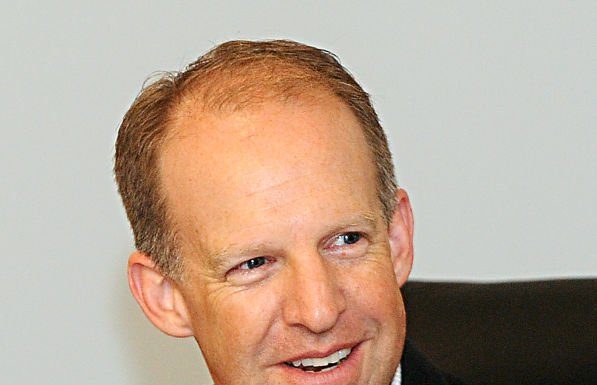
The Santa Clara County District Attorney’s Office charged Morgan Hill City Councilman Larry Carr with misdemeanor domestic violence following a Nov. 25 incident at the home he shares with his girlfriend.Morgan Hill Police reported they responded to Carr’s home in the city’s downtown 6:20pm Nov. 25 in response to a call from his partner. The woman told a dispatcher on the phone that Carr, 48, threatened her, pulled her hair and broke her glasses, according to police reports.Carr was arrested at the home, according to police.Morgan Hill Police Sgt. Troy Hoefling confirmed the arrest on suspicion of misdemeanor domestic battery, and referred further questions to the D.A.’s office.Prosecutors filed one count of misdemeanor battery on a cohabitant against Carr, South County Deputy Supervising D.A. Vishal Bathija said Nov. 29. Carr’s next court date, scheduled for an arraignment, is Jan. 26, 2018.Bathija added that Carr was released on $10,000 bail shortly after his Nov. 25 arrest.A lifelong Morgan Hill resident, Carr was re-elected to his fifth and current term as a city councilman in November 2016. For 2017, the council has also assigned him the title of Mayor Pro Tem.Before joining the council, Carr was an elected Morgan Hill Unified School District trustee. He has a teenage son and daughter.In response to the questions from the Times regarding the Nov. 25 incident, Carr declined to address the specific accusations because he had not seen the D.A.’s complaint or evidence against him.But Carr said he is “terribly sorry” for placing himself and his family in the situation, and said he is “not a violent person.”“I realize I am not perfect—far from it,” Carr said. “I know I have let a lot of people down, most notably my partner, a person I care deeply about, (and) my family and many people in Morgan Hill who trust in me…I don’t act out in a violent way. Violence does not exist in my home.”The California Penal Code section in which Carr is charged states the maximum punishment for misdemeanor battery on a cohabitant is a $2,000 fine and/or one year in county jail.Authorities declined to comment on any potential injuries to the victim in Carr’s case. But the penal code notes that a charge of battery does not require physical injury.
City settles Voting Rights Act lawsuit for $25K
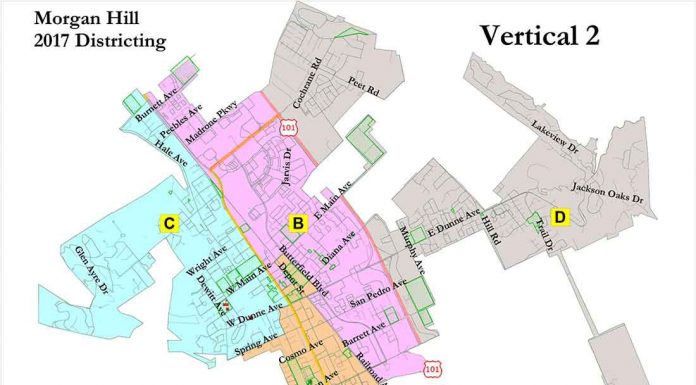
The Morgan Hill City Council settled a California Voting Rights Act claim from an Oakland law firm for $25,000, according to the city attorney.The settlement, approved on a narrow 3-2 council majority, ends the legal saga that forced the council to change to a district-based local election system starting in November 2018.The council met in closed session Oct. 18 to discuss the claim filed by law firm Goldstein, Borgen, Dardarian & Ho. The firm, which sparked the city’s change from at-large to district elections in May with a demand letter to the council, initially filed a claim for $30,000, the maximum allowed for damages under applicable election laws.However, the council voted to negotiate a $25,000 settlement with the Oakland firm, Morgan Hill City Attorney Donald Larkin said. That settlement was negotiated and approved by both parties Nov. 2.The settlement includes a “full release from (further) claims under the Voting Rights Act,” Larkin said at the Nov. 15 council meeting. Mayor Pro Tem Larry Carr and City Councilmember Rich Constantine voted against the settlement in the Oct. 18 closed session.The council reluctantly approved the switch to district-based elections after receiving the May 1 demand letter from the Goldstein firm, which represented Morgan Hill residents Armando Benavides, Sally Casas and Brenda Cayme—all of whom are Latino. The firm claimed that the city’s at-large system, which has been in place since Morgan Hill was founded in 1906, violates the CVRA because it limits the influence of minority groups.Benavides and Cayme have previously run for elected office in Morgan Hill, but have not won an election.After the council approved the change in election systems this summer, they spent several months working with a professional demographer and community members in drawing four geographical districts within the city limits, equal in population and each one represented by a single councilmember.Throughout the process, councilmembers complained that the new district-based system is unlikely to produce its intended effect of giving more voice to minority groups living in Morgan Hill. Instead, the incumbents think the system will severely limit the pool of qualified candidates for council.But the council adopted the change out of fear that fighting the demand letter could result in substantially higher legal costs. Larkin noted that no city has ever successfully challenged a CVRA claim. With the council agreeing to change to a district-based system, the law caps any damages owed to a plaintiff at $30,000.Carr and Constantine said they didn’t think the Goldstein firm deserved even the $25,000 that the majority of the council agreed to settle for.“They weren’t really showing what they spent the money on, or their billable hours,” Constantine said. “It was more out of principle than anything else (but) if we took them to court it would have cost more.”He added “this is what happens in cities throughout California” when challenged under the CVRA.Constantine said even the four districts approved in September by the council under the new election system are unlikely to result in better representation for minority groups such as Hispanic voters—which was the stated intent of the residents represented by the Goldstein firm.“There is really no advantage (to district elections) from what I see, other than it’s going to be cheaper for everyone to run,” Constantine said. He added, “Sometimes the remedy doesn’t work in every situation.”Carr added the demand letter and claim by the Goldstein firm and its clients amounted to a “frivolous lawsuit” that was “forced” upon the city. He also doesn’t think the expenses claimed by the firm are justified.“I was hoping that we could see from (the Goldstein firm) some of their data (and) analysis they did that made them come to the conclusion that underrepresented people in Morgan Hill are disenfranchised when to comes to voting, and they did not want to produce any of that kind of information,” Carr said. “So I just think...they didn't earn the amount that they were asking for.”The by-district system will start with the November 2018 election, when the seats occupied by Constantine and Councilwoman Caitlin Jachimowicz will be on the ballot. The seats occupied by Carr and Councilmember Rene Spring will next appear on the November 2020 city election ballot.The mayor will continue to be elected at large, every two years, under the district-based system.
Water district improves flood protections

With the approach of winter harkening memories of devastating floods downstream from Anderson Reservoir’s northeast Morgan Hill spillway, officials have assured locals that precautions are underway to minimize the risks that became reality earlier this year.
Credit/ATM card skimmers found at Gilroy gas stations

The Gilroy Police Department last week found a credit card scanning device planted at the Valero gas station on First Street. And just days later, Gilroy police and a county computer investigating team found two additional skimmers on gas pumps at the Chevron Gas Station, located at 7999 Westwood Drive in Gilroy.Police from Gilroy as well as Morgan Hill are working to get the word out about the skimmers, and are offering advice on how to avoid being an unsuspecting victim.Chevron and Valero gas stations are cooperating with investigators as they search for the approximate dates these skimmers were installed, according to police. At this time, it appears the skimmers have been on the pumps for no less than two weeks.The skimmers have allowed thieves to go into people's bank accounts and steal money.Police are reminding people who have used their debit or credit card at either Valero Gas, 1190 First St. or Chevron Gas, 7999 Westwood Drive—both in Gilroy—to monitor their bank statements and card usage for unauthorized withdrawals or purchases.Anyone who finds fraudulent charges on their account can contact the Gilroy Police Department at (408) 846-0350, or the Morgan Hill Police Department at (408) 779-2101. Officers note that due to the high volume of calls, your report may not be immediately taken, but your name and contact number will be retained for an officer to call you back in the next couple of days.To prevent getting ripped off, police advised:• Paying with cash would be the safest.• Use a credit card instead of your ATM. That way they do not have access to your personal bank account.MHPD Sgt. Carlos Guerrero also noted the department is testing a new mobile phone application known as Skimmer Scanner, that can identify illegal skimming devices located on gas station pumps. The app is currently only available for Android users.“We are not necessarily promoting the app,” Guerrero said. “Our concern is for our residents to be aware of the issue.”In the cases in Gilroy, the skimmers were essentially undetectable to the public because they were inside the gas pump. There were no obvious signs to look for, police said.
MHPD: Man stole car keys from auto dealership
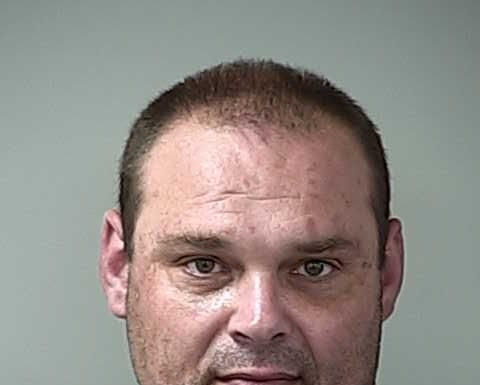
Morgan Hill police arrested a Campbell man Nov. 10 who had more than 20 sets of stolen car keys from an area dealership in his vehicle.An MHPD officer made a traffic stop on a “refurbished older San Jose police car” about 6pm Nov. 10, according to a post on the MHPD Facebook page.The traffic stop resulted in a search of the vehicle, during which the officer found the numerous sets of car keys tucked inside the trunk, police said.Attached to many of the keys were valet tags that looked similar to each other. The officer began contacting vehicle dealerships throughout the county until police located the victim, according to authorities.The victim auto dealer told police that the keys were stolen, and the suspect was a recently terminated employee, police said. MHPD Sgt. Troy Hoefling clarified that the suspect was likely upset with the former employer, and police do not think he intended to try to steal the vehicles to which the keys belonged.Police arrested the driver and sole occupant of the vehicle, Michael Aaron Buckland, 41, of Campbell, on suspicion of embezzlement and stolen property.

