






MHPD: Soccer coach sexually assaulted minor

A youth soccer coach who lives in Morgan Hill is accused of sexually assaulting a child athlete that he coached, according to police.Morgan Hill Police officers arrested Marcial Gonzalez, Jr., 27, Jan. 31 on suspicion of sexual assault of a minor, according to a press release from MHPD. He allegedly sexually assaulted the child at his home. Police are not alleging the sexual assault took place on school grounds.During the investigation, police learned that at the time of his arrest, Gonzalez was employed as a soccer coach at Oak Grove High School in San Jose since November 2017. He was also currently coaching soccer at South Valley Junior High in Gilroy.Police also said Gonzalez previously worked as a coach for Sentinel Soccer Club, a junior varsity boys soccer coach at Live Oak High School and a local Lyft driver.MHPD is in the process of determining if other victims or witnesses have observed or been targeted by crimes from Gonzalez, the press release says. Anyone who might be a victim or has information about this case can contact MHPD at (408) 779-2101 or (669) 253-4960.
MHPD to target impaired drivers during Super Bowl weekend
The message from Morgan Hill Police during Super Bowl weekend is, “Drive sober or get pulled over,” as officers will conduct citywide DUI enforcement efforts during one of the nation’s favorite annual pastimes.Officers who are “specifically trained in DUI recognition” will be deployed throughout the city during peak hours for the “greatest opportunity for achieving drunk and drugged driving deterrence and provide the greatest safety for the community,” according to a press release from MHPD.Police want those football fans who are thinking about driving after drinking alcohol can expect jail, license suspension, insurance increases, fines and fees—all of which can exceed $10,000 if arrested and convicted.“Directed DUI enforcement is an effort to prevent and reduce DUI driving that often results in collisions that cause serious injury or death,” the press release continues.Officers will also be checking motorists for proper licensing, police said.Authorities hope the enforcement effort will have a deterrent effect on those who might otherwise consider driving drunk or drugged, and encourage revelers to use sober designated drivers during the Super Bowl weekend. According to the National Highway Traffic Safety Administration, this type of DUI enforcement efforts have provided the most effective documented results of any of the DUI enforcement strategies, and resulted in the decrease of injury/ fatal traffic collisions.The Super Bowl weekend (Feb. 3-4) enforcement effort is part of the city’s recent implementation of the “Vision Zero” traffic safety program.The NFL Super Bowl is scheduled for a 3:30pm kickoff Sunday, Feb. 4.
AAUW to promote civic engagement with Feb. 27 event
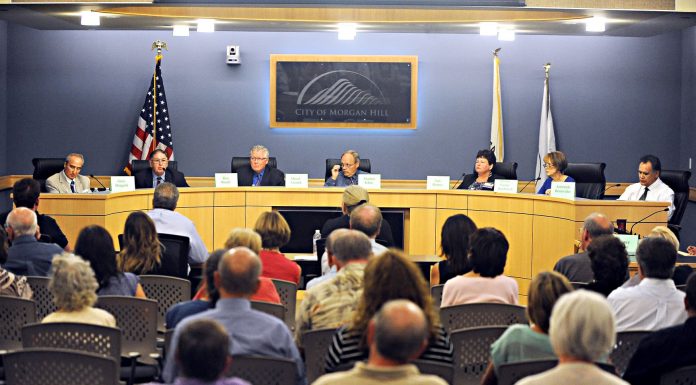
The Morgan Hill chapter of the American Association of University Women is sponsoring a civic engagement event to encourage, educate and advise any Morgan Hill residents who are thinking about running for local elected office.
DA adds gun enhancement to Stubblefield sex charges
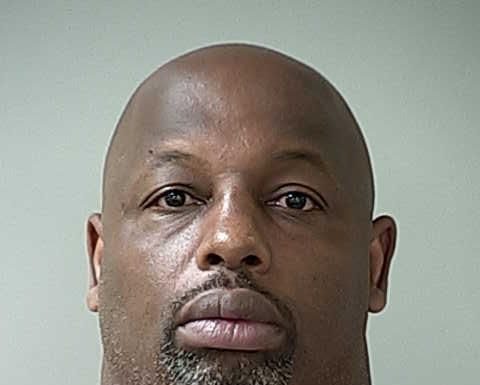
Former San Francisco 49ers defensive tackle Dana Stubblefield could remain in jail until the conclusion of his upcoming trial on charges that he raped a developmentally disabled woman at his Morgan Hill home.At the conclusion of Stubblefield’s preliminary hearing in San Jose Jan. 19, he was handcuffed and taken into custody after Santa Clara County Deputy District Attorney Tim McInerny added an enhancement for “use of a gun during the commission of sexual offenses” to the charges.This enhancement carries a maximum sentence of life in prison, McInerny said. It also means Stubblefield will be held at Santa Clara County Jail without bail at least until his trial is over.Stubblefield, 46, faces a total of five felony charges, on top of the gun enhancement, in relation to the 2015 alleged rape of the victim, who is in her 30s, according to authorities. These charges are forcible rape, forcible oral copulation, rape and oral copulation of a person incapable of consent, and false imprisonment.Stubblefield has pleaded not guilty to the charges. His next hearing is scheduled for Feb. 16, where the court and attorneys will set his trial date, McInerny said. Because Stubblefield has not waived his right to a speedy trial, his jury trial could begin in March.Stubblefield was arrested by Morgan Hill Police in May 2016, after officers conducted a year-long investigation into the victim’s claim that the former NFL star raped her. The incident allegedly occurred April 9, 2015. Investigators said Stubblefield asked the woman to come to his home in Morgan Hill to interview for a babysitter job. He initially contacted the woman through the website sittercity.com, and asked her to visit his home the next day for a job interview.After a brief interview, the woman left, according to authorities. But Stubblefield called her back and offered to pay for her time. When she returned, he carried the woman to a room, raped her, forced her to perform oral sex and then gave her $80, according to police reports.The woman drove straight to the Morgan Hill police station from Stubblefield’s home to report the incident, according to authorities.Stubblefield said in a statement after he was released on $250,000 bail following his arraignment in 2016, that he had consensual sex with the woman he is accused of raping. He denied all the charges at that time.Among those who testified during the preliminary hearing was the victim’s mother, with whom the victim resides, McInerny said, adding the victim has “never lived alone.” The mother testified about the victim’s daily routine and history of special education and services she has acquired for disabled adults.Authorities also presented the results of a psychological evaluation of the victim, commissioned by the DA’s office, McInerny said. This expert found the woman’s IQ to be “around 70.”“We established a history of the victim being serviced (for) developmental disabilities,” McInerny said.Stubblefield’s attorney did not immediately return a phone call requesting comment.The Feb. 16 hearing will take place at the South County Courthouse in Morgan Hill.Stubblefield was drafted by the San Francisco 49ers in the first round of the 1993 draft, and played for the team until the end of the 1997 season. He then played for the Washington Redskins, and returned to the 49ers for the 2001 and 2002 seasons. He then played for the Oakland Raiders in 2003.
City adopts ‘Vision Zero’ plan to prevent traffic deaths, injuries

In response to an uptick in traffic accidents going back several years, the City of Morgan Hill has adopted the “Vision Zero” collision-reduction strategy that combines street planning concepts, education of motorists on traffic safety, enforcement of existing traffic laws and adopting new policies in order to prevent injuries and deaths on the roadways.The Morgan Hill Police Department also announced this week that officers will begin increasing traffic enforcement “in an attempt to reduce injury collisions in 2018,” reads a Jan. 18 press release. “Effective immediately, the MHPD traffic team and members of the patrol division will be conducting proactive traffic enforcement during peak commute hours,” the press release states. “The mission of the officers is to educate motorists on the importance of traffic safety and to enforce traffic laws when necessary.”Such enforcement is just one aspect of the overarching Vision Zero concept, which was developed by authorities in Sweden in 1997, according to a presentation given by city staff to the Morgan Hill City Council Jan. 17. The council unanimously adopted the Vision Zero plan at that meeting.The Vision Zero mindset includes shifting from traditional assumptions, such as the belief that traffic fatalities are inevitable and that human error is not a significant factor in collisions, according to city staff. Under Vision Zero, authorities and planners assume that fatalities are preventable, human error will occur frequently and so forth.According to city staff, the guiding principles of Vision Zero include:• Traffic deaths are preventable and unacceptable;• Human life takes priority over mobility and other objectives of the road system, which should be safe for all users, all modes of transportation, in all communities and for people of all ages and abilities;• Human error is inevitable and unpredictable; the transportation system should be designed to anticipate error so the consequence is not severe injury or death;• People are inherently vulnerable and speed is a fundamental predictor of crash survival. The transportation system should be designed for speeds that protect human life;• Safe human behaviors, education and enforcement are essential contributors to a safe system;• Policies at all levels of government need to align with making safety the highest priority for roadways.“The elimination of traffic related injuries and deaths is our primary goal,” reads the press release.City staff added that Vision Zero action items fall into one of seven categories: Engineering, Enforcement, Education, Engagement, Evaluation, Encouragement and Equity.Some examples of Vision Zero policies and plans are already in place in Morgan Hill, according to city staff. These include more expansive data collection and analysis of collisions and traffic reporting; more diligent evaluation of planning for mid-block crosswalks; installation of “countdown timers” at newer signalized intersections; and consideration of future upgrades for several existing intersections/crosswalks to improve cyclist and pedestrian safety.Morgan Hill Police attribute the increase in traffic accidents in recent years to more commuter traffic on city streets, as well as more motorists using phone and GPS apps (such as Waze) that re-route drivers onto local roads.In 2017, MHPD responded to 269 traffic accidents in the city limits, which is in fact down from 287 such accidents in 2016, according to authorities. In 2014 and 2015, police responded to 209 accidents each year.
Police blotter: Burglaries, theft

Stolen vehicleA thief or thieves ditched a stolen 2017 Dodge Ram outside a home on Monterey Road. The vehicle had been stolen out of San Jose. The vehicle was reported recovered about 9am Jan. 15.Someone stole a green 1996 Honda Accord from a spot on West Main Avenue. The crime was reported 11:02pm Jan. 14.A silver 1998 Honda Civic was stolen from a location on La Crosse Drive. The theft was reported 6:43am Jan 13. Someone stole a 1998 Honda Civic from a parking spot on Bluebonnet Way. The theft was reported 4:48pm Jan. 16.A 2009 Toyota Camry, reported stolen from a residence in Morgan Hill, was recovered on Jerome Street in San Jose. The owner of the vehicle left the car running outside the Morgan Hill home. A subject on a bicycle rode by the home and stole the running vehicle, leaving the bike behind. The Toyota was recovered 9:20pm Jan. 10.BurglaryA burglar or burglars broke into a maintenance yard on East Main Avenue and stole a golf cart. The suspect or suspects left the cart behind, with a broken wheel. The crime was reported 4:21pm Jan. 15.Someone broke a window on a home on Calle Mazatan and burglarized the house. The crime was reported 6:04pm Jan. 22.Grand theftSomeone stole about $3,500 worth of tools from a trailer on Oak Park Drive. The thief or thieves broke a lock off the trailer door to gain access. A 1999 Dodge pickup was attached to the trailer. The crime was reported 7:23am Jan. 19.A former resident of a home on Arguello Avenue stole about $6,000 worth of jewelry that belonged to the homeowner’s deceased wife. The crime was reported 8:04am Jan. 22. A thief or thieves stole an iPhone X worth about $1,000 from a location on West Edmundson Avenue. The theft was reported 9:14pm Jan. 9.Petty theftA suspect who fled in a small silver vehicle tried to steal about $1,500 worth of liquor from Safeway at Tennant Station Way. The crime was reported 1:09pm Jan. 12.Someone stole power tools worth about $600 from a site on East Dunne Avenue. The theft was reported 11:53am Jan. 19.A guest stole a television from a room in a hotel on Condit Road, and switched out the hotel TV with one he brought to the room. The theft was reported 12:54pm Jan. 20.Two men in their 20s stole ink cartridges from a store on Cochrane Road. They left the area in a dark blue Honda Accord. The theft was reported 3:37pm Jan. 21.Auto burglarySomeone smashed the window of a 2015 Toyota Rav4. The crime was reported 3:32pm Jan. 15.A thief or thieves broke into a Subaru Outback parked on Condit Road and stole a laptop computer, a tablet and personal information. The burglary was reported 6:24am Jan. 22.Someone smashed the window of a white pickup on Tennant Avenue and stole tools from inside. The crime was reported 7:50am Jan. 18.VandalismTwo men in their 30s pushed over two potted plants, breaking the pots, outside a downtown business on Monterey Road. The two vandals were arrested. The crime was reported 7:31pm Jan. 13.Someone broke a window on a vehicle parked on Encino Drive. The vandalism was reported 2:47pm Jan. 11.TheftA suspect stole a purse from a customer at Vineyard Town Center and ran away. The crime was reported 9:25am Jan. 14.A customer of a store at Tennant Station Way left the store with a backpack of baby items he stole from inside the store. The crime was reported 12:33pm Jan. 17. All subjects are innocent until proven guilty. Information is compiled from public records.

