





No police consensus on carotid hold

Santa Clara County Sheriff Laurie Smith would like to eliminate the carotid control hold from the sheriff’s office use-of-force policy, because there is too much room for injury-resulting error.Local law enforcement agencies say the use of the carotid restraint is not common. However, they train for it and reserve it as a use-of-force technique in the field to compel disobedient, violent subjects to submit to arrest.The carotid hold recently gained local attention when Gilroy Police reported that officers used the restraint, among other non-lethal techniques, to attempt to arrest an unarmed suspected prowler, Steven Juarez on Feb. 25. Juarez died after a struggle with officers in the Old Gilroy neighborhood. Police said at least one officer applied a carotid hold and used a Taser and other use-of-force techniques on Juarez while he tried to resist.An investigation into Juarez’ death is ongoing, and authorities have not yet said identified the cause of his death.The written use-of-force policies for the Gilroy Police Department, Morgan Hill Police Department and Santa Clara County Sheriff’s Office each contain a section on the officers’ use of the carotid control hold. The restraint—popular among many departments nationwide—is typically applied by wrapping an arm around a subject’s neck from behind, and putting “lateral compression” on one of the the arteries on each side of the neck, according to Morgan Hill Police Sgt. Mario Ramirez.The Hollister Police Department does not use the carotid hold, according to Hollister Police Sgt. Don Pershall. Officers in Hollister are trained to use and carry Tasers in the field.A correct use of the carotid hold does not cut off or restrict the subject’s breathing, Ramirez said. Rather, it is intended to briefly restrict the blood flow to the brain so the subject is momentarily rendered unconscious, allowing the arresting officer to handcuff them. When applied, the restraining officer’s elbow should form a “V” in front of the subject’s throat with a “pocket” between the elbow and throat, ensuring that no pressure is placed on the trachea or back of the head, Ramirez explained.“It is not a chokehold,” Ramirez said. “At no point are we restricting the airway of an individual.” He added that when applied correctly, “Most are rendered unconscious within five to 15 seconds of the application. Most regain consciousness within 20 to 30 seconds.”The written policies for both Morgan Hill and Gilroy police spell out precisely under what conditions an officer can apply a carotid hold: when the subject is “violent or physically resisting,” or the person “has demonstrated an intention to be violent and reasonably appears to have the potential to harm officers, him/herself or others.”The policies require that officers can only use the carotid hold if they have successfully completed their respective department’s approved training in its use, “due to the potential for injury.” Gilroy and Morgan Hill police departments’ use of force policies also note that after a carotid hold has been applied to a suspect, that person “shall be promptly examined by paramedics or other qualified medical personnel.”In Morgan Hill, Ramirez said officers rarely use the carotid hold, which can only be used in tight “body-to-body” contact when an officer is “in an active fight and other forms of force may not have been effective,” Ramirez said. In fact, he said he can’t remember the last time a local officer used a carotid hold in the field.“But it is a technique we train for, because it is effective when other methods aren’t working,” Ramirez said. He added it’s also an option to avoid using “impact weapons,” also an approved use of force method for local departments, which are more likely to injure the suspect. Gilroy policy unchangedGilroy Police Sgt. Jason Smith said trained officers are still permitted to use the carotid hold in Gilroy following the Feb. 25 death of Juarez. The department has not made any changes to its use-of-force policy since Feb. 25, but Smith said, “The Gilroy Police Department constantly evaluates our policies to make sure they are lawful, relevant, and they meet the needs of the department and the community.”Officers in Gilroy are trained every two years in the application of the carotid hold, Smith said. This training is conducted by California Peace Officer Standards and Training certified instructors. The most recent training for Gilroy officers was a four-hour session in the fall of 2017.Gilroy Police Department’s “Control Devices and Techniques” policy lists other non-lethal use of force techniques that officers are trained and permitted to use. These include batons, tear gas (for crowd dispersal), Oleoresin Capsicum or pepper spray/projectiles and “kinetic energy projectile” launchers.The policy addresses the proper escalation of force, noting that an officer should use verbal warnings before resorting to physical force on a subject refusing to comply. “When using control devices, officers should carefully consider potential impact areas in order to minimize injuries and unintentional targets,” the control devices policy states.Gilroy Police also have a “Conducted Energy Device” policy, which lists the procedures and proper use of Tasers.In Gilroy, officers in the field generally use the carotid hold less often than Tasers, Smith said. Sometimes, even just displaying a Taser is enough to compel a suspect to comply, he said.Smith added that there might be some circumstances when an officer has to use force that is not spelled out in the written policies.“If you’re in a fight for your life, there might be a metal stick next to you,” Smith said, without referring to a specific incident. “There are times, in a fight for your life, when you use what you can.”Ramirez said a similar list of control devices, including Tasers and even a flashlight as an impact weapon, is available for Morgan Hill officers. He added that officers may use “personal body weapons”—a technical term for fists, feet and knees—in “close combat altercation.”Officers also carry firearms, which are used only as a last resort because they are lethal.Sheriff has concernsSheriff Laurie Smith said while the sheriff’s office includes the carotid hold in its use of force policy, she would like to see it removed from approved use in the field because sometimes “people don’t do it right.”The carotid hold is not approved for use by officers in county jails, which are under the sheriff’s jurisdiction.Sheriff’s deputies do not carry Tasers in the field or in the jails, but Smith thinks they should be permitted in both environments.“I think it’s a good intermediate step,” Smith said. “I believe Tasers would decrease deadly force. We’ve had deputies shoot people who were attacking them with a knife, where I think they would have had time to get their Taser out, and that may have stopped the deadly force.”
Drums echo spring
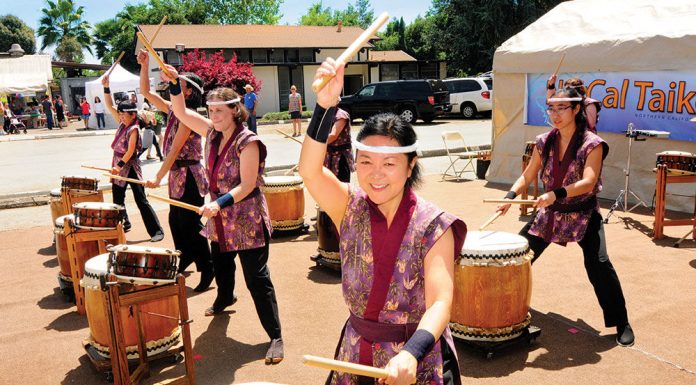
Taiko drumming and martial arts demonstrations were on display Sunday, April 22 at the annual Morgan Hill Haru Matsuri and Nor Cal Taiko Expo.The spring festival, in its 58th year was accompanied by arts and crafts vendors, cultural displays, delectable Asian-style cuisine, ikebana flower arrangements and farmers market to name a few.The Renkishin Dojo of Morgan Hill flexed its martial art muscles for the crowds and Taiko groups from around the region descended on the city of Morgan Hill—all in the celebration of spring and Japanese culture sponsored by the Morgan Hill Buddhist Community.
Mosque project to face public review by summer

After more than a year, Santa Clara County planners are almost complete with the Environmental Impact Report for the Cordoba Center mosque and community center project in San Martin.Proposed by the South Valley Islamic Community, the project will eventually be built on a 16-acre undeveloped parcel near the intersection of Monterey Road and California Avenue. The proposal consists of a two-story, 9,000-square-foot mosque; a two-story, 14,500-square-foot multipurpose building; a four-acre Islamic cemetery; a one-third-acre campground; and additional support and ancillary structures, according to plans submitted to county officials.Planners began the environmental study of the project, which is designed to accommodate up to 300 people at a time, in January 2017. Santa Clara County Planning Manager Rob Eastwood said Tuesday that the initial draft of the EIR is slated to be complete by “mid- to late-May.” After that will follow a minimum two-month public review period “for folks to read the EIR and provide comments.”Planners will conduct at least one public meeting on the Cordoba Center EIR in San Martin, and county staff will spend several weeks responding to each comment on the EIR submitted by the public, Eastwood explained.After that, the project will be filtered through the San Martin Advisory Committee and the county planning commission before the board of supervisors takes a vote on the Cordoba Center’s site plan, Eastwood added. He estimated the public hearings before those bodies could begin in fall of 2018.The Cordoba Center has generated ongoing skepticism from South County residents who fear the project will be significantly larger than typical existing commercial or religious uses in the rural, unincorporated town of San Martin.Eastwood noted that the top three concerns that San Martin residents have identified about the project are the potential impact of the cemetery on the groundwater, increased vehicle traffic associated with the site and the visual impact. The EIR will offer a detailed analysis of these and other potential impacts of the Cordoba Center on the surrounding community.At previous public hearings on the Cordoba Center project—which was first proposed in 2012—some residents expressed more hateful concerns related to the SVIC members’ religion, culture and beliefs. County planners have told the residents that the county cannot legally reject a project based on the religion of those who proposed it.The SVIC includes about 400 residents of South County. These families currently attend prayer services in a barn in San Martin.SVIC spokesman Hamdy Abbass said the SVIC remains committed to developing the new Cordoba Center as a modern central religious and cultural center for the local Muslim population. On occasion, they also plan to open up the Cordoba Center to the surrounding community for events.Family fights intoleranceThe SVIC and the Cordoba Center proposal gained national publicity last week when NPR and National Geographic published a lengthy story about the discrimination faced by local Muslim families. The story featured a teen in Gilroy who has been bullied in class because of her religion, and her efforts to use education to eliminate such ignorance.The teen’s mother, Noshaba Afzal, told the Times recently that one of the initial town hall meetings on the Cordoba Center—which drew hundreds of residents—“felt like we were living in the 1600s in the deep south” due to the procession of prejudicial comments submitted by attendees opposed to the SVIC.While the effort to build the Cordoba Center continues, Afzal and her daughter—who the Times is declining to name at her mother’s request—have made ample progress toward creating a more comfortable environment in the Gilroy school.The teen and her family have worked with Gilroy Unified School District to eliminate culturally insensitive classroom lessons and encourage more education of different cultures. The Christopher High School sophomore’s academic experience has thus improved since she spoke to National Geographic more than a year ago.“At this point of time, it’s old news,” said Afzal, who hopes the bullying behavior does not return with the recent publicity.Reporter Scott Forstner contributed to this story.
Towing, impound fees to increase

Storage and impound fees for vehicles towed by order of the Morgan Hill Police Department will soon rise, in order to offset the city’s increasing costs, according to city staff.The Morgan Hill City Council approved the new fees April 4 as an update to the city’s “Two Franchise Agreements” with two local towing companies: Community Tow, and California Tow and Salvage.Under the new towing agreements, the towing companies’ tow fee charges to vehicle owners will rise from $180 per hour to $225 per hour; the daily storage fee for vehicle owners will increase from $60 to $100; and the towing companies’ “franchise tow fee” paid to the city will rise from $97 to $128 per police-ordered vehicle towed.The franchise tow fee is designed “to ensure 100 percent cost recovery” for the police department and its staff who order vehicles to be towed and process the related paperwork, according to MHPD Sgt. Carlos Guerrero.In the last three years, MHPD has towed an average of 612 cars per year from local streets and properties. Police order parked vehicles to be towed when they are in violation of city ordinances, abandoned or illegally parked.The fee increases will also “maintain consistency throughout the region,” reads a staff report by Guerrero.Besides the franchise tow fee, the city also charges impounded vehicle owners $165 each to release their vehicle to them.Morgan Hill’s franchise tow program was started in 2009, and was revised in 2011 to cut down on some of the labor costs involved in administering it, Guerrero added.Since then, the city’s costs associated with towing and processing vehicles has risen, and the city has been losing money on towed vehicles.In 2017, Morgan Hill Police recovered a total of about $113,300 in vehicle release fees ($165 each vehicle) and franchise tow fees ($97 per vehicle, paid by towing companies). But the city’s cost to administer the towing program is about $126,177, or about $206 per hour of staff time, according to Guerrero’s staff report. Staff positions involved in administering the program include sergeants, officers, dispatch and records personnel.Thus, police calculated that a higher franchise fee of $128 would recover the difference in costs, and the council agreed.Before 2011, the city was charging the franchised towing companies 20 percent of the revenue recovered from police-ordered tows. However, this required too much officers’ staff time, and that fee was changed to a flat rate of $97 per vehicle, Guerrero explained to the council.
Fast internet now possible in remote South County
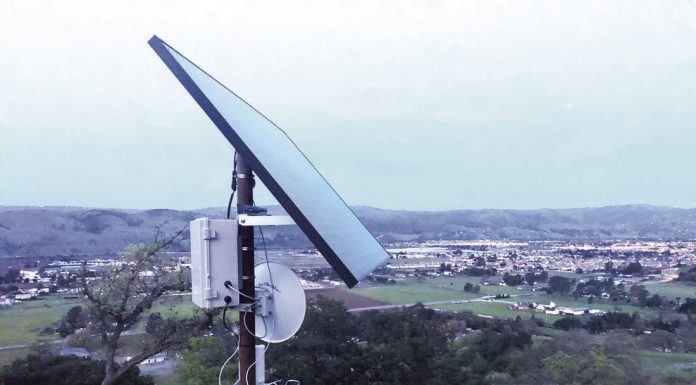
For new Morgan Hill neighborhoods, outlying ranches, or businesses where fiber-optic cable lines haven't yet reached, getting adequate high-speed internet may not only be frustrating, but it can hinder economic progress. To help bring internet services from these areas into the fast lane, Bullet Wireless is one company that offers services that help to increase internet speed and quality.
Carr hearing postponed to June 15

Morgan Hill City Councilman Larry Carr’s April 18 hearing on a misdemeanor domestic violence charge was delayed at South County Courthouse.Carr’s attorney requested the hearing, scheduled for a pre-trial conference, be postponed because the attorney is involved in another trial, according to Santa Clara County Supervising Deputy District Attorney Vishal Bathija. The pre-trial conference was postponed to 9am June 15 at the Morgan Hill courthouse on Diana Avenue.Carr, 49, has pleaded not guilty to the charge of domestic battery, which carries a maximum sentence of a $2,000 fine or one year in county jail, or both.The charge stems from a Nov. 25, 2017 incident involving his girlfriend of 11 years, with whom he shared a home in downtown Morgan Hill at the time.Morgan Hill Police responded to the couple’s residence that evening, and arrested Carr after taking statements from him and his girlfriend. The woman told police, during a lengthy verbal argument, that Carr “ripped the glasses from her face and threw them to the ground, causing them to break,” and pulled her hair in the process, according to the police report of the investigation.Carr told police at the time that any contact he made with his girlfriend during the argument was accidental. He has continued to deny the allegations since his arrest.The victim did not exhibit any injuries or indicate a complaint of pain, according to police.Carr—who is currently serving in his fifth term as a Morgan Hill councilmember—was convicted of a similar misdemeanor charge in 2015, in relation to an incident at the couple’s previous home March 23. Carr pleaded no contest to domestic battery and completed a 16-week counseling program. The court later dismissed the charge from his record, at Carr’s formal request. Carr has also denied acting violently in that incident, and he pleaded no contest to avoid prolonged court proceedings.If Carr is convicted of the 2017 charge, the court can consider the 2015 conviction as a prior offense in his sentencing, according to authorities.

Pelted with color

A colorful springtime celebration came late this year for celebrants of the South Asian spring festival of renewal, Holi. The Sunday, April 15 event took place in a smash of colors at Community Park in Morgan Hill with more than 160 festival goers in attendance.Heavy March rains forced the rescheduling of the event from its normal new moon celebration on Poornima day—typically occurring during February or March in the Hindu calendar, which is lunisolar, meaning it is guided by both the moon and the sun.Hosted by the Indian Association of South County (IASC), Holi celebrates the victory of good over evil—the bright spring season emerging from the cold winter.Steeped in love and vibrant colors, vice president of IASC Monica Iyer said the traditional Hindu festival celebrates the Avatar Lord Vishnu and the story of how he defeated and killed an evil demon called Hiranyakashyap and his evil sister, the demoness Holika.The holiday is typically celebrated with a bonfire, reminiscent of the fire that according to legend was used by Lord Vishnu to burn Holika.“In modern times, it has also become a bigger celebration with colors,” said Iyer. Although it has its origins as a Hindu festival, Holi has a broader cultural significance and is observed among various Indian subcultures, she added.With more than 400 community members in South Valley, Iyer noted the IASC is a secular non-profit. Beyond Indian celebrations, the IASC is eager to share its cultural traditions with the broader community.“Our aim is to celebrate our culture and traditions and pass it down to our kids,” she said. “At the same time, we also want to share our rich tradition with our friends in the community who are not from India. Our celebrations are open to all. We are not religion-based.”Meeting new people and making new friends is an important part of the festivities, she added.“There is a lot of fun and frolic and most importantly our children have a fabulous time together,” Iyer said. “It is one event where even our teen kids love to come, get painted, play with water guns and just have a chilled-out time all day. It is a really feel good day for all of us.”For more information about the Indian Association of South County, please visit iascinfo.com.
Police write 130-plus traffic tickets in four hours
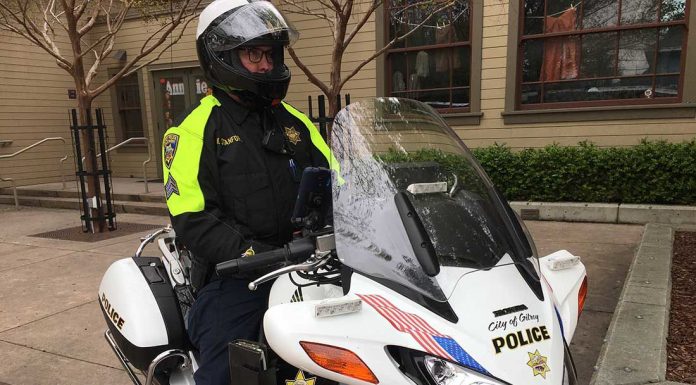
Traffic officers from law enforcement agencies all over Santa Clara County wrote more than 130 citations to Morgan Hill motorists in a four-hour period the morning of April 18.

