





Police blotter: Disturbances, fighting, petty theft

BurglaryA resident of Llagas Road saw a man with a gun near the kitchen inside her home. When the man saw the resident, he told her “Get back,” and said he didn’t want to hurt her dog that was barking at the intruder. The woman ran downstairs. Her sister and boyfriend’s 84-year-old father were also in the house at the time. Police arrived but did not immediately locate the burglar, who might have fled through the home’s back door. The crime was reported 12:43am April 24.AccidentA green Ford Escape crashed into Mount Hope Cemetery, 250 Spring Ave., when the vehicle’s brakes malfunctioned, according to the driver. The vehicle flipped over as a result of the accident, but the occupants of the Ford refused medical treatment. At least four gravestones in the cemetery were damaged. The accident was reported 7:54pm May 4.DisturbanceA number of young drivers were reportedly racing their vehicles on the 1100 block of Easy Street. The incident was reported 9:43pm May 4.A patron of Strixe, 650 Tennant Station Way, urinated on the side of the building and re-entered the bar and sat down for a drink. The man was asked to leave, but he refused. The disturbance was reported 8:01pm May 5.A woman was seen assaulting a driver for UPS at McDonald’s, 135 Cochrane Plaza. The crime was reported 1:45pm May 1.Auto burglaryA thief or thieves broke the front passenger’s side window of a Honda Odyssey parked on the 16500 block of Condit Road, and stole the owner’s ID card. The break-in was reported 5:08am May 5.VandalismSomeone broke a window on a Mercedes parked on Winter Creek Way. The vandalism was reported 10:28am May 6.Petty theftA thief or thieves stole three bicycles and a scooter from a residence on Calle Enrique. The stolen items were described as a purple road bike, a black/blue kids’ bike, a black adult cruiser with pink stitching and a pink scooter. The theft was reported 10:30am May 6.Someone stole a pair of shoes from Big 5 Sporting Goods, 150 Cochrane Plaza. The suspect left the parking lot in a white Ford F150. The crime was reported 11:14am May 6.A thief or thieves stole a license plate from a vehicle parked on the 16000 block of Caputo Drive. The crime was reported 10:17am May 7.A woman entered a garage on the 16900 block of La Selva Drive and stole a cell phone wallet with a phone, credit cards, cash and ID card inside. The crime was reported 3:01pm April 28.A female victim reported someone stole the rear license plate off her Toyota Camry, while it was parked on the 15200 block of La Alameda Drive. The crime was reported 8:10pm April 29.FightA group of 15 to 20 men and women were seen fighting outside Strixe, 650 Tennant Station Way. When police arrived, the fighters they contacted were uncooperative. The fight was reported 12:56am April 29.Three men were seen fighting in front of a residence on the 17700 block of Del Monte Avenue. The fighters dispersed before police arrived. The fight was reported 10:17pm April 29.Stolen vehicleSomeone stole a 1996 Mazda from the 200 block of East Dunne Avenue. The theft was reported 5:50pm April 30.Identity theftA resident of Del Monte Avenue received a notice from the IRS advising her that someone used her Social Security Number to obtain employment. The crime was reported 9:55am may 2.All subjects are innocent until proven guilty. Information is compiled from public records.
Summer opening scheduled for downtown eateries
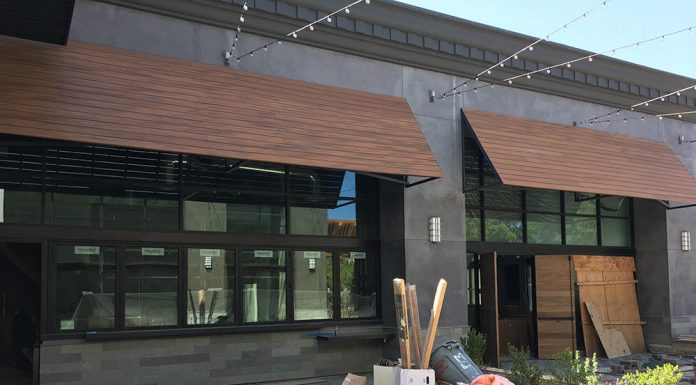
Morgan Hill downtown gourmets will need to wait a little longer for Willard Hicks, Tac-Oh, Mo's and Opa! to open. Restaurant owner Molly Adams has delayed the opening of Willard Hicks and Tac-Oh, but vowed in an email that the restaurants would open this summer.
Smith, Hirokawa at odds

Less than a month after some of her opponents said she should quit over decades-old ethical allegations, five-term incumbent Sheriff Laurie Smith has come out swinging.

On the record, Q&A with Sheriff Laurie Smith

There's obviously a lot of growth in South County. Do you see any need for changes in manpower strategies for handling this increase?
Police: Carnival suspects knew each other, had criminal histories
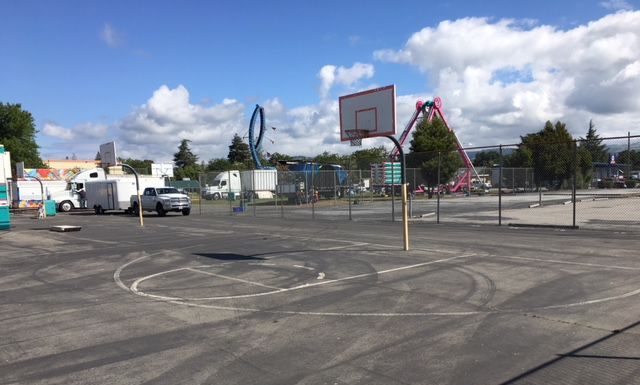
Morgan Hill citizens, school officials and community leaders this week were still trying to make sense of an April 27 brawl in which police said they were attacked by several teens while attempting to arrest a juvenile who had brought a knife to the Britton Middle School carnival.
Teen injured after officer accidentally fires weapon
A 23-year veteran Morgan Hill police officer accidentally fired his service handgun at the end of a stolen vehicle pursuit on Sunday, injuring a teen who had just exited the vehicle, according to authorities.The officer has been placed on administrative leave while the Morgan Hill Police Department and the Santa Clara County District Attorney’s Office investigate the incident, according to Sgt. Troy Hoefling. Morgan Hill police declined to release the name of the officer who discharged his weapon before the investigation is complete.“We’re doing a joint investigation with the police department and the (DA’s office) in alignment with the county protocol on officer involved incidents, and we’re doing an administrative investigation that will identify the facts surrounding the incident,” Morgan Hill Police Chief David Swing said May 1.About 7:30pm April 29, Morgan Hill Police responded to the area of Cochrane Plaza after receiving information about a stolen van in the area, according to a May 1 press release.Officers located the stolen van traveling in the area and attempted to make a traffic stop. The van driver refused to stop for police, according to authorities. Police continued to pursue the van, eventually ending the chase in the area of Llagas and Del Monte avenues by using a collision technique that made the vehicle spin out.When the van stopped, two teenage girls exited and walked toward officers while the 16-year-old driver remained in the vehicle, police said. As officers were directing the girls to stop and lie down on the ground, an officer accidentally discharged his service weapon into the ground near them. The bullet broke apart, and a fragment of the projectile bounced up and struck one of the teenage girls in the eye.The girl was transported to Lucille Packard Children’s Hospital in Palo Alto, where the bullet fragment was successfully removed, police said.The teen has been released from the hospital, and is recovering, Swing said. He declined to name the girl or specify her condition because she is a juvenile.“We certainly wish her the fullest and quickest recovery,” Swing said.Three MHPD officers were at the scene when the van crashed and the teen girls exited, Swing said. Officers are trained to make a “high-risk stop” when approaching a stolen vehicle or a person suspected of committing a felony. That training requires that in situations such as the April 29 incident, officers approach with their service weapons drawn.“Sometimes, we have less-than-lethal options available, but in this case, because of the circumstances and the number of officers at the scene, they had their service weapons drawn,” Swing said.Swing noted that Morgan Hill officers’ service weapons do not have a safety mechanism built into them.The teen driver of the van was arrested on suspicion of vehicle theft, Swing added. The van had been stolen from Live Oak High School earlier in the evening.Also earlier in the evening, the two teen girls who were passengers in the stolen van had been reported missing to police. Swing said officers had been in contact with the girls’ families earlier in the day. Police are also investigating why the girls were missing.The vehicle pursuit with officers ended when the stolen van crashed into a light pole and a fire hydrant, police said.
Carnival chaos costs Britton dearly
In a matter of minutes—albeit a violent and scary few minutes April 27 involving local students and police officers—a $20,000 school fundraiser quickly unraveled.
Police: Mob-fueled violence cancels Britton carnival
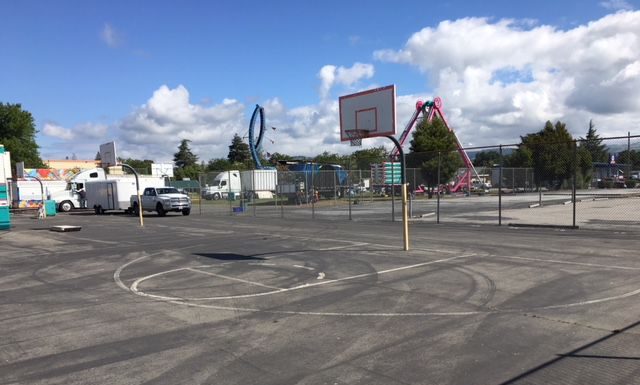
Chaos erupted at the Britton Middle School Home and School Club Carnival Friday night, as dozens of police officers from throughout the area responded to a violent incident that escalated within the crowd of hundreds.By the end of the night, several officers had been assaulted by teen suspects, eight children were arrested and the carnival—which was scheduled to continue through Sunday evening—was shut down for the rest of the weekend. A total of 59 officers responded to the incident in order to help disperse the unruly swarm and calm what quickly became a “hostile environment” for police, according to a press release from the Morgan Hill Police department.The incident started on Britton Middle School grounds, 80 W. Central Ave., at 5:48pm April 27, when school staff contacted two uniformed MHPD officers who were assigned to patrol the annual carnival, police said. The officers were told that a male juvenile on the carnival site—on the northern edge of downtown Morgan Hill—was in possession of a knife that another student had given him.Police contacted the juvenile with the knife while he was in line for one of the carnival rides, authorities said. The child was arrested without incident.Immediately after that arrest, school staff then told police the identity of the juvenile who had given the knife to the other suspect, police said. In addition to providing the knife, that student had also caused a disturbance on campus earlier in the day and was asked to leave.When officers contacted the juvenile who provided the knife, he “responded in an aggressive manner, took a fighting stance and threatened officers with bodily harm,” the press release states. Additional officers responded and the second juvenile was taken into custody.During the arrest, the suspect and two other juveniles attacked and assaulted MHPD officers, resulting in minor injuries to the officers, according to authorities. These additional two juveniles were also arrested.The crowd surrounding the incident grew to about 200 people, “many confronting police and refusing to disperse,” police said. The incident started on the basketball courts adjacent to Keystone Avenue on the Britton campus, according to witnesses and a video shot by a carnival patron.This growing hostility resulted in police response from multiple agencies, including Gilroy, San Jose, the Santa Clara County Sheriff’s Office, California Highway Patrol and CalFire, reads the press release.Before police were able to disperse the crowd, four additional juveniles were arrested by MHPD and assisting agencies, bringing the total number to eight arrests. All eight juvenile suspects were booked at Santa Clara County Juvenile Hall on suspicion of multiple charges, including possession of a knife on school grounds; assault on an officer; felonious threats on officers; inciting a riot and resisting, delaying and obstructing an officer.Police did not release the names of the arrested juveniles.Throughout the incident, numerous suspects and others in the crowd displayed gang signs, shouted gang slogans and wore gang-related clothing, police said.By about 7:30pm April 27, Morgan Hill Police were warning that anyone who remained in the area was subject to arrest, and used social media to ask parents to get their children home from the carnival as soon as they could.MHPD and Morgan Hill Unified School District officials opted to shut down the carnival Friday night, and cancel the event’s remaining two days due to the violence.On Saturday morning, crews were calmly breaking down the carnival rides and other equipment at the site of the fundraising event. Carnival organizers said that in more than 40 years of operating the annual event at various locations, this was the first time it had been shut down before scheduled.
Police shut down Britton carnival after fight breaks out
Morgan Hill Police and multiple agencies in the area shut down the Britton Middle School carnival Friday night after officers responded to reports of a violent incident that required significant crowd control.

