





Business woman uses paracord to give back to nonprofits
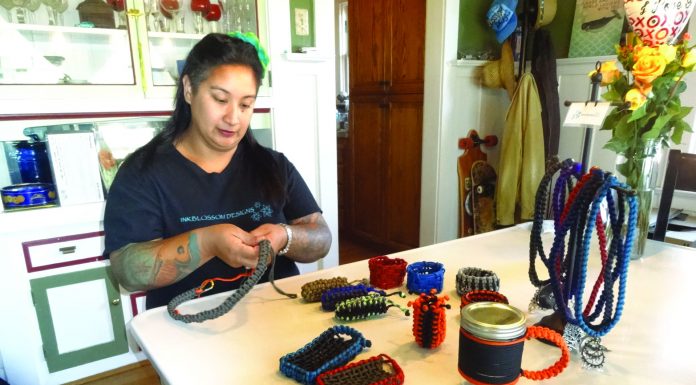
A local business woman found an innovative way to repurpose an accessory now used by many people and to give back to nonprofit organizations at the same time.Lanyards - thin pieces of cord usually found draped around the necks of students and attached to their school IDs - are common sights on school and business campuses around the world. An easy way to keep ID cards from being lost, they serve a simple purpose.Gilroy resident Jamie Hernandez had the idea to put them to another good use by creating a lanyard that can serve as a safety tool in emergency situations. In return, the lanyards helped Hernandez in her own time of need when she was recovering from a debilitating illness.“I get migraines and I became paralyzed,” she said. “I was in a wheelchair for two and a half years. Then I got better and I wanted to do something that kept me busy.”Hernandez, who is originally from Morgan Hill, taught herself how to knot and tie paracord to create colorful lanyards, key chains, jewelry and other accessories.Paracord - or parachute cord - is a thin rope made of nylon or polyester most commonly used as suspension lines for parachutes, according to www.paracordplanet.com. For each lanyard, Hernandez uses about 30 feet of paracord 550, which can hold up to 550 pounds. The cord never mildews, according to Hernandez.As a former athlete, she knew the safety value of the lanyards.I did a lot of rock climbing before, but then I got sick,” Hernandez said. “A few years ago in 2007 I broke my hand, so I feel fortunate to be able to do this.”Starting as a hobby, Hernandez’ lanyard creations eventually became a business when her daughter, Jasmine Yanez, was on the Gilroy High School wrestling team. The school lost its funding for buses, Hernandez said, so she sold her lanyards at the Mid-California Wrestling Championship Tournament to raise funds for team transportation. She also made all the first place lanyards for each of the 14 weight classes in the two-day tournament.“It’s rewarding because if (the wrestlers) win first place, they get the lanyard and I’ve seen them around town,” Hernandez said. “We put a dog tag on it with their (place) and their class. To see the kids still wearing it, and using it and coming back for more is good.”Hernandez’ new business endeavor, InkBlossom Designs, became a big hit when her daughter left home to pursue her business management degree at Menlo College in Atherton. Yanez took the paracord lanyards to sell to fellow students. By then, Hernandez had added another safety feature: whistles to use to attract attention in case of emergency.The rest of her family also became involved in the business. Hernandez’ son, Solar, helps his mom by measuring and cutting the paracord before she begins knotting the cords for lanyards. And her husband, Steven Hernandez, is charge of sales and marketing.“My husband is my biggest cheerleader,” she said. “He saw something I like to do and I’ve made it my own.”As her business grows, Hernandez continues to donate 40 percent of her profits to community organizations. To date, InkBlossom Designs has donated a total of more than $3,000 to the Fallen Hero Memorial Scholarship Fund, South Valley Middle School wrestling and cross-country teams, Santa Clara Valley Wrestling Association, Los Gatos Rugby Club, Pop Warner football leagues and Christopher High School sports.“If I can help bring a smile to someone’s face and help an organization, that’s the best thing for me to do,” she said.But Hernandez’ community outreach doesn’t end with InkBlossom Designs. She also volunteers as an assistant coach at South Valley Middle School and created the school’s annual Sumo Feast Fundraiser with dinner, live music and inflatable sumo suits for wrestling.Her contributions are greatly appreciated by the South Valley Middle School staff.“Ms. Hernandez is always around to lend a hand and is a valuable team player,” Athletic Director Jami Reynolds said.A handy way to keep track of those important items, lanyards serve a simple purpose..But Gilroy resident Jamie Hernandez cm to put them to another good use by creating a lanyard that can serve as a safety tool in emergency situations. In return, the lanyards helped Hernandez in her own time of need when she was recovering from a debilitating illness.“I get migraines and I became paralyzed,” she said. “I was in a wheelchair for two and a half years. Then I got better and I wanted to do something that kept me busy.”Hernandez, who is originally from Morgan Hill, taught herself how to knot and tie paracord to create colorful lanyards, key chains, jewelry and other accessories.Paracord - or parachute cord - is a thin rope made of nylon or polyester most commonly used as suspension lines for parachutes, according to www.paracordplanet.com. For each lanyard, Hernandez uses about 30 feet of paracord 550, which can hold up to 550 pounds. The cord never mildews, according to Hernandez.As a former athlete, she knew the safety value of the lanyards.I did a lot of rock climbing before, but then I got sick,” Hernandez said. “A few years ago in 2007 I broke my hand, so I feel fortunate to be able to do this.”Starting as a hobby, Hernandez’ lanyard creations eventually became a business when her daughter, Jasmine Yanez, was on the Gilroy High School wrestling team. The school lost its funding for buses, Hernandez said, so she sold her lanyards at the Mid-California Wrestling Championship Tournament to raise funds for team transportation. She also made all the first place lanyards for each of the 14 weight classes in the two-day tournament.“It’s rewarding because if (the wrestlers) win first place, they get the lanyard and I’ve seen them around town,” Hernandez said. “We put a dog tag on it with their (place) and their class. To see the kids still wearing it, and using it and coming back for more is good.”Hernandez’ new business endeavor, InkBlossom Designs, became a big hit when her daughter left home to pursue her business management degree at Menlo College in Atherton. Yanez took the paracord lanyards to sell to fellow students. By then, Hernandez had added another safety feature: whistles to use to attract attention in case of emergency.The rest of her family also became involved in the business. Hernandez’ son, Solar, helps his mom by measuring and cutting the paracord before she begins knotting the cords for lanyards. And her husband, Steven Hernandez, is charge of sales and marketing.“My husband is my biggest cheerleader,” she said. “He saw something I like to do and I’ve made it my own.”As her business grows, Hernandez continues to donate 40 percent of her profits to community organizations. To date, InkBlossom Designs has donated a total of more than $3,000 to the Fallen Hero Memorial Scholarship Fund, South Valley Middle School wrestling and cross-country teams, Santa Clara Valley Wrestling Association, Los Gatos Rugby Club, Pop Warner football leagues and Christopher High School sports.“If I can help bring a smile to someone’s face and help an organization, that’s the best thing for me to do,” she said.But Hernandez’ community outreach doesn’t end with InkBlossom Designs. She also volunteers as an assistant coach at South Valley Middle School and created the school’s annual Sumo Feast Fundraiser with dinner, live music and inflatable sumo suits for wrestling.Her contributions are greatly appreciated by the South Valley Middle School staff.“Ms. Hernandez is always around to lend a hand and is a valuable team player,” Athletic Director Jami Reynolds said.
Female suspect caught on video stealing mail from MH house

The Morgan Hill Police Department is asking for the community's help to identify a female suspect caught on tape stealing mail and packages from at least two houses on Peak Avenue at approximately 3 p.m. April 8.
UPDATED: Suspect in fatal Easter Sunday collision arraigned

The motorist accused of driving impaired when he struck and killed a Gilroy man at a Morgan Hill intersection Easter Sunday was arraigned on a murder charge at the South County Courthouse April 8, according to Santa Clara County Supervising Deputy District Attorney Steve Lowney.Results of the hearing for Edgar Benitez Martinez, a Morgan Hill resident, were not yet available as of the afternoon of April 8. Authorities arrested Martinez moments after the accident when he tried to flee the scene, according to police.The Santa Clara County Coroner’s Office identified the victim as 37-year-old Gilroy resident Alberto Sanchez. He was pronounced dead at the scene, according to authorities.About 6:50 p.m. April 5, Morgan Hill police responded to a traffic collision on Tennant Avenue near the intersection of Juan Hernandez Drive, according to a press release from MHPD.During the initial investigation, officers learned an off-duty MHPD officer witnessed the collision and followed the suspect’s vehicle, driven by Martinez, as it failed to stop at the scene of the accident, police said. The off-duty officer followed the suspect and detained him near his home in Morgan Hill. After contacting him, police suspected Martinez was driving under the influence of alcohol.While at the scene of the collision, officers learned the suspect’s vehicle was traveling westbound on Tennant Avenue from U.S. 101 when it drifted to the right shoulder of the roadway near the intersection of Juan Hernandez Drive.At that tie, Martinez’ vehicle collided into the rear of the victim’s vehicle which was parked on the shoulder, according to police. At the time of the impact, the driver of the parked vehicle was standing to the rear of his car while his juvenile passenger was inside the car. After the collision, Martinez continued traveling westbound on Tennant Avenue, then northbound on Juan Hernandez Drive where he was later detained.The victim’s juvenile passenger was transported to a local trauma center by paramedics and later released to a family member, authorities said.Martinez was booked at Santa Clara County Jail, according to police.Anyone who witnessed this collision can contact MHPD Sgt. Bill Norman at (408) 779-2101 or the anonymous tip line at (408) 947-7867.
City offers downtown businesses $1 million for moving expenses
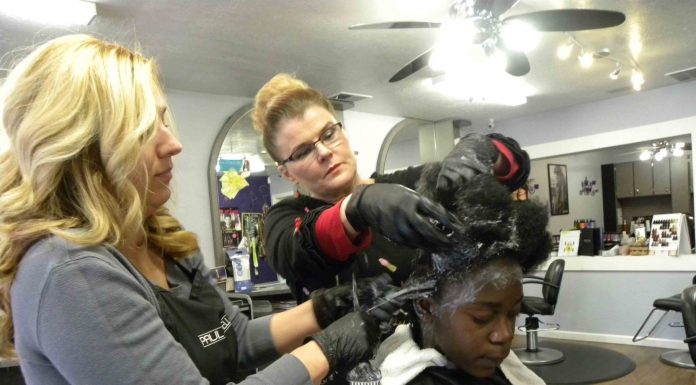
The City of Morgan Hill will provide up to $1 million to help 11 downtown businesses with moving and relocation expenses as they expect to be displaced by upcoming demolition and construction activities.While the city has not yet finalized deals with the future developers of these sites, they are under a tight deadline to dispose of properties formerly owned by the Redevelopment Agency which house established, family-owned businesses that attract thousands of visitors to the neighborhood.These businesses include Jesus Restaurant on Third Street, Cherisse’s Hair Salon on Second Street and United Academy of Martial Arts on Depot Street—all of which are part of the BookSmart shopping center.Business owners are concerned about the cost of finding a new location somewhere in the downtown, let alone whether or not such new digs even exist.Evelyn Gomez, whose parents own Jesus Restaurant, cried while telling the city council April 1 how stressful the impending move to an unknown place has been for her family.“We tried to get a loan (and) refinance,” Gomez said as she broke down into tears. “My mom is going to have to sell her home because we won’t be able to afford that mortgage and get the loan. It’s very painful to see (my parents) going through this stress.”The council voted unanimously to approve the $1 million “economic development reimbursement” program for downtown tenants to be displaced. The program, funded by leftover RDA bond proceeds, will provide up to $35,000 per full-time equivalent employee to each business that qualifies for assistance, according to Assistant City Manager Leslie Little.The funds will not go to the employees, but rather to specific types of moving expenses, including rental trucks, equipment purchases for new space, construction of tenant improvements, carpeting, shelving, real estate commissions and impact fees. Because the funds are former RDA assets, there are strict limitations on what they can be used for, Little explained.Cherisse White, owner of Cherisse’s Hair Salon a couple doors down from BookSmart, also addressed the council. White and other business owners wondered if $1 million will be enough to cover moving expenses for all 11 tenants.“I have a thriving business that wants to stay downtown, and I’m concerned about the low inventory (of vacant space) to move into,” added White, whose salon has been located at the shopping center for six years.The 11 businesses—plus seven others that are not eligible for the city’s program—will likely have to move before the end of this year because they are located on property that has to be sold and developed for the purposes originally intended by the RDA. These purposes include mixed-use, multi-story retail, dining and residential projects, in order to complement the city’s vision for a pedestrian-, visitor- and public transit-friendly downtown.In February, the council directed city staff to begin negotiating with City Ventures on the BookSmart site. City Ventures wants to purchase an option on the property (for $100,000), which the RDA purchased in 2010, and then complete the purchase from owner Llagas Valley Investments for another $2 million. The developer plans to build 24 townhomes upstairs with ground-floor retail facing Depot and Third streets.The city and developer have 60 days to negotiate a deal on that property, according to city staff.While BookSmart and all nine tenants on that property will have to move after such a deal is reached, the bookstore is not eligible for relocation assistance. As a former partial owner of the option, the store opted out of future relocation assistance when the RDA purchased the option for $1.7 million.But BookSmart co-owner Brad Jones also addressed the council April 1 to emphasize how crucial it is that the tenants remain downtown where they have become permanently woven into the fabric of the overall scene.“When development starts at the properties, family businesses are going to be exiled to some other part of Morgan Hill other than downtown,” Jones said.He added these shops, hair salons and restaurants have collectively spent “over 150 years paying rents and providing jobs in the downtown, (and they) account for at least 100 jobs.”“Much of what makes downtown great is the family businesses,” Jones added. “They would likely not return.”Also eligible for city assistance are two tenants on the Granada Theater/Downtown Mall site—Berriez Parlor and Shear Heaven Hair Salon, according to city staff. City Ventures is working on a deal with the city on that property as well, to build 50-plus condominiums and 40,000 square feet of retail space.And the third property soon to change hands from a public trust controlled by post-RDA regulators to a private owner is the Royal Clothiers/Tryst building at the corner of Monterey Road and Second Street. The city plans to sell that property to Lone Star Development for $881,280. Lone Star plans to make only “modest cosmetic” improvements to the site.Tenants have a “soft deadline” of June 1 to notify the city if they plan to take advantage of the reimbursement program, according to city staff.Other tenants on these properties who are ineligible for the city’s relocation reimbursement program are The Music Tree, Tryst, Morgan Hill Cigar Company, EcoSparc, Acevedo’s House of Poppy Jasper and other small shops. These companies are ineligible because they have previously received RDA, or they signed short-term leases waiving any future assistance.The city has until Dec. 31 to dispose of the properties and use former RDA bond proceeds, in accordance with strict timelines set by the IRS and the state’s Department of Finance. The DOF has the final say over the use of all former RDA assets.
UPDATE: New city watering restrictions

No new swimming pools in town and a strict limit on when homeowners can water their lawns are part of Morgan Hill’s new watering restrictions, but some residents think the new rules don’t go far enough to combat the effects of an historic statewide drought.And just this week, a state water regulator reported that Morgan Hill is among the cities that might be required to cut as much 35 percent of its water use from 2013 levels.The Morgan Hill City Council declared a “level 2” water shortage at the April 1 meeting. Along with this declaration comes new watering restrictions including a prohibition on filling and refilling swimming pools and washing vehicles with drinkable water. The restrictions go into effect April 11.Some who spoke at a public hearing just before the council adopted the new measures April 1 think the city is not doing enough to preserve water by allowing new residential construction to continue at its current pace.“It does not make sense that the city would punish existing residents while continuing to allow new connections for residents that are not even here yet,” said Morgan Hill resident Glenn Ritter, referring to hundreds of new homes under construction or permitted for construction in the city limits. “Level 2 (restrictions) should require a moratorium of all new connections and the city should take fair and prudent action.”However, only a “level 3” declaration by the city would allow the council to eliminate new home construction, according to city staff.The state is in the fourth year of an “unprecedented drought,” resulting in steadily increasing restrictions in communities throughout the state since early 2014, according to a city staff report.In April 2014, the council declared a “level 1” water shortage, which limits outdoor landscape watering to three days per week (or one day in the winter); requires property owners to repair leaks and water system malfunctions within 72 hours; and prohibits watering pavement or hard surfaces in most cases.These are in addition to permanent city watering restrictions, including limits on watering durations, no excessive water flow or runoff and limits on washing vehicles.The level 2 restrictions include these permanent rules and the level 1 limits, plus the following:• Watering of lawns, landscaping or other vegetation with potable water is limited to two days per week from April to October, and one day per week from November to March;• As of April 11, odd-numbered addresses in Morgan Hill may only water lawns on Mondays and Thursdays, while even-numbered addresses may water on Tuesdays and Fridays only;• Irrigation is allowed before 9 a.m. or after 5 p.m.;• Obligations to repair leaks, breaks and malfunctions within 48 hours;• Washing cars is prohibited except at commercial facilities that recycle water (all commercial car washes in Morgan Hill use recycled water);• Swimming pools and outdoor spas may be refilled up to one foot; initial filling of residential swimming pools, outdoor spas, ornamental lakes or ponds is prohibited.The level 2 restrictions will effectively eliminate new swimming pool construction in Morgan Hill while the restrictions are in place, according to Morgan Hill Program Administrator Anthony Eulo.A staff report presented to the council showed that available local water supplies—including city wells fed by the groundwater basin—have shrunk significantly due to the drought. This supply is typically supplemented by sources outside the Bay Area, which are also diminishing.The groundwater level at the city’s Nordstrom well, for example, has dropped from 135 feet below the ground surface in 2011, to a projected 203 feet in 2015, according to Public Works Director Karl Bjarke.Saving statewideEven if new residential construction became banned in Morgan Hill, that would not affect the overall water supply if surrounding cities continue to allow growth at current or increasing levels, explained Community Development Director Andrew Crabtree. Developers who planned to build in Morgan Hill would simply take their projects to the south if the city declared a construction moratorium.“There’s a lot of things we can do with new development to minimize (the drought’s) impact,” Crabtree said.On April 7, the State Water Resources Control Board’s monthly report of daily per capita water consumption showed that by this measure, consumption is on the rise in Morgan Hill. City customers in February consumed about 71 gallons per capita per day, which is on the rise from 63 in January and 60 in December 2014.Statewide, the water conservation rate for February was a “dismal” 2.8 percent as compared to the same month in 2013, according to the state water board. As a result, the regulators are planning to implement a “sliding scale” mandatory rate cut, requiring the biggest water wasting cities and retailers to conserve at a higher rate than those who have shown a more impressive water-conserving history.That means the city of Morgan Hill actually has to cut its water usage by 35 percent, according to the regulators.“We will be continuing to work hard and work with the community to save water and reduct the amount of water we use,” Eulo said. “The goal was 30 percent (set) by the water district, and now (as of April 7) we have a little bit higher goal, and a higher mandate.”
Police: Pedestrian killed by drunken motorist in Easter Sunday accident

A pedestrian was struck and killed by an impaired motorist who tried to flee the scene of the fatal accident in south Morgan Hill April 5, according to police.About 6:50 p.m. April 5, Morgan Hill police responded to a traffic collision on Tennant Avenue near the intersection of Juan Hernandez Drive, according to a press release from MHPD.During the initial investigation, officers learned an off-duty MHPD officer witnessed the collision and followed the suspect vehicle as it failed to stop at the scene of the accident, police said. The off-duty officer followed the suspect and detained him near his home in Morgan Hill. Police later determined the motorist was driving under the influence of alcohol.While at the scene of the collision, officers learned the suspect vehicle was traveling westbound on Tennant Avenue from U.S. 101, police said.As the suspect vehicle approached Juan Hernandez Drive, the vehicle drifted to the right shoulder of the roadway and collided into the rear of a parked vehicle, according to police. At the time of the impact, the driver of the parked vehicle was standing to the rear of his car while his juvenile passenger was inside the car. After the collision, the suspect driver continued traveling westbound on Tennant Avenue, then northbound on Juan Hernandez Drive where he was later detained.Responding officers and EMS personnel rendered first aid to the pedestrian victim, but he was pronounced dead at the scene, police said.The Santa Clara County Coroner’s Office identified the deceased victim as Alberto Sanchez, 37 of Gilroy.The victim’s juvenile passenger was transported to a local trauma center by paramedics and later released to a family member, authorities said.The driver of the suspect vehicle was under the influence of alcohol and arrested on suspicion of DUI, police said. The suspect, Edgar Benitez Martinez of Morgan Hill, was booked at Santa Clara County Jail.Anyone who witnessed this collision can contact MHPD Sgt. Bill Norman at (408) 779-2101 or the anonymous tip line at (408) 947-7867.
SCVWD to host April 16 hearing on water rate hike in Morgan Hill
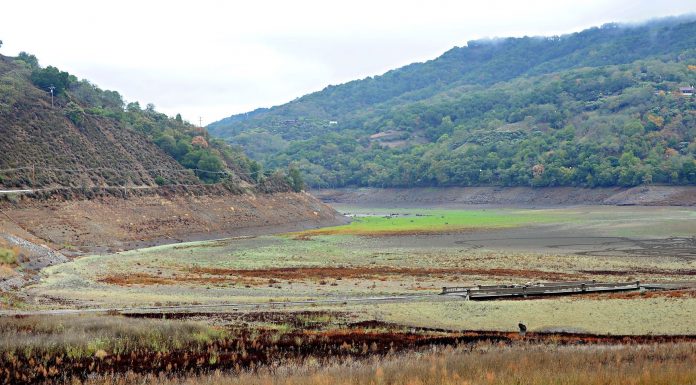
The Santa Clara Valley Water District will lead an open house and public hearing on groundwater production and proposed rate hikes for South County customers April 16 at Morgan Hill City Council Chambers.The district, which supplies wholesale drinking water to retailers and municipalities such as the city of Morgan Hill, has proposed increasing groundwater charges by up to 13.8 percent for the 2015-16 fiscal year. The current groundwater charge for municipal and industrial users is $319 per acre foot, and district staff has proposed raising that to a maximum of $363 per acre foot for 2015-16.An acre foot of water is enough to supply a family of five for two years with drinking and household water.The maximum proposed rate assumes another dry year in the current, ongoing historic statewide drought, according to SCVWD staff. Santa Clara County groundwater supplies depend largely on imported water and rainfall, both of which have fallen dramatically since the drought started more than three years ago.Sources throughout the state, from which SCVWD imports about 26 percent of its total groundwater supply, are drying up, according to district staff. As a result, SCVWD anticipates spending about $4 million in extra costs in South County to “secure imported water supply, support water conservation rebate efforts, conduct aggressive water conservation outreach and develop future purified water supplies.”For agricultural water users, SCVWD has proposed increasing rates from $19.14 (current) to $21.79 (2015-16) per acre foot.“A smooth series of water rate increases had been a part of our long-range planning to address much needed water supply infrastructure investments,” SCVWD CEO Beau Goldie said in a press release. “However, the historic drought has resulted in urgent expenditures that are essential to continue providing a reliable water supply, maintaining a healthy groundwater basin, avoiding the serious consequences of groundwater overdrafting, and avoiding land subsidence and saltwater intrusion.”An open house at the Morgan Hill Chambers, 17565 Peak Ave., will take place 6 p.m. April 16, with a public hearing and presentation at 7 p.m.
Pintello pros carries production

Pintello Comedy Theater pros Jayson Stebbins and Denee Lewis Bohnsack get together to bring in playwright Jack Neary’s gentle and funny “First Night,” an amusing bit of witty theater. The two carry the production under the deft direction of Whitney Pintello.

