






Roll out the barrels for a super tasting of wines

Santa Clara Valley wineries are getting a head start on the Super Bowl 50 celebration by hosting “Super Barrel Tasting Day” on Saturday, February 6, 2016. Wine lovers are invited to visit selected wineries along the Santa Clara Valley Wine Trail and be among the first to taste the newest vintages straight from the aging barrels.
Guglielmo Winery named to business hall of fame
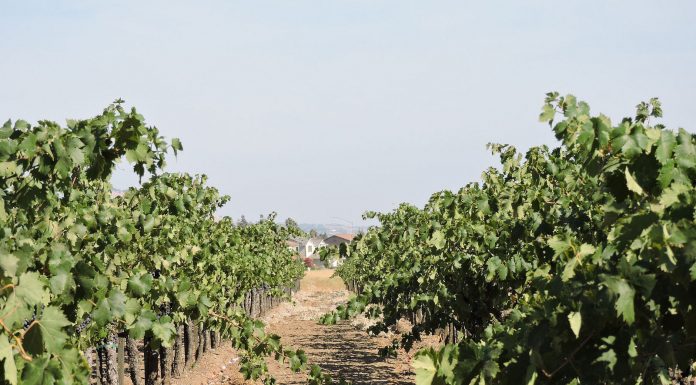
The San Jose / Silicon Valley Chamber of Commerce has announced that Guglielmo Winery in Morgan Hill will be inducted into the Business Hall of Fame at their Annual Membership and Distinguished Awards Dinner on Feb.25.
Lee: Don’t rain on my run

Exercise is meant for the outdoors. As a runner, I absolutely detest doing a workout on the treadmill or elliptical machine. But in this El Niño season, sometimes going indoors is the only option. After all, I can only take getting poured on so many times (it’s already happened several times in the last month).
Drunk driver pleads no contest to 2014 vehicular manslaughter

A San Martin man who was driving drunk when he caused the death of a Morgan Hill man and serious injuries to his fiancée nearly two years ago pleaded no contest to three felony charges at the Morgan Hill Courthouse.Raymond Escudero, IV, 25, has been in custody at Santa Clara County Jail since the Aug. 30, 2014 accident that left Jason McArthur dead at the age of 34. The accident occurred on Santa Teresa Boulevard just south of Native Dancer Drive, according to police. Escudero, driving an Acura, struck McArthur’s Jeep Wrangler, causing both vehicles to lose control. Both vehicles were traveling northbound.McArthur was pronounced dead at the scene. Escudero was uninjured but his passenger suffered minor injuries, according to authorities.The accident also caused severe injuries to McArthur’s passenger and fiancée, a 43-year-old Morgan Hill woman.On Jan. 4, just before the case was set to go to trial, Escudero pleaded no contest to three felony charges related to the accident, according to Deputy District Attorney Alexandra Ellis. Specifically, he pleaded no contest to vehicular manslaughter with gross negligence and two felony DUI charges.The suspect also pleaded no contest to an unrelated hit and run charge from 2011, Ellis said.A plea of no contest is the same as a plea of guilty, Ellis added.Escudero will be sentenced at a Feb. 19 hearing at the Morgan Hill Courthouse. He faces a maximum sentence of 13 years, eight months in prison.
4,000 Home Development Off the Table
Overwhelmed by public criticism and two lawsuits, the developers of the biggest housing project in Gilroy’s history have pulled their application to take more time to sell it to the public.
242 homes to be built in Morgan Hill next year

The Morgan Hill Planning Commission approved developers’ requests to build a total of 242 housing units in the city limits for the 2017-18 fiscal year, and for the first time in recent memory the allocations include a large number of market-rate apartments for rent.The allocations approved Jan. 12 by the seven-member commission represent the maximum number of homes that can be built in 2017-18, under the city’s Residential Development Control System. The commission also approved 85 specific housing units for 2018-19, but more allotments will be awarded for that year in the coming months as the competition among developers is ongoing, according to city staff.The housing allocations for 2017-18, which will be found in 14 projects throughout the city, include a mix of single family detached homes, multi-family attached condominiums, “micro projects,” affordable housing and apartments. Some of the approved allocations will add to existing projects, such as five single family homes awarded to Ventura Investors’ Altimira project off Altimira Circle in northeast Morgan Hill.Planning Commission Chair Joe Mueller said a unique aspect of this year’s residential development competition is the San Pedro Presidio apartment project, which is cleared to build 80 units next year in the “multi-family rental” category. It was also awarded 85 multi-family rental units for the following year. At full build-out, that project will include 168 apartments at the northeast corner of San Pedro Avenue and Condit Road.The developer is Presidio Evergreen, LLC, which was also awarded 30 condominium allotments for a separate project at San Pedro and Murphy avenues in the “open/market” (not restricted by residents’ income) category for 2017-18.The unusually high number of apartment requests also resulted in a “tighter competition” this year, Mueller said.“It’s the first time we had an apartment project for the open market in a very long time,” Mueller said. “We need market rate rental housing because our vacancy rate is very low, and market rate rentals will help attract young engineers (and other professionals) to our town.”Each project still has to go through the city’s entitlement process, which includes site plan and building permit reviews.Morgan Hill Community Development Director Andrew Crabtree said the projects ultimately to be presented could change slightly from what the planning commission approved Jan. 12. But the developers are required to maintain the “score” they received in order to win the allotments.The voter-approved RDCS ordinance requires developers to compete for the limited number of annual housing units they want to build in Morgan Hill, under a complicated scoring system that awards points to each proposed project based on its housing quality, enhancement of public services, energy efficiency and other categories.The allotments approved by the planning commission Jan. 12 do not require city council approval. However, the applicants may appeal the commission’s decision to the council, Crabtree said.The ordinance, originally known as Measure C, sets a population cap above which the city cannot climb as of 2020. That cap is 48,000 people, which has allowed about 250 housing units to be built annually in recent years.With the ordinance set to expire in 2020, city officials are working on a ballot initiative to present a renewal of the RDCS for the November 2016 citywide election. City staff, consultants and residents who have been working on the city’s General Plan Update for the last 18 months have said the RDCS renewal would ideally set a new cap for the year 2035. That new population cap is currently proposed at about 65,000, but discussions and public review could change that number in the coming months as the city prepares a formal draft ballot measure.
Ag acreage down but production up
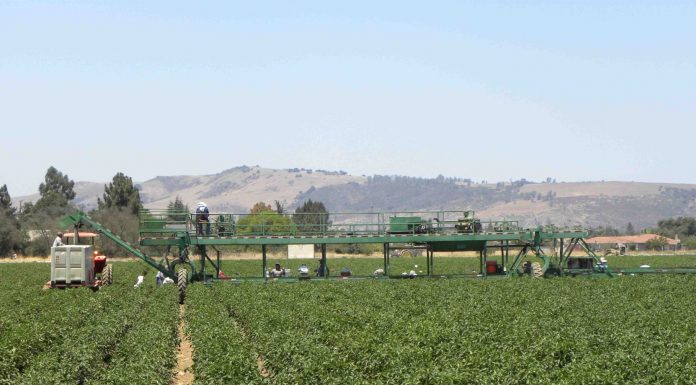
Half the farmland that Santa Clara County had 30 years ago has been lost to development but agriculture is thriving, and in some cases is more robust than ever thanks to advanced farming techniques, according to a new county report.The report has been circulated at the Local Agency Formation Commission (LAFCO) and other regional bodies that control land use and promote its preservation.LAFCO, which opposes premature conversion of farmland for development, is expected to rule on a 721-acre annexation request by the city of Gilroy later this year, and on one from the city of Morgan Hill to annex 250 acres of farmland and rural property.The agricultural economics report was commissioned and released by Santa Clara County Agricultural Commissioner Joe Deviney.It is the first study to analyze the state and viability of the county’s agriculture industry—which is largely based in South County.It concludes that despite a “significant reduction” in farmland, “continued growth of both land and labor productivity has resulted in a county agricultural sector that is gaining in both production value and employment … driven by a shift towards higher value crops, increases in productivity, new technologies, and more efficient farming practices.” The per-acre value of irrigated farmland “has never been higher,” the report states.Deviney commissioned the report to resolve a long-standing debate over the viability of farming in the county and questions about its contribution to the economy.“This report says very clearly that ag is viable,” he said.The county’s 2014 ag production was valued at $276.2 million, up nearly five percent from 2013.The top two crops for 10 years have been nursery stock and mushrooms, which require less land than more traditional crops. Nursery crops brought in $75.5 million, and mushrooms $72.1 million. Bell peppers, a land-intense row crop, were a distant third at $15.4 million. Cherry production was down 70 percent to $2.6 million, according to the recently released 2014 county crop report.The economic analysis comes as county planners and the Santa Clara County Open Space Authority move forward with a grant-funded $100,000 study of the effects of farmland loss on climate in South County and the need to preserve land.OSA General Manager Andrea Mackenzie said Wednesday that southern Santa Clara County “is one of our highest priorities,” as the special district created by the state legislature in 1993 goes about its business of land preservation. And that includes, she said, “keeping farms and ranching viable by ensuring there’s a land base for agriculture.”That effort took a powerful new tack when Gov. Jerry Brown, state lawmakers and others added land conservation policy to the arsenal of tools in the fight against climate change, according to Mackenzie.She called the combined Gilroy and Morgan Hill annexation bids “The (county’s) largest proposal for the conversion of farmland at one time in probably more than 30 years.”A recent OSA study also noted a sort of hidden value, beyond crop values, of farm and open space land, according to Mackenzie.“When you look at open space land there is a suite of environmental goods and services provided back to the local economy. We call these natural capital and they are the life-support system of our county,” she said.It includes such things as the value of land in flood control, percolation to the underwater aquifers and improved water quality. Those are valued conservatively at “$1.6 to $3.9 billion to the local economy, just as the agricultural contribution is $1.6 billion,” Mackenzie said.For opponents of Gilroy’s LAFCO application, approved by the City Council but not yet submitted, Deviney’s report states unequivocally that acreage in farming dropped from 40,000 in the late 1980s (excluding range land) to 20,000 in 2014, the year the data was collected.For advocates of development of the 721 acres, page after page of the report is filled with glowing statistics about the state of the county’s agriculture industry in spite of farmland losses.The full report, titled The Economic Contribution of Agriculture to the County of Santa Clara 2014, can be found online at adobe.ly/1njbM8L.
Beau Goldie resigns as water district CEO

Longtime Santa Clara Valley Water District CEO Beau Goldie, a Morgan Hill resident, announced his resignation from the water management and flood protection agency Jan. 15.Goldie made the announcement jointly with SCVWD Board of Directors Chair Barbara Keegan.“It has been a privilege and an honor to have served at the district, and I am very proud of what district employees and its management teams have accomplished together on behalf of our customers and communities in Santa Clara County,” Goldie said in the statement.Keegan added, “The board would like to take this opportunity to thank Mr. Goldie for his 31 years of dedicated service to the Santa Clara Valley Water District. During his tenure as CEO, he brought stability to the organization and delivered high quality services to the people of our community. The board appreciates all the contributions Mr. Goldie has made and we wish him the very best in his retirement."Goldie was CEO of the water district for about seven years. SCVWD provides drinking water and flood protection for the county’s 1.9 million residents and has a budget of about $400 million.The statement did not mention that Goldie has been under fire from the media, the SCVWD board of directors and even the district attorney’ office in recent months.Goldie has been accused of hiring a contractor—RMC Water and Environment—that is partially owned by the husband of Melanie Richardson, one of Goldie’s top deputies at SCVWD. He has been further accused of allowing RMC to fraudulently bill the water district for work it had not completed. Only weeks before Goldie signed a single-source contract with RMC in April for a water recycling project, former Monterey County water board member Steve Collins pleaded no contest to accepting about $160,000 in illegal payments from RMC.The joint announcement by Goldie and Keegan followed a Jan. 14 closed session meeting of the SCVWD board.Keegan listed the following among Goldie’s achievements during his tenure with SCVWD:• Opening of the Silicon Valley Advanced Water Purification Center;• Establishing the district as a leader in the state in terms of drought response;• Accelerating a purified water program to develop drought-proof supplies to help with future droughts and climate change impacts;• Seeing the successful passage and early implementation of the 15-year Safe, Clean Water and Natural Flood Protection Program, which voters passed with nearly 74% support in November 2012;• Improving the Asset Management Program to protect and efficiently maintain investment in district assets;• Developing and implementing programs to ensure a sustainable workforce in the future as a wave of Baby Boomer retirements is expected; and• Improving organizational performance and transparency through a comprehensive Management Audit Program.The “acting CEO” position will be filled on a rotating basis by the three chief operating officers (COO) starting with COO Jim Fiedler, continued the SCVWD statement. This rotation will continue until an interim CEO can be selected. The interim CEO will be chosen from internal candidates. The intent is for the interim CEO to serve until the board can select a permanent CEO.
LAFCO meeting on city expansion projects postponed to March 11
The county commission meeting where officials will determine whether or not to annex more than 280 acres into Morgan Hill’s boundaries has been postponed until March 11.

