






UPDATE: Survey says life is good in Morgan Hill
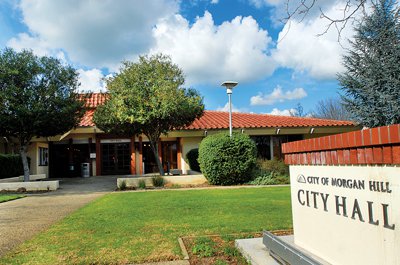
A public opinion poll recently commissioned by the City of Morgan Hill found that most residents who responded are “highly satisfied” with the quality of life here, according to a press release from city staff.Much slimmer majorities said they would support potential ballot measures for a local sales tax and growth control ordinance update in the November election, but the research firm that conducted the survey said such initiatives are “viable.”More than 90 percent of respondents rated the city’s quality of life as “excellent” or “good,” according to the survey results. The survey also showed that residents see maintaining public safety, streets and roads, fiscal stability and keeping a safe, clean, reliable local water supply as important city priorities."We are happy residents have given us a good quality of life rating," said Morgan Hill City Manager Steve Rymer. "These results show our community wants us to continue our efforts to keep our neighborhoods healthy and safe. Doing so maintains our quality of life and helps to protect local property values.”The survey was conducted by Godbe Research from Nov. 20 through Dec. 9, 2015. The City Council voted to commission the survey July 8, for a cost of about $33,000.The council’s objectives in ordering the survey include to assess overall perceptions of life in Morgan Hill; gauge support for potential future ballot measures; determine residents’ satisfaction with the delivery of city services; assess awareness of the city’s financial situation; and determine the most pressing problems facing Morgan Hill.The scientific survey selected a random sample of 501 residents, and consisted of both telephone and internet interviews, explained Morgan Hill Communications Manager Maureen Tobin.The sample is representative of the “universe” of 16,528 Morgan Hill residents likely to vote in November 2016, according to Godbe’s report.No representatives of City Hall were involved in the interviews or compilation of data, which was left entirely to Godbe Research, Tobin added.Among other findings, the survey found respondents prioritized maintenance and repairs to the city's water system, city staff said. About 86 percent of respondents agreed that work on this citywide infrastructure is necessary.On the question of whether voters would support a local sales tax to fund basic city services—police, fire, street maintenance and traffic relief, parks and public buildings and other “general city services”—almost 58 percent said “definitely yes” or “probably yes.”Specifically, this question posed a hypothetical three-quarter cent ongoing sales tax that would raise $5.35 million per year “that cannot be taken by the state.”For the last two years, city council members have discussed the need for such a local sales tax, which the city currently does not have. A possible ballot measure has been discussed in the context of City Hall’s ongoing shortage of funds from current sources to improve streets and related infrastructure, and keep them maintained.The survey also showed respondents value Morgan Hill as a great place to raise a family, with 92.2 percent saying Morgan Hill was an "excellent" or "good" community for doing so, the city’s press release said.But some more pointed questions in the survey did not yield such overwhelmingly enthusiastic responses. When asked what direction Morgan Hill is going, about 51 percent responded “right direction,” while about 34 percent said “wrong direction.”When asked how well Morgan Hill is providing services, about 10 percent said “excellent,” 48 percent said “good” and about 36 percent responded “only fair” or “poor.”About 62 percent of survey respondents said they would support an ordinance to update the city’s Residential Development Control System, extending it to 2035 with a population ceiling of 64,600 for that year. The current RDCS or growth control ordinance sets a population cap in Morgan Hill of 48,000 for the year 2020.Such an update is another ballot measure the city council is considering sending to the voters in November.Respondents were also more evenly split on the question of how dense future residential development should be in Morgan Hill. About 32 percent said new housing should be “higher density to preserve open space,” while about 27 percent said future homes should be “as low a density as possible even if it does not preserve open space.”The margin of error for the survey results is plus or minus 4.31 percent, according to Godbe’s report.Survey takers from Godbe Research relied on files for all of Morgan Hill’s registered voters to find contact information for respondents, according to Bryan Godbe, President of Godbe Research.“We would call of those,” but also make sure different socioeconomic demographic groups are equally represented, Godbe explained. If a voter didn’t answer the phone, the firm would call them again until they reach a live person.“We usually have about a 100-to-1 or 150-to-1 ability to actually talk to someone,” Godbe said of the scientific survey process in general.He added that a challenge in conducting any such survey is that many of the phone numbers in the voter files are land lines that have been “abandoned” as residents rely more on cellular and digital communications, he added. Survey takers for the Morgan Hill project called about 3,500 cell phone numbers, which were also listed on some of the voter files.To view more results of the survey, visit the city’s website at morganhill.ca.gov.
MH hires new Assistant City Manager for Admin Services
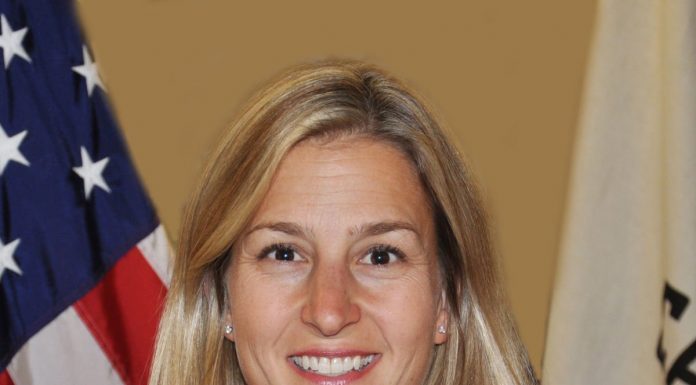
The City of Morgan Hill announced Jan. 27 that Christina Turner was hired on as the new Assistant City Manager for Administrative Services.
Judge denies motion to dismiss charges related to Sierra LaMar’s disappearance

The suspect accused of kidnapping and murdering 15-year-old Morgan Hill resident Sierra LaMar was denied a motion to dismiss the charges against him in a court hearing last week.Antolin Garcia Torres, a Morgan Hill resident who remains in custody at Santa Clara County Jail, appeared Jan. 22 for a hearing on his attorney’s motion to dismiss the case against him. Superior Court Judge Helen Williams denied the motion after the brief hearing at the Hall of Justice in San Jose, according to court officials.Garcia Torres was arrested in May 2012 by sheriff’s deputies, weeks after Sierra disappeared. He is charged with murder and kidnapping in relation to Sierra’s disappearance.He is also charged with three unrelated attempted carjackings and assaults in the parking lot of two Safeway grocery stores in Morgan Hill in 2009.Garcia Torres’ trial on all the charges remains set for April 25. He pleaded not guilty to the charges in February 2014. If convicted, he faces a possible penalty of death.Police say Sierra disappeared March 16, 2012 from her north Morgan Hill home while she was walking to her school bus stop near the intersection of Palm and Dougherty avenues. She was a sophomore at Sobrato High School when she disappeared.Despite search efforts by law enforcement and a dedicated team of volunteers, who logged more than 54,000 hours of searching, Sierra’s body still has not been found.On Monday, the San Jose Mercury News published excerpts from a bizarre jailhouse interview with a suspect in an unrelated case, who claimed the victim he is accused of killing was Sierra’s murderer. The suspect, Steven Hlebo, is accused of killing his co-worker Kyle Merrick in San Jose.In the jailhouse interview, Hlebo claimed that Merrick was the one who kidnapped and murdered Sierra, and even helped frame Garcia Torres for the crime, according to the Mercury News.
Submit public comments on General Plan draft EIR by March 14

The draft copy of the Environmental Impact Report for the Morgan Hill General Plan Update and associated projects is now available for public review and comment, according to city staff.The public has until March 14 to submit written comments in response to the draft environmental study, which analyzes the effects of the city’s proposed long-term growth documents on traffic, wildlife, air quality, farmland and other natural resources. The EIR is required as part of the California Environmental Quality Act.The purpose the EIR, according to CEQA, is to “inform public agency decision makers and the public generally of the significant environmental effects of a project, identify possible ways to minimize the significant effects, and describe reasonable alternatives to the project.”The public will also have a chance to provide written and/or oral comments at the Feb. 23 meeting of the Morgan Hill Planning Commission, which will take place at city council chambers, 17555 Peak Ave.The subject of the draft EIR is not only the General Plan Update—which city staff, consultants and volunteers have been working on for the last two years—but also an update to the city’s Residential Development Control System (RDCS).“The proposed General Plan includes land use, urban design, circulation, public services, natural resources, and safety goals, policies, and actions to guide investment and development in the Project Area over the next 20 years,” reads a summary of the proposal in the draft EIR. “The proposed RDCS would regulate population growth through the provision of residential building allotments on a yearly or bi-annual basis.”The council is planning to ask voters to approve an update to the RDCS in November. The ordinance, first known as Measure C, was initially approved by voters several years. The current ordinance is set to expire in 2020.The General Plan and RDCS updates are collectively known as the Morgan Hill 2035 project.Copies of the draft EIR, draft General Plan Update and draft RDCS are available online at morganhill2035.org. Paper copies can be viewed at City Hall Development Services Center, 17575 Peak Ave., and the Morgan Hill Library, 660 W. Main Ave.
Survey says life is good in Morgan Hill
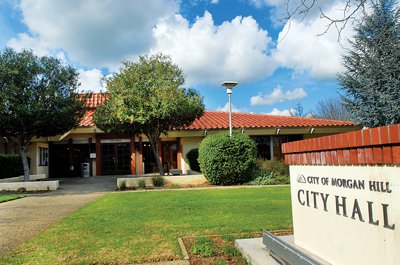
A public opinion poll recently commissioned by the City of Morgan Hill found that most residents who responded are “highly satisfied” with the quality of life here, according to a press release from city staff.More than 90 percent of respondents rated the city’s quality of life as “excellent” or “good,” according to the survey results. The survey also showed that residents see maintaining public safety, streets and roads, fiscal stability and keeping a safe, clean, reliable local water supply as important city priorities."We are happy residents have given us a good quality of life rating," said Morgan Hill City Manager Steve Rymer. "These results show our community wants us to continue our efforts to keep our neighborhoods healthy and safe. Doing so maintains our quality of life and helps to protect local property values.”The survey was conducted by Godbe Research from Nov. 20 through Dec. 9, 2015. The City Council voted to commission the survey July 8, for a cost of about $33,000.The council’s objectives in ordering the survey include to assess overall perceptions of life in Morgan Hill; gauge support for potential future ballot measures; determine residents’ satisfaction with the delivery of city services; assess awareness of the city’s financial situation; and determine the most pressing problems facing Morgan Hill.The scientific survey selected a random sample of 501 residents, and consisted of both telephone and internet interviews, explained Morgan Hill Communications Manager Maureen Tobin.The sample is representative of the “universe” of 16,528 Morgan Hill residents likely to vote in November 2016, according to Godbe’s report.No representatives of City Hall were involved in the interviews or compilation of data, which was left entirely to Godbe Research, Tobin added.Among other findings, the survey found respondents prioritized maintenance and repairs to the city's water system, city staff said. About 86 percent of respondents agreed that work on this citywide infrastructure is necessary.On the question of whether voters would support a local sales tax to fund basic city services—police, fire, street maintenance and traffic relief, parks and public buildings and other “general city services”—almost 58 percent said “definitely yes” or “probably yes.”Specifically, this question posed a hypothetical three-quarter cent ongoing sales tax that would raise $5.35 million per year “that cannot be taken by the state.”For the last two years, city council members have discussed the need for such a local sales tax, which the city currently does not have. A possible ballot measure has been discussed in the context of City Hall’s ongoing shortage of funds from current sources to improve streets and related infrastructure, and keep them maintained.The survey also showed respondents value Morgan Hill as a great place to raise a family, with 92.2 percent saying Morgan Hill was an "excellent" or "good" community for doing so, the city’s press release said.But some more pointed questions in the survey did not yield such overwhelmingly enthusiastic responses. When asked what direction Morgan Hill is going, about 51 percent responded “right direction,” while about 34 percent said “wrong direction.”When asked how well Morgan Hill is providing services, about 10 percent said “excellent,” 48 percent said “good” and about 36 percent responded “only fair” or “poor.”About 62 percent of survey respondents said they would support an ordinance to update the city’s Residential Development Control System, extending it to 2035 with a population ceiling of 64,600 for that year. The current RDCS or growth control ordinance sets a population cap in Morgan Hill of 48,000 for the year 2020.Such an update is another ballot measure the city council is considering sending to the voters in November.Respondents were more evenly split on the question of how dense future residential development should be in Morgan Hill. About 32 percent said new housing should be “higher density to preserve open space,” while about 27 percent said future homes should be “as low a density as possible even if it does not preserve open space.”The margin of error for the survey results is plus or minus 4.31 percent, according to Godbe’s report.To view more results of the survey, visit the city’s website at morganhill.ca.gov.
Sobrato overcomes turnovers, ends two-game losing streak

Megan Yabumoto and Kianna Maldia combined for 27 points to help lead Sobrato over Willow Glen 63-36.
LO’s Sanders inks with Westmont

Justin Sanders wanted to prove that despite his stature, he was a quality pitcher.
Junior hawk stretches its wings

Very early on a dark, cold morning in late December in Los Banos, a duck hunter was preparing for the day’s activities when his golden retriever came upon an injured hawk and alerted the hunter.
Water, sewer rates on the rise starting April 1
Despite the formal objection of 159 residents, the Morgan Hill City Council Jan. 20 approved new utility rates that will see the average residential water customer’s bill go up more than 60 percent by the end of 2020.The new rates, adopted unanimously by the five-member council, were subject to Proposition 218 requirements that allow ratepayers to block proposed price increases with a majority protest. The tally of 159 protest letters counted during the Jan. 20 public hearing—the end of the 45-day comment period—fell far short of the 6,000-plus needed by state law to prevent the rate hikes.Rates for all the city’s 13,000 water and wastewater customers will go up annually for the next five years, starting April 1. The average monthly bill for water and wastewater rates combined, for a single family home, will rise from the current charge of $90.13 to $121.24 in 2020.The new rates are a reconfiguration of the city’s utility service revenue model, as the previous methods are unreliable and perhaps even illegal, according to Morgan Hill Public Works Director Karl Bjarke.As customers have cut their water use by more than 20 percent citywide the last three years due to the ongoing drought, city water revenues have declined, Bjarke explained. However, the city’s costs to deliver water and remove wastewater continue to increase.Furthermore, a state court ruled last year that tiered water rates, which charge customers a higher rate per unit of water as their consumption increases, are unconstitutional. The City of Morgan Hill has used such a tiered rate system for decades.Thus, the new rates are based on fixed monthly rates according to the customer’s meter size, plus a charge per 100 cubic feet of water or wastewater that is equal for all customers, city staff explained.The increasing rates will also create a surplus of revenue each year that will be used to build up the water and wastewater fund’s cash reserve. This surplus will also help fund a “proactive capital replacement program” to maintain older or busted pipes or equipment, according to city staff.Some of the seven members of the public who spoke at the Jan. 20 council meeting noted the irony that customers are asked to pay more for water even though they are, in many cases, using significantly less of it.For the first time, Morgan Hill’s water and wastewater rates include a “zonal surcharge” for customers who live in the hillsides served by the city utility system. These additional monthly charges are intended to pay for the city’s extra electricity costs to power pumps that deliver water and wastewater uphill, according to city staff.Customers who spoke at the Jan. 20 meeting reside mostly in neighborhoods on the city’s hillsides, including Holiday Lake Estates and Jackson Oaks. They complained the surcharge for pumping uphill is unfair to the uphill customers, and asked the council to consider other cost-reducing efforts such as more solar power.Other ratepayers said the city’s effort to meet Proposition 218 noticing requirements was not customer friendly, and the protest process was confusing and cumbersome. One said she thought the envelope in which the notice letter was sent, informing customers about the proposed rates and how to formally protest, looked like “junk mail.”Resident Marby Lee, a former councilmember, said the council should not have timed the 45-day public comment period during the winter holidays, during which time City Hall was closed for five business days. The city sent the Prop 218 notices to customers Dec. 5.The rate plan approved Jan. 20 also increases the city’s monthly subsidy for low-income customers by 10 percent annually for the next five years. The current subsidy is $3.63 per month for water, and $7.69 for wastewater.The first annual water and wastewater rate increase (7.4 percent combined) will kick in April 1.
Tickets now on sale for ‘Once Upon a Mattress’

IN a kingdom far, far away—and nowhere near Camelot, Shrek’s swamp or Santa Cruz—lives a king that is struck dumb, wizards past their prime, court jesters, battling sibling minstrels and a score of proper knights and ladies, all characters in the zany and festively fun ride that is Once Upon a Mattress. A fractured fairy tale is based on Hans Christian Andersen’s Princess and the Pea, Mattress the musical is the story of an overbearing queen who seeks to test the bloodlines of young women seeking to marry her precious and very sheltered son. By putting a small pea under the mattress, the queen reasons that a true princess would be far too sensitive to sleep soundly. In this production, that story line, as well as numerous fairy tale archetypes, become ripe for humor.

