






Sierra LaMar trial set to begin with jury selection May 23

The trial for the Morgan Hill man accused of kidnapping and murdering Sierra LaMar was delayed again, as attorneys continue to squabble over the sharing of evidence processed by the county crime lab during the investigation of the 2012 case.The latest delay, which pushes the trial date to May 23, stems from the defense’s insistence on reviewing the state's DNA evidence that includes the genetic makeup of people other than the defendant.However, prosecutors from the Santa Clara County District Attorney’s Office maintain that it is the defendant’s attorneys who have been dragging their feet in handing over their list of witnesses and other evidence they plan to present during the upcoming trial.Antolin Garcia Torres, 24, appeared in court April 25 at the Santa Clara County Hall of Justice in San Jose. Garcia Torres’ attorneys said they were not prepared to go to trial as scheduled at that hearing. The judge set a hearing for May 9 to discuss a previous motion by the defendant to gather more evidence from the District Attorney’s Office, according to court documents.The judge also set a trial date of May 23 at the Hall of Justice. If the DA and defendant are prepared to proceed to the trial, jury selection would likely begin at that time.Despite the finger pointing on the shortage of and delays in sharing evidence, an April 22 order by Judge Deborah A. Ryan worked out in the defendant’s favor. This mandate ordered the DA’s office to provide the defense with “a two to four centimeter portion of evidence,” described as a hair “collected from a white rope seized from Mr. Garcia Torres’ red Jetta.”The segment of the hair, described as 29 centimeters in total length, was ordered to be shared with the defense attorneys’ chosen third-party laboratory that specializes in “mitochondrial testing.” The hair has already been tested by the county crime lab, according to the order.Garcia Torres is charged with murder and a special circumstance of kidnapping in relation to the disappearance of Sierra. The 15-year-old sophomore at Sobrato High School was last seen March 16, 2012. She vanished while walking to the school bus stop near her north Morgan Hill home near Palm and Dougherty avenues, according to police.The DA’s office is seeking the death penalty for Garcia Torres.Earlier this month, Garcia Torres’ attorneys filed a motion to compel the DA’s Office to provide more of the DNA evidence collected by authorities during the investigation. Specifically, defense attorney Alfonso Lopez is seeking “DNA profiles of individuals who are not defendants,” whose genetic material was found on Sierra’s belongings during the investigation.The defense filed the “motion to compel” March 11. This motion also notes that investigators found the DNA of 11 individuals, other than Garcia Torres, on items related to the investigation.“Without adequate defense consultation based on a thorough investigation of all the crucial DNA evidence, defense counsel would be rendered ineffective in their cross-examination of the government experts,” reads the March 11 motion.“The DNA evidence in this case is not reliable as it is subject to human error based on incorrect assumptions which must be independently investigated by the defense,” the motion continues.The state’s case against Garcia Torres rests partly on DNA evidence. Investigators allegedly found Sierra’s DNA in Garcia Torres’ vehicle after he was arrested, and found Garcia Torres’ DNA on Sierra’s clothing which was found in a field near Sierra’s home in the days after the teen disappeared.Deputy DA Dana Veazey has expressed his own frustration with defense attorneys’ alleged delays in revealing the evidence they plan to present in the upcoming trial. In a March 23 motion, Boyd noted that the defendant’s attorneys have not provided evidence first requested in February 2015. Specifically, the DA is seeking a list of witnesses the defense intends to call to the stand; any audio, video or photograph evidence; expert reports; results of any mental examinations, scientific tests and experiments.“The People have provided over 500 compact discs and over 20,000 pages of material relating to four separate criminal events,” the motion states. “The People’s case rests on eyewitness testimony, forensic DNA, fingerprint and trace evidence, computer searches and cell phone data.”The other cases referenced in the motion are three attempted carjackings that occurred in 2009 in the parking lots of two Morgan Hill Safeway grocery stores. These incidents are unrelated to Sierra’s disappearance, but Garcia Torres is accused of attempting to assault three women by following them to their vehicles in the parking lots late at night.Investigators have not recovered Sierra’s remains or found any evidence that indicates the location of her body.Volunteers have continued to search for Sierra’s remains since she went missing. Roger Nelson, one of those volunteers who has persisted with the effort for more than four years, attended the April 25 hearing.“I know that everyone has been hoping for a long time that the trial would begin and, ultimately, that justice for Sierra LaMar would be served, and it would result in Sierra being returned to her family,” Nelson said.
Half cent tax for $6B worth of transit improvements?

Santa Clara County residents will pay a half-cent sales tax to improve roads, trains, bike and pedestrian paths to the tune of $6 billion, if a major group representing the top businesses in Silicon Valley has its way.“We heard a rumor that traffic is back and our roads are pockmarked with potholes,” said Carl Guardino, CEO of Silicon Valley Leadership Group (SVLG), a public policy trade association that is currently lobbying for a transportation funding measure for the region.For more than 3½ years, the group, which represents nearly 400 companies in Silicon Valley, has been working on a comprehensive transportation plan they say relieves traffic, fixes local streets and roads and increases transit options for county commuters.The group hopes the Valley Transportation Authority (VTA) board will consider its plan at an April 22 board workshop, where it will discuss a number of transportation proposals, including results of a two-year public/private process called Envision Silicon Valley that sought input on identifying potential transportation projects that could be funded through a ballot initiative. While SVLG did participate in the Envision Silicon Valley process, it created its own parallel plan after consulting with transportation professionals, and relevant staff at VTA and the 16 county jurisdictions.SVLG believes it has crafted a consensus plan for the valley that is equitable to all and addresses major transportation issues.Including big projects like the completion of the BART extension to San Jose, the proposal also includes up to $135 million worth of upgrades to the Santa Teresa and Hale corridor, and improvements to U.S. 101 and the 101-Hwy. 25 interchange in Gilroy.The proposal also earmarks $1.2 billion for street maintenance and pothole repair across the 16 county jurisdictions. Gilroy’s allocation of that total is nearly $30 million.SVLG’s draft expenditure plan also includes $600 million for Caltrain safety improvements and grade separations as well as another $314 million in Caltrain modernization and capacity improvements. These allocations would be made over a 30-year period.This will benefit Gilroy and South County residents by improving the safety, capacity and efficiency of Caltrain throughout the corridor, said Chris O’Connor, SVLG senior associate in transportation and housing.“It is estimated that the improvements funded in this measure, along with Caltrain electrification, will more than double the capacity of Caltrain,” he added.Also benefiting Morgan Hill would be the extension of Santa Teresa Boulevard and Hale Avenue to make a seamless bypass around downtown through the west side of the city, according to Morgan Hill Councilman Rich Constantine. This project has been in the planning stages for decades, but has never gained the necessary funding. The city’s Redevelopment Agency was prepared to start digging on the Santa Teresa/Hale project in 2011, but the state shut down the agency, cutting off future property tax funding.The completion of Santa Teresa/Hale would allow the city to implement “traffic calming” measures in order to stimulate the downtown and improve safety by diverting through traffic, Constantine said.“A lot of the groundwork has already been laid down to put the road in,” Constantine said. “It would be very beneficial for future traffic calming and the flow of traffic we have now.”Identified projects would be funded by a half-cent sales tax in Santa Clara County that would run for 30 years, generating nearly $6 billion. If the VTA board moves forward with placing a transportation funding initiative on the November ballot and it passes, sales tax would start being collected in July 2017.Guardino said there is voter support for such a sales tax measure. According to four polls conducted since August 2015, 64 to 68 percent of county voters said they were in favor of a transportation-only sales tax measure.A 2014 study showed that people in the Bay Area spend 64 hours a year in excess traffic—above and beyond the normal commute, said Guardino, almost two work weeks stuck in traffic. Only New York and Los Angeles have worse traffic.Up to 80 percent of Gilroy workers commute to jobs, primarily north of the city.Greg Becker, CEO of Silicon Valley Bank, which has 2,100 employees internationally and 750 in the Bay Area, says the “noise” of people complaining about traffic, both in his company and among his clients, is getting louder.“Housing costs and congestion are two of the big factors that come into play,” he says, in keeping companies and employees here.“How much time you are spending in your car getting from Point A to Point B? The Bay Area will always be expensive but you have to create the opportunity for people to live in lower cost areas. If that’s taken away, you force people to think about other alternatives.”His bank, which represents cutting edge technology companies, has opened a branch in Arizona, in part to handle the pressure of business in SIlicon Valley. “People are wanting to move down there. It's just too expensive here.”The funding proposal provides a mix of improvements that benefit both those who drive to work and those who ride mass transit.“People can sit on trains and get work done,” said Becker. “For the most part, sitting in traffic is dead time. That’s why mass transportation is one of the key parts—fixing BART, getting higher capacity on Caltrain. Not just fixing the roads.”
A taste of Italy
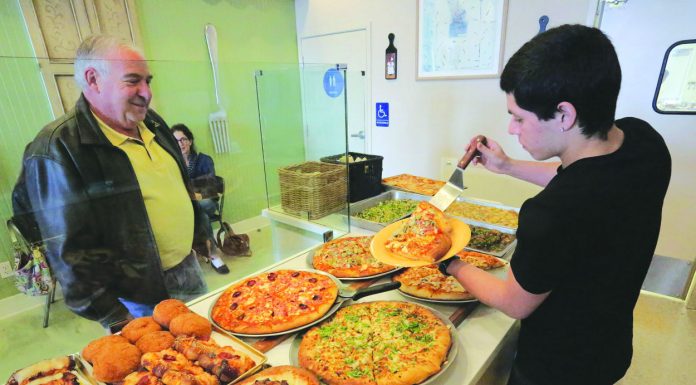
Gilroy residents hoping to experience authentic Italian cuisine need look no further than Sweet Sicily. The new Italian style coffee bar and bistro opened in late February and business has been booming since.
Healthy snacks within reach

Whether you’re eating 3,000 calories a day or 1,500, it’s hard not to snack periodically throughout. However, too many people tend to make poor choices when it comes to snacking, selecting foods that are high in calories, sugar and void of key nutrients. Here are some healthy, tasty snack options that won’t bust your waistline and will hold you over until it’s time for the main meal.
Master Gardener: Time to thin fruit trees

One of the best things about gardening in Santa Clara County is that, no matter how big your garden or how long you’ve been doing it, you get the sense that we’re all in it together. A heat wave can wilt a single patio garden tomato as easily a 100-foot row of lettuce. Aphids don’t care if you’ve been gardening for 30 years or just planted kale for the first time with your fingers crossed. They will find you! And so it goes with fruit trees when spring rolls around. Whether you have acres of orchards or a lone apricot in the backyard, it’s time to start thinking about thinning your fruit.
Baby Lesser Goldfinch

Springtime is when wildlife rehabilitators across the country are inundated with wild babies of all kinds. Many of these turn out to be unnecessary rescues by well-intentioned, kind-hearted people. A lot of seemingly abandoned young are actually being cared for by their parents.

One acquitted, one convicted in Tara Romero trial

The family of Tara Romero is shocked and dismayed by the April 15 acquittal of Primitivo Hernandez, the 27-year-old Gilroyan who stood trial last month on charges of murder and attempted murder in relation to the 2011 drive-by shooting that took the Morgan Hill teen’s life.The 12-person jury found Hernandez not guilty after deliberating for about five days following attorneys’ closing statements in the month-long trial. He has been in custody since his arrest just a few hours after the Nov. 4, 2011 shooting outside the Village Avante apartment complex at the intersection of Cosmo and Del Monte avenues.“That stabbed us in the heart,” Tara’s father Joe Romero said of the verdict. “I’m really pissed off at the whole system. I’m totally disgusted.”Joe Romero faithfully attended the trial—which also included suspect Fernando Mateo Lopez—throughout the month of March. He was deeply surprised by the verdict of not guilty for Hernandez, as he thought the Santa Clara County District Attorney’s case against both defendants was solid.“We respectfully disagree with the jury’s decision” to acquit Hernandez, said Santa Clara County Deputy District Attorney Miguel Valdovinos.Hernandez was released from custody April 19, according to the Santa Clara County Department of Corrections website. In an April 19 court hearing, Hernandez pleaded no contest to misdemeanor assault in a separate incident that occurred in Santa Clara County Jail in 2013, Valdovinos added. In that incident, Hernandez assaulted Ramon Gutierrez, who is also in custody as a suspect in the 2011 murder of Tara Romero.After pleading no contest to that assault, Hernandez was sentenced to three years probation and received credit for time served in jail, Valdovinos said. Gutierrez suffered minor injuries in the 2013 assault and “didn’t make any helpful statements” against Hernandez. Valdovinos said he did not know why Hernandez assaulted Gutierrez.Second suspect convicted of second degree murderMateo Lopez, 24 of Gilroy, was found guilty by the same jury April 15 of second degree murder in relation to Tara Romero’s death, according to Valdovinos. The jury also found him guilty of five counts of attempted murder and three counts of shooting at an inhabited dwelling, as well as enhancements for carrying out the crime as a member of a criminal street gang. His sentencing hearing is scheduled for June 20. Each count carries a maximum penalty of life in prison, Valdovinos said.Mateo Lopez was tried in the same courtroom as Hernandez in Santa Clara County Superior Court.Hernandez and Mateo Lopez faced the same list of charges, but only Mateo Lopez now faces imprisonment. The five counts of attempted murder are related to five teen victims who were shot at when a Chrysler drove by them and and one or more occupants opened fire. Three of these victims were hit by the gunfire and survived; they were friends and classmates of Tara Romero’s at Sobrato High School, and they testified in the March trial.A total of five suspects were arrested by Morgan Hill police hours after the shooting, and have been in custody since their arrest. Ricardo Diaz, 23 of Morgan Hill, pleaded guilty to murder and testified against Hernandez and Mateo Lopez in their trial. He agreed to a minimum sentence of 25 years.The trial for suspect Esmeling Bahena, 22 of Morgan Hill, began this week with jury selection, according to Valdovinos. Police reports said the suspects fled to Bahena’s home on Barnell Avenue after the shooting. An MHPD officer followed the Chrysler there from the scene of the shooting after the vehicle ran a stop sign on Wright Avenue.Gutierrez, 21 of Morgan Hill, has been in custody at state mental health facilities since he was declared incompetent to stand trial after a 2012 preliminary hearing on the Tara Romero murder.Bahena and Gutierrez are charged with murder and attempted murder, according to authorities.While authorities said the suspects planned and carried out the drive-by shooting to settle an ongoing feud with rival Norteno gang members, the victims were not involved in gang activity.The prosecutor and investigators who testified during the trial for Hernandez and Mateo Lopez presented mounds of evidence that connected Mateo Lopez to the shooting, including his thumbprint on the ammunition magazine of an SKS rifle identified as the murder weapon, and text messages between him and other suspects arranging the Friday evening attack—which was planned to be directed at rival gang members.The state had less evidence connecting Hernandez to the shooting even though he was caught hiding in Bahena’s apartment building after police called out the other suspects and attempted to clear the residence the night of the shooting. His attorney Nicole Lambros argued to the jury that while Hernandez might have been affiliated with the same Sureno street gang as the other suspects in the past, and he was in the car with them during the 2011 shooting, he did not know the others were planning a drive-by shooting that night.“When you try cases in front of a jury, anything is possible,” Valdovinos said. “The whole issue was whether or not (Hernandez) was an aider or abettor.”Tara Romero was a 14-year-old freshman at Sobrato when she was gunned down. She and her friends had been out celebrating a birthday at Community Park earlier that evening. They were waiting for a ride home when the shooting happened, according to testimony.
Judge rules in city’s favor, rejects zoning ballot measure

A Santa Clara County Superior Court judge upheld the City of Morgan Hill’s bid to keep a citizen-initiated zoning measure off the June 7 ballot.In a March 24 hearing, Judge Theodore Zayner heard arguments from the city and the Morgan Hill Hotel Coalition, the party that submitted a petition demanding the city council repeal its previous decision to zone a 3.39-acre parcel on the southeast corner of Madrone Parkway and Lightpost Way from Industrial to General Commercial. The petition, which was certified by City Clerk Irma Torrez in May 2015, contained the signatures of more than 4,000 Morgan Hill voters.“The Court decided against the voters today,” MHHC attorney Asit Panwala wrote in a March 29 email to the Times, shortly after the judge issued his written decision.Panwala added that on April 1 the MHHC, which represents six hotels in Morgan Hill, filed a notice of its intent to appeal Zayner’s decision.The MHHC has argued that changing the property’s zoning, which has been zoned Industrial for several years, would deprive the local economy and residents of an opportunity to benefit from a future development that could bring high-paying jobs to Morgan Hill.They also fear that the Madrone Parkway property’s owner—Riverpark Hospitality—will create a glut of hotel rooms in the struggling market by fulfilling its plan to build a new 149-room hotel on the site.A string of council decisions that started in March 2015 with the 3-2 rezoning vote led to the current litigation. Riverpark Hospitality requested the rezoning. Prior to that decision, in November 2014, the council changed the property’s General Plan land use classification from Industrial to Commercial.The MHHC circulated its petition asking the council to either repeal the March rezoning decision or put the question up to the voters. When presented with the petition and asked to make a decision in July 2015, the council declined to repeal the zoning or place it on a ballot, based on the advice of then-City Attorney Renee Gurza.Then in January 2016, the MHHC sued the city for violating the state elections code by rejecting the certified, voter-initiated petition.In February 2016, Interim City Attorney Gary Baum revisited the council’s original rejection of the petition. He recommended the council approve a ballot measure asking the voters if they wanted the Riverpark property to retain its original Industrial zoning, but at the same time challenge the measure in court.The March 24 hearing was the deciding venue on that legal tussle over the measure, which became known as Measure D. If Judge Zayner’s decision withstands the MHHC’s appeal, the measure will not appear on the June 7 ballot.The city’s legal representatives—including Gurza and Baum—have maintained that keeping the Riverpark property in its original Industrial zoning would be illegal because it would make the zoning inconsistent with the city’s General Plan.The judge agreed, citing the 1985 case deBottari v. City Council as the precedent. Baum cited the same case in his argument supporting the city’s position.“Were the voters to consider and approve (the General Commercial zoning), previously passed by the City Council, there would be no conflict as the proposed zoning would be consistent with the General Plan,” reads Zayner’s ruling in part. “However, were the voters to reject the ordinance, that would leave in place an inconsistent—and legally invalid—zoning designation.”The MHHC and its attorneys argued that the city could have zoned the property another type of commercial other than General Commercial, which is the only designation in the Morgan Hill zoning code that allows a hotel. Another type of commercial use would have permitted a development that brings even more jobs and revenue to the local economy, according to the MHHC.“It is very clear that the city took (its) position because they fear a lawsuit from the developer,” Panwala said. “I frankly don't understand how the developer could possibly have a suit…(No) permits had been issued and certainly there could not have been an expectation that he would be able to build a hotel on industrial land when he bought it.”The MHHC filed an appeal with the Sixth District Court of Appeal. “We feel the voters should be able to vote on this measure,” Panwala said.
Fun with parking

City officials tout the new downtown Morgan Hill parking structure—which is set to open next month—as much more than a garage.The 3.5-story, 273-space building is mostly known to residents as the display board for two prominent public art pieces that decorate the exterior. But inside—and within the details just outside the structure that sits between East Third and Fourth streets—are features that facilitate the city’s downtown vision of a multimodal transit-oriented neighborhood, as well as a destination and gathering place for public events.There is even more public art inside, and the project—which includes new retail space on Third Street—is also a tribute to the natural resources and agricultural history of Morgan Hill and the “Sunsweet” property on which the garage lies.“I think this is going to be the most beautiful parking garage, anywhere,” Morgan Hill Economic Development Manager Edith Ramirez said on a March 25 tour of the facility. “It has amazing art, it blends well into the rest of downtown and it has beautiful vistas. Morgan Hill should be very proud of this structure.”Inside are interactive features that inform visitors what businesses and amenities they can find in downtown Morgan Hill, along with electric vehicle charging stations and bicycle lockers.“We wanted to make the garage very friendly. All the parking spaces are full-size” rather than compact, Ramirez noted.The facility’s floors are color-coded in line with the mineral poppy jasper’s color scheme, which features different shades of red, yellow and orange. The north side of the top floor is reinforced to allow public events and large crowds of visitors for car shows or live performances. This space will be available for rent, Ramirez said.The Third Street plaza, which encompasses the front of the new retail space and the area under the branches of a giant oak tree, contains planter boxes and furniture made of lumber, tin and other materials “repurposed” from the former Sunsweet site, Ramirez explained. Chairs in front of a public high-top table, where visitors can plug in their phones or laptop computers for al fresco browsing, resemble tractor seats.A wooden deck under the oak tree that covers the new plaza between Huntington Station restaurant and the garage is designed to protect the tree’s root system, Ramirez added. This structure can also accommodate a band or other type of live performer.“It will be great when they finish it,” said Morgan Hill resident Wayne Lunceford, who was walking by the garage’s pedestrian entrance on Third Street with wife Jane earlier this month. “We’re looking forward to there being more activity in this area.”Jane added, “It is very attractive. We’re ready for it to open.”A walkway exiting the west side of the garage connects the facility with existing restaurants as well as planned new construction closer to Monterey Road.For security, the interior of the garage is equipped with surveillance cameras and blue call boxes that ring directly to the police station with the touch of a button.The three-story elevator shaft contains windows that allow visitors to see their change in perspective over downtown.Occupants of the 4,000-square-foot retail shell are not yet determined. Developers Rodrigues/Imwalle have a contract with the city to serve as that property’s landlord. The space can accommodate up to three tenants, and interior improvements can be built to suit their needs, Ramirez added.

