






Fences to Furniture

Amid the din of electric tools, chatter and loud music, the Terra Amico woodshop brims with creativity and bustles with energy. A thick layer of dust coats every item in sight, and sunlight beams through large open doors—catching sawdust particles in their wake.
Big election, fast market
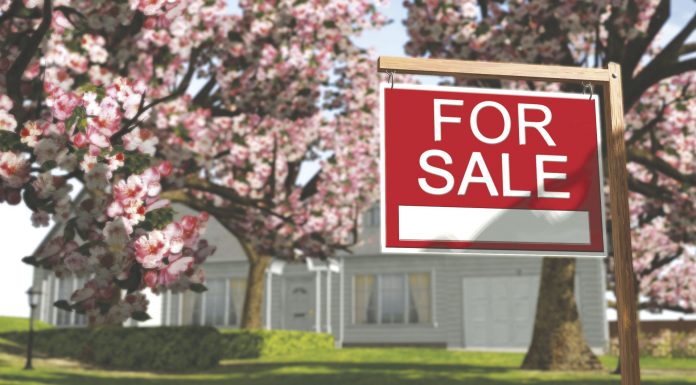
This year’s divisive general election has caused some voters to threaten to move to Canada should their candidate fail to win the White House.
Seoul food

In an atmosphere where the din of clamoring forks and plates rises slightly above the conversation with servers bustling back and forth in traditional dress, the familiar aroma of grilling meats fills the air and fuels my primal instincts.
Budding artists

South Valley residents have probably already seen her talents displayed under the bridges on the Gilroy levee walk or on one of the many painted utility boxes scattered about Gilroy.
No water for weeds

Water is one of our region’s most precious resources. Our hot, dry summers have always made water conservation a top priority. With a little planning, gardeners and landscapers can reduce the amount of water that goes to weeds, while still maintaining healthy plants.
Finding Swainson’s Hawk

Even after 13 years of rehabilitating countless songbirds, raptors, reptiles and assorted mammals, there are still some “mystery critters.” Sometimes it’s because they’re too young to identify, other times because it’s such an unusual animal (to me or to our locality).
Survey says: Public wants growth control, opposes new tax

Voters are unlikely to approve a new revenue source for street upgrades and other services, but they favor an extension of the city’s growth control ordinance, according to results from a recent public opinion poll.That’s among the data compiled by The Lew Edwards Group and Godbe Research, which will be presented to the council at the July 27 meeting. The agenda items include a public hearing and council discussion on a possible bond or sales tax measure to be placed on the Nov. 8 ballot, but staff does not offer a conclusive recommendation on such a measure.The council will also discuss and possibly approve a measure to extend the Residential Development Control System, which was first approved by voters in 1977. The current RDCS ordinance expires in 2020 with a population cap of 48,000 for that year. The council and planning commission have said they hope the voters will continue to support a population cap by extending the RDCS at least another 10 years. The new expiration date, population cap and number of annual housing allotments to appear on the ballot will be determined by the council July 27, if the body chooses to approve a measure.The proposed ballot measure, which the council could change July 27 based on public input and its own discussion, reads, “Shall a measure be adopted to amend the Morgan Hill General Plan and Municipal Code to update the City’s voter-approved Residential Development Control System (RDCS) to extend it to 2035, establish a population ceiling of 59,000, with a slower rate of growth than currently exists, and improve policies to maintain neighborhood character, encourage more efficient land use, conserve water, and preserve open space?”Scientific survey results compiled by LEG and Godbe show that almost 78 percent of respondents—likely Morgan Hill voters—would vote “yes” to this measure. Three hundred ninety-eight people responded to the telephone and email survey. Such a measure would only require more than 50 percent approval among the voters.Furthermore, a city staff report notes that this proposed RDCS update is a “paradigm shift” from past growth control ordinances, as it focuses more on the maximum annual housing allotments rather than the population cap itself. This annual housing maximum is likely to be set by the council July 27 between 155 and 250, based on previous discussions. On June 28, the planning commission recommended a maximum allotment of 230 units.The city staff report also notes that the proposed population cap of 59,000 in 2035 is “a ceiling and not a target,” and the number of housing allotments can be reduced from the annual maximum but never increased.The current RDCS allows up to 250 housing units per year. Council members, developers and community members have praised the RDCS as promoting high-quality housing and amenities for Morgan Hill residents, by requiring developers to compete for the limited number of allotments.Low support for new taxesThe “quality of life survey results” compiled by LEG and Godbe Research show limited support for a general obligation bond or sales tax measure on the Nov. 8 Morgan Hill ballot.Such a measure has been discussed by council members for two years, primarily to address a backlog of “deferred maintenance” on the city’s road system and a shortage of funds to repair or upgrade streets.A memo from the consultants, included with the July 27 agenda item, states only 36 percent of survey respondents would support a general obligation bond, and 48.5 percent would vote in favor of a three-quarters-cent sales tax. On follow-up questions, the consultants further determined that 54.6 percent supported a half-cent sales tax, and 59.9 percent supported one-quarter-cent. Although the last of these options gained majority support beyond the margin of error, the consultants don’t recommend placing it on the ballot because it was a follow-up and “not a test of viability,” the memo reads.“(It) is our strong advice and reluctant conclusion that the City of Morgan Hill should not proceed in placing a revenue measure on the ballot at this time, and only place the update to the RDCS update measure on the November 2016 ballot,” reads the memo from LEG and Godbe Research.The city staff report states that the city has an annual funding shortfall of $5.8 million to keep up with needed maintenance of streets, roads, parks and public facilities.At the July 20 meeting, the council approved a “resolution of necessity” for up to $38 million worth of general obligation bonds, which can be used only for capital projects that “are used to improve our asset or extend the life of the asset,” City Manager Steve Rymer said. Council members and city staff also at that meeting determined that if such the bonds can be acquired, 80 percent of the funds should go toward streets and roads.If approved, the bond would be repaid with a property tax assessment at $29 per $100,000 of assessed value on each property in Morgan Hill.A voter-approved sales tax could be used for “operational and capital items for maintaining the long-term financial stability of Morgan Hill and critical services,” including 911 emergency response times, police patrols, crime prevention and investigation, fire and EMS services, fixing potholes and maintaining city streets, economic development and “other general city services,” reads the staff report.The council hired LEG and Godbe last year to conduct public opinion research in order to determine Morgan Hill residents’ priorities for city services, and to gauge their support for different ballot measure options.
Agenda complaint precedes ballot measure discussions

The Morgan Hill City Council will consider placing two measures on the November election ballot at their July 27 meeting, but some observers say the noticing of the public hearing items could have been more upfront to the citizens.City officials said they corrected one of the complaints by clarifying the agenda description in the name of openness and transparency, a move that a Brown Act expert said is exactly what governments should be “encouraged” to do.Specifically, item 12 on the agenda relates to a possible revenue measure, mainly for street repairs and improvements, in the form of a local sales tax or $38 million general obligation bond.Item 13 recommends the council approve a ballot measure asking voters to renew the Residential Development Control System, which currently expires in 2020 with a city population cap of 48,000 for that year.When the agenda was released to the public July 22, neither title of the two items mentioned a possible ballot measure. Anyone interested in the agenda and unfamiliar with recent council discussions would have to read a list of recommended actions following each title to learn the council might vote to place the measures on the ballot.Item 12 was titled “Report on quality of life survey results,” with discussion of a possible revenue measure on the Nov. 8 ballot listed as among the recommended actions. The staff report for this item in fact does not advise the council to approve such a measure, but cites recent public opinion research that indicates Morgan Hill voters are unlikely to support a new funding source for city services.Item 13 was titled “Morgan Hill 2035 Project: Environmental Impact Report (EIR); General Plan Update; and Residential Development Control System (RDCS) update.” Adoption of a measure to place on the November ballot is buried within recommendation number three of the agenda item.That irked Morgan Hill resident Chris Monack, who emailed council members and city staff to express his frustration with the vague titles. He suggested that failing to provide details of the possible passage of a bond measure within the agenda item description is inconsistent with the Brown Act, a state law that ensures openness of public meetings and records.“(If) someone looked at the agenda titles to find reference to the ordinance, they wouldn't find any,” Monack said by email. “They would have to know specifically where to look.”City officials agreed with Monack’s complaint about the vagueness, at least for the item 12 revenue measure. They released an amended agenda July 25, with a new title: “Report on quality of life survey and consideration of a sales tax and/or general obligation bond November 2016 ballot measure(s).”“We are revising the agenda to say that, even though it’s a little late,” Mayor Steve Tate said. “We are very widely publicizing the fact it’s a ballot consideration as well.”But that doesn’t appease Monack, who argues the new agenda did not meet the Brown Act’s minimum timing requirement for public notices. The act says public meeting agendas must be posted to the public at least 72 hours prior to the scheduled meeting.A Brown Act expert contacted by the Times said the city is probably not guilty of violating its noticing requirements, but could have been clearer from the get-go. The Brown Act recommends that public government meeting agenda items should include a brief description “generally not to exceed 20 words,” according to Nikki Moore, Legal Counsel for the California Newspapers Publishers’ Association.The description of items 12 and 13 on the July 27 agenda each tally in at more than 75 words, including the list of recommended actions for each items.“I think it’s a little bit unclear on the front end that they could be taking a vote, and they could do a better job describing what they’re planning to do,” Moore said. “For the regular citizen reading this they might not know what action might be taken. (Item 12) would be well served to be more specific what they’re actually intending to do, which is sort of buried” in the recommended actions.Moore added that the reposting of the amended agenda does not seem to violate the Brown Act’s 72-hour minimum either, and in fact “There’s a public interest in encouraging government to fix their mistakes.”She added, “The recommendation portion does put the public on notice of what the title says so the clarification does not change anything, and does not require that the (council) put over the item for discussion at a properly noticed meeting.”If the amended title was significantly different from the original agenda posting, that could constitute a Brown Act violation and the council would have to delay discussion, Moore added.Even if there was no Brown Act violation, the way the agenda items were written is “ethically questionable and irresponsible to the community,” Monack added. He plans to publicly object to the noticing of the July 27 meeting.City staff compiles each council meeting agenda, which is approved by City Manager Steve Rymer before it is released to the public.Rymer added that he agreed that Monack had a good point about the lack of clarity in the title of item 12. The original title posted July 22, which had no mention of a possible vote on bond or sales tax measure, was based on previous discussions about ongoing public opinion research conducted by consultants Godbe Research and The Lew Edwards Group, he added. The consultants were hired by the council last year to conduct research on local voters’ priorities for their city government, and to gauge their interest in taxing themselves to augment city services.The city wasn’t trying to hide anything, Rymer assured. On the contrary, in addition to circulating the agenda, city staff have also sent out “email blasts” in advance of the July 27 meeting, prominently notifying recipients of the two possible ballot measures under consideration.“I think our track record speaks for itself,” Rymer said. “We are very open and transparent. The law requires it, and the council expects it.”
Police arrest three on suspicion of drug sales at hotel

Morgan Hill Police arrested three people at a local hotel July 25 on suspicion of intent to sell narcotics and other offenses.About 9 a.m. July 25, MHPD officers were driving through the parking lot of Executive Inn, 16505 Condit Road, according to a press release. They saw a man walking in the parking lot who said, “Oh the cops” and ran toward the hotel as the patrol drove closer to him.The officers gave chase and detained the man, later identified as Antonio Vasquez, 41 of San Martin, according to police. The officers learned that Vasquez was on searchable probation and had multiple warrants for his arrest out of Santa Clara County Sheriff’s Office.Two women—Vanessa Cecena, 28 of Hollister, and Kayla Adams, 29 of San Jose—were also contacted in the room associated with Vasquez, police said. Cecena had a warrant out of Gilroy for her arrest.Police found methamphetamine and evidence of narcotics sales in the subjects’ hotel room, according to the press release.All three occupants were arrested on suspicion of possession of narcotics for sales, being under the influence of a controlled substance and possession of drug paraphernalia, police said. Cecena and Vasquez are also suspected of providing false information to a police officer. All three were booked at Santa Clara County Jail.Anyone with information about this incident can call MHPD Det. Del Moral at (669) 253-4964 or the anonymous tip line at (408) 947-7867.

