




Best of Out & About, August 5, 2016
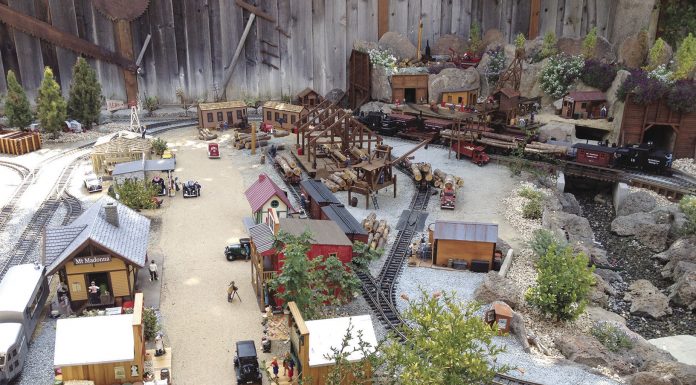
Garden Railroad Tour - If you enjoy model trains, then check out the 22nd Annual Garden Railroad Tour. The tour benefits St. Joseph’s Center and Community Pantry. You can drop off non-perishable food items at any tour site. Pick up the Tour Guide and Etiquette Booklet at Garden Accents, 11155 Lean Ave, Gilroy or BookSmart, 1285 E. Dunne Ave in Morgan Hill. Visit nine stunning model railways running throughout spectacular backyard gardens in Morgan Hill, Gilroy, Hollister and Aromas on Saturday, Aug. 13 from 9 a.m. to 3 p.m. For more information contact [email protected] or visit bagrs.org
What they’re wearing

Gilroy may not be the New York or Paris of fashion, but that does not mean our little town lacks a sense of style. Walking around Gilroy this weekend, I ran into many people of different genders, races and ages. Despite all these differences, they had one very special trait in common—a striking sense of style.Starbucks, the hot spot for sleep deprived workers, teenage girls and… this just in..., electronic design firm owners? Melanie Byerly, 65, was on her way to Monterey, when she made a quick pit stop at the Gilroy Outlets. Like others who can remember midcentury elegance, her fashion inspiration is Jackie Kennedy. Byerly says “[Mrs. Kennedy] had a great sense of style, but of course she had a great deal of money so she could buy the best,” says Byerly. “I like the simplicity of her dress, the beautiful lines, and she used beautiful fabrics, not a lot of ornamentation.” One can match Byerly’s beautiful style by spending $500 per month on clothes and shopping at her favorite store, J Crew.Starbucks must be the fashion hub of Gilroy, because standing in line waiting to buy a cool beverage, was Acacia Alvarez, 16. Her teal hair caught my eye, and I knew I had to sit down and talk with her.Alvarez is a full-time student, but works at Tapioca Express and babysits on the side. Being a student, she limits how much she spends on clothes, spending less than $25 on most items. Some of her fashion choices are inspired by Manon Macasaet and Ceilidh Joy, two models that focus on vintage clothing, but often add their own personal, modern twist to their style. For example, Alvarez says, they’ll wear a vintage top and then rock it with a tight black leather skirt. These two extremes make a very bold fashion statement—one Alvarez strives for.
Hiking Peninsula Watershed

We are very fortunate that the hills west of Interstate 280 along the San Francisco Peninsula remain largely wild and undeveloped. Many acres of that land are open every day to the public at no charge or for a small day use fee, but not all.
High on the hog
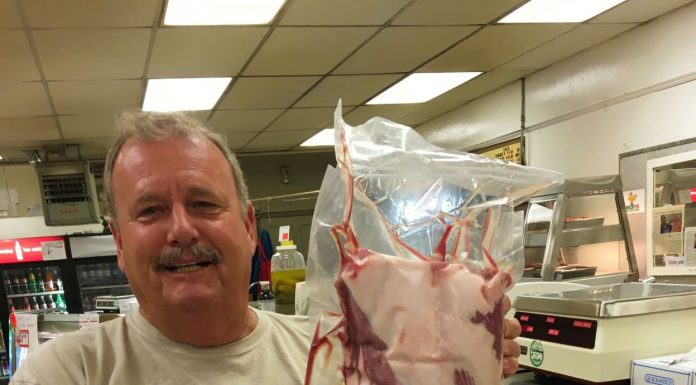
In a world of fad diets and low-fat foods, the major pork producers in America have, over the last 60 years or so, reengineered the tasty hog.
Planning for a life of fitness

Most of us grew up playing sports or doing something that required movement. A number of today’s high school athletes train either in the morning, the afternoon, or both. For college athletes, the intensity and length of their training is even more demanding. Athletes typically train for three or more hours a day.
From farm to fair
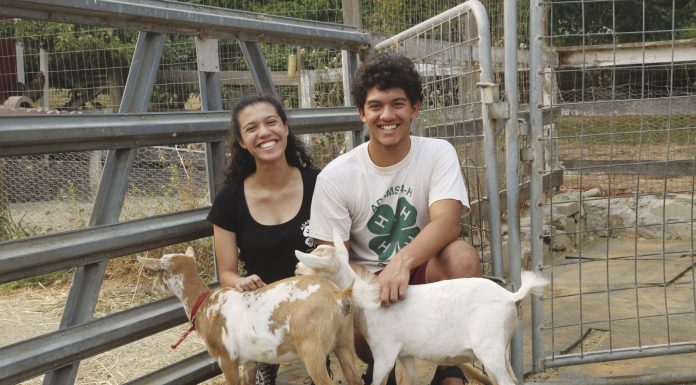
From Beyonce and Jimmy Carter to Jacqueline Kennedy Onassis and Willie Nelson, 4-H and Future Farmers of America (FFA) have been helping young people across the nation build leadership skills for the last century.For two Gilroy families, the Beyers and the Funkes, these organizations have not only taught about animal husbandry and showmanship at county fairs, like this week’s Santa Clara County Fair, but they’ve helped foster community and cultivate a personal sense of accomplishment for the kids involved.The older of the two organizations, 4-H had its official start in 1902. It began as an extracurricular youth organization for young people ages 5-21 as a way to teach leadership, encourage citizenship and responsibility, and develop life skills. The group was later formalized with the 1914 passage of the Smith-Lever Act, which created the Cooperative Extension Service, a partnership between the USDA and land-grant universities to extend the agricultural research efforts of these universities.Similarly, the FFA began around the same time as part of the Smith-Hughes Act (1917), which expanded upon the Smith-Lever act to allow for vocational agricultural training. Eventually, the development of a high school curriculum gave way to the FFA in 1928 when 33 students from 18 states officially formed the organization.Cheryl Beyer, 48, enrollment chair and a leader for the Adams 4-H chapter in Gilroy, one of four chapters in South Santa Clara County, started in 4-H more than 10 years ago when her oldest child, Jasmine, was six. As a homeschooled family, Cheryl wanted to provide additional social outlets for her four children and she sought out 4-H as an extracurricular opportunity.“Everyone thinks that your kids are going to turn out weird when you homeschool them because they think that they are sheltered,” says Cheryl, but she says her kids, like their peers, are active in their church group and in sports and dance programs.“When they got involved in 4-H the first two projects that they took on were garden and rabbits. So for years we raised rabbits and then we added chicken and then we added swine.”Farm to tableWith the popularization of the farm to table movement, families like the Beyers and the Funkes are walking the talk. While not large scale farmers, they are raising and processing their own animals. Processing is the term used for slaughter, and Cheryl Beyer admits it’s a euphemism used by the meat packing industry.“I think it’s a shame that we use the word ‘process’ because it divorces people from what actually happens with their food,” she says, adding that because of 4-H, her kids are very cognizant of waste.“When we cook a chicken that they have raised, if there is anything left over, they will say ‘let’s wrap the leftovers up.’ They know what it took to get that chicken from the little chick all the way to the table because they had to do it.“When they saw Food, Inc. they said, ‘We want to raise meat chickens because we don't want to eat the chickens that come from the store.’ So first we raised turkeys and then we raised meat chickens.”For people like the Funkes, who raise larger animals, there is a company that comes and slaughters them.Kathy Funke, 51, who is an agriculture instructor at the Charter School of Morgan Hill, has roots in both FFA and 4-H, where she was a participant and leader for many years and where she met her husband, Dave.“I taught high school agriculture over in Soquel, then when I had kids I stayed home with them and then I went back to teaching at the charter school—K-8,” says Kathy. “We have a farm at the school with goats and chickens and pigs.”The Funkes own property in Gilroy, where they raise goats, meat birds, hens, swine, horses and, until this week’s county fair in San Jose, a steer.Kathy’s daughter, Beth Funke, 18, says the farm to table movement is “good for us.”“When we first moved here, our dream was to grow everything we eat,” says Kathy. Because only one animal can be sold at auction, as a market project, Kathy says her kids were raising multiple animals and selling them outside of auction. They would hold their own farm to table events after the fair, inviting the people who had purchased animals from them, and serve food they had grown on their farm.Beth’s Supervised Agricultural Experience project this year is a steer, where she’ll take the skills she learned in her agricultural class through FFA and apply them outside of class in at fair.“I’ve never shown a steer before,” says Beth, “so this is all very new to me. I’ve been working really hard with him and I want to sell him at the fair. My end goal is to get a good price, so $3.50 a pound.”According to her mom, “Most of her animal projects have been market projects because we’re big into entrepreneurship here. She’s made a lot of money here.”More than animalsBut not all projects go to market. This year, in addition to showing meat hens, Joshua Beyer, 16, is showing a blown glass bowl at the fair in the “still” barn.“That’s basically anything that’s not alive and moving,” says Jasmine Beyer, 17. “One of the coolest things about the fair is that everyone thinks that it’s animal-focused, but it’s not. You just have to go into the still barn.”Stills could be anything, including baked goods, art, flower arranging, or photography. Jessica Beyer, 14, has previously won a blue ribbon for baking. “That was really fun!” she says. “It felt really nice to accomplish something.”Emerging LeadersCheryl Beyer shares that even though a lot of the projects are agricultural, they teach young people more than animal husbandry. “It’s to teach them responsibility. It’s to teach them leadership skills.” In addition to meeting for individual project groups, 4-H clubs have a general monthly meeting, where the club gets together and discusses different projects.“They will get up and talk about what they learned in their projects, so that’s teaching them public speaking skills,” says Cheryl.“I still have trouble with public speaking,” says Jessica Beyer. “And because we have presentations in 4-H, I feel like it’s really helped me a lot in overcoming that fear.”Other practices that encourage leadership are preparation for 4-H camp, where Jasmine Beyer worked as a youth leader this summer. Over a six-month period, she planned this year’s week-long summer camp with two other students and three adult advisors.“So the project is just kind of ‘a spy in disguise’ if you will. It's the vehicle for teaching responsibility, public speaking, money management—because that feed starts getting expensive after a while—just all of these different life skills that they can take beyond 4-H,” she says.
Powerful healing methods

You can find the Body and Soul Apothecary booth by its gentle scent alone. Follow that enigmatic smell and you’ll quickly stumble upon one of the more eclectic companies present at Morgan Hill’s farmers market.
City responds to openness complaint; growth control to appear on ballot

After receiving a complaint from a resident about the “confusing” title of a July 27 Morgan Hill City Council agenda item, city officials agreed to take steps to make this and future agendas more transparent.
Judge denies request to delay Sierra LaMar trial

The judge in the ongoing Sierra LaMar case denied a motion by attorneys for the missing teen’s accused killer to delay the jury trial, which is now expected to begin in September.Antolin Garcia Torres, 24 of Morgan Hill, appeared in a Hall of Justice courtroom in San Jose for a hearing on the motion to delay the trial Aug. 1. Superior Court Judge Vanessa Zecher denied the motion, which Garcia Torres’ defense attorneys filed more than four years after Sierra went missing from her north Morgan Hill home at the age of 15.The court and attorneys still have to resolve other pre-trial motions filed on Garcia Torres’ behalf before jury selection can begin, according to Santa Clara County Deputy District Attorney David Boyd, the state’s lead prosecutor in the case. These include a motion to suppress evidence and another to change the trial venue to another county.“Defendant is unable to show a reasonable likelihood that he cannot receive a fair and impartial in Santa Clara County,” based on the large population of Santa Clara County from which to draw jurors and other factors, reads Boyd’s motion opposing the request to change the trial venue.This argument and Garcia Torres’ motion to suppress evidence—which claims investigators’ collection of the suspect’s DNA samples violated the Fourth Amendment of the U.S. Constitution—will be heard at the Hall of Justice in late August or early September, Boyd said.During a 2014 grand jury hearing, investigators revealed they found Garcia Torres’ DNA on Sierra’s belongings, which were found on the roadside in her former neighborhood on Palm Avenue. They also say they found Sierra’s DNA inside Garcia Torres’ Volkswagen Jetta after the teen was reported missing.Sierra was last seen walking to her school bus stop near Palm and Dougherty avenues March 16, 2012. Investigators think Garcia Torres kidnapped and killed her, though her remains have not been found.Sierra was a sophomore at Sobrato High School at the time of her disappearance.Garcia Torres has been in custody at Santa Clara County Jail since his arrest May 2012. He is charged with murder in the Sierra LaMar case.In an unrelated case, Garcia Torres is also charged with three 2009 attempted carjackings of female customers in the parking lots of two Safeway grocery stores in Morgan Hill.The DA is seeking the death penalty for Garcia Torres in relation to the murder charge.Jury selection for the murder trial could begin by Sept. 19, Boyd said.On July 28, Zecher signed an order prohibiting cameras in the courtroom to cover the trial proceedings.

