






Sip and savor

Revered in the wine world, Josh Jensen is the winemaker at Calera Wine. He’s graced the cover of Wine Spectator and Jensen’s pinot noirs are known the world over.So it was during their recent Summer Social & Sliders event that I made my pinot pilgrimage to Calera, to sip and savor wine made from grapevines grown in limestone soil at the site of a former limekiln. Arriving at the winery I was immediately awed by the views provided by the majestic Diablo Mountains.My tasting started inside the cool barrel room with a glass of 2014 Central Coast Chardonnay ($20), awarded “Best Value!” by Wine & Spirits Magazine. Next up was a “spunky and fun” 2015 Pinot Noir Rose—just right for summertime picnics.Although 19 different pinot noirs, all estate grown and from different vineyard blocks, are available for purchase, for the day’s event we were treated to a vertical tasting of pinots from the Jensen Mt. Harlan block: two library and one 2012 release.The pinots were poured next to the outside tent filled with gourmet sliders. Surprisingly, the 2005 Pinot Noir ($94) is still a fabulous wine, showing rich and complex layers of ripe raspberry and Bing cherry. The 2009 Pinot Noir ($104) is silky with sweet spice topping the dense raspberry and cherry cola flavors. Layers of sweet raspberry jam and tart rhubarb give way to leathery notes on the finish of the 2012 Pinot Noir ($92).Taking in the views, I savored the tasty bites and sipped these extraordinary wines.
Gavilan Election: What you need to know

On the heels of hiring a new president, Gavilan Community College in Gilroy will soon have a new trustee.Two candidates, Danielle Davenport and Rachel Perez, will vie for the only contested seat in the Nov. 8 election for the Gavilan Joint Community College District. Two other seats are uncontested so voters can choose only the incumbent in each.It will mark the first time trustees are seated under the college’s new district election format. Previously, they were elected at-large from the attendance area, which encompasses 2,700 square miles in San Benito County, and Gilroy, Morgan Hill, San Martin and parts of south San Jose in Santa Clara County.Also under the old system, the board had to be made up of two trustees each from the Gilroy and Morgan Hill unified school districts and three from San Benito High School District.In the new election format, representation from Santa Clara County will be slightly stronger than from San Benito County.Four trustees must live in Santa Clara County, two in San Benito County and the seventh can live in either county.Under the new format approved by trustees last year, the attendance area was subdivided into seven Trustee Areas (TAs), each roughly balanced in numbers (24,000 based on the 2010 U.S. Census) and demographic characteristics, including ethnicity.The change was made following pressure from Latino groups that claimed Latinos were at a disadvantage under the old system, a violation of the Federal Voting Right Act.Now, candidates can run only from the area in which they live. Voters cast ballots only for candidates who live in their area.Elections under the new system, like the old, are staggered so that all seats are not open at the same time. This year, seats in TAs 2, 4 and 6 will be filled.Davenport, of San Martin, and Perez, of Gilroy, are vying for the T6 seat. That trustee area is the only one that includes parts of Santa Clara and San Benito counties.Incumbent Jonathan Brusco of Morgan Hill is running unopposed in TA2, while board colleague Mark Dover of Gilroy is unchallenged in TA4.The San Benito and Santa Clara County election offices consolidate the trustees’ election with the November general election under contract with Gavilan College.On June 14, the college board voted unanimously to hire Kathleen Rose as the school’s superintendent/president.Previously she was Gavilan’s executive vice president and head of instruction. Rose held that post for seven years before succeeding the retiring president, Steve Kinsella.Gavilan College has a 2016-17 operating budget of $43.5 million, with another $33 million in Measure E capital project expenditures, federal financial aid monies and the Associated Students fund, according to Jan Bernstein Chargin, director of public information.The college enrolled 8,572 students for the 2016 spring semester. Of those, 71 percent were part-time, 19 percent were full-time and 9 percent were non-credit students, she said.It has a full-time faculty of 207 and 270 part-time teachers and other staff.In addition to its main campus in Gilroy, Gavilan operates learning centers in Morgan Hill and Hollister and will open another in the Coyote Valley in South San Jose.The college started nearly a century ago as San Benito Junior College in Hollister, became a joint community college in 1963 with the addition of south Santa Clara County to its service area and built its main Gilroy campus on Santa Teresa Boulevard in the late 1960s. In 2019 the school will celebrate its centennial anniversary.

Meet the council candidates: Rene Spring

Editor's note: This article was originally published Feb. 8, 2016.Campaign season for the November 2016 city election is underway, as Planning Commissioner Rene Spring has formally announced his candidacy for one of two City Council seats up for grabs.Spring, 52, is running on a platform that consists of slowing down the growth that Morgan Hill has seen in recent years, and planning for “smart” growth in the future.“I’m really worried about the direction our town is going,” Spring said. “I don’t know anyone who moved to Morgan Hill for the urban experience. I’m really worried about the explosion of buildings we’ve seen across town. As a planning commissioner, I’m really worried about some of the policies the council still has in place that enable this to happen.”Spring is a 12-year resident of Morgan Hill, having immigrated to the U.S. from Switzerland a few years before he moved here.He has served on the seven-member planning commission since 2012. Members of that body are appointed by the elected City Council.“The council doesn’t want to change. They cater to the builders and developers,” Spring added.He doesn’t think some of the council’s recent key decisions on land use reflect how the majority of Morgan Hill residents feel. He cited the Southeast Quadrant project as an example, where the council has regularly advocated an annexation and “Sports-Recreation-Leisure” plan for the agricultural area for more than a decade, despite the protests of other local agencies and residents who insist the effort is not compatible with its surroundings.“When (the SEQ) came up, I strongly advocated including that in the General Plan Update,” Spring said. The City Council two years ago declined to include the projected commercial growth of the SEQ—which would include a private Catholic high school if it gains approval from the county—in the General Plan Update effort. “It will not do anything to preserve our agriculture in the Southeast Quadrant.”Another “eye opener” on the commission, for Spring, was when the Oak Meadows annexation project in west Morgan Hill. On that agricultural property, the owner planned to build up to 48 new homes. “I thought that was a beautiful area. When it came up (at a planning commission meeting), I was the only commissioner that voted against the project,” Spring said.The current council last year ultimately rejected the Oak Meadow annexation by a 3-2 vote.“We need to stop annexing land outside our city as long as we have lots of land inside our Urban Service Area,” Spring added.Spring added he has also differed with the current council on the conversion of industrial land to residential and commercial. “We want companies to move down here and make this land available for well-paying jobs.”Furthermore, Spring said the city’s downtown plans suffer from safety shortfalls, and have forced small businesses to move out to the detriment of the city.“I do not think (the downtown) is family friendly,” he said. “It is unsafe, especially for kids. I want to keep our innovative and community-building small businesses in downtown, and we need to attract other business.”Two council seats up for election in November 2016 are currently held by incumbents Larry Carr and Marilyn Librers, neither of whom has formally announced their intent to run for re-election. Councilmembers serve four-year terms.The mayor’s seat, currently occupied by five-term incumbent Steve Tate, will appear on that ballot as well. The mayor’s term is for two years.The city election will take place Nov. 8.Spring is Director of Program Management for Cadence Design Systems. He has served on the board of directors for Leadership Morgan Hill, and is currently President of the Board of Directors for the Morgan Hill Community Foundation.
Meet the council candidates: Mario Banuelos

Mario Banuelos has a 25-year career as a public servant under his belt, but it was his recent volunteerism with the City of Morgan Hill’s General Plan Advisory Committee that pushed him to run for one of two city council seats on the Nov. 8 ballot.“That really gave me insight into the workings of our local community,” said Banuelos, 57. “It inspired me to step up and take my level of service to the next step.”The GPAC, now dissolved, was a 17-member committee of local residents appointed by the city council to filter community input and offer insight to planners for Morgan Hill’s latest General Plan update. The GPAC spent most of 2013-2015 working on this process, and the council unanimously approved the updated General Plan in July 2016.Banuelos was the vice chair of the GPAC. He also served on the city’s Residential Development Control System working group, which helped advise planners on details of that ordinance’s update, which will also appear on the Nov. 8 ballot for renewal.One thing Banuelos learned during the GPAC process is that residents are suffering “development shock, and rightfully so.” That’s a response to the ceaseless residential construction throughout Morgan Hill over the last two-plus years, as developers have rushed to complete a backlog of homes permitted during the recession.“We heard from residents wanting to maintain that small-town character,” said Banuelos, who plans to vote in favor of the city’s RDCS update, which will appear on the ballot as Measure S. “For them, it’s single family homes.” The downtown should be reserved for higher-density residences to complement businesses and alternative modes of transportation, he added.“I’m excited about the downtown, and the new businesses coming in,” Banuelos said.Before retiring in 2014, Banuelos worked for the City of San Jose Public Works’ Geographic Information Systems office. This work consisted largely of attaching various individual data layers—such as jobs or housing—to maps of the city to assist with public planning.In Morgan Hill, Banuelos is a longtime volunteer and a founding board member for the nonprofit Morgan Hill Community Foundation, and a member of the Rotary Club of Morgan Hill. Through these and other civic efforts, a central focus of Banuelos' has been the youth.“To see their enthusiasm, their eagerness to solve problems, their idealism, it inspires me,” he said.Banuelos is married to Morgan Hill Unified School District Human Resources Director Fawn Myers. The couple have four adult children.
Meet the council candidates: Armando Benavides
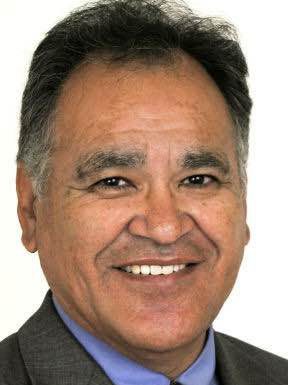
The growth of Morgan Hill is shaping up to be a central issue in the Nov. 8 race for two city council seats, and candidate Armando Benavides is critical of the current body’s efforts to control it.“I think there’s a general consensus that the rate of growth has been a little too much,” Benavides said, referring to the time since about 2013, when the economy improved enough for developers to gain financing to build previously approved homes.He thinks the city’s streets infrastructure woes are a result of this surge in residential construction. City staff have reported that Morgan Hill is short about $5.8 million per year in funding for street repairs and maintenance, just to maintain the infrastructure at its current level.If elected to the council, Benavides said he would like to re-examine that number, and consider cuts in other services funded by taxpayers before asking voters for more money with a sales tax or other local funding source.He added that when it comes to growth, which is regulated through the city’s Residential Development Control System (also on the Nov. 8 ballot as Measure S), the city should seek to tie the annual growth rate to the state of the streets and roads.“My platform is ‘responsible growth,’ based on the most important factor that it can be sustained by the infrastructure on a short-term and long-term basis,” said Benavides, a local trial attorney who specializes in civil law. “I don’t think our current leaders have done an investigation of how much growth our infrastructure can sustain.” He didn’t specify a number of housing allotments he thinks the streets can support.Benavides, who ran for Morgan Hill Unified School District trustee in 2014, added he has “concerns about the (city’s) budget.” For example, he thinks the council shouldn’t have spent $425,000 of former Redevelopment money on public art for the new downtown garage.Benavides has also been active in Morgan Hill’s Latino community, working with various parent groups and leaders.He led an effort last year to force MHUSD to change its election system from at-large to by-district electing. He said he does not plan to do the same with the Morgan Hill City Council, but he thinks the city should figure out how to achieve “more outreach and more engagement” from underrepresented sectors of the community.Benavides, a resident of Morgan Hill for 16 years, is married and has two sons—one attending San Jose State University and one at Live Oak High School.
Meet the council candidates: Marilyn Librers

Councilwoman Marilyn Librers, a nearly 40-year resident of Morgan Hill, is running for her third consecutive term on the city council in order to contribute to a “bright and exciting future” for the city.Since her first four-year term, which started in 2008, Librers counts fiscal responsibility, the preservation of Morgan Hill’s “charming small-town feel” and solid public safety services among the city’s attributes she hopes to maintain.“This community has a unique mix of family life, recreation, tourism and agriculture,” said Librers, who has two adult children and a granddaughter who live in Morgan Hill. “I believe as a City Council member, I have contributed to all of these.”Librers is a strong supporter of Measure S, the city’s growth control ordinance update on the same ballot as Morgan Hill City Council and mayoral races. While other candidates have doubts about the measure, Librers thinks it can effectively manage local growth and prevent surges of construction.“I support slow planned residential growth, development of downtown businesses and strong economic growth in our industrial areas,” Librers said.She also counts public safety as an ongoing priority if re-elected, as the city’s police and fire services account for more than 75 percent of Morgan Hill’s general fund budget.Another important issue to Librers is the maintenance of city streets—an area of city services that is vastly underfunded. If re-elected, she said she will seek funding for street maintenance and upgrades through grants and by taking a look at utility expenses to ensure that infrastructure is “up-to-date and safe.”Furthermore, she encourages voters to vote “Yes” on the Valley Transportation Authority’s Measure B half-cent sales tax on the Nov. 8 ballot, which is projected to provide about $800,000 annually to Morgan Hill to fix potholes and maintain streets.Librers is retired from the Mt. Madonna YMCA, and is a former Morgan Hill Parks and Recreation Commissioner. For the last eight years, she has been the Executive Director of the Morgan Hill-based nonprofit Pauchon Research Foundation.She is also President of the nonprofit China-Silicon Valley, which promotes economic ties between the two regions. Librers has traveled to China numerous times to promote these ties.Librers is also a past board member of the Morgan Hill Community Foundation, former representative of the Morgan Hill Sister Cities Association and has held various posts with the League of California Cities as a representative of Morgan Hill in recent years.

