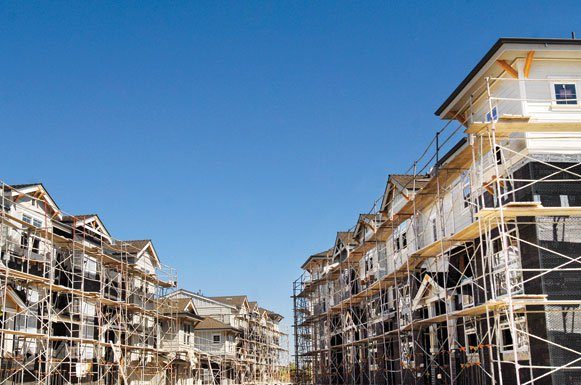
With five candidates running for two seats on the Morgan Hill City Council, and three hopefuls running for the office of mayor, the Nov. 8 ballot will be a crowded one for the local election.Running for council are incumbents Larry Carr and Marilyn Librers, and challengers Mario Banuelos, Armando Benavides and Rene Spring. The top two vote getters will win the available seats. Early voting starts Oct. 11, and the votes will be tallied when polls close the evening of Nov. 8. Councilmembers serve four-year terms.Mayoral candidates are incumbent Steve Tate, and challengers Kirk Bertolet and Joseph Carrillo.This week, the Times publishes the council and mayoral candidates’ answers to some of the important issues in the local race.Three measures on the Nov. 8 ballot that directly impact Morgan Hill residents are:• Measure S, which will ask voters if they want to extend the city’s Residential Development Control System with an annual maximum housing allotment of 215 units and a population cap of 59,000 by 2035. See related story on A1 for more details about this measure, which requires a simple majority for passage.• Measure B, sponsored by the Santa Clara Valley Transportation Authority, which will ask voters to approve a 30-year half-cent sales tax to fix potholes and finance significant transportation infrastructure improvements, including an extension of Caltrain service to South County, and the Santa Teresa Boulevard/Hale Avenue extension on the west side of Morgan Hill. This measure requires a two-thirds majority for passage.• Measure A, sponsored by Santa Clara County, which will ask voters for a $950 million general obligation bond to fund affordable housing projects and related efforts throughout the county. This measure also requires a two-thirds majority.There are also three seats on the Morgan Hill Unified School District board of trustees up for grabs on the ballot. Incumbent Tom Arnett and challenger Angelica Diaz are running for the Trustee Area 5 seat; incumbent Rick Badillo is running against Albert Beltran Jr. and Mary Patterson for TA 6; and Teresa Murillo is running unopposed for the TA 7 seat. Visit morganhilltimes.com to view more information on these candidates.Visit the Santa Clara County Registrar of Voters website at sccvote.org for more election information.THE CANDIDATES:Mario BanuelosAge: 57Family: Married with four adult childrenOccupation: Retired from City of San Jose, Geographic Information SystemsArmando BenavidesAge: 61Family: Married with two sons—one attending San Jose State University and one attending Live Oak High SchoolOccupation: Trial attorney with a specialty in civil lawLarry CarrAge: 47Family: Partner and two teenage children—a son and daughter who both attend Sobrato High SchoolOccupation: Vice President of Joint Venture Silicon ValleyMarilyn LibrersAge: Not providedFamily: Two adult children and a granddaughter, all residents of Morgan HillOccupation: Retired from Mt. Madonna YMCA, now the Executive Director of the nonprofit Pauchon Research FoundationRene SpringAge: 52Family: Married, three adult step-children, three grandchildrenOccupation: Program Management Director; Morgan Hill Planning Commissioner (volunteer position)TIMES: Why are you running for city council? Why do you believe you are the best candidate and how would you like to impact Morgan Hill as an elected official?SPRING: I love Morgan Hill and want to continue serving this great community, making positive changes. As a planning commissioner and board member of local nonprofit organizations, I realize many in our community want new leadership on our council. As an experienced, independent community leader, I will bring a fresh perspective.BANUELOS: With over 25 years of public service in city government, with local nonprofits, and as a community volunteer, my experience, leadership and service gives me a unique and balanced perspective that I will bring to the city council as we build upon past successes and solve future challenges.BENAVIDES: The incumbents’ uncontrolled growth policies motivated me to run. Every year we have to generate approximately 10 million dollars in housing development fees to meet our budget. I will use my experience as an attorney and community leader to shift to a paradigm of responsible growth desired by the community.CARR: Morgan Hill is a great city and I want to continue making it better. I have a positive plan for Morgan Hill’s future: continue balancing our budget, maintain growth control, improve public safety, protect our natural open space and agricultural resources, continue making downtown a vibrant welcoming and pedestrian friendly centerpiece to our community and continue to invest in the youth of Morgan Hill. Morgan Hill has a strong record of accomplishments during my time serving on the council.LIBRERS: I am running for a third term as a city councilmember as I feel I bring the experience needed to oversee our projects that are underway, and also to assure the citizens that Morgan Hill continues to be the family-friendly community we all have come to love. As a 40-year resident, I understand and believe in the small-town feel. I will continue to support economic growth in our industrial parks and work hard to bring jobs to the city.TIMES: Do you think Morgan Hill is growing too fast, too slowly or just the right pace? Why?LIBRERS: Right now Morgan Hill is growing at a fast pace in regards to residential development. This is due to the backlog of building allotments all the way back to 2008. Once this surge has ended, the city will then move forward at a much slower rate. It is important for Measure S (growth control ordinance extension) to pass so the citizens can be assured of slow controlled growth. The council has built into place the opportunity for review of this growth number over the next years. No one is in favor of becoming a large city or having urban sprawl.SPRING: I firmly stood for slower, more responsible residential growth before declaring my candidacy for city council. As a planning commissioner, I proposed an annual growth rate of 1 percent and opposed the Southeast Quadrant and Oak Meadows proposals. We need to make sure we can afford to maintain our infrastructure and city services long-term before bringing more land into our city limits. I will work with all stakeholders to find sensible solutions to concerns about sprawl.BANUELOS: I support Measure S on the November ballot that limits the total number of housing units built per year to a fixed number of 215 through year 2035. At this rate of growth, I think our community will grow at the right pace. Measure S will also eliminate the spike in development that has alarmed so many residents of Morgan Hill in recent years.BENAVIDES: I believe the incumbents created unsustainable growth by ignoring its negative impact on the infrastructure because the city budget depends on growth. Every year we have to generate about $10 million in new development fees to meet our budget. Lower the growth and the city faces a budget deficit. Meet the budget and we further degrade our infrastructure. I will make it a priority to only approve responsible growth that our infrastructure will sustain.CARR: The last few years have brought a spike in development in Morgan Hill. The current Residential Development Control System allowed for increased growth after years of zero or near-zero growth during the recession. Some have said this is a flaw in the system. I have voted in favor of fixing this system to stop the spikes in development and have a more predictable and steady slow rate of growth—Measure S on your November ballot. I voted with the majority of the current council to slow the rate of growth even further by lowering the annual cap on residential development.TIMES: What aspects of city services do you think need the most improvement? How would you go about improving these services?CARR: Morgan Hill has funding needs for infrastructure. As Morgan Hill’s representative to the Valley Transportation Authority (VTA), I have been working to bring more regional resources and service to Morgan Hill. Our streets and roads and the residents of Morgan Hill have benefited from this work. I have been a supporter of using General Fund dollars to supplement the gas taxes the state provides to maintain local streets and roads.LIBRERS: Although a lot has been done to improve the communication of city services and events, I believe we still have work to do with helping citizens be engaged. I also think we lack communication with the Hispanic population and have inquired many times for more notices to be printed in Spanish and also our website to be bilingual.SPRING: Our roads and telecommunications infrastructure are city services needing the most attention. Education and engagement with the community and businesses in how to address these are key to finding feasible and broadly supported solutions. We must also further water conservation efforts and the potential for increasing water recycling/reuse technologies. Continuing engagement of the community and collaboration with the Water District will go a long way in addressing this issue.BANUELOS: At the present time, street maintenance and repair need the most improvement. This is largely due to declining transportation funding (gas tax). Morgan Hill’s pavement condition index (PCI) ratio for city roads has declined from good/excellent to “at risk.” At this rate, our roads will deteriorate even further. That is why I support Santa Clara County Traffic Measure B in the November elections to improve countywide congestion and road conditions.BENAVIDES: The most needed improvement is to identify where our infrastructure needs repair or to be rebuilt. Our infrastructure is in gradual decline and we have no money to invest in it. More growth means more deterioration. I will focus my attention to direct the city to identify where our infrastructure is deteriorating and will collaborate with the community to generate and implement corrective plans. I will only approve new development sustained by the infrastructure.TIMES: How would you plan to stay in tune with the taxpayers if elected? What other factors will guide you in your decisions on the dais?BENAVIDES: I will represent the people and know their preferences through social media, one-on-one meetings, meet-and-greet events, letters received, and comments made at the council meetings. I will listen to city staff recommendations, council members and stakeholders. But I will be guided by the preferences of the voters.CARR: During my years of service to Morgan Hill I have been recognized as an accessible and open-minded policy maker. I have routinely met with residents, answer messages and am active through social media. I have lived in Morgan Hill for more than 30 years, my kids go to public schools in Morgan Hill, and this helps to keep me informed and connected to the community. The thoughts of public members are always of great interest to me when making decisions as a councilmember.LIBRERS: I think I am very approachable as a city councilmember. I will meet with whoever asks and I always like to hear citizen input. I’m usually the councilmember who will ask the hard questions of staff and consultants. Being on the council is not about being popular, and sometimes decisions are very difficult; however, experience and trust of my colleagues is key to a well functioning council. If the council can’t respect each other, no decisions can be made and the city as a whole will suffer.SPRING: I have been and will remain very accessible to residents to discuss concerns and ideas. I believe engagement is essential. Key to decision-making is finding a balance among data, the pros and cons of competing ideas, the circumstances at hand, and what impact a solution will have on the community.BANUELOS: I am connected to various groups throughout the community and will continue to elicit their feedback, as well as from individuals and groups that I have not yet met. I will study each issue, listening to the public and staff in order to answer the question, “How will this benefit our residents?”TIMES: How do you feel about the council’s recent efforts to overhaul the downtown corridor and bring more business to this neighborhood?BANUELOS: I support the City’s efforts to bring more businesses downtown. I envision downtown to be a destination and not a shortcut, where new neighborhood residential development will help support businesses while encouraging a safe, walkable and bikeable community. Those who drive into downtown or use transit will be able to stroll through the area. The completion of the Hale-Santa Teresa extension should be a priority in order to give commuters an alternative route.BENAVIDES: The impact of the downtown overhaul remains unknown as major housing and building construction is a work in progress, and many additional families will move into those areas. I believe there will be new job creation and additional tax revenues once the new businesses open. Definitely, we will see more congestion and safety concerns once all the new houses are filled and businesses open, since we have no money to invest in the infrastructure around downtown.CARR: I am a supporter of our downtown. I voted to Invest $25 million of Redevelopment Agency funds in downtown and this has already brought in private investment in far greater amounts. Successful downtowns are the right combination of retail—restaurants and more traditional stores—entertainment, places to gather and residential. Parking is accessible and the pop-up park provides a great place for families. Yet, there is more work to be done—downtown can, and should, be more pedestrian friendly. I am working with the VTA to bring funding to Morgan Hill to complete the Santa Teresa/Hale Westside extension.LIBRERS: I’m very happy with what is going on in our downtown. It’s an exciting chance for the downtown merchants to finally get the foot traffic that will keep their doors open for business. The quaintness of our town lends itself to tourism, which in turn will make the downtown profitable for all involved. The new parking garage has made such a big difference in traffic. Where it is located, many people park and walk the downtown core. This is exactly what Morgan Hill needs. More foot traffic means more jobs and added tax revenueSPRING: I support recent efforts to make our downtown safer and more pedestrian and family-friendly. I am also encouraged by the redevelopment projects occurring. However, we still need to make further improvements to safety and ensure that community-building, family-owned businesses are not completely priced out of downtown. We need to find ways to support these types of businesses staying in our downtown because they often have the greatest overall impact and connection to our community.