



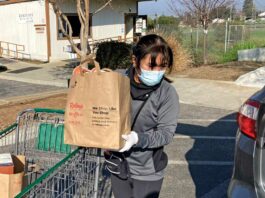


MHPD: Four suspects caught stealing baby formula at local Safeway stores

Local police nabbed four suspected thieves Feb. 6 in possession of $1,000’s worth of baby formula and other merchandise at two local Safeway grocery stores on E. Dunne and Tennant Avenues, according to a post on Morgan Hill Police Department’s Facebook page.
County sues Trump Administration to block Executive Order

Attorneys for Santa Clara County filed a lawsuit Feb. 3 in federal court challenging President Donald Trump’s Jan. 25 executive order that withholds federal funds to municipalities that do not assist the federal government in the deportation of millions of immigrants.

Clean energy program starts in April

Morgan Hill residents and businesses are starting to receive notices in the mail informing them of their coming automatic enrollment in the Silicon Valley Clean Energy Authority, which allows electricity customers to use strictly renewable sources to power their homes and businesses.“Silicon Valley Energy is on track to start providing our 100 percent carbon-free electric generation service to residents and businesses of Morgan Hill, beginning in April,” reads an email from SVCE spokeswoman Pamela Leonard.SVCE is required to inform existing PG&E customers 60 and 30 days in advance of their automatic enrollment in the program, Leonard said. All customers have the ability to opt out of SVCE, and continue using the PG&E electricity they have been burning.SVCE is a nonprofit public agency formed in 2016 by 12 South Bay communities, including Morgan Hill. The nonprofit was formed in order to source clean energy on the participating communities’ behalf, at lower costs than PG&E’s comparative rates, according to Morgan Hill Communications Manager Maureen Tobin.“PG&E is still an essential partner as they will continue to deliver electricity over existing power lines, maintain the lines, send bills and provide customer service,” Tobin said in a press release.Enrollment will be phased in over a six-month period starting in April, and ending in October, Tobin explained. All PG&E customers will receive a series of notices before and after they are enrolled.Specifically, existing PG&E accounts will be enrolled in SVCE’s GreenStart electric generation service, which offers 50 percent renewable energy that is 100 percent carbon free, Tobin continued. For a higher rate, residential and commercial customers can choose to upgrade to SVCE’s GreenPrime program, to receive 100 percent renewable power.In comparison, PG&E’s existing service offers 60 percent carbon-free, 30 percent renewable energy.On Jan. 11, the SVCE board of directors approved rates for their GreenStart, GreenPrime and rooftop solar programs. The GreenStart rates will be 1 percent lower than existing rates offered to residential and commercial customers by PG&E, according to a SVCE press release.For the GreenPrime program, rates will be $.008 per kilowatt-hour more than that currently offered by PG&E. That adds about $4 per month to the average customer’s current bill.Furthermore, the SVCE board approved a Net Energy Metering program for rooftop solar customers. This program will offer rewards to customers who produce more power with their solar power systems than they consume.“Right now, electricity used to power our homes and businesses creates about a quarter of our region’s emissions,” Tobin’s press release continued. “Using more renewable energy is an easy, economical way to reduce our greenhouse gas emissions and improve our carbon footprint. It’s the single most effective way to accomplish our communities’ climate goals.”Other communities that are part of SVCE include Santa Clara County, Gilroy, Campbell, Cupertino, Los Altos, Los Altos Hills, Los Gatos, Monte Sereno, Mountain View, Saratoga and Sunnyvale.To learn more about SVCE, visit svcleanenergy.org, or call (844) 474-SVCE.
Council approves Sunsweet proposal, with suggested changes
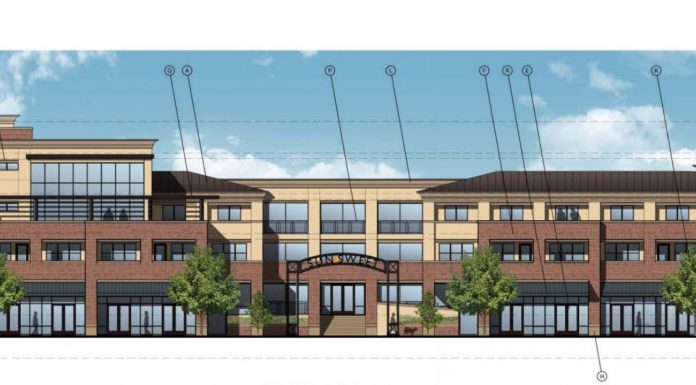
A 60-foot tall, five-story mixed use project in the heart of downtown was approved by the Morgan Hill City Council Feb. 1, despite mixed reviews on its fit in the ever-changing neighborhood.Touted by the developer as a residential haven for millennials, the project was approved on the fabled Sunsweet property, located on Depot Street with frontage on both East Third and Fourth streets. Property owners and developers Rocke and Glenda Garcia have tried for more than 20 years to develop the site. They have submitted numerous iterations of a mixed-use project for the city’s consideration over the years, but none of those have progressed to construction.This time, the city and the Garcias might finally see eye to eye, even though the council asked the developer to make some changes to the latest Sunsweet proposal, for which they approved a development agreement on a 4-1 vote Feb. 1. Councilman Rene Spring voted against it.The mixed-use project includes 83 apartments for rent, 7,859 square feet of retail space—including dining—along Third Street, underground parking and a variety of amenities for future residents. The fifth floor of the project is not a full story, but rather contains loft areas for the upstairs units, according to Morgan Hill Interim Planning Manager Terry Linder.The residences would be a combination of studios as well as one- and two-bedroom units. The project also features an outdoor plaza of 18,600 square feet, surrounded by the residential building.Republic Family of Companies is the builder and designer, and a “50/50 partner” in the project, according to Rocke Garcia.The Sunsweet property is a “landmark” of downtown Morgan Hill, Garcia added.The site has long been seen by city officials, as laid out in the 2009 Downtown Specific Plan, as crucial to the success of a fully built-out downtown.“I’m just super pleased that Glenda and I are involved in it,” Garcia said.The former agricultural processing site is located just east of the city’s downtown parking garage, and has been mostly vacant for decades.But the proposal presented to the council Feb. 1 was met with some hesitation from the elected body, and criticism from the public.Spring said he voted against the project primarily because of its maximum proposed height of 60 feet in some places—higher than other projects downtown. The “front” of the project is on Third Street, where Spring acknowledged that height variations with a lower rooftop at a proposed arched entryway don’t look as imposing.Still, he said, the idea of a 60-foot “wall” along the Depot Street side “breaks my heart looking at it,” referring to drawings presented by city staff and the developer.Newer developments downtown have grown in height in recent years. Linder noted that the city’s four-story parking garage required an allowance to exceed the downtown height restriction of 55 feet.Mayor Pro Temp Larry Carr agreed the height of the Sunsweet proposal is out of the norm for downtown Morgan Hill. But he had more pressing concerns, including the fact that 2,000 square feet of the proposed commercial space on Third Street (7,859 square feet) is dedicated for the project’s leasing and property management office.Carr said the city’s vision for Third Street frontage, as noted in the DSP, has always been for commercial uses available to the entire community—not just for the use of residents of a single project.“That takes up a quarter of the Third Street frontage, and it’s not going to have activity in it,” Carr said. He asked the developer to try to reduce the size of the office, or figure out how to add more community-oriented commercial space on Third Street.Linder noted that after the council’s Feb. 1 approval of a development agreement, the project’s detailed plans will still require further planning commission and council approval.Parking was a unanimous concern among the council members, who worry there will be more cars associated with the new residents than spots available—a problem with numerous other high-density residential projects in Morgan Hill.Carr included in his motion for approval, a request for the developer to come back with a plan to require new residents to park on site, and not in spots elsewhere downtown that are supposed to be for visitors.The developer asked city planners for flexibility on some of the DSP’s building guidelines. These include the required depth, from the street, of commercial space; the total amount of commercial space; and the maximum height.The developer is seeking a “Planned Development” zoning designation in order to get around some of these restrictions. Such a designation provides “flexibility in our design standards and guidelines,” Linder said.But the requests by the Garcias and Republic are not out of the ordinary, she added. “The exceptions sought this evening are in line with the exceptions we’ve looked at with other projects,” Linder said.Targeting millennialsMichael Van Every of Republic Family told the council the rental apartments will appeal to “a broad spectrum of people,” but are particularly well-suited for millennials who are struggling to find places of their own in the pricey Bay Area market.The project is “pet friendly,” and the office will provide concierge services, a lounge area, espresso machine and a greeting area, he added.“Morgan Hill doesn’t have this product type,” Van Every said.Councilwoman Caitlin Jachimowicz suggested, despite the parking and other worries she shared with her colleagues, the proposal will allow young professional natives of Morgan Hill, who might have moved away in their 20s, to come back to their hometown.“I don’t want to lose (the project) because of the concerns we have,” she said. “The numbers show that people my age are not coming back to Morgan Hill. We don’t have the places to move back to.”The Sunsweet proposal looks poised to fill that void, she said.The developer did not immediately comment on whether they would be able to adjust the project in line with the council’s Feb. 1 requests.
South County loses LAFCO representation

Despite having the most land available for ongoing development in Santa Clara County, South County will not have a place at the table when it comes to making key decisions on future growth.The Santa Clara County Cities Association, which gets to fill one seat on the seven-seat governing board of the Local Agency Formation Commission (LAFCO), the state mandated agency that oversees boundaries of cities and special districts in the county, decided to appoint Rob Rennie, Vice Mayor of Los Gatos, over Gilroy Councilwoman Cat Tucker to the county commission’s board at a contentious meeting earlier this month.The Association, which aims to “represent the mutual interests of the diverse 15 cities of Santa Clara County,” decided on Rennie after Sunnyvale councilman Jim Griffith, who serves on the Cities Association Executive Board, claimed it would be a conflict of interest for the Gilroy councilwoman to serve as commissioner because Gilroy was the subject of a lawsuit brought by LAFCO.Tucker, who had served on the Board for three and a half years, two of those years as an alternate before the term she was appointed to fill was up last April, put herself forward to fill the seat left vacant when the previous commissioner, Tara Martin-Milius from Sunnyvale, failed to win re-election to her council seat in November.The odds seemed to be split evenly between Tucker and Rennie, who was currently serving as an alternate on the board, when Griffith made the erroneous claim.While it is true LAFCO sued the city of Gilroy in January last year over alleged deficiencies in the environmental review of the proposed North Gilroy Neighborhood Districts Urban Service Area Amendment—otherwise known as the 721-acre Ranchos Los Olivos housing proposal—it was settled three months later after the development proposal was pulled by the applicant and Gilroy City Council rescinded its certification of the environmental impact report. As part of the settlement, the City of Gilroy agreed to pay $24,500 to cover LAFCO’s court fees.The initiated litigation was called “unprecedented in the history of our LAFCO and possibly LAFCOs nationwide” by the agency in its 2016 annual report.At last week’s council meeting, Gilroy Mayor Roland Velasco thanked Tucker for her efforts, saying, “We knew it was going to be an uphill battle, thank you for going above and beyond.”For more on this topic, read Gilroy City Councilman Dan Harney's opinion piece in the Gilroy Dispatch on LAFCO and the city's place in the valley: http://www.gilroydispatch.com/opinion/gilroy-s-changing-role-in-silicon-valley/article_3c8414ee-e8d4-11e6-b012-97347d401b6e.html
City to study ‘quiet zones’ at railroad crossings

A divided Morgan Hill City Council Jan. 25 approved an approximately $88,000 expense for a consultant to conduct a “quiet zone” study at selected railroad crossings in town.A quiet zone is a section of railroad tracks, typically located in “residentially sensitive” areas, in which a train proceeds silently, without the conductor blasting the horn as an approach warning, according to a city staff report.Quiet zones, which are governed by the Federal Railroad Administration, are created with the use of safety measures to enhance the crossing. These measures include enhanced gate systems for vehicles and pedestrians, traffic signal coordination and more.In Morgan Hill, the study, to be conducted by Michael Baker International, will specifically look into establishing quiet zones on the Union Pacific tracks where they cross Dunne, Main and Tilton avenues, according to city staff. These intersections are located in higher-density residential neighborhoods where the train horn, particularly late at night, can be disruptive.The council voted 3-2 to approve the $88,330 study, with Mayor Steve Tate and Councilman Rene Spring opposed.Tate noted that if the study determines that quiet zones are possible at any of the intersections in question, the cost to construct and develop each quiet zone is $3 million to $6 million—a sum the mayor said is too high for the city to commit to, or to even embark on a study that might not lead to any action.“I don’t know where it falls in our list of priorities,” Tate said. “To me the safety issues we have on our other streets need to be looked at as well. I’m just saying don’t do it now. Let’s figure out our priorities first.”Spring noted the cost of the study is almost “$90,000 for a project we may never get financed.”He added that the state’s High Speed Rail project presents another potential hindrance. If the HSR Authority chooses an alignment through Morgan Hill that follows the UP tracks, that could make the study a moot point.But Mayor Pro Temp Larry Carr suggested if the study determined quiet zones are feasible and desirable in Morgan Hill, the city should try to convince the HSRA to help pay for the construction of the zones.He added that “eliminating the train horn” in some of the city’s higher-density residential areas is a quality of life improvement that is worth pursuing.The study is expected to be complete in six months, according to city staff. The cost of the study is funded by the city’s long range planning fund and the public facilities fund.
Attorney: No evidence that Sierra LaMar is dead

In the second day of the Sierra LaMar murder trial, the attorney for accused killer Antolin Garcia Torres attempted to sow doubt within the jury by attacking the most essential facets of the case presented by police and the prosecutor.“You are not going to hear any evidence that (Sierra) was killed, absolutely none,” defense attorney Al Lopez told the jury Jan. 31.The claim was a stark contrast from that of Santa Clara County Deputy District Attorney David Boyd, who started his opening statement less than 24 hours earlier by saying, “Sierra LaMar is dead, and this man killed her,” as he pointed to Garcia Torres seated at the defense table in the crowded courtroom.Lopez continued his opening statement by attempting to pick apart various other arguments Boyd presented before him at the Hall of Justice in San Jose. He implored the jury to “keep an open mind throughout this whole process. You haven’t heard the evidence yet.”Garcia Torres, 25 of Morgan Hill, is accused of kidnapping and killing Sierra March 16, 2012, the last day the 15-year-old Sobrato High School sophomore was seen alive. Her remains have not been found.He is also accused of three unrelated attempted kidnappings in 2009, when he allegedly attacked three women in the parking lots of two local Safeway stores.Lopez told the jury none of the state’s evidence proves Garcia Torres was involved in those 2009 crimes. There is even an “innocent explanation” for the defendant’s thumbprint on the battery of a stun gun used in at least one of the attacks, found by crime lab experts during the police investigation.Employed as a “courtesy clerk” at Safeway in 2009, one of Garcia Torres’ responsibilities was to perform “go-backs,” Lopez explained. This entailed placing items back on the shelves that customers returned or decided not to purchase after all before closing out their purchase.The packaging on Duracell nine-volt batteries, such as the one found in the stun gun recovered from the parking lot crime, tends to “bust open on a regular basis” just from incidental handling. When this happened in the store, it was Garcia Torres’ job to place the batteries back inside the packaging, tape them up and place the item back on the shelf.“That’s why Mr. Garcia Torres’ thumbprint would be on that battery,” Lopez said. He added that Safeway employees would testify about this later in the trial.Lopez added that none of the three female victims in the Safeway incidents could pick Garcia Torres out of a photo lineup, and the attacks appeared to be run-of-the-mill robberies rather than kidnapping attempts as the prosecution claimed.On Jan. 30, Boyd said the 2009 Safeway victims didn’t see a photo lineup until after Garcia Torres was arrested on suspicion of killing Sierra in 2012, but they all gave similar verbal descriptions of the suspect hours after their respective incidents. Boyd added Jan. 31, finishing up his opening statement before Lopez started, that “nothing was said, nothing was taken” from the women, indicating the attacker was not interested in robbing them.Lopez then went into a lengthy refutation of the DNA evidence that allegedly ties Garcia Torres to Sierra in the hours after she disappeared—a lynchpin of the DA’s case.Lopez said the prosecutor’s case relies on “background DNA” found on Sierra’s discarded belongings and in Garcia Torres’ red Volkswagen Jetta. This DNA was found in such small amounts that it could have been transferred to the incriminating locations by a third or fourth party, and there is no way to determine, with certainty, how or when it appeared there.DNA, Lopez told the jury, can be left in a location simply with the touch of a hand, and can stay there for years. “This case is not the ‘gold standard’ DNA,” Lopez said. “It’s called ‘contact DNA’…It’s too sensitive. You’re picking up everybody’s DNA who touched it…And you get mixtures from many people in that sample. There is no way of knowing how many people touched it.”Boyd told the jury earlier that a DNA analysis of Sierra’s jeans, which were found discarded in her bag along with the rest of the clothing she was wearing the day she disappeared, showed a strong likelihood of Garcia Torres’ DNA on the pants. He added that a rope found in the trunk of the defendant’s car had a hair that matched Sierra’s DNA, and a glove—also found by investigators in the trunk—held the teen’s genetic material.But Lopez said investigators did not follow “DNA protocol” when processing the items from Sierra’s bag, which they found off the side of the road near Laguna Avenue a couple days after she disappeared. He showed photos of the items placed on a “dirty” corkboard by detectives before being sent to the contamination-controlled crime lab.“The government has big problems in this case with transfer” of DNA and potential evidence contamination, Lopez said.Plus, photos of the rope do not show any hair on it, despite Boyd’s claim that more than 50 such fibers were found on the item. “The rope was in evidence for four months before they found that hair,” Lopez said.Garcia Torres’ attorney also questioned the relationship between the defendant and hundreds of microscopic glass beads found in Sierra’s discarded clothing. Boyd said these beads are the kind found in roadway paint, used to make the surface more reflective. He suggested this evidence shows Garcia Torres dragged Sierra or her body across a road surface some time after he kidnapped her.But Lopez said these beads were found only on Sierra’s clothing, and nowhere in Garcia Torres’ car or on his belongings. Furthermore, he said a defense witness will testify that there are no drag marks on Sierra’s belongings that contained the beads.Finishing up his opening statement the morning of Jan. 31, Boyd said Garcia Torres and Sierra met “for the first and last time” the morning the teen disappeared, despite the defendant’s claims to police that he had never met her.Sierra vanished as she walked from her north Morgan Hill home to her school bus stop near the intersection of Palm and Dougherty avenues.Garcia Torres “learned” from the foiled Safeway attacks to pick a younger, smaller victim, “immersed in her own life, with her headphones in her ears as she walks toward her bus,” Boyd said.The trial for Garcia Torres is expected to last up to five months at the Hall of Justice in San Jose. If convicted, he faces a possible sentence of death or life in prison.
Prosecutor: Suspect had ‘opportunity’ to kidnap, kill Sierra LaMar
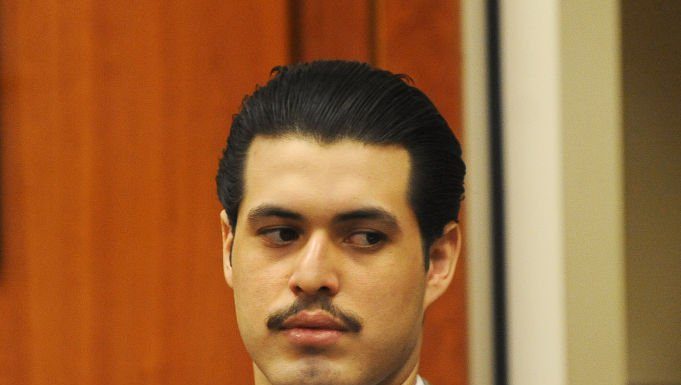
Opening statements started Jan. 30 in the trial for Antolin Garcia Torres, who is suspected of kidnapping and murdering 15-year-old Sierra LaMar of Morgan Hill.

