




Guest view: Help is always available

“Why didn’t you call me?” It's a phrase I've heard multiple times in the last couple of months. People who care about me ask why I didn’t reach out before I got to a very dark place and almost ended my life. It’s a...
Guest view: Walking a mile in her shoes
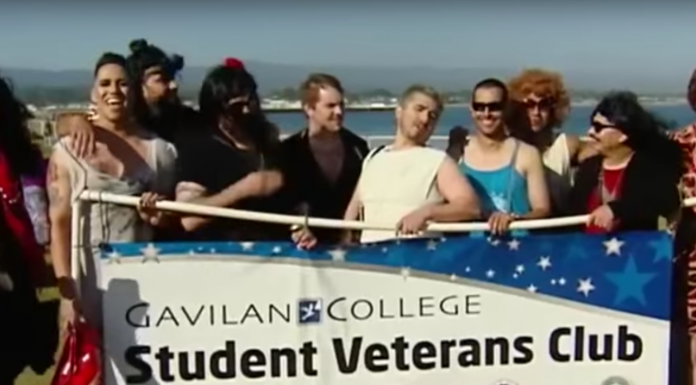
I’ve adopted several phrases that I use when life gets rough: “Someone out there has it way worse than me,” and “I’m doing this for something bigger than myself.” I used to tell myself these things when things were particularly bad in Afghanistan. I have continually referred to these lines in my time out of the service, however I never thought I’d need to use them while having mascara put on my eyes.At the Gavilan College Veterans Club, we’ve been looking for ways to help out in our community. We want to change the conversation that has become the norm when discussing veterans, especially combat veterans. A couple of months ago at a party, when one of the revelers learned that a friend of mine had done several tours to Iraq he asked him, “Are you alright? Up here?” pointing to his head. He managed to brush it off but, it’s not an isolated incident.Most of us have had someone just assume that we aren’t alright after doing a tour. One of the goals that we at the club wanted to do was put ourselves out there so that we could show combat veterans in a new light. If we could find an opportunity to help our community and simultaneously display that we don’t need to be taken seriously all the time, we win on all fronts.So when our club advisor Jillian Wilson came up with the idea of supporting Walk a Mile in Her Shoes, we all agreed it was a great idea. However, I wasn’t that excited when the suggestion came about for a tiered system of donations. With every monetary goal reached we’d make ourselves a little more feminine, and at $2,500 we’d go full drag.Some of the club members were thrilled (it raised eyebrows, but we don’t judge). I really enjoy being a guy. I grew a beard as soon as I got out of the Army. So the whole process wasn’t thrilling me. The money we would raise would go to Monarch Services (formerly Women's Crisis Support - Defensa de Mujeres), an organization that helps over 1,500 victims of sexual assault and domestic violence a year. So indeed this was “something bigger than myself,” thus it would be worth it.A couple of days away from the event it was clear that we’d make the goal for full drag. To add to the uncomfortability, I recruited my mom to help buy me a dress. It was definitely fun for her.On April 28 about 10 combat hardened veterans showed up at the Cosmetology Department at Gavilan, ready to get dolled up. We were greeted by a very eager team of women who couldn’t wait to get started on us. I was uncomfortable and they couldn’t help but laugh. I think every one of them really enjoyed doing this to us, so I’m not sure if I really need to thank them too much. A special thanks does need to go to Gilbert Ramirez and Michelle Terrano. (I know you did it just to get back at your brother.) By the time we got to Santa Cruz I think it’s safe to say we were all a bit nervous and we were right to be. All 10 of us were gawked at and even cat-called. So ladies, job well done.Our number one earner, Johnny Sandavol, who personally brought in over a grand in donations was probably the best looking out of all of us, if not the most revealing. Hopefully his lovely girlfriend Erika Linn Chesnutis will choose to dress him a little more conservatively next time. Ray Lopez, our team Captain, brought in over $700 just behind myself, although in my opinion he should redo the mile since he looked more like an 80s glam metal star.The biggest guy we got, Jake Hester, pulled in about a couple hundred. He ended up looking like a cross dressing Fred Flintstone. Jorge Gonzales was dubbed a cholo drag queen before we even left the campus. Thanks for giving me something to laugh at. Josh Santorro, with his waxed mustache and betty boop outfit, will forever haunt my dreams. Ben Sandavol went for a Marilyn Monroe look.Somebody described me as drag queen hippie Jesus; I’ll take it. In total we all raised $4,757, nearly doubling our original goal to walk a mile dressed in drag.It also wouldn’t be fair not to mention the women who joined us on this walk: Mayra Rios, Ray’s wife Elaine Estrada, Melissa Santorro, and of course my mother.The true title of queen of our group goes to Jillian Wilson as she’s the one who encouraged us to do this. A very special thanks goes out to Leeann Luna the Monarch Services Administrative Manager who was responsible for putting on this year's Walk a Mile in Her Shoes event.This was an eye opening experience. I’m happy that I did it. Even if I did exaggerate how uncomfortable I was, I’d still not like to do it again. Next year I think I’ll just stick to the shoes.Gilroy resident and Live Oak High alumnus Connor Quinn is Region IX State Membership Coordinator for Team Rubicon, a disaster relief organization that employs military veterans. He is also a VA work study at the Gavilan College Veterans Resource Center.
Religion: The positive power of faith traditions in the community

Dr. Martin Luther King Jr., in teaching about faith, stated “The God whom we worship, is not a weak or incompetent God. He is able to beat back gigantic waves of opposition, and bring to low, prodigious mountains of evil. The ringing testimony of...
Guest View: The Granary District is where downtown thrives

Eat, drink, play, work out, get healthy and beautiful, design or buy a house and get it financed all at the Historic Granary located on Depot Street by the train station in downtown Morgan Hill.
Wander the garden paths and take in the quiet nature...
Religion: From Egypt—Out of a Narrow Place
Passover celebrates the Biblical story of Exodus where God freed the Israelites from slavery. It is a central teaching in Judaism. On Friday evening, April 15, the week-long holiday of Passover begins. The most observed Jewish holiday, Jews around the world will hold a...

