


Mike Roorda: Not running for re-election as City Treasurer
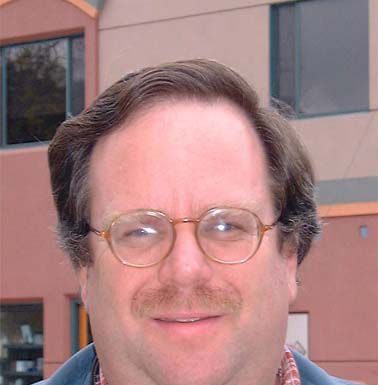
Thank you Morgan HillI would like to thank the citizens of Morgan Hill for entrusting me with the elected position of City Treasurer over the past 19 years (five elections).It has been a unique opportunity for me to serve the community while having professional experiences that were outside of my private sector employment and for me to meet many of you, plus elected officials and city staff, whom I may not have otherwise met.I have decided not to seek elected office this year but look forward to the spirited campaign I believe will ensue as others in the community seek this elected office.Thank you again.Michael J Roorda, City Treasurer City of Morgan Hill
Religion: On the shoulders of trailblazers

Forty years ago I had one of my earliest “calls” or moments imagining my future as a rabbi.
I grew up in New Jersey in an observant Reform Jewish home. In the summer of 1982, I was a participant in a Reform Jewish social action...
Guest view: Food security is critical to economic and national security on Central Coast

The agricultural stretch of California’s Central Coast along the Salinas Valley is often called the “Salad Bowl of the World,” and for good reason. It supplies more than 60% of the nation’s lettuce and substantial portions of strawberries, spinach and broccoli.
But beyond the fertile...
Guest view: Substation site would impact rural area

The Times noted in the Sept. 30, 2015 article on PG&E’s proposal to build a new substation in South County, "The last open house took place Sept. 28 at the Morgan Hill Community Center. Two previous sessions took place in Gilroy and San Martin.The trio of meetings was sparsely attended, but the public can continue to provide feedback to PG&E via email, phone or the internet.”I believe the sparse attendance was by design on PG&E’s part and not apathy on the part of those who will be negatively impacted. I was completely unaware of this project as were most of my neighbors when we just recently learned of the plan and the eight possible locations for the substation. We learned that mailers had been sent out, but were intermingled with other ads and junk mail, and easily dismissed rather than in an envelope PG&E would normally send customers regarding matters of importance.Many of us are now scrambling to understand how these eight sites were determined. It obviously wasn’t using valuable public feedback.Three of the sites are particularly distressing to the residents along the scenic Watsonville Road Wine Trail corridor. The “Watsonville C” site location is particularly troubling for my family in that it will be built directly across the street from our house! My neighbors are understandably equally troubled.This is such a scenic area that it is hard to fathom how PG&E would even consider a 6-acre substation and its devastating impact. The impacts are devastating in potential health effects for those living in the vicinity, environmental considering the impact to Little Arthur and Uvas creeks, and loss of property value.I am also wondering where our county stands on this very important matter. I have yet to hear back from our District 1 County Supervisor Mike Wasserman to whom I have sent several emails. The county should have been giving PG&E guidance, direction and input from the start because there are obviously so many zoning, planning and permit issues.Redwood Retreat Road has by county ordinance been designated as a scenic road and as such the county has placed limits on building in order to preserve the beauty of the area. So again, my question is, why wouldn’t the county be involved and also keeping us informed? Mike Wasserman has never mentioned the South County Power Connect Project once in his newsletters—leaving me to wonder, why?John Tepoorten and his family have lived on Redwood Retreat Road for 19 years. PG&E is in the outreach phase of its South County Power Connect project, which will add a new substation and new transmission lines to South County to enhance the electrical grid. To learn more about the project and the eight substation site options, visit pge.com.

