

Guest view: Let’s hear it for Santa Clara County agriculture

It is exciting to see so many members of the community in defense of open space, and in particular, productive open space such as that used in agriculture. As a second generation farmer from Santa Clara County it is great to see. But as a grower, I wish there was more understanding of how agriculture operates safely for our community and the consumers, as well as the diverse benefits it returns to the community.A frequently asked question comes up: “What is the health of the agricultural community?”At first thought, you may not believe farming and ranching are doing very well. Such endeavors are more and more hidden from Santa Clara County as open space is replaced by asphalt, concrete, roof lines and other structures.The answer is more complex for urban edge farming; but, fortunately, the county has an Agricultural Commissioner—Mr. Joe Deviney—whose forward thinking has brought about great answers to this complex question. In collaboration with ERA Economics and help from local growers and ranchers, a good answer was brought forward through sound economic analysis to quantify Santa Clara County’s Ag Value. Ag’s valuation to Santa Clara County was 8,150 jobs and $1.6 billion in economic stimulus. That’s a lot more than any of us in the industry expected.Agriculture is incredibly responsive to the needs of the community and is currently doing very well. That’s not to say there are some large threats to the health of these industries, but for now it is showing signs of stabilization. How well is well? Here are some highlights to the report:• The resource base of agricultural land declined significantly in the 1980’s and 1990’s, but has recently stabilized. The value per acre and the value per worker created by Santa Clara County agriculture has continued to increase and has never been higher.• Agriculture provides diverse, stable employment opportunities for both skilled and unskilled laborers.• Like the other high-tech industries in Santa Clara County, agriculture is growing in productivity per worker and per land unit.• The Santa Clara County Open Space Authority estimated that the total value of Santa Clara County natural capital exceeds $45 billion. Agriculture preserves some of these vital natural processes and adds to the character of the county.• Agriculture can be viewed as self-financing open space, providing important ecosystem service values to county residents.Santa Clara County needs to continue with the stabilization of productive open space.When asked about land use policies, mitigation and how best to use areas for productive open space such as farming, ranching and other agricultural uses, the California Farm Bureau Federation uses language in a way that best represents growers’ and ranchers’ thoughts in the following statement: “Proposals to use agricultural land for mitigation should be considered by each county farm bureau on their own merits on a case-by-case basis. CFBF supports the use of voluntary agricultural conservation easements, when mitigation is required for farmland conversion. We oppose government mandated deed restrictions or easements acquired by the use of eminent domain. Subsequent easements granted on lands with agricultural easements should not restrict or reduce the agricultural productive capacity of the land, including crop choice.”The efforts of notable agriculture families, such as the Chialas, is generous and real. Many counties are discovering ways to integrate and weave agriculture into the community. Santa Clara County ought to do the same. Much applause and gratitude should be lauded on those—private and public—who entertain such ideals and work toward improving our community because the environment will benefit.How you may ask? Equally important are the ecosystem benefits attributed to open space areas. And agriculture plays a role in delivering these benefits to surrounding communities, free of charge.Ecosystem benefits include: flood control, groundwater recharge, water quality, pollination, biodiversity and open space. These benefits are easily overlooked but have measurable values for our community.So the next time you visit your favorite local nursery, winery, pumpkin patch or farmers market, be sure to thank them for doing great things for the economy, environment and the community’s health.We surely love to hear it! Working towards a balanced, healthy community benefits all.Erin Gil is a second generation farmer and owner of the Grass Farm in Morgan Hill. To read the report “The Economic Contribution of Agriculture to the County of Santa Clara,” visit sccgov.org/sites/ag/news/Documents/AG_Economic_Report_WEB_Final.pdf.
Guest view: Unions vs. business on California ballot

The Capitol’s most enduring conflict pits California business interests against a quartet of liberal factions—unions, environmental groups, consumer advocates and personal injury attorneys.
Guest view: History supports city’s SE Quad plan

I grew up on a prune ranch on Fisher Avenue bought in the 1930s by my immigrant grandparents, Gataeno and Anna Forestieri. My first job was picking 10 boxes of prunes to buy a lunch box when starting kindergarten. The year was 1960.My brother Steve and I worked summers, weekends and part-time jobs. My parents were adamant that farming was not a feasible career for us. Steve and I found other careers—an engineer and court reporter, respectively.Morgan Hill is a town rich in history, and my father helped build that image and was appointed to the Federal Prune Administrative Committee by Secretary of Agriculture Bob Bergland in 1980.You must understand the past to see the future. The freeway placement, which my father Duke Forestieri fought, cut off our land to the west. Dad took on other people's orchards to make ends meet for our family. He also pursued the idea of moving to Yuba County where prune farming was beginning. My father's love of Morgan Hill instead kept him here. He continued to sharecrop but as Yuba County's production increased, it drove the price of prunes down everywhere—including in Morgan Hill.The cost of farming escalated in the Valley, as more and more restrictions were enacted, utility costs increased, and labor for harvesting became harder to find even though my dad paid top dollar and provided free housing for the seasonal workers. My dad's health began to spiral downward in his mid-70s. He gave up sharecropping and farmed only his land and the next door neighbor's..The pioneer farmers did not have stock options or golden handshakes; they had their families and their land. Dad joined others in working with the city in the 90s and early 2000s to carve out a plan for the pioneer farmers and include the needs of a growing Morgan Hill. Before he died in 2011, this plan was taking shape and he told me, “It lets people enjoy using our land, not just looking at it as they drive by, but to walk on it, play on it".This final plan has been worked on for over 15 years. It provides an area where kids who cannot afford traveling teams can improve their skills in many sports and have a better chance at the coveted spots on the high school teams.It will provide a place for community sponsored events, where families can afford the tickets for the whole family. If this cohesive plan is not put into place, landowners will go their own way, creating a haphazard tapestry for financial survival, which will not enrich our children's lives or improve the landscape.I firmly support this plan for the SEQ.Editor’s note: The Southeast Quadrant/Sports-Recreation-Leisure Urban Service Area expansion plan will be considered for approval at the March 11 meeting of the Local Agency Formation Commission. For more information, visit morganhilltimes.com or santaclaralafco.org.
Guest View: Clean your gutters for fire protection
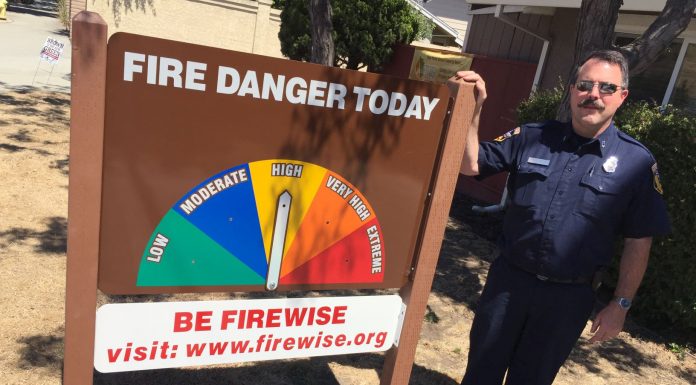
This guest view is the first in a periodic series of upcoming op-eds on tips to prepare for wildfire season, which started May 1 in Santa Clara County.No matter where you live, the most common reason homes burn during a wildfire is because embers land on something easily ignitable around the home. Remove leaves and pine needles from your rain gutters. Make changes now to reduce the ember threat to your home.Flaming brands and embers can travel a mile or more ahead of the active front of a wildfire and up to 60 percent of wildland/urban interface home ignitions result from embers.Most of the activity that makes a home less vulnerable to ignition focuses on the home and its immediate surroundings. Our Ember Aware campaign is intended to educate people on the risks of ember cast and the actions they can take to reduce those risks, to encourage residents to harden their homes against embers and/or to maintain those ember-resistant features, and to practice ember-safe housekeeping and landscaping. You can learn more at emberaware.comTip number two: Unclutter the gutter.Rain gutters attached to the edge of your roof are perfect for catching embers during wildfire. Burning embers can land in the gutters, and if they are filled with dried leaves, pine needles and twigs, a fire can start and possibly ignite the roof, roof sheathing and fascia. Even houses with fire-rated roofs are vulnerable to this type of ember attack. Rain gutters made of vinyl will melt and drop into flower beds, igniting plants next to the house and maybe even combustible siding. To keep your home safe, we suggest that you:• Remove all dried leaves, pine needles or other materials from your rain gutters before fire season.• Keep a ladder handy and check your rain gutters throughout the fire season, cleaning them out as necessary.• If a wildfire is approaching and there is no time to clean out the debris, plug the rain gutter downspout with a tennis ball, or something similar so that the downspout will be plugged, and fill the rain gutter with water.Fire Marshal Dwight Good serves the Morgan Hill Fire Department and South Santa Clara County Fire Protection District and the CalFire Santa Clara Unit. He has 24 years of fire service experience. He can be contacted at [email protected].
Guest view: Gavilan College serves South Valley community

The Gavilan Joint Community College District extends from the Coyote Valley to the southern edge of San Benito County, and includes the communities of Morgan Hill, San Martin, Gilroy, Hollister, San Juan Bautista, Tres Pinos and Paicines, along with the surrounding rural areas. It...

