



Religion: On the shoulders of trailblazers

Forty years ago I had one of my earliest “calls” or moments imagining my future as a rabbi.
I grew up in New Jersey in an observant Reform Jewish home. In the summer of 1982, I was a participant in a Reform Jewish social action...
Supe’s update: Get your pet microchipped
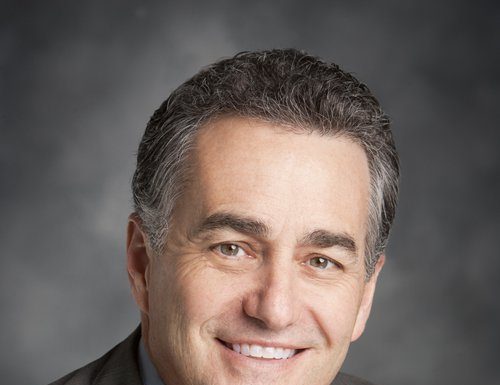
Anyone who has ever lost a pet knows how helpless it feels not to be able to locate their animal. Fortunately, it’s now easier than ever to prevent this from happening. Santa Clara County Animal Care and Control and VIP Pet Care are proud to sponsor a free registered microchip and free rabies vaccination clinic Sunday, July 17 at the County Animal Shelter, 12370 Murphy Ave., San Martin. Santa Clara County Animal Control Officers carry microchip scanners in their vehicles. When they pick up a stray animal, they scan it for a microchip. If the animal is wearing a license tag or has a registered microchip, the officers will return the pet to the owners if possible. For more information about this event, call VIP Pet Care at (800) 427-7973.Homelessness decreased 14 percent in just two years in our county,thanks to innovative programs and partnerships between government and local nonprofits. There is no question about it: Housing First works. The concept of Housing First has proven effective in our community; we know that by providing people with housing in conjunction with supportive services, they are significantly more likely to stay housed and off the streets. As recently reported in the press, a single homeless person often uses $67,000 in government services annually. Once housed, that number drops down to $24,000. The significant saving is due largely to homeless individuals relying on expensive emergency room services for basic health care. Once housed, this reliance drops dramatically. By focusing on housing for the homeless, we can save lives and taxpayer money.From July 4 to 10, the U.S. Women's Open—dubbed the Super Bowl of women's golf—will take place for the first time ever in Santa Clara County! The public can watch 156 of the world's greatest professional and amateur golfers compete for the sport's ultimate trophy. The 71st U.S. Women's Open, presented by the USGA and hosted at CordeValle, will draw thousands of visitors from around the world to our region. Kudos to all involved with bringing this event to our County.The county is partnering with Racing Hearts to place lifesaving heart defibrillators (AEDs) throughout the community. So far, 249 AEDs have been installed, each of which is supported by a 5-year program of supplies and service. This translated to protecting over 943,230 students and adults per year, at 185 sites! If you have a location in your area which is high risk that you feel would benefit from our county's matching grant program, Racing Hearts (Program Manager for the County) is available to answer questionsabout how to start work on bringing AEDs into your community. Contact them at (650) 308-4183 or email [email protected]'t forget to submit a photo for my 2016 Summer Photo Contest. Grab your camera and show us your favorite summertime images of landscape, farmers markets, parades, county parks, neighborhood BBQs, pets and other fun images of summer. The deadline is July 29. Simply email your photo (ONE per person please) to [email protected] along with your name, address, and where you took the photo.Santa Clara County Supervisor Mike Wasserman represents District 1, which includes South County, on the board of supervisors. He can be reached at (408) 299-5010 or [email protected].
Guest view: For her, I relay

Why do I Relay? My biggest reason is this amazing woman who left us all too soon. Jennifer Pavicich-Murphy was by far one of the greatest people I have ever had the privilege of knowing and calling my friend. For her I Relay!This time last year she and I were lucky enough to be placed in the same corral for the Disneyland Star Wars 10K. Funnily enough, we'd chosen to go as Anna and Elsa. This would be both of our first 10Ks. I was very nervous at first since I had not even run a 5k straight before, but running with Jen pushed me to do it. We spent the first three miles just chatting and catching up when suddenly I realized we'd hit the 5K mark. We both got excited and did a little shout out.We were feeling the Disney magic! She then asked if I was okay to keep going. I felt great, so we did. This was Jen. The girl had been through hell and back battling cancer, was running a 10K, laughing and goofing around, and making sure that I was okay.We slowed around mile 5 to make sure we'd take some pictures and could meet up with the other girls in our group. Thankfully were able to finish with most of them. It was the best feeling in the world to have accomplished that race with my mama tribe and with Jen at my side. We spent the rest of the weekend tearing up Disneyland and having the best weekend ever! Those are memories I will cherish always.We'd make a lot more memories over the following months, especially during special events like her 80s themed birthday and Relay for Life. At Relay we'd all planned to really go all out the following year and make the event one for the books.Sadly, we would lose our beautiful Jen much sooner than anyone expected. Our sweet girl went up to be our forever angel this past August. It still hurts that she can't be with us, but I know deep down inside that she is watching over us all, smiling, just waiting to catch up on all of our adventures one day.This beautiful friend, mother, wife, daughter, sister, niece—she is why I Relay. I will participate in her memory and in memory of all of those we've loved and lost to cancer. I will continue the fight because we all deserve to live in a world without cancer.Last year Jen shared why she relayed: "I RELAY because I want my boys to live in a world where cancer is a disease of the past. Where adults and children of all ages no longer have to endure this fight. And where technology and medicine can provide us with a CURE for every type of cancer. Every step we take brings us closer to these goals." People like Jen and their families deserve a cure. We shouldn't need to share our warriors stories anymore. We should be able to celebrate that cancer has been cured and that our children get to grow up without knowing the pain of this ugly disease. The American Cancer Society strives to improve the lives of all those touched by cancer. By creating Relay for Life, they gave us an event to focus all of our energy on, to help raise those funds that are so desperately needed to end this disease.I really hope that after reading this, you'll consider attending our Relay for Life event here in Morgan Hill May 20. Teams, sponsors, attendees, each and every one of you has some way, whether it be large or small, to help make this event great. Let's end this fight for Jen, and for all of those who have been touched by cancer!Amanda Banta, a Morgan Hill resident, is the social media lead for the local Relay for Life.
‘Muzungu’ takes a fascinating trip to Rwanda

My husband and I recently spent a month in Rwanda, visiting his parents who have been Baptist missionaries there for 35 years. For my husband it was a trip home, a chance to be in familiar places, to be known, and to exhale. For me it was a chance to know my husband better by experiencing where he grew up, to be on vacation for a month, to spend the holidays with my in-laws as our gracious hosts, and to explore a new country.

