



Guest view: Freedom Fest depends on your donations, time

We are fast approaching another Fourth of July. In Morgan Hill, we celebrate July 4 over two days with six events, together known as Freedom Fest.Many people are not aware that Independence Day Celebration, Inc., (IDCI) produces the events. A 501c3 nonprofit corporation, IDCI is staffed entirely by volunteer, community-minded individuals. With more than 500 volunteers led by more than 50 dedicated team leaders, six event chairs and a five-member board of directors, our team works much of the year to bring you these events. Freedom Fest is not produced by the city or Chamber of Commerce, although both work closely with us.The six Freedom Fest events have a little something for everyone. Our Patriotic Sing on July 3 features local children singing patriotic songs, Blue Star moms and much more. Immediately after, the Family Music Fest held downtown includes live music and a DJ for dancing, food and drinks featuring wine from local wineries.Runners and walkers can start the day on July 4 with a quick tour around the parade route, then enjoy the car cruise and historic parade. Following the parade, car enthusiasts can stop by our Car Show at the Community and Cultural Center. The Fireworks on the Green at the Outdoor Sports Center is the perfect way to end the day with live music, food, drinks and crafts to go with our world-class fireworks show.All volunteer community organizations face annual challenges in the areas of financial and volunteer support. Freedom Fest is a perfect example. Despite the growth surge that Morgan Hill is experiencing, we have funding challenges this year. Morgan Hill businesses and residents have given us tremendous support over the years. We hope it will continue, and even grow. Without your support, there can be no Freedom Fest.We always try to find new ways to reach out to sponsors and communicate with Morgan Hill residents. One new way we will do so this year is to mail our award-winning program to every household and business in Morgan Hill. In past years, we have increased our Facebook and web presence.On behalf of the Freedom Fest team, I want to thank the community for always showing up. It is your participation and support that makes Freedom Fest events a pleasure to produce. We are proud to serve our community in this way.Please go to mhfreedomfest.com to donate, volunteer or learn more about us.Jeff Dixon is a Morgan Hill resident and President of Independence Day Celebrations, Inc. He can be reached at [email protected].
Guest view: Sue-happy California ranks third worst

In my 17 years as a central coast franchise owner, I was always grateful for my community and the passion they had for supporting local family-owned businesses.
Guest view: Human trafficking: recognize the signs

As the world’s fastest growing criminal enterprise, human trafficking is not something we can ignore. We hear news reports and wonder, how can this be happening in our region? What can ordinary citizens do about it? The following account, which details the victimization of a woman in Santa Clara County, sheds light on the problem. Names have been changed to protect privacy.Aesha is a 28-year-old woman from South Asia with a Master’s degree in Engineering. She left her home to live in Santa Clara County with her new husband, Robert. Before marrying Aesha and bringing her to the U.S., Robert promised her a wonderful home and opportunities to pursue a career. Shortly after arriving, Aesha discovered Robert had a fiancée and his real purpose in bringing Aesha was to have a cook and maid to serve his family, and a nanny to care for his younger brother.From day one, Robert and his live-in parents emotionally and physically abused Aesha. Her workday began at 6 a.m. and rarely ended before midnight. Robert raped Aesha regularly. His parents sometimes beat her. They kept her under constant surveillance. She had no car or money of her own. She became desperate to return to her home country but was not free to leave the house. She had no one she could turn to.Federal law defines human trafficking as the act of recruiting, harboring, transporting, obtaining or providing of a person by means of force, fraud or coercion, for the purpose of sex or labor exploitation.Act: Robert courted and married Aesha under false pretenses, transported her to the U.S., and harbored her in his house, denying her the means to leave or to communicate with her family.Means: Robert resorted to put-downs, threats and physical abuse to force Aesha to comply with his demands. He confiscated her passport and controlled her through isolation, constant surveillance and control of household finances.Purpose: Robert intentionally defrauded Aesha, then exploited her for labor, forcing her to act as a domestic servant and caregiver for his family, while denying her basic freedoms and rights.Even a well-educated person can fall prey to a situation where he or she is deceived, abused and exploited.In reality, the same factors that increased Aesha’s risk of being trafficked prevented her from leaving the situation. Nearly every aspect of Aesha’s situation was a red flag indicating that she was a victim of human trafficking. Robert ensured that Aesha was dependent on him for survival. Her lack of familiarity with U.S. systems, resources and protections further isolated her. Aesha was unable to attain financial independence, because Robert kept her from obtaining employment and didn’t pay her. Fortunately, a neighbor noticed bruises on Aesha’s arms when she was working in the yard and connected her with Community Solutions, a South County nonprofit with offices in Morgan Hill and Gilroy. The local organization provided Aesha with confidential services and a way out of exploitation.Learn more. Attend an anti-trafficking workshop at the Morgan Hill Library, 7 to 8:30 p.m. Sept. 27. To report a potential case of human trafficking, call the National Human Trafficking Hotline 888-373-7888 or text BeFree (233733).Perla Flores is Director of Solutions To Violence at Community Solutions. Sharan Dhanoa is Coordinator for the South Bay Coalition to End Human Trafficking. This guest view is part two in a three-part series on human trafficking in Santa Clara County. To read part one, visit morganhilltimes.com.
Opinion: High Speed Questions
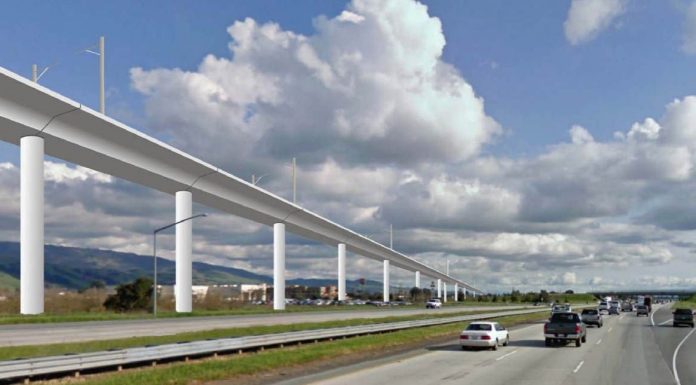
The City of Morgan Hill asked residents for questions and comments on the California High Speed Rail Authority’s plans to build the 200-mph-plus train through or around the city. Below are some of those comments and questions, which city staff presented to the Morgan Hill City Council at the Nov. 16 meeting and are available to view on the city’s website. The council plans to submit a comprehensive list of questions about the HSR’s potential impact on Morgan Hill, in hopes of influencing the state agency’s choice on its preferred route alignment. Concerned residents can still submit questions and comments to the city by visiting morganhill.ca.gov and searching for High Speed Rail, which will bring users to a page with information and forms for submitting input. See related story for more information on the HSRA’s four alignment alternatives. Comments below are edited for length and clarity.Has there been consideration of tourism and quality-of-life impact when considering a final alignment choice, or is it purely economic? An HSR alignment through downtown Morgan Hill would destroy the character of this unique area.Andrew SterianWhy would the alignment not occur in the most obvious location—along with the existing railroad line?? The home value and quality of living in the Diana neighborhood will be severely impacted should the rail be put in along the west side of 101. My house will not be one purchased in eminent domain but would be in the first row of houses adjacent to the planned location on the west side of 101. The rail will without a doubt create a negative impact on my home’s value. Please consider what will happen to home values in the entire Diana neighborhood should the west side (alignment) be chosen. Why would you add a rail line in a neighborhood instead of in a downtown area where it makes sense. The community should share the burden of the rail's addition, not the homeowners, who already live next to 101 to begin with! Please do what you can to prevent loss of the investment we made when purchasing a home in Morgan Hill.Dana MortonWill there be any tall redwood trees planted to on both sides of the raised viaduct to mitigate noise and visual impact?William CarlsonWhat can the city of Morgan Hill do to stop this huge boondoggle?Mark HinkleHow will the HSR determine which properties need to be taken? How will the HSR ensure that there is no loss to the residential properties that are not strictly needed for right of way access but would be close to the proposed route? Will the HSR purchase enough residential properties alongside the track to ensure that there is a cushion of green space and thereby ensure that the remaining home's property values are not impacted? Will anything be done to beautify the space between the HSR and the residential areas around it? Will homeowners who wish to move for no other reason but that the HSR will be constructed in their neighborhood be reimbursed realty fees and any loss in property value due to the HSR being present or the need to disclose its future presence? Will the HSR work with the City to make sure that no resident is financially hurt?Susan EassaHow many trains will be scheduled to travel through Morgan Hill on a daily basis?Lauri QuigleyWhy wouldn't the money be spent on widening and fixing our freeways. We can hardly move around on the freeway. We keep being told there’s no money but you can build this and it won’t even be used for many people.Traci ValdezIf the East or West 101 routes through Morgan Hill are chosen, how will you mitigate impact on Coyote Creek Park and Trail including impacts to wildlife, waterfowl, and birds that call that area home? In addition, how will you maintain the current quiet and peaceful rural environment for hikers, walkers and bicyclists?Debra UllmannAre there plans or intentions to provide bus service to the San Jose and Gilroy terminals? If so, will fares be included in the cost of HSR tickets? Will the residents of Morgan Hill be provided with lower ticket rates? Will VTA bus schedules be aligned with train schedules? Will VTA and HSR offer interchangeable tickets? How about with BART, ACE and Caltrain? Will HSR work with local companies and schools to provide lower ticket rates?Yudhvir SidhuWill there be a study about noise pollution effects in Morgan Hill?Pravin LathigaraI am concerned about the increased traffic downtown and safety if the high speed train goes along Monterey highway and through downtown Morgan Hill. How will pedestrian traffic be protected? How often are these trains projected to run?Jeanne Wise
Guest view: Urban expansion encroaches on rural San Martin

Do you ever wonder about the fate of San Martin? Many who live in this rural, unincorporated community certainly do. Annexation proposals and Urban Service Area boundary requests, submitted by the Cities of Morgan Hill and Gilroy, have been unsettling to those within the unincorporated areas.
Guest view: Make the best of new reality
Trust me, graduates, high school graduation is not at all like the movies crack it up to be. Most importantly, we are all coming together to show an outstanding level of support.

