






Guest View: We must work together to protect immigrants

Regulations issued by President Donald Trump to Homeland Security’s Immigration and Customs Enforcement (ICE) offices are chilling.All undocumented people working and living in the U.S. are now legally deportable. This includes not only “the bad guys” with criminal records but millions of hard-working, taxpaying undocumented immigrants who have contributed greatly to the economy of this country.All people in this country have constitutional rights. Trump’s goal is to take away the right to a hearing in preparation for mass deportations. He has increased the budget for Homeland Security to $3 billion from our taxes. He has expanded the number of ICE agents to 25,000 on the border. Thirty percent of these are veterans of the war in Iraq who were trained to kill, not to arrest and deport.“Expedited removal” is the law allowing ICE to pick up and deport without giving access to a hearing or a lawyer. Under former President Barack Obama, expedited removals were limited to those caught within two miles of the Mexican border. Now, there are no limits. All can be deported wherever they are found, and if they cannot prove they have been here for eight years (on the spot), they can be deported with no legal hearing. Two-thirds of those detained are not able to access lawyers. Those who can afford a lawyer or have access to legal aid have seven times the opportunity to be released from detention.The movement by city police chiefs to disassociate from any cooperation with ICE is admirable. In a raid several weeks ago in Santa Cruz, ICE agents lied to local police when they promised they had warrants. During the raid, they emptied an entire apartment building and detained law abiding, innocent people who were there. The mayor and police chief apologized to the community and said it would not happen again.ICE has also misrepresented themselves as “police officers,” and thus gained access to homes where they could not enter without a warrant. They question people who do not know their rights and get them to sign them away.The state of California is asking for regular reports on their raids and the daily publication of people detained, which ICE has refused to do. These refusals by ICE are illegal.What can we do to help the terrified undocumented in our area? Having the police pledge not to cooperate with ICE is one step. Educating the people who are frightened about their rights is a priority. We can arrange for public Know Your Rights workshops through Siren and the Asian Law Center. We can educate ourselves to educate all the undocumented we know or meet. Can we organize to form groups that will intercept these ICE raids? Nothing works better than bad publicity from newspapers and radio stations.Which churches and homes in our areas will be willing to be sanctuary places for a family? Have we educated our teachers and principals about ICE coming to schools?If we work together in true community we can bring back constitutional rights to all.Natasha Wist is a former school psychologist and family therapist with 31 years experience. Since retiring, she has volunteered teaching immigrant women in Morgan Hill. For many years, she has been active in peace and justice movements in Morgan Hill and San Jose.
Guest view: U.S. owes an apology for feds’ mistreatment of Italians
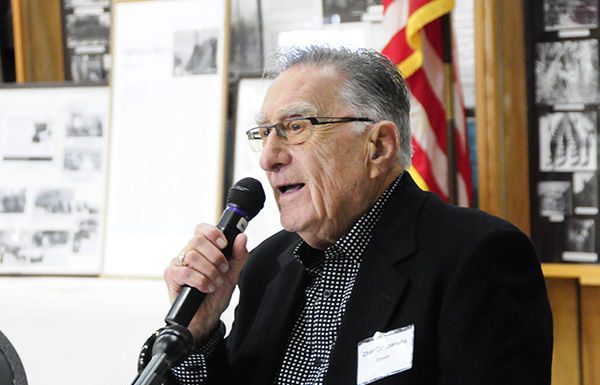
While many know about the impact of February 1942’s Executive Order 9066 on Japanese-Americans in the U.S. in response to the bombing of Pearl Harbor, surprisingly few are aware that thousands of Italian-Americans were swept up in the same law that imposed various restrictions including unannounced warrantless searches and even incarceration on certain foreign-born residents. San Jose resident Chet Campanella, 86, was a child when he lived through the imposition of these harsh, discriminatory restrictions. Campanella gave a presentation on the impact of EO 9066 on Italian-Americans in Morgan Hill Feb. 11, at the annual membership meeting of Friends and Family of Nisei Veterans (FFNV). The meeting took place at the Morgan Hill Buddhist Community Center. Sunday, Feb. 19, marked the 75th anniversary of EO 9066. Below is a short version of Campanella’s Feb. 11 presentation.
Guest view: Be sure to take advantage of state EITC tax rebate

A much deserved windfall is on its way to many low- and moderate-income California workers. For those who file state taxes and claim their benefit in 2017, the state is offering an Earned Income Tax Credit (EITC) that, combined with what is available through the federal government, could provide up to a $6,000 rebate to families who meet specific qualifications.Research has shown that the cash benefit from the EITC has been one of the single greatest contributors to move people and families out of poverty and to improve their financial security. Unlike other programs to assist low- and moderate- income families, this benefit applies only to those who are working but still remain in financial difficulty. For many of us, $6,000 could ease our financial challenges and it could make the difference between a family keeping a roof over its head or becoming homeless.In 2015, Gov. Jerry Brown and the legislature created California’s EITC program, CalEITC, as a way to help qualified working, low-income families. This cash-back credit is intended to complement a similar federal EITC that has existed since enactment by President Gerald Ford in 1975. In order to benefit from the state credit, eligible families need to claim it when they file their state tax returns.According to the California Department of Community Services and Development (CSD), the state agency that administers CalEITC, one out of five eligible workers does not claim the EITC on their state income tax return. On average, a qualified family that did not participate in 2016 lost $2,409 from the state and federal governments.The specific amount of cash-back credits for qualified working individuals and families depends on income and family size. Californians with an income of up to $53,505 annually may be able to receive cash-back by claiming the federal EITC on their tax return. Additionally, California families that earn up to $14,161 annually may be able to utilize the CalEITC to supplement the federal EITC when a state tax return is filed.If you meet the criteria, you must file federal and state income tax returns to claim the credits, even if you do not owe taxes or are not required to file a return.For more information, visit CSD’s website, www.csd.ca.gov/. During this tax season, I encourage you to find out if you are eligible to receive the benefits of the Earned Income Tax Credit. Monning represents the 17th Senate District, which includes all of San Luis Obispo and Santa Cruz counties, and portions of Monterey and Santa Clara counties.
Guest view: Why I Joined the Women’s March on Washington

On Jan. 21, 2017, I joined what are now estimated to be 800,000 other people at the Women’s March on Washington, D.C. (and an estimated four million fellow marchers around the U.S. and the globe). The results of the Presidential election sunk my hopes for this great country, and inspired personal fear as a woman, a person of Jewish descent, as well as for the many marginalized folks whose rights Donald Trump staked his campaign on overturning.I felt alternating bouts of rage and despair that we elected a president who is on record making abusive and derogatory statements about women, people of color and the disabled, as well as bashing our venerated intelligence agencies, to name just a few. Not to mention he has no prior experience in any political office.At first, I was more nervous than excited—I feared reprisal from Trump supporters; I feared that in this frustrated and angry time, a tightly-wound lone shooter might express his dissent in bullets.Fortunately, that was not the case. If the counter-protesters were there, I never saw them. I was packed densely into the center of the National Mall, near Independence and Fourth Streets, with a direct view of the nation’s Capitol. My friend and I arrived by 8 a.m. Saturday morning, and by 8:30, you could no longer see streets in any direction—just bodies upon bodies carrying clever signs announcing their fears and concerns, many bedecked in the now-iconic pink hats.For five hours I stood and listened to fierce, passionate, committed speakers and artists plead for the rights of women, the disabled, the LGBTQ community, and against a Muslim registry and a wall at the Mexican border. Speakers included Gloria Steinem, Angela Davis, Michael Moore, Ashley Judd, Alicia Keys, Van Jones, California Sen. Kamala Davis, D.C. Mayor Muriel Brown, the mothers of slain black children and so many more activists, politicians and entertainers.Despite this enormous outpouring of energy and effort around the country, people are criticizing the movement. What did you want to say? What purpose did it have? Why can’t you all just shut up and accept things as they are?Last I checked, this country is still a democracy, albeit one that’s under threat. The Trump administration has already made clear it is hostile to media criticism. It has made steps to defund women’s health and climate science, and to repeal healthcare. Protest and demonstration are our Constitutional rights and one of the many ways we can create change.Change comes when we the people put pressure on our leaders to let them know what matters to us. As President Trump’s loss of the popular vote by nearly three million votes reveals, he doesn’t speak for many of us.The Women’s March was a fierce rallying cry as we launch into the beginning of many battles: for women’s bodily autonomy, for civil rights, for a decent world where we take care of our own and stay in good stead with the rest of the world.I’ll be bringing the same fierce energy to my own community in the days to come.Jordan Rosenfeld is a local freelance writer and author of seven books. She can be contacted at [email protected].
Guest view: Swirl of emotions away from the battlefield

Some things turn out to be harder than you expect. For me, I like to go into things a little head strong and overly confident, then figure out I’m in over my head. Most times I like to think I figure it out and get the job done. Such was the case when Morgan Hill’s Eddie Bowers asked me to read the Honor Roll at the Veterans Day ceremony downtown just a few weeks ago. I couldn’t turn him down, as he has almost single handedly kept this tradition going. I’ll say that I was completely confident at the time that I would have no issues doing it.
Guest view: Keeping our lifeline healthy
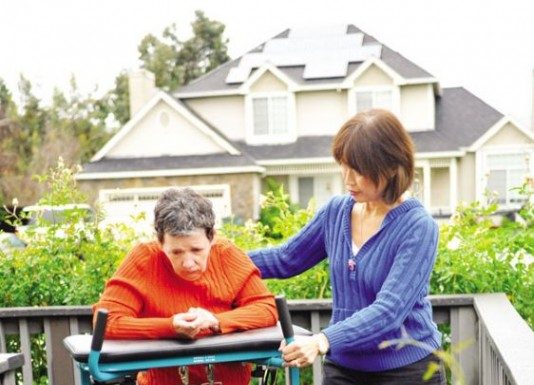
Just like our bodies require routine health screenings and checkups with age, so does our aging water infrastructure. The Santa Clara Valley Water District has been busy inspecting and maintaining our county’s aging water infrastructure, and in some cases making needed upgrades.The water district is responsible for the operation and maintenance of 142 miles of pipelines that transport water from reservoirs to its treatment plants, and from its treatment plants to water retailer distribution systems. Through our network of massive pipes (some as wide as 10 feet in diameter), over 121 billion gallons of water travel annually from their source to groundwater replenishment ponds throughout the county and, ultimately, to your tap. For most people, pipeline maintenance isn’t a topic at the forefront of our water concerns. However, the majority of our pipelines are over 30 years old. Because they are underground, it becomes easy to forget about them—an “out of sight, out of mind” perspective. For the water district, it is important to perform routine inspections to ensure proper operation and to detect any repair needs, which helps avert a potential pipeline failure that could cause serious damage and disrupt water service.The water district maintains and inspects some of its pipelines on a 10-year inspection cycle to detect signs of corrosion, weak spots or leaking. Some of the more critical pipelines require a maintenance and inspection cycle every five years.The water district visually inspects pipelines, but also uses modern technologies to enhance the quality of diagnosis and to identify any signs of pipe distress quickly. Recently we used a high-tech sensor held in a floating foam ball that traveled through several miles of pipeline to literally listen for leaks. Another device we are using is acoustic fiber optic cables that monitor breaks in the wires that keep concrete pipes intact, and can provide instant status reports.Regular inspections are also a cost-saving measure; it is much more expensive to deal with the consequences of pipe failure than to invest in regular maintenance.Scheduling inspections and repairs for so many miles of pipe is a major challenge since we all depend on them for our water supply. Many key pipelines can only be taken out of service for short periods of time without affecting water supply availability.Another major pipeline project that started this fall will install large flexible pipelines that deliver water to the Penitencia Water Treatment Plant and connect to water distribution systems. The pipes are made to withstand movement from landslides or earthquakes registering a 6.0 magnitude, to prevent future pipe failures. This is the first project of its kind for the water district.Identifying warning signs also helps avoid wasting water through pipe leaks. As we do our part, we encourage residents to check for leaks at home in both indoor plumbing and outdoor irrigation systems, and repair them. Taking action now helps avoid future losses.For more information on upcoming pipeline projects, water supply, flood protection, board updates and more, sign up for our monthly newsletter on valleywater.org.John Varela sits on the Santa Clara Valley Water District Board of Directors, representing the district that includes South County. For further information, contact Varela at [email protected].
Guest view: Teachers are our greatest resource

Teachers in Morgan Hill are committed to the students, families, and community they serve. They respect and admire their colleagues. When we negotiate, we are negotiating for ourselves, but we are also negotiating to improve education in Morgan Hill. We believe that our present negotiations represent a pivotal moment in this district. We are asking the district for an increase in compensation that will provide an incentive for our veteran teachers to stay in this district. We are asking for an increase in compensation that will make this district competitive enough to attract well-prepared new teachers. We are asking the district to acknowledge their 30 percent increase in revenues over the last five years has only resulted in a 12 percent increase for teachers and this is why teachers have left the district. We are asking the district to value teachers as the greatest resource our students have.We are asking our community to support us in our effort to protect public education in Morgan Hill.Nicole Dietmeier is a Special Education teacher at Central High School, the district’s continuation high school. Her assignment requires her to teach a small group of students—making sure that each has access to an appropriate education program—and work with supporting agencies who service her students. Many of her students also deal with poverty, family crisis, depression and other traumas. Unofficially, Nicole says she also “provides emotional support, counseling, and access to outside resources in order to make sure that each student receives all of the support they need in order to thrive and be successful.” Like many teachers, Nicole has a son that is a student in the district. She began her career in Morgan Hill as a paraprofessional and went back to school to become a Special Education teacher. In the process, she earned two credentials and a master’s degree. It is distressing to a parent who is also a teacher when her son “questions the legitimacy of higher education because it has not enabled me to make enough money to support my family on my own.”She also has to sacrifice time with her son to tutor and work at a friend’s home business in order to make ends meet.When Nicole first came to Central, she said, “Students told me that I would give up on them like everyone else. I told them I wouldn’t. So, when I returned the following school year, they were all shocked, but told me they were happy that I was willing to stay and not give up on them. That one single action did more to build trust with these students than anything else I could have done.” She wants to show these students that people do believe in them and will support them.Nicole is committed to both the students and staff at Central. She is not currently looking for a new position, but she also knows that she can provide a more secure life for her son, and maybe even buy her own home, if she moves to a different district where she would make more money with better benefits. Nicole explains that “leaving the district is not something that I am looking forward to doing or have decided upon without a significant amount of thought and conversations with family. I have built a reputation, gained a second family, and have been personally rewarded with fulfilling relationships and the success of my students while at this district. I have learned how to become a successful teacher here and would love to be able to learn more and share my expertise with the district. I have realized though that the loyalty and respect I have demonstrated to the district is not mutual. The district continues to show that it does not have loyalty or respect for its teachers.”Since last March, teachers have been asking the district and the board for an increase in compensation that would keep teachers like Nicole in this district, but have only been told that a significant raise is unsustainable. Now, we are asking our families and our community to come to the Dec. 13 Morgan Hill Unified School District Board of Education meeting and remind the board that they must invest in their greatest resource, OUR TEACHERS.Gemma Abels is a veteran high school English teacher and the president of the Morgan Hill Federation of Teachers. The Dec. 13 MHUSD board meeting will start at 6 p.m. at district headquarters, 15600 Concord Circle.
Opinion: High Speed Questions
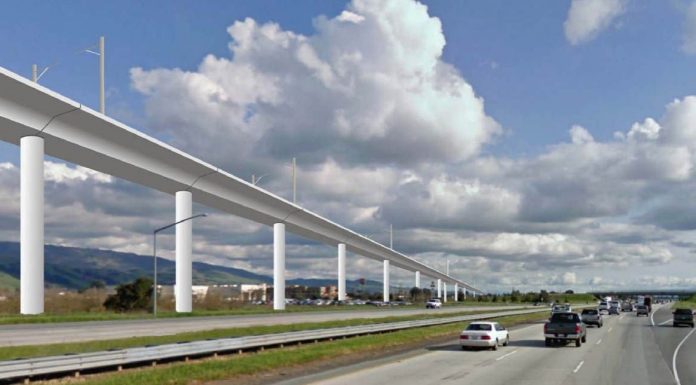
The City of Morgan Hill asked residents for questions and comments on the California High Speed Rail Authority’s plans to build the 200-mph-plus train through or around the city. Below are some of those comments and questions, which city staff presented to the Morgan Hill City Council at the Nov. 16 meeting and are available to view on the city’s website. The council plans to submit a comprehensive list of questions about the HSR’s potential impact on Morgan Hill, in hopes of influencing the state agency’s choice on its preferred route alignment. Concerned residents can still submit questions and comments to the city by visiting morganhill.ca.gov and searching for High Speed Rail, which will bring users to a page with information and forms for submitting input. See related story for more information on the HSRA’s four alignment alternatives. Comments below are edited for length and clarity.Has there been consideration of tourism and quality-of-life impact when considering a final alignment choice, or is it purely economic? An HSR alignment through downtown Morgan Hill would destroy the character of this unique area.Andrew SterianWhy would the alignment not occur in the most obvious location—along with the existing railroad line?? The home value and quality of living in the Diana neighborhood will be severely impacted should the rail be put in along the west side of 101. My house will not be one purchased in eminent domain but would be in the first row of houses adjacent to the planned location on the west side of 101. The rail will without a doubt create a negative impact on my home’s value. Please consider what will happen to home values in the entire Diana neighborhood should the west side (alignment) be chosen. Why would you add a rail line in a neighborhood instead of in a downtown area where it makes sense. The community should share the burden of the rail's addition, not the homeowners, who already live next to 101 to begin with! Please do what you can to prevent loss of the investment we made when purchasing a home in Morgan Hill.Dana MortonWill there be any tall redwood trees planted to on both sides of the raised viaduct to mitigate noise and visual impact?William CarlsonWhat can the city of Morgan Hill do to stop this huge boondoggle?Mark HinkleHow will the HSR determine which properties need to be taken? How will the HSR ensure that there is no loss to the residential properties that are not strictly needed for right of way access but would be close to the proposed route? Will the HSR purchase enough residential properties alongside the track to ensure that there is a cushion of green space and thereby ensure that the remaining home's property values are not impacted? Will anything be done to beautify the space between the HSR and the residential areas around it? Will homeowners who wish to move for no other reason but that the HSR will be constructed in their neighborhood be reimbursed realty fees and any loss in property value due to the HSR being present or the need to disclose its future presence? Will the HSR work with the City to make sure that no resident is financially hurt?Susan EassaHow many trains will be scheduled to travel through Morgan Hill on a daily basis?Lauri QuigleyWhy wouldn't the money be spent on widening and fixing our freeways. We can hardly move around on the freeway. We keep being told there’s no money but you can build this and it won’t even be used for many people.Traci ValdezIf the East or West 101 routes through Morgan Hill are chosen, how will you mitigate impact on Coyote Creek Park and Trail including impacts to wildlife, waterfowl, and birds that call that area home? In addition, how will you maintain the current quiet and peaceful rural environment for hikers, walkers and bicyclists?Debra UllmannAre there plans or intentions to provide bus service to the San Jose and Gilroy terminals? If so, will fares be included in the cost of HSR tickets? Will the residents of Morgan Hill be provided with lower ticket rates? Will VTA bus schedules be aligned with train schedules? Will VTA and HSR offer interchangeable tickets? How about with BART, ACE and Caltrain? Will HSR work with local companies and schools to provide lower ticket rates?Yudhvir SidhuWill there be a study about noise pollution effects in Morgan Hill?Pravin LathigaraI am concerned about the increased traffic downtown and safety if the high speed train goes along Monterey highway and through downtown Morgan Hill. How will pedestrian traffic be protected? How often are these trains projected to run?Jeanne Wise
Guest view: Vietnam veteran revisits battlefield
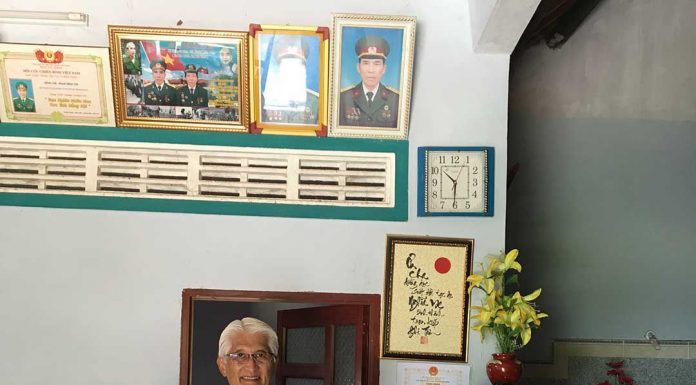
Last August, I had the opportunity to speak at a Hitachi conference for Chief Information Officers from companies in Vietnam. This conference was held in Danang, Vietnam, which was in the area of operations during my tour in Vietnam. I took this opportunity to visit some of the battle sites I was engaged in 50 years ago.One of the areas that I visited was Tinh Binh near Quang Nhai. This was the site of Operation Utah where my unit, 2nd Battalion, 7th Marines, engaged two regiments of the North Vietnamese Army. After a day-long battle, we were overrun and had to call air strikes down on our position to survive.I found a villager that lived in the area who was a 16-year-old Viet Cong at the time. He did not participate in the fighting, but he helped the North Vietnamese Army dig their fortifications. He later became an officer, and he and his wife were honored by Ho Chi Minh and General Giap. We walked the battlefield together using my old military map and later he invited me to his home for tea where he and his wife showed me their many citations from Ho Chi Minh.My best friend in the Marine Corps was the executive officer of G Company when he was shot through the chest on the first day of Operation Utah. He survived Operation Utah and we both joined IBM after we left the Marine Corps.Over the past 50 years, he has sent me a Christmas card every year, with which he encloses a picture of his family. I have seen his family grow with kids, marriages, grandkids and now their wives and husbands. All this would not exist if the bullet had hit him a few millimeters either way or the helicopter had not evacuated him in time.Operation Utah was a success for the Marines in the way they kept score in that war. There were 98 Marines killed in action versus an estimated 600 North Vietnamese. If you visit the Vietnam Memorial in Washington, D.C., you will see the names of these Marines on the wall in the time period, March 4 to 6, 1966.When I visited the area of Operation Utah this August, there was a large military cemetery where hundreds of Vietnamese soldiers were interred. These were North Vietnamese soldiers who had travelled from their homes in North Vietnam to fight and die and be buried in this area so far from their family homes. I said a prayer for them as I prayed also for our Marines.Now 50 years after that war, I wonder at the loss we all suffered and the senseless waste. I work with my Vietnamese colleagues in Hitachi, whose fathers and grandfathers fought against us in the same war. There is no hatred or distrust—only a shared sense of vision and cooperation in our work.Thomas J. Watson, the founder of IBM, made many speeches on “World Peace Through World Trade.” I am hopeful for that vision. In Hitachi, our corporate strategy is Social Innovation, developing solutions to make society healthier, smarter, and safe. That means a world without war.Hubert Yoshida is a Morgan Hill resident.
Guest view: Measure S lacks the facts
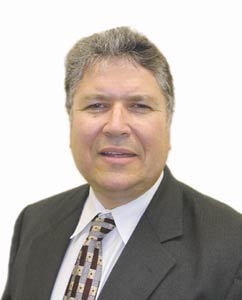
John McKay’s avocation for an “not perfect” Measure S is exactly the reason it should be rejected. It is this imperfection wrapped around vague and ambiguous language that leaves the measure open to interpretation. If passed, the measure at best will likely end up in the courts, resulting is costly and unnecessary litigation. At worst, it could lead to the destruction of our precious open spaces.For example, John cites in his article that 300 agricultural units can be set aside in Morgan Hill’s “developable areas” for preservation. But John, how do you define “developable?” As a Planning Commissioner, you know that when we define lands and boundaries we use terms such as the UGB (Urban Growth Boundary), City Limits or Sphere of influence, etc. These are legal terms. They are well known and there are maps with lines that define them. But none of these terms are used in the measure. Instead, we find the term, “developable lands.” All lands are developable and that includes county farm and agricultural lands. And therein lies the problem.The city has already spent over a decade in an effort to develop county farm and agricultural lands at a cost of hundreds of thousands of dollars, only to be rejected by the state regulatory agency—not once, but twice. There is good reason to distrust the ambiguity of the measure as a continued pursuit to pave over our open spaces.John’s article fails to mention that those 300 agricultural units are specifically identified for housing, encouraging urban sprawl and untold costs to our community. And again, I have to ask, what is a unit?Measure S doesn’t solve problems, it creates them. It is labeled to “conserve water and preserve open space,” but it does none of that. Measure S is a “smoke and mirrors” effort to undermine our slow growth policies and encourage excessive development.If you discount that, just look at where our pro-growth incumbents are getting their campaign funding: real estate companies, landowners and developers. Councilmember Marilyn Librers, the strongest advocate for sprawl, received $3,000 alone from a Cupertino developer with land interests and projects in Morgan Hill.John, you want facts, and so do I. But the wording in Measure S lacks factual language and likely by intent. It deserves a NO vote until it can be rewritten clearly and factually. Your comment that it is not perfect is correct and we agree but no measure such as this should have ever have been brought before the community unless it is openly clear as to its intent and impacts.Mark Grzan is a former Morgan Hill City Councilman and Mayor Pro Tempore.

