

47.4 F
Morgan Hill
December 5, 2025

Student seeks new respect for veterans

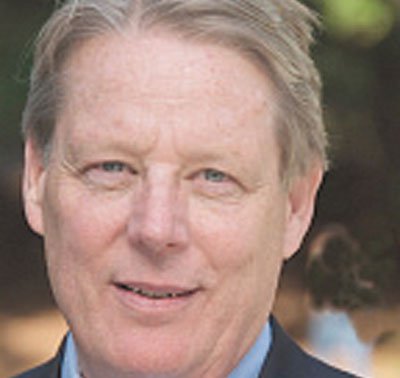
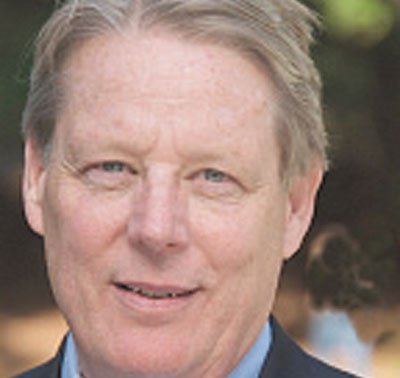
Concerned that his fellow students needed to know more about World War II and the bravery and sacrifices of ‘The Greatest Generation,’ Mount Madonna senior Cyrus Kamkar recently organized a veterans panel held at his private school. He expanded the panel to include veterans of several wars.I feel that respect for our veterans in today's culture is lacking, unfortunately, especially among my age group.My goal with this project was to spread the awareness of the importance of soldiers’ sacrifices. When people talk about how horrible Hitler was, they forget to mention that he could have won. If it weren’t for the United States and its brave soldiers, the world would be a very different place. What I am doing is not a message of pro war, if anything, it is anti-war. The further away we get from remembering these incidents in history, the closer we are to war and losing freedom. This can’t be thought of as something that happened a long time ago. War is relevant.I am very grateful for the veterans who participated in the panel at Mount Madonna: JP (Navy, WWII), Al Hopson (Air Force, WWII), David Perez (Army medic, WWII) Rick Noble (Army, long-range reconnaissance patrol, Vietnam), Gary (Army, Vietnam) Mike Baker (Army, Vietnam), and Dean Kaufman (Army, Gulf War).I have a deep interest in our nation's veterans, and feel that it is very important to remember their sacrifices. Every step we take in a free society, every movement, every breath was fought for and made possible by our veterans. Every freedom we have has been fought, bled and died for. The will to protect and preserve the ideas that shape us as Americans must continue to live on and be a shining example for the whole world to see. We are a unique country that was formed off a reaction to oppressive government rule, and we have successfully been consistent with those values by being the strongest enemy of tyranny and biggest preserver of freedom around the world.There is nothing that could sadden me more than to see our country become alienated from these unique and integral values. War must be avoided at all costs, but we should always be the first to sacrifice when it’s needed to ensure freedom. This is why it is important to not just respect our veterans, but to show them that you respect them. A WW II veteran once told me: “We aren’t called the greatest generation because of what we did. We were the greatest generation because of who we were. We could not have done what we did if it weren't for our values and patriotism. And always remember this, Cyrus, we didn’t fight for us, we fought for you.” I will always remember that.There is a quote that was found in a dead U.S. soldier’s diary on the battlefield from WW I that always gives me the chills: “America must win this war. Therefore, I will work, I will save, I will sacrifice, I will endure, I will fight cheerfully and do my utmost, as if the issue of the whole struggle depended on me alone.”

Guest View: Hotel height proposal favors future developers

You may not have realized this, but the City of Morgan Hill is updating its zoning code. In the proposed code, the city will allow hotels near U.S. 101 to be as high as 65 feet. (Chapter 18.24.030). One may ask, why do we need 65-foot hotels in Morgan Hill?Perhaps you’ve heard the argument we need taller structures because land is scarce. This type of development will not ease the housing crisis nor provide affordable housing. Instead, it will increase the wealth of developers at the expense of harming our existing hotels and changing our landscape forever.The city’s proposed height requirement is a reminder to local hotels that they “doth protest too much.” In 2015, when the city attempted to provide a $2 million windfall to an out-of-town developer by changing the zoning to more valuable one, the Morgan Hill Hotel Coalition collected more than 2,500 signatures for a petition for referendum. The city refused to place the ordinance on the ballot, and spent nearly $200,000 of your money fighting against your Constitutional right to approve or reject the ordinance. The court of appeals agreed that you have the right to vote to approve or reject the zoning ordinance, but instead the city asked the California Supreme Court to review the case, thereby spending more of your money.When it came time to update the zoning code, the city decided it would allow any developer to build a hotel twice as tall as the current hotels. If you drive on Condit Road, nearly every hotel is 35 feet high and three stories tall.The city admits it restricted us. In fact, the 35-foot height restriction still applies to every other type of building other than hotels under the proposed zoning code. So the city is clearly singling out hotels.Under the new code, newly developed hotels would have a huge economic advantage over the current ones because they will build twice as many rooms on the same amount of land. When the current hotel owners expressed their concern that the city was providing an unfair advantage, the city’s response has been, “too bad, times have changed.” The hotels even suggested a compromise at 50 feet, but the city declined.Why are hotels different from all other commercial buildings? Is this the way we treat family businesses that have invested in our community for decades and employed dozens of people?  Or is this what happens when the hotels stand up to the city?Perhaps, you really want a series of 65-foot hotels lined up along the highway? When you drive by on 101, instead of El Toro, your view will be changed to high-rise buildings. Is that how you would like people to remember our town? I hope not.Asit Panwala is a spokesperson and attorney for the Morgan Hill Hotel Coalition. He can be reached at [email protected].

Guest View: Recycled water is key to agriculture’s future

Although many of the farm fields and orchards that once covered the valley floor are long since gone, agriculture remains an important part of Santa Clara County’s heritage and its future.As in the past, the availability of water to grow crops and raise livestock affects individual farmers and ranchers as well as the economy of our county. Because of this, the Santa Clara Valley Water District continues to offer support to farmers, through the open space credit, which offers a credit on water rates to account for the benefits the larger community receives from that open space.Additionally, the district supports agriculture through its planning efforts performed in partnership with local jurisdictions such as the South County Recycled Water Master Plan. Recently updated, this master plan, completed in partnership with the South County Regional Wastewater Authority (SCRWA) and cooperation with the cities of Gilroy and Morgan Hill, addresses a variety of options for expanding the use of recycled water in South County.Most of the farming in Santa Clara County takes place in the southern portion of the county, where farmers, residents and businesses rely almost entirely on groundwater. The amount of groundwater pumped each year far exceeds what is replenished naturally by rainfall and other sources. So, the water district carefully replenishes the groundwater basin there, to ensure there is enough water. We do this using a mixture of water from local reservoirs and water imported to our county through the Sacramento-San Joaquin River Delta.In addition to refilling the groundwater basin through percolation ponds and creeks, the water district also works to reduce the amount of water that needs to be pumped through water conservation and recycled water programs. For example, every gallon of recycled water used is a gallon of groundwater that doesn’t need to be pumped.To fund and implement the projects in the master plan, the district hopes to continue our partnership with the two cities and SCRWA, with the eventual goal of recycling 100 percent of the wastewater treated in South County, thereby decreasing local reliance on groundwater and bolstering our water supply.Richard P. Santos is Chair of the Board of Directors of the Santa Clara Valley Water District. John Varela is Director of District 1 of the SCVWD. They can be reached at [email protected].

Guest View: Donate life, become an organ donor

The month of April has been designated as National Donate Life Month to encourage Americans to register as organ donors, educate our communities about the need for organ donations and celebrate those who have saved lives through the gift of donation.The need for organ, eye or tissue donors is ongoing and can potentially save someone’s life.  Unfortunately, while 95 percent of Americans have no issue with registering to be a donor, only 54 percent are actually registered to donate their organs. The gap between those willing to donate and those who are registered donors contributes to the 115,000-person waiting list for organs. Every day, 22 people die waiting on the list.Organ donation after death brings comfort and hope to families by turning a tragedy into renewed life. In 2016 alone, 33,600 patients were given the gift of life by transplants from willing donors.  Signing up to be an organ donor is as easy as marking a “Yes” box at the DMV when getting or renewing your driver’s license or ID card. You can also sign up online at donatelife.net/register/.   People of any age, background, or medical history can become donors after death, and there is absolutely no cost to donors or their families. The process to establish whether your remains are eligible for donations is thorough and done independently from the transplant process.  Also, becoming a donor does not impede or change funeral arrangements. Additionally, in some instances, you can even become a living donor and donate a portion of your liver, lung, pancreas or a kidney.This April, please reflect on the lives of those touched by donation and transplantation, and  join me as you register to become an organ donor. Learn more about National Donate Life month at donatelife.net or donatelifecalifornia.org/.  Sen. Bill Monning represents the 17th State Senate District, which includes all of San Luis Obispo and Santa Cruz counties, and portions of Monterey and Santa Clara counties.   

Guest View: Information is power in era of mass shootings

In 2003, I started a company that evolved into what we named “PlanReady.” As a school architect following the Columbine massacre in 1999, I realized that much of the information that the first responders, police and fire—and the school itself—should have had at their fingertips was unavailable to them.

GOP immigration plan hurts farmers

As the U.S. House of Representatives continues discussion on proposed immigration legislation, the California Farm Bureau Federation cannot support a part of the bill that addresses agricultural employees.

Guest view: February is Spay and Neuter Awareness Month

February is nationally recognized as Spay and Neuter Awareness Month to educate and bring awareness to the benefits of spaying or neutering your pet.In the United States, there are more than 6 million homeless animals brought to animal shelters annually. Often, these healthy, well-behaved animals are euthanized due to shelter overpopulation. By making the choice to spay or neuter your pet, you will help to reduce the homeless animal population and increase the longevity of your pet’s health.While not widely discussed, spaying and neutering has been shown to increase your pet’s lifespan because it decreases the risk of certain types of cancers. According to the American Veterinary Medical Association, spaying females prior to their first heat cycle decreases the risk of uterine and breast cancer, and also prevent uterine infections. Neutering males prevents testicular cancer and the enlargement of the prostate glands. By fixing your pets at an early age, you can provide them with a long, healthy life.Additionally, spaying and neutering pets can curb bad behavior. Unneutered dogs can be more assertive and aggressive than neutered males, and unneutered cats are much more prevalent to spray than fixed cats.   It is a common misconception that sterilizing your pet is expensive. There are many veterinarian clinics and local shelters that provide these services at an affordable price. Additionally, many communities provide financial assistance to help offset the cost to spay or neuter your pet.  For more information about financial assistance programs in your area, contact your local Humane Society or local animal shelter.To ensure your animal family member has a healthy, long life, and to help save millions of unnecessary homeless animals each year, please remember to spay or neuter your pet.For more information or to find a spay/neuter clinic in your area, use the spay/neuter locator here: petsmartcharities.org/adopt-a-pet/find-a-spayneuter-clinicSen. Bill Monning represents the 17th State Senate District, which includes all of San Luis Obispo and Santa Cruz counties, and portions of Monterey and Santa Clara counties.   

Guest view: 2017: The year in water

2017 will be a memorable year for Santa Clara County, especially for water resources management.It was the year that broke our state’s longest dry streak with record-setting precipitation. A year of transition between extremes—from drought to floods. A year for big decisions on the future of our water supply. And it was a year to redouble our commitment to preparing for wet and dry years to ensure safe, clean water for a healthy life, environment and economy for the Silicon Valley.As Board Chair of the Santa Clara Valley Water District, I am proud to reflect on some of the year’s highlights.  A historic flood along Coyote Creek was a vivid reminder that flood risks persist in our county, and our hearts go out to those affected. Despite our investments of close to $1 billion in flood protection projects over several decades protecting nearly 100,000 parcels, our work is far from complete. The Coyote Creek flood has ignited a new urgency in our fight to reduce flood risks and help keep communities safe.This year, we completed the Lower Silver Creek Flood Protection Project in east San Jose. The project extends approximately 4.4 miles from its connection at Coyote Creek to Cunningham Avenue. When the Lake Cunningham detention basin is complete, it will protect approximately 3,800 homes and businesses.  After the Coyote Creek flood in February, my colleagues and I led advocacy efforts in Washington, D.C., to seek federal funding and support changes to the regulatory process, which has delayed many important flood protection projects. At home, we took immediate action to build short-term flood barriers at the Rock Springs neighborhood, remove invasive vegetation along Coyote Creek and remove downed trees and potential creek blockages. The board also approved new operating parameters at Anderson and Coyote reservoirs to create more storage space, further reducing the chance of flooding.In one of the most critical decisions of the year, the water district board voted to participate in the California WaterFix project to improve the infrastructure that carries water from the Sacramento-San Joaquin Delta. Our board developed a list of seven guiding principles to examine a less costly, scaled-down and staged project that would serve Silicon Valley’s needs, as well as those of our partner agencies.To further improve reliability of our imported water supply sources, we applied for $484.5 million in state funding for the potential expansion of the Pacheco Reservoir. Located about 13 miles southwest of San Luis Reservoir, this project offers emergency and drought-year supply, fish habitat enhancement, flood protection and other benefits.  Another way we are preparing for the future is through expanding the use of recycled water.No doubt about it, 2017 was a forward-moving year. I wouldn’t expect anything less for the Silicon Valley, and I am humbled to have led the efforts this year. Follow more of what we accomplished throughout the year in our 2017 annual report, available at valleywater.org.John Varela represents District 1—which includes Morgan Hill, San Martin, Gilroy and hills east of San Jose and Milpitas—on the Santa Clara Valley Water District Board of Directors. He can be reached at [email protected].

Guest view: Help others this holiday season

Although many may immediately associate the holiday season with brightly-wrapped presents shared among friends and family, I want to take a moment to encourage people to think about another kind of gift-giving this holiday season: helping those who are less fortunate.It is my wish that during the holidays, everyone who is able set aside some time to help others. There are members of our community who do not have the means to purchase gifts for their children, who struggle to put food on the table even though they work full-time, or who may not have a home for the holidays. Additionally, there are those throughout California and across the country whose lives have been devastated by floods, hurricanes or fires.All of these people could use a helping hand, which can come in many forms and does not need to be a monetary donation. Donating your time can be just as valuable as a donation of money. Your gift of service to others can have a positive impact and help to create a sense of community that may not be there in our everyday lives. You can help food banks package food for the hungry, donate warm clothes to the homeless, visit senior citizens or donate blood to those in need.  My family and I have a tradition of volunteering and I encourage you to volunteer during this holiday season as well. The joy that it brings us is rewarding and a powerful reminder of the meaning of the season. We find the most positive aspect of service to others is getting to know people we would not otherwise have the occasion to meet, as it broadens our sense of community.In these times of uncertainty, natural and human made disasters, and the desperation caused by poverty and homelessness, those of us who are able to make a small difference can help to reinforce the basic bonds of community and humanism.I wish you, your friends and family a peaceful and joyous holiday season and a healthy and happy 2018.Sen. Bill Monning represents the 17th State Senate District, which includes all of San Luis Obispo and Santa Cruz counties, and portions of Monterey and Santa Clara counties.   

Guest view: High Speed Rail is a boondoggle of epic proportions

I am a past President of Gilroy-Morgan Hill Bar Association, a member of the Transportation Lawyers Association, and past Chair of TLA's Legislation Committee.I have practiced transportation law in the South County for 38 years, and have done post-doctoral study of transportation law and policy at the Norman Y. Mineta International Institute for Surface Transportation Policy Studies, and at Transportation Research Board, Georgetown University; and at the Library of Congress. I am a graduate of SJSU, and the University of Santa Clara Law School, and I have 52 years of transportation industry experience dating back to my junior year at Cupertino High School, when I worked for the SPRR, and later at UPRR in San Jose (1970-1980).My comments are personal, and not made on behalf of a client or any professional organization to which I belong.For a state that cannot afford adequate fire suppression, or water storage, it is bad public policy to add to the public transit boondoggles that the taxpayers (mostly motorists) already shoulder, under the worst tax/fee burdens among all the states.What the California High Speed Rail Authority is doing, which is not what voters voted for in Prop. 1A in 2008, is contrary to the conclusions of both the President's Blue Ribbon Commission on Transport Funding, and the California Transportation Commission. Both of them concluded that we ought to fund transport with "user fees."Giving away transit rides, by any mode, with fares near zero, diverting the costs to motorists' gas and diesel taxes, is unfair, unsound, and unsustainable transport policy. Taxing people out of their cars is a public policy plunging us down the Road to Serfdom, intended to cripple our state's economy.We already pay our taxes for many wasteful boondoggles like Amtrak, Caltrain, ACE Train, BART, Light Rail and county transit, when it would be much cheaper for taxpayers if we just purchased each transit rider his own BMW, or paid his taxi fare, or his Uber fare.California's voters voted for self-sufficient high speed rail, not a Supermassive Black Hole added to the already intolerable public sector transit Black Holes that our lost leadership forces us to subsidize.This bad public policy is making California into Northern Venezuela. I urge local leaders to support the repeal of Prop. 1A.Caveat viator.Joseph Thompson is an attorney whose law offices are in Gilroy. He can be reached at [email protected].

SOCIAL MEDIA

7,630FansLike
1,679FollowersFollow
2,844FollowersFollow