






Threat at Sobrato not credible, police say

Authorities determined there was no threat to students and staff at Ann Sobrato High School after a suspicious note was found on campus this morning, according to Morgan Hill Unified School District.
Initiative seeks to change crime laws

A statewide initiative to ask voters to change portions of three crime-related laws is picking up steam in Santa Clara County.Over the last week and a half, both the Morgan Hill City Council and Gilroy City Council passed support resolutions for a Reducing Crime and Keeping California Safe Act of 2018, which would change portions of voter-approved Proposition 47 and 57, as well as Assembly Bill 109, to reclassify current “nonviolent” crimes as “violent” to prevent the early release of inmates convicted of various sex and assault crimes.The initiative also aims to reform the parole system to stop early release of violent felons, expand parolee oversight, strengthen penalties for parole violations, reform theft laws, and expand DNA collection for drug, theft, domestic violence, and other crimes. It is supported by the California Police Chiefs Association, The California District Attorney’s Association, and the Peace Officers Research Association of California.Morgan Hill’s city council is supporting the initiative because they think it supports their top ongoing annual priority for the city: enhancing public safety, according to Morgan Hill Public Information Officer Maureen Tobin.Certain types of crime are on the rise in Morgan Hill, where overall property and violent crime is up 13 percent, in recent years. While city staff and MHPD can’t directly connect the local crime uptick to Props 47 and 57, and AB109, they are convinced that the long-term impact of these laws will be to reduce safety in the community.The Reducing Crime and Keeping California Safe Act will “add more crime types to the list of violent crimes,” Tobin said. These include rape of an unconscious or intoxicated person, shooting into an inhabited dwelling, assault with a firearm or other deadly weapon, solicitation to commit murder and abducting a minor for prostitution.“The crimes listed above are not on the rise; however, the early release of those who have committed heinous acts as (those reclassified by the earlier laws) foretell a future with increasing crime,” Tobin said. “The initiative seeks to prevent future residents from becoming victims of violent crime.”The proposed ballot measure will also “provide some of the necessary sanctions to help hold offenders accountable in custody and post-release, and restore some of the necessary tools that officers to ensure safety,” Tobin said. These tools include conditions of probation that can be imposed years after a defendant is released from prison or jail. South Valley supportCity and police officials in Gilroy have been hitting the pavement in support of the Reducing Crime and Keeping California Safe Act.“The bottom line is I think that if we can find ways to rehabilitate people, that is fantastic. I completely support that,” Gilroy Police Chief Scot Smithee said Tuesday. “The idea of this (initiative) is not aimed at those people. It is aimed at those who do not choose to avail themselves of those opportunities and continue to choose a life of crime. There needs to be consequences to deal with those people.”Gilroy Mayor Roland Velasco spent a few hours Saturday morning at First Street Coffee helping residents collect signatures for the new initiative, which needs 365,880 signatures by August to qualify for the November election. Over 100 signatures were gathered in two hours, he said.Velasco said he supports the Reducing Crime and Keeping California Safe Act of 2018 because of the ill effects of Prop 47, 57, and AB 109.“It is creating havoc in cities up and down the state,” Velasco said Tuesday. “It is impacting the quality of life of our residents. It is becoming a strain on public safety services.”AB 109, which Governor Jerry Brown signed in 2011, transferred responsibility of supervising certain felony offenders and state prison parolees from state prisons and state parole agents to county jails and probation officers.California voters approved Proposition 47 in November 2014, which reduced certain drug possession felonies to misdemeanors and also required misdemeanor sentencing for petty theft, receiving stolen property, and forging or writing bad checks all to the amount of $950 or less. Prior to Prop 47, the dollar threshold for theft to be considered a felony was $450.“If someone comes into your house and steals something from you, as long as the value is less than $950, if we caught and arrested them we would give them a citation ticket and let them go,” Smithee said. “They could come back and do the same thing and still get the same ticket. It does not matter how many times. The result is never going to be more than getting a ticket and let go again because there is no sanction for how many times something has been done. It is each a separate case.”Morgan Hill city staff reported that the Reducing Crime and Keeping California Safe Act would allow local officers to book “serial property thieves” into the county jail, rather than be forced to release them back onto the streets with a citation. The act would also ensure these offenders have the “appropriate restrictions” after their release from custody to help them return to being productive members of society.Former Gilroy Police Officer and current Hollister City Councilman Jim Gillio is another supporter of the Reducing Crime and Keeping California Safe Act of 2018.“Over the past several years we have had Proposition 47 and Proposition 57 that have essentially, in an administrative way, decriminalized certain crimes,” Gillio said by phone Monday. “Certain violent crimes have been lowered, so you are eligible for early release.”California voters approved Proposition 57 in November 2016, which allowed parole consideration for nonviolent felons, authorized credit-earning opportunities for good behavior, and changed some juvenile prosecution policies.According to the California Department of Corrections and Rehabilitation, Proposition 57 moved up parole consideration for nonviolent offenders who served the full term of a primary offense sentence and demonstrated their release to the community would not pose an unreasonable risk of violence.“The overall intent of both Prop 47 and 57 was to increase the opportunities for rehabilitation and try to minimize mass incarceration, but there were unintended consequences,” Gillio said.The Hollister councilman is currently working with Acting Chief of Police Carlos Reynoso to have a support resolution for the new initiative placed on the next city council meeting on March 5.“I will present it to the city council for their consideration,” Reynoso said. “If passed, all we are asking for is their support in getting this initiative on the ballot and letting the citizens of our community and the state vote on it.”San Benito County Sheriff Darren Thompson, who supports the Reducing Crime and Keeping California Safe Act of 2018, said he hopes to approach the San Benito County Board of Supervisors in the near future to see if they would support the initiative.“The previous measures, Proposition 47, 57, and AB 109, are designed to reduce state prison population, they are not designed to increase public safety,” Thompson said. “Certainly some adjustments are in order to those original measures.”Velasco said he hopes the initiative will be able to collect enough signatures to go before voters statewide in November.“Hopefully California voters will support this proposition,” he said. “I think it will go a long way in making sure that people who should be locked up, are locked up.”For more information on the Reducing Crime and Keeping California Safe Act of 2018, visit www.keepCALsafe.org.
Schools prepare for the worst
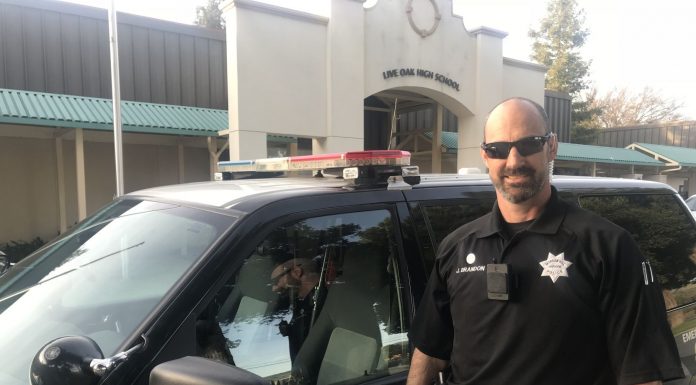
Four years ago, students, staff and faculty within the Gilroy Unified School District collaborated with more than 15 law enforcement agencies to help produce a “Run, Hide, Defend” training video.
MHUSD to allow student activism

Morgan Hill Unified School District’s superintendent sent out a March 7 letter to all “employees, parents, guardians and students” regarding the district’s strategy to allow for student participation in planned school walkouts and protests.
Borgioli toughs it out for March 6 meeting
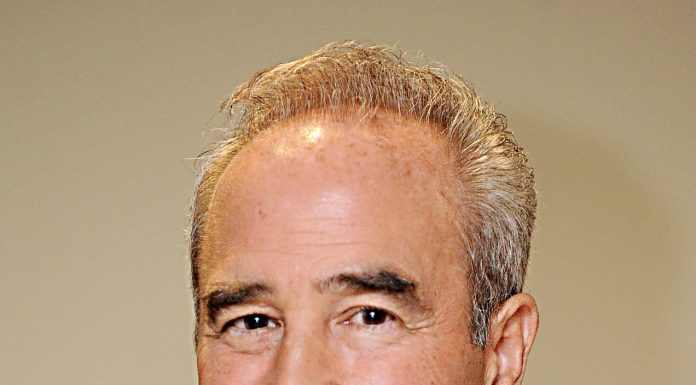
At 72 years old and one week removed from being struck by a car while walking his dogs on La Crosse Drive, Morgan Hill Unified School District Trustee Gino Borgioli was determined to attend the March 6 meeting.
Three trustees to call in to March 6 school board meeting

With the Morgan Hill Unified School District’s board of education set to convene March 6 for a regularly scheduled meeting at the 15600 Concord Circle headquarters, three of the seven board members will participate via teleconference for varying reasons.
School trustee injured in pedestrian-auto accident
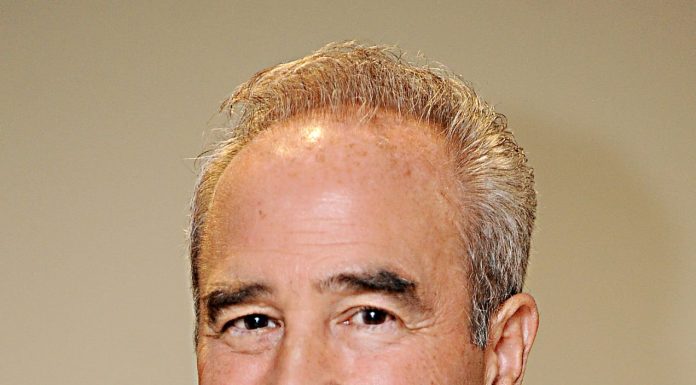
A board of education trustee for Morgan Hill Unified School District is in the hospital Feb. 27, recovering from serious injuries one day after being hit by a car while walking his two dogs in the Paradise Valley neighborhood.
LOHS students compete in FBLA section conference

Live Oak High School student Sarah Ann Leal recently placed fifth in Public Speaking at the Future Business Leaders of America (FBLA) Bay Section Leadership Conference, according to the chapter’s advisor.Leal was in competition with some powerful Bay Area schools such as Monte Vista, Lynbrook, Homestead and Dougherty Valley.Meanwhile, the local FBLA chapter delivered 528 teddy bears to all first graders in the Morgan Hill Unified School District for Valentine’s Day.Member Kai Leong spearheaded the special Valentine’s Day deliveries to Jackson Academy of Math & Music, El Toro Elementary School and Nordstrom Elementary School.
Charter students line school track with canned goods

Students at the Charter School of Morgan Hill celebrated Valentine’s Day in a unique way Feb. 14 as they successfully collected enough cans to go around a 1/8-mile track for a schoolwide “We LOVE our community” canned food drive.The canned food will be given to Second Harvest Food Bank for distribution to those in need.Students used critical thinking skills to calculate how many cans it would take to go around the 1/8-mile track, and then demonstrated personal and social responsibility with their donations, according to CSMH staff. They also were given the challenge of collecting enough canned food donations to do so.“I am happy to report that our CSMH community was able to demonstrate how much we care about our larger community by meeting the challenge of donating enough cans to go around our 1/8-mile track,” said Diana Gill, CSMH Community Liaison and Outreach Coordinator.
Nominations open for June primary election
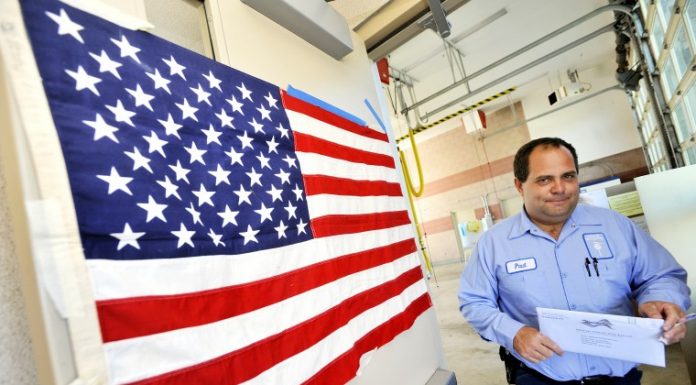
If you have ever considered running for local office in Santa Clara County, now is your chance.Monday, Feb. 12 kicked off the nomination period for the June 5, 2018 Statewide Primary Election. The nomination period ends Friday, March 9, but can be extended to Wednesday, March 14 for contests where the eligible incumbent doesn’t file.And while local Morgan Hill offices won’t appear on the ballot until November, City Council incumbent Rich Constantine has signaled he might run for mayor, and former two-term Councilwoman Marilyn Librers has tossed her hat back into the ring.Santa Clara County Registrar of Voters Shannon Bushey urged candidates running for office in June to call the Candidate Services Division at (408) 299-8639 or come to the office in order to review forms and requirements for successful filing.“There is no leeway in the filing deadline,” Bushey said. “It is always best to file nomination papers as early as possible so that any incorrect forms may be corrected before the filing deadline, which in most cases cannot be extended.”District 1 Supervisor Mike Wasserman, who represents Morgan Hill, said he intends to run for reelection.“It’s been my privilege to represent South County on the Santa Clara County Board of Supervisors,” Wasserman said. “I am seeking reelection in June 2018 and have been honored to receive a strong outpouring of support from local leaders in education, public safety, business, agriculture, and community members who share my passion for improving our county.”The following federal, state, and county offices are up for election in June:GovernorLieutenant GovernorSecretary of StateControllerTreasurerAttorney GeneralInsurance CommissionerSuperintendent of Public InstructionState Board of Equalization, District 2U.S. SenatorU.S. Representative District 17 (incumbent Ro Khanna)U.S. Representative District 18 (incumbent Anna Eshoo)U.S. Representative District 19 (incumbent Zoe Lofgren)U.S. Representative District 20 (incumbent Jimmy Panetta)State Senator District 10 (incumbent Bob Wieckowski)State Assembly District 24 (incumbent Marc Berman)State Assembly District 25 (incumbent Kansen Chu)State Assembly District 27 (incumbent Ash Kalra)State Assembly District 28 (incumbent Evan Low)State Assembly District 29 (incumbent Mark Stone)State Assembly District 30 (incumbent Anna Caballero)Santa Clara County Supervisor District 1 (incumbent Mike Wasserman)Santa Clara County Supervisor District 4 (incumbent Ken Yeager)Assessor (incumbent Larry Stone)District Attorney (incumbent Jeffrey F. Rosen)Sheriff (incumbent Laurie Smith)Judge of the Superior Court, 24 officesThe City of Morgan Hill will not participate in the June primary, and instead will hold elections for local offices in November. The nomination period for the Nov. 6 election opens July 16 and closes Aug. 10.This will be the city’s first council election in the district format. Candidates will need to reside in the districts they are seeking office in. The mayor’s seat will still be elected at large.Three seats will appear on the November ballot, including Mayor Steve Tate, District B Constantine and District D Councilwoman Caitlin Robinett Jachimowicz.Jachimowicz is currently nine months pregnant and said she hasn’t decided if she’ll run to retain her seat later this year. She was appointed to her council seat in January 2017 to complete the unexpired term of former Councilmember Gordon Siebert.“I want to make sure the baby is healthy,” Jachimowicz said by phone Tuesday. “After that, I’ll be able to make some more decisions.”According to City Clerk Irma Torrez, Constantine has already filed a Form 501, candidate intention statement, to run for mayor in 2018.Constantine said that he opened a committee to explore the possibility of a mayoral run, but paperwork for a possible campaign wouldn’t be filed until June.“I think I have a lot to offer Morgan Hill in the higher capacity than just as a city councilmember,” Constantine said by phone Tuesday.Former Councilwoman Marilyn Librers also filed a Form 501 to seek an open council seat in the November 2018 election. Librers served two terms on the council from 2008 to 2016, but was defeated in the November 2016 election.Additionally, the Morgan Hill Unified School District will hold their election in November. Four trustees are up for reelection, including Donna Ruebusch, Ron Woolf, Gino Borgioli and David Gerard. Also, Claudia Rossi’s seat on the Santa Clara County Board of Trustees is also up for election in November.Candidates are encouraged to make an appointment and begin the nomination filing process as early as possible to ensure all paperwork is completed and submitted on time.For more information, contact the Registrar of Voters’ Office at (408) 299-VOTE or toll-free at (866) 430-VOTE, or visit sccvote.org.

