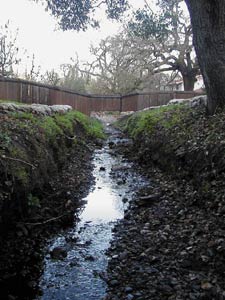
Morgan Hill – This week city officials learned they’re off the hook for alleged property damage caused by a stream running through backyards on Llagas Road.
In a lawsuit that went to trial last April, resident Judy Berkman and her neighbors claimed the city had control over the waterway and was responsible for erosion and seasonal flooding that made a mess of their yards.
However, Superior Court Judge Thang Nguyen Barrett on Feb. 16 ruled in favor of the city, which had argued the creek was naturally occurring and the property owners had full knowledge of the landscape when they bought their homes.
“It’s a terrific decision for the city,” said Morgan Hill City Attorney Janet Kern, who received the ruling in the mail on Wednesday. “This lawsuit cost the city more than $300,000 to defend.”
The case concerned a season creek that ran through the backyards of Berkman and three other plaintiffs before ending up in West Llagas Creek. While they knew about the creek when they bought their homes, the plaintiffs argued in court the waterway was not natural because it appeared to have been altered at some point. They also argued the creek had become incorporated into the city’s drainage system.
However, the city produced maps to show the stream existed more than a century ago, and in his 16-page ruling, Barrett stated even if there had been man-made improvements to the waterway, it would not affect its status as “natural.”
“It should be noted that this watercourse has been part of the natural landscape over a century ago, many decades before the development of the Llagas Valley Acres subdivision, and could be seen on an 1892 map,” Barrett wrote. “There is no evidence presented that the city had ever … dug, constructed or built the watercourse or had requested anyone else to do so.”
Barrett further ruled city workers who entered plaintiffs’ backyards in 2002 during a winter flood to place sandbags along the banks of the creek did so because the residents had requested the service, not because the city was exercising dominion or control over the waterway.
Attorney Mark Mosley, who represented the plaintiffs in court, said in an e-mail his clients are “very disappointed” by the judge’s ruling.
“We are considering all of our options carefully and we expect to decide upon a course of action soon,” he wrote.