A private groundbreaking ceremony for the $50-million American
Institute of Mathematics, a place where international scholars will
meet to exchange ideas on deep mysteries, will be held Thursday in
east Morgan Hill.
Morgan Hill – A private groundbreaking ceremony for the $50-million American Institute of Mathematics, a place where international scholars will meet to exchange ideas on deep mysteries, will be held Thursday in east Morgan Hill.
City and county leaders along with esteemed members of Bay Area math circles – including Congressman Jerry McNerney, who holds a doctoral degree in math – will come together for the invitation-only event. The attendees will meet from 11:30am to 1pm Thursday on Foothill Avenue to celebrate and talk about the highly anticipated project, which is slated to be finished in 2009 or 2010.
Modeled after the gorgeous Alhambra Palace in Granada, Spain, many believe AIM’s proposed 166,000-square-foot conference center will raise Morgan Hill’s educational and cultural profile. The spacious center will host international conferences, hold lecture series and harbor a world-class math library. It will also give local teachers and students a chance to interact with working scientists and mathematicians.
The center, which will include a 145-seat auditorium along with lecture halls and lodging for guests, will be located at the former site of Hill Country and the Flying Lady restaurant, a well-known tourist trap in the 1970s and ’80s owned by Irv Perlich. Fry’s Electronics CEO John Fry bought the property from Perlich in 1998, including his 18-hole golf course.
In 1999 a local controversy exploded when Fry and his partners graded large chunks of the course and planted turf close to Corralitos Creek, which runs through the property and is home to endangered animals and plants. The city forced Fry to complete an environmental plan in recent years in hopes of minimizing the damage. The golf course remains open for limited use only.
Founded in 1994 by Fry and Silicon Valley businessman Steve Sorenson, AIM is one of the world’s top math institutes. Housed in a funky 8,000-square-foot converted Palo Alto warehouse, the brainy group pushes the envelope of math knowledge with workshops and projects that bring scholars together from all corners of the globe. Fry’s Electronics donates the warehouse space, which used to be the company’s headquarters.
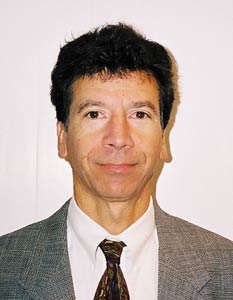
The warehouse will be vacated when the center is complete in Morgan Hill. The institute will relocate its roughly 15,000 books and journals and its seven-member staff under the direction of Brian Conrey, 51, a local mathematician who has been working with the center since 1997.
At AIM’s core are four volunteer boards. The AIM Board of Trustees oversees financial matters and meets two to four times a year. It consists of Fry, Sorenson, Santa Clara University mathematician Gerald Alexander, Stanford University mathematician Gunnar Carlsson and San Diego-based Imaging Technologies Corporation board chairman Harry Saal.
The AIM Scientific Research Board meets once a year and reviews workshop proposals. The board includes about 20 scholars from major U.S. universities including Princeton, Stanford, MIT, Caltech and UC Berkeley.
AIM is powered by a $2-million yearly budget from private fundraising and National Science Foundation grants. The Morgan Hill conference center will reportedly cost $50 million and is being privately financed.
Times interviews AIM Director Brian Conrey to discuss project’s significance
Q How is AIM’s work important to the science world?
A I think it’s very important. This new facility will be a major feature in the field of science. Our team style of solving problems may well be the wave of the future. It’s already captured a lot of interest around the world and continues to do so.
Q What will this research institute mean to Morgan Hill?
A It will have an educational, cultural and economic impact. For one thing, it will mean opportunities for students, teachers and people interested in mathematics to participate in this institution. Culturally, we’ll continue to host the Math Mardi Gras festival, but we’ll also opening a math library with historical and archival volumes that are extremely rare. We’ll also continue to host public talks about mathematics. We’ve already had seven with a total attendance of 4,000. Economically, it will make Morgan Hill an even more desirable place to live. For people who are looking for a place to live in the Bay Area, it will make Morgan Hill more attractive.
Q How will schools benefit with AIM in their backyard?
A For students, the two main things will be the opportunity to visit and the programs we offer. I think they will see benefits from various types of enrichment programs (such as Math Counts) we have developed and plan to continue. We also have plans to implement programs at elementary schools. The enrichment programs will continue be a way for schools to get involved in what we do. But also things like visiting the math institute on field trips and interacting with professional mathematicians from around the world will have a positive impact on students.
Q Why did AIM choose such elaborate castle?
A It was John Fry’s original vision for the math institute. I think it’s the fascination with the beautiful geometry present in the Alhambra Palace and the mathematics that was going on with the culture that built it. It will be inspiring to mathematicians who will come and work in Morgan Hill. I think having a beautiful and inspirational setting could be key to unlocking some of the mathematical mysteries we are involved with. We certainly hope that’s the case… and having a castle in the valley in Morgan Hill will be a catalyst for doing some really important work.
Q AIM scholars recently mapped the inner workings of one of the most complicated structures in the universe, the object known as E8. What’s next?
A Probably the area we are making the most progress in combines physics and number theory and could have applications to encryption and Internet security. The numbers-theory part involves L-functions, of which the Riemann hypothesis is the big mystery – a Holy Grail. When this gets solved, people are going to look back at that date and divide mathematics into two eras. The Riemann hypothesis (published in 1859) is close to 150 years old and it’s the key to understanding prime numbers. We still don’t know how to solve it, but it’s an ongoing project at AIM. We’ve had three international conferences and we are not close to solving it yet but we are making progress on better understanding it.
Q Congressman Jerry McNerney holds a doctorate in math. How happy are you to move to his district?
A How lucky can we get? McNerney is only the second math Ph.D. holder to be elected to the House. He’s already on the House Committee on Science and Technology and he’s backing a bill that would essentially double the amount of funding for basic scientific research. That is tremendously important for our economy. Our economy is based on innovations, building things, developing things, and this all starts with basic research in science and engineering. Also, the National Science Foundation supplies half of our funding, so his interest and involvement with the NSF budget obviously affects us. We welcome the opportunity for him to connect with the scientific community through AIM.
American Institute of Mathematics, Morgan Hill Unified School District form partnership
Morgan Hill – In a merging of math methods, the Morgan Hill Unified School District and the American Institute of Mathematics have formed an alliance that will offer students expanded opportunities to hone their mathematical skills.
The agreement brings specific services to students offered by AIM, including continuation of its Math Counts program.
The institute is currently located in Palo Alto but is breaking ground on its Morgan Hill campus Thursday.
“I’m delighted to be a part of the community, and to have the community be a part of everything we do,” AIM Executive Director Brian Conrey told trustees Tuesday evening. “It is a unique opportunity, a unique arrangement to have, and I look forward to seeing good things come from it.”
Some of the programs initiated by the partnership include an elementary after-school program for grades four through six focusing on problem solving and math games, a problem-solving course for sixth-graders, a problem-solving program before school or after-school program at the middle school level, a possible middle school elective course, participation by district students in national math competitions and a chapter of Mu Alpha Theta, which is a math honors society, at the high schools.
District parent Lori Mains, who coordinates the Math Counts program, said the partnership will be beneficial to both groups.
“AIM has this idea of cooperation, working together to achieve, and you see that with our kids (in Math Counts),” she said. “As these kids learn together, they feel community, they have synergy. It’s really an exciting thing.”
The agreement between the two organizations does not state a time limitation.