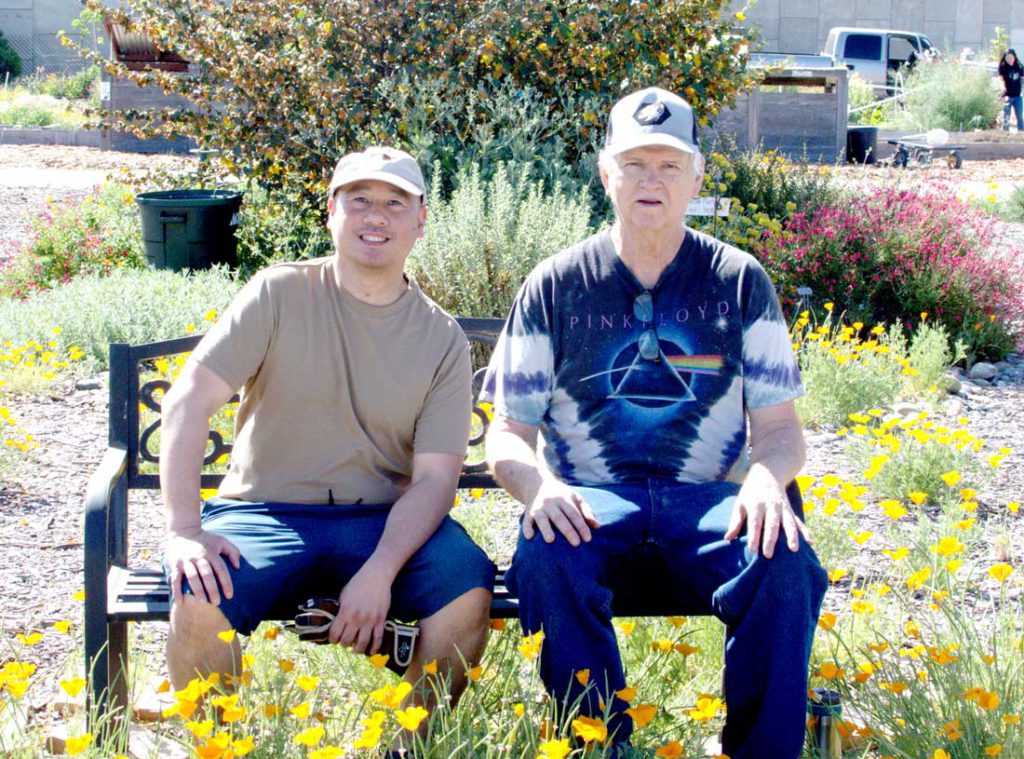
On sunny afternoons at the Morgan Hill Community Garden, Charlie Beecroft tends to his plot of vegetables and herbs. After downsizing to a home in Morgan Hill with virtually no yard, the community garden has become his outdoor sanctuary.
“For us, it was a great fit because we were downsizing from a quarter-acre (yard) in Redding to basically nothing here, and we really missed the idea of gardening,” said Beecroft, who joined the Morgan Hill Community Garden’s board of directors two years ago. “It’s neighborly, a really neighborly feel.”
The facility offers more than 100 garden plots at 15690 Railroad Ave., where gardeners from diverse backgrounds cultivate everything from common vegetables to exotic herbs.
The garden, which moved to its current location in January 2020, has grown into a flourishing hub of activity and agricultural education in Morgan Hill. Previously located near the South County Courthouse on Butterfield Boulevard, the garden relocated to make way for the new fire station.
The garden’s relocation provided an opportunity for expansion. The current three-acre site houses nearly 100 garden boxes, each 100 square feet, rented annually by local residents for $125 per plot. Demand continues to grow, with garden leadership recently announcing only seven plots currently available.
Eight specially designed elevated planter boxes accommodate gardeners with mobility challenges.
“They’re elevated so people like me with bad backs, and people in wheelchairs don’t have to reach down,” Beecroft explained. “They can come in and garden and have the experience.”
The garden maintains strict organic practices, with members agreeing to avoid synthetic fertilizers and pesticides. This commitment to sustainability extends beyond individual plots to the garden’s shared spaces and educational initiatives.
“Each gardener volunteers six hours a year to maintain the garden,” said Beecroft. “That’s weeding in the common areas, etc.”
A central 3,000-square-foot pollinator garden serves as both the site’s focal point and an ecological resource, attracting bees and other pollinators to the garden with its beautiful array of native flowers and trees.
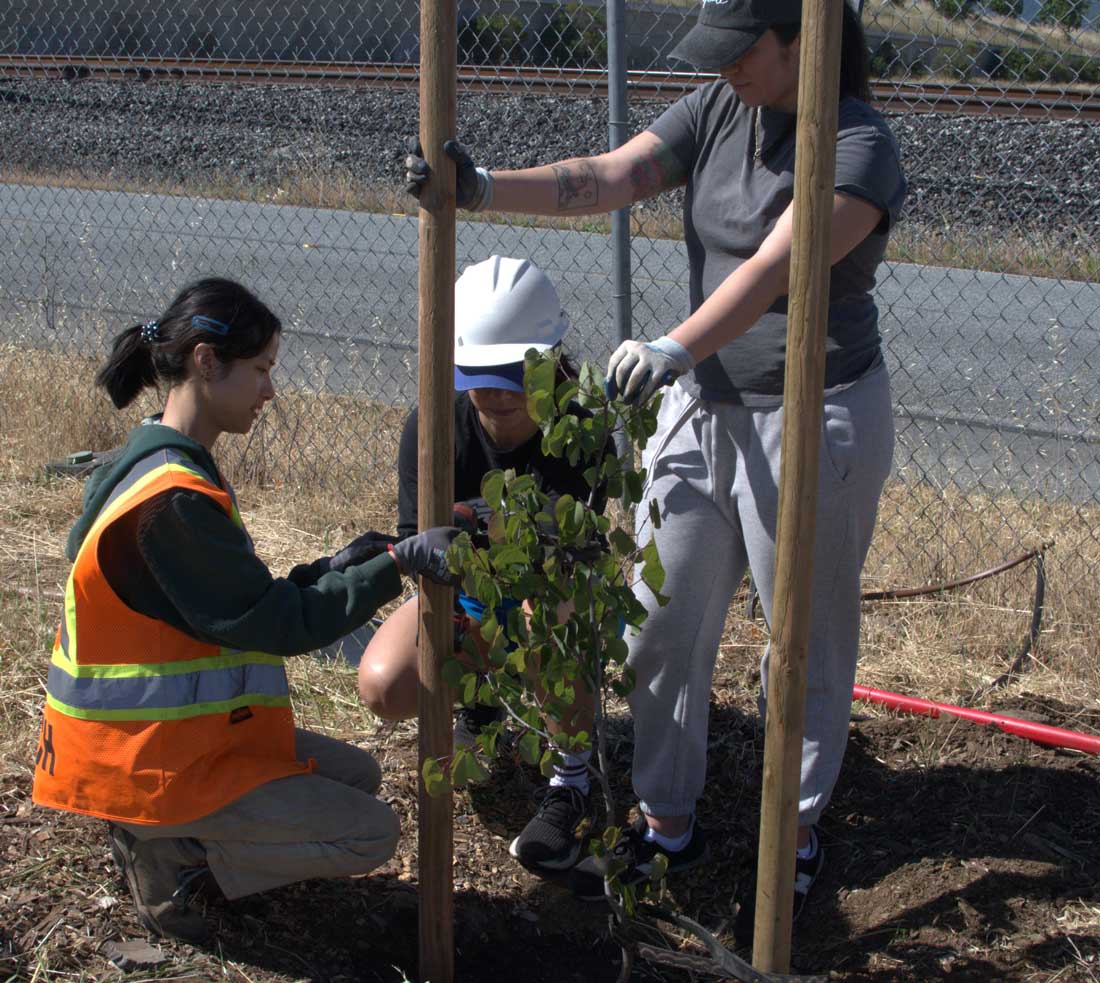
The garden recently partnered with Our City Forest to install new trees along the property boundaries, funded by a CalFire grant.
“Despite Morgan Hill not necessarily being what we might think of initially as an urban area, it is still eligible for this CalFire grant because of its growing population,” explained Marisa Zulaski, Urban Forestry Program Manager at Our City Forest. “It’s shifting from more agricultural to more development.”
Native trees, including Valley Oaks and Redbuds, will provide shade, habitat and windbreaks while enhancing the garden’s environmental benefits.
Education remains central to the garden’s mission. Regular classes led by Master Gardeners introduce both members and the public to sustainable growing techniques.
“We try to have periodic classes,” said Beecroft. “For the last couple of years, a master gardener had a class every first Saturday of the month for the community.”
These sessions cover innovative approaches like Three Sisters planting, an Indigenous technique that combines corn, beans and squash in a mutually beneficial relationship.
“The beans use the corn to climb, and the squash acts to kind of prevent insects,” Beecroft explained. “It’s not a yellow corn that we would traditionally eat, it’s a different corn than yellow corn, more like what the natives would grow.”
The garden also embraces modern sustainable practices that challenge conventional wisdom.
“A lot of things have changed with, for instance, cover crops,” said Martha O’Rourke, president of the Community Garden board of directors. “You don’t really try to disturb the soil anymore. Roto-tilling used to be how you did gardens, but now you don’t do any of that.”
Beecroft added, “Now you have to just maintain the soil, because every time you dig into it you’re changing the microbes.”
The garden’s international membership brings diverse cultivation practices and crops.
“We have a very international group, people from all over the world growing a variety of different herbs,” Beecroft said. “We get more and more interesting kinds of different people bringing in different crops.”
During the COVID-19 pandemic, the garden provided a safe outdoor activity and food security for many residents.
For O’Rourke, a self-described “city girl,” the garden offers both education and culinary benefits.
“It’s a great place to learn about gardening,” she said. “I enjoy cooking, and it is indescribable how much better it tastes than grocery store food. And you can grow things that aren’t necessarily able to be grown for the masses, because it doesn’t keep as well.”
Founded by three gardeners in 2009, the Morgan Hill Community Garden initially opened in 2010. After more than a decade, it has evolved into a vibrant community institution where residents connect with nature, food and each other.