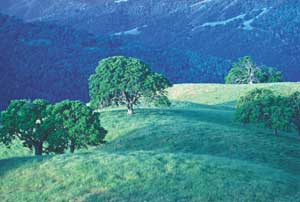
- The 87,000 acres of protected wildlife and parkland in South
- County’s backyard may close following Governor Jerry Brown’s
- release of his May budget revision Monday morning. On page 53, of
- 124 pages in the budget revision summary that resolves the
- remaining $10.8 billion deficit, is printed under
- “
- Recently Adopted Solutions
- “
- the shuttering of 70 state parks to save $33 million over two
years.
The 87,000 acres of protected wildlife and parkland in South County’s backyard may close following Governor Jerry Brown’s release of his May budget revision Monday morning. On page 53, of 124 pages in the budget revision summary that resolves the remaining $10.8 billion deficit, is printed under “Recently Adopted Solutions”: the shuttering of 70 state parks to save $33 million over two years.
Henry W. Coe State Park is on the list of cuts that were mandated by a bill passed by the Legislature in March. The real affect of closing so many state parks is coming to fruition now.
“Although park closures have been threatened before, this constitutes the first time in the 100-year history of California state parks that a serious, deliberate effort has been made to significantly reduce the state parks system,” said Elizabeth Goldstein, president of California State Parks Foundation.
Brown’s proposal keeps open the parks that produce the most revenue such as Hearst Castle and many beaches in Southern California that attract millions of visitors each year.
“We regret closing any park,” Ruth Coleman said, director of California State Parks, “but with the proposed budget reductions over the next two years, we can no longer afford to operate all parks within the system.”
The state parks department delineated three primary goals for developing the closure methodology: 1. protect the most significant natural and cultural resources; 2. maintain public access and revenue generation to the greatest extent possible; and 3. protect closed parks so that they remain attractive and usable for potential partners.
“These cuts are unfortunate, but the state’s current budget crisis demands that tough decisions be made,” said Resources Secretary John Laird, Morgan Hill’s former assemblyman. “Hopefully, Republicans in the Legislature will agree to allow California voters to decide whether we extend currently existing taxes or make deeper cuts to our parks.”
Frequent Coe visitor is Sean McLaughlin, who works in the global marketing department at Specialized Bikes in Morgan Hill. McLaughlin has been hiking and mountain biking in Coe for 15 years and is a lifelong devotee of exploring and the outdoors.
“It’s such a spectacular, beautiful place,” McLaughlin said. “I think about all the years I’ve spent out there, and then I go and look at a park map and maybe I’ve seen half of the park.”
McLaughlin said he was felt sad after hearing the news that Coe could close was sadness and the potential loss of outdoor recreation for families.
“While I recognize the need to work on the state budget … it seems like this is such a small fraction of the bigger challenge,” he said, pointing out that most park activities are volunteer run. Four state park employees work at Coe; two rangers and two maintenance employees.
“It’s my hope that something works out. I want to believe that ultimately the voters and taxpayers believe it’s worth it to us to protect a public treasure and it’s worth the investment,” he said. “Every one of those parks are valuable and belongs to us as Americans. It just doesn’t feel right to close them.”
Despite the large number of parks identified for closure, at least 92 percent of today’s attendance will be retained, 94 percent of existing revenues will be preserved, and 208 parks will remain open, Brown’s office reported.
On Friday, after Brown’s announcement, Assemblymember Bill Monning (D-Carmel) said the proposal to close 70 parks is distressing. Henry W. Coe State Park is the only state park in Santa Clara County and the second largest in California.
“While I understand the dire budgetary situation that has led to this decision, it is still a tragedy that these parks will no longer be open to the 5.6 million visitors they annually host,” Monning said.
He added that he’s committed to “working with all interested parties” to work together to find a solution.
State parks officials said the methodology developed preserves and protects parks critical to the mission, which provide for the diversity of experiences wanted by visitors across the state. For instance, a variety of state historic parks, state beaches, state recreation areas, state nature reserves and state parks and most of the parks in all categories will remain open to serve the diverse preferences of park visitors.
The threat to close Coe has been in the news before. In 2009, Gov. Arnold Schwarzenegger proposed cutting 220 of 278 state parks to save $70 million, though the plan was later revoked and instead 32 state parks are now managed by cities, counties or non-profit organizations. And in November, voters rejected Proposition 21 that would have added an $18 annual fee on vehicle registrations to provide funding for state parks.
“We can begin to seek additional partnership agreements to keep open as many parks as possible,” state parks Director Ruth Coleman said. “We already have 32 operating agreements with our partners – cities, counties and nonprofits – to operate state parks, and will be working statewide to expand that successful template.”
The governor must submit his final budget revision before July 1 when the next fiscal year begins, until then, the 38,000 people who visit the park that was donated by Henry Coe’s family in 1953 can depend on the park to remain open.