

Birds of the South Valley

The South Bay is abundant with an astonishing variety of avian life. The captivating hobby of birdwatching allows you to discover and appreciate the marvelous diversity of wildlife all around us. At the water’s edge you may see a majestic Great Blue Heron or a reclusive American Bittern; you will learn how to tell the difference between Great and Snowy Egrets; you might be surprised by a crested blue-and-white Belted Kingfisher suddenly diving into the water and emerging with a fish.
Oakwood denied league title, CCS hopes still high

Oakwood was in an unfamiliar position from the start against Trinity Christian Wednesday night.
Ford Store raising money for shooting victims’ families
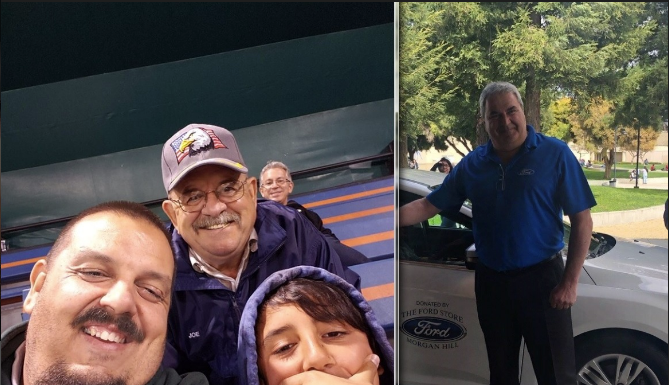
The June 25 fatal shooting at the Ford Store in Morgan Hill resulted in the death of Brian Light and Xavier Souto, both employees at the dealership.
MHPD launches software to engage crime victims

The Morgan Hill Police Department just rolled out a new online platform that allows officers to better communicate with local crime victims.
Crime is down in Morgan Hill, but challenges are up

While some types of crime are on the rise in Morgan Hill in the last year, the 2016 MHPD Annual Report shows the city remains safe, as the most serious categories of offenses are in decline.And while Morgan Hill, like other cities and counties in California, is challenged by recent state reforms that make it harder for local jurisdictions to keep potentially violent suspects in check, Police Chief David Swing said the local department is making strides in keeping the community safe by increasing engagement with the public and being more proactive in identifying criminals and preventing threats.“The report illustrates the work being done, and the quality and quantity of work being done by the men and women in this department, and I’m very proud and honored to be able to lead them,” Swing said.The latest MHPD Annual Report was distributed to the public last week. The document gives an overview of what federal authorities classify as “part 1” crimes—which as a whole are decreasing in Morgan Hill—and it lists some of the department’s accomplishments, new initiatives and other statistics.Part 1 crimes “are defined as offenses that are more serious crimes by nature and/or volume,” the report states. These include theft, vehicle theft, burglary and violent crimes such as homicide and assault. In Morgan Hill, theft makes up the highest category (49 percent, or 418 incidents) of all Part 1 crimes, followed by assault (22 percent). Burglary and vehicle theft each account for 13 percent of the local Part 1 volume. Robbery makes up about 3 percent of the total, or 21 incidents. There were no homicides in 2016, and three reported incidents of rape. Most cities in Santa Clara County, including Morgan Hill, have seen a decrease in Part 1 crimes when 2016 totals are compared to those of 2015, the report states.“We enjoy a relatively low crime rate in Morgan Hill,” Swing said. “Our residents are served by a group of dedicated professionals, many of whom live in South County—so they have a personal commitment” to local safety.However, Swing added it is “concerning” to see increases in residential burglaries, which are also on the rise in other Bay Area cities. These incidents are up to 111 in 2016 from 100 in 2015, but are down from a peak of 164 incidents in 2013.Another growing trend in Morgan Hill is the recovery of firearms from criminal suspects, Swing said. So far in 2017, officers have confiscated 11 guns as evidence during traffic stops or searches. That’s on pace to significantly surpass the 19 firearms recovered in 2015, and 18 confiscated in 2016. In 2014, MHPD officers recovered seven firearms from “people arrested for other crimes.”“Clearly, the increased presence of firearms is a real threat to our community, and to our officers’ safety,” Swing said.And in yet another growing trend, more suspects arrested in Morgan Hill are from other communities, Swing said. In 2016, he said more than half the people arrested here list their residence in another city.Reforms make it harderSome new state laws approved in recent years make it more difficult for local police departments to reduce crime in California. These include Proposition 47, which was approved by the voters in 2014 and reclassified certain nonviolent felonies as misdemeanors.This requires local police to issue citations for theft suspects, for example, who would have “earned a trip to county jail” before Prop 47 was approved, Swing said.The chief listed two of many examples of how this has impacted safety in Morgan Hill in recent months. In an incident earlier this year, officers contacted a suspect in possession of drugs—once a felony, but a misdemeanor under Prop 47. An officer gave the suspect a ticket and let him go.A little while later, the suspect walked into downtown Morgan Hill, and tried to snatch a purse from a customer who was eating on the outdoor patio of a busy restaurant, Swing said. A witness gave chase to the suspect, and police caught up to him and made an arrest.“Pre-Prop 47, that person having lunch in Morgan Hill doesn’t experience the theft of her purse,” because officers would have detained him for the drug possession, Swing said.Another state law that has allegedly made it easier for criminals is AB109, an effort passed in 2011 to reduce the state’s prison population by moving repeat, nonviolent offenders to county jails. Many law enforcement experts have argued this law has placed more criminals—including some violent ones—back on the streets.Less is known about the impact of Proposition 57, which was just approved by voters in November 2016. This proposition makes it easier for judges to release nonviolent criminals on parole.Swing added that at least one study, conducted by Stanford University, ties a statewide increase in auto thefts to these state reforms. In Morgan Hill, police are seeing more vehicle thefts, as well as stolen cars being used in other crimes.Traffic and other numbersTraffic accidents, often overlooked as a public safety issue, increased by a big margin in Morgan Hill in 2016. Police and emergency personnel responded to 283 accidents in 2016, compared to 209 in both 2014 and 2015, according to the annual report.Strategies to decrease the number of collisions, implemented by the MHPD traffic unit and patrol officers, include “directed traffic enforcement, responding to traffic complaints, community outreach campaigns and safe driving education,” the report reads.The annual report also notes that 50 percent of all police reports filed by MHPD officers result in an arrest. That percentage is higher than Gilroy, Palo Alto, Campbell and other similar size cities in Santa Clara County, according to the report.Engagement is keyThe 2016 annual report touts the effectiveness of some new programs instituted at MHPD in the last couple years.One of these is the reinstatement of the department’s Street Crimes Team, which was approved by the council earlier this year. This unit has just recently sprung back into action, tackling gang activity and violent crime, as well as “quality of life issues throughout the community,” Swing said.The Street Crimes Unit is also addressing local homelessness, Swing added. These officers will work with other local agencies and nonprofits to connect homeless people to services that can eventually move them into long-term housing.The report lists other community engagement efforts MHPD has participated in over the last year: Shop With A Cop, Safe Trick or Treat, Coffee With a Cop (next installment coming up May 19 at Peet’s on Cochrane Road) and vacation home checks performed by the department’s Volunteers In Policing program.
Tech park opponents crowd chambers
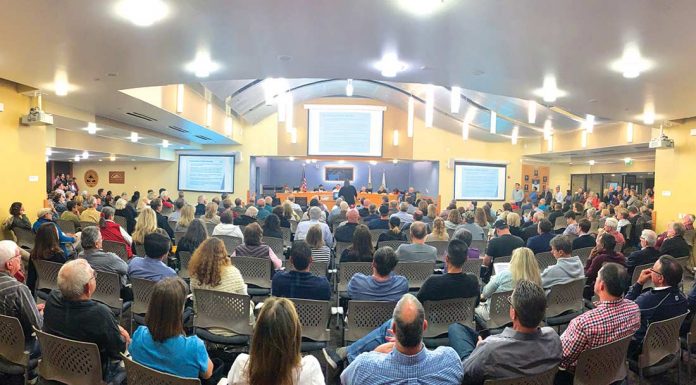
The Morgan Hill Planning Commission’s review of conceptual plans for a major industrial project Oct. 15 filled the council chambers with residents decrying the plans.
In a meeting that lasted four hours, nearly 30 people spoke against Trammell Crow Company’s proposal for three separate buildings...
UPDATED: Council moves to district elections
Editor's note: A previous version of this story reported the mayor's seat will continue to be elected by the voters at large under the chosen district-based system. City Attorney Don Larkin clarified this has not yet been determined. The council will determine how the mayor will be elected under the district system in the coming weeks.Starting November 2018, voters in Morgan Hill will begin electing their city councilmembers in a district-based election process. That’s a sharp change from the current and long-standing at-large system where every eligible voter within the city limits can choose who they want to represent the entire community.The sitting council unanimously approved this change at the June 7 meeting, not because they wanted to but because they’re certain it’s the only way to avoid a costly lawsuit that would force them to alter the election system anyway. In fact, councilmembers think the district-based system will have the opposite of its intended effect, and will make it more difficult for voters to gain adequate representation.Morgan Hill is now following a similar path as other nearby jurisdictions that have switched to by-district voting, prompted by threats from attorneys who claim the at-large system violates the California Voting Rights Act.The at-large system results in “vote dilution” and prevents under-represented groups such as Latino voters from “influencing the results of elections,” reads a May 2 letter to Morgan Hill City Manager Steve Rymer from the law firm Goldstein, Borgen, Dardarian & Ho.City Attorney Don Larkin recommended the council switch to a district-based election system at the June 7 meeting, based on the high improbability that the city could keep its current system in the face of legal challenges now that it has been threatened.“The California (VRA) has a strong preference for district elections,” Larkin told the council. “If someone can show there is polarization (of minority voters), they can sue… No city has ever successfully defended itself from claims of minority polarization” under the CVRA.Under a by-district or district-based election system, each elected official—in this case a city councilmember—must reside within the designated councilmember area boundary within the city limits, and is elected only by the voters in that area.City staff and councilmembers will spend the next three months conducting public meetings trying to get as much community input as possible as they establish four or five (depending on whether the mayor’s office remains elected at large) new council districts within the city limits. The council will likely consult with a demographer to help draw the city up into four districts of equal populations.The next public meeting on the matter will take place 7 p.m. June 21 at council meeting chambers, 17575 Peak Ave., the focus of which, Larkin said, is to begin gathering input from the community.This outreach is the most crucial part of the process, according to councilmembers who devoted the bulk of the June 7 discussion to determining the best methods to reach every voter in Morgan Hill.“I suggest we start now with informing the community,” Councilmember Caitlin Jachimowicz said.Between June 21 and Aug. 23 will be three more public hearings devoted to the task of dividing up the city into four council districts. A council subcommittee or citizens advisory committee (which one is yet to be determined) will oversee the drawing of draft district maps from June 29 to July 7. Draft maps will be published July 14.The district-based election system will roll out for the November 2018 election, in which the seats occupied by Councilmembers Rich Constantine and Jachimowicz will appear on the ballot. Councilmembers Larry Carr and Rene Spring will continue to serve the city at large until their seats next appear on the ballot in November 2020, after which those seats too will be elected within their respective new district.The council has not determined if the mayor will continue to be elected at large under this system, but it is currently leaning that way, Larkin said.Another option is to make the mayor’s office essentially a fifth council seat elected from within a city district equal in size and representation to those designated to the other four seats on the body.Attorney Mike Baller, who signed the May 2 letter from Goldstein, Borgen, said the council will not meet its requirements under the CVRA if it keeps the mayor’s seat elected at large.“If the city is trying to shield itself from being sued, this plan (an at-large elected mayor) will not do it,” Baller said.Under the current system, the mayor’s seat is up for election by the voters every two years, but the seat is equal in voting power to the other four councilmembers, who face election every four years. In many other cities, the office of mayor is assigned to a sitting council member, by a majority of the council as a whole, often on a rotating basis.Council: No other choiceCouncilmembers at the June 7 meeting had no praise for the new system, and were sharply critical of the May 2 letter signed by attorneys with the Goldstein, Borgen firm. All four councilmembers present—Mayor Steve Tate was absent—declared their only choice was to switch to a by-district system.The May 2 letter is “rubbish,” said Councilmember Rene Spring.“I’m all for being an inclusive city, but (this) will set wrong expectations, and it’s probably unlikely it will lead to the results those pushing the changes are hoping for,” Spring said. “I don’t think it will raise the inclusiveness. That will come with great candidates stepping up.”Jachimowicz added, “Going to district elections does not mean more people will have a voice…A law firm will get a large sum of money from the city.”Larkin explained to the council that the May 2 letter, titled “Demand for Compliance with California Voting Rights Act,” started a 90-day timeframe during which the city cannot be sued as long as the council chooses to change to a district-based system. Because the council made that decision June 7, any damages, fees and other costs claimed by the attorneys are capped at $30,000.Larkin said these costs could include the drafting of the demand letter and any oversight the firm might conduct to ensure the city is drawing adequate district maps.The letter from Goldstein, Borgen states the firm represents “Latino citizens and voters of the City of Morgan Hill.” It does not specify who these clients are.“Based on our review of election returns and demographic information… it is clear that disproportionately few Latinos, and other candidates favored by non-Latino voters, have been successful in winning election to the Morgan Hill City Council,” the letter states, in part. “For instance, none of the five current members of the City Council (including the mayor) is a Latino.”Morgan Hill attorney Armando Benavides, who unsuccessfully ran for seat on the council in the 2016 election, was one of three local voters who expressed support for the council’s change to a by-district system. Benavides, who is Latino, declined to say if he is one of the clients represented by Goldstein, Borgen. Benavides was an advocate for MHUSD board of trustees’ change in 2015 to a by-district election system.“It’s a better opportunity for all the community’s needs to be considered, because each councilmember has a particular district they have to account for,” Benavides said of the council’s June 7 decision.
Police blotter: Failing to register as a sex offender

Recent arrests from the Morgan Hill Police Department blotter:
Nurses, county reach agreement on wages
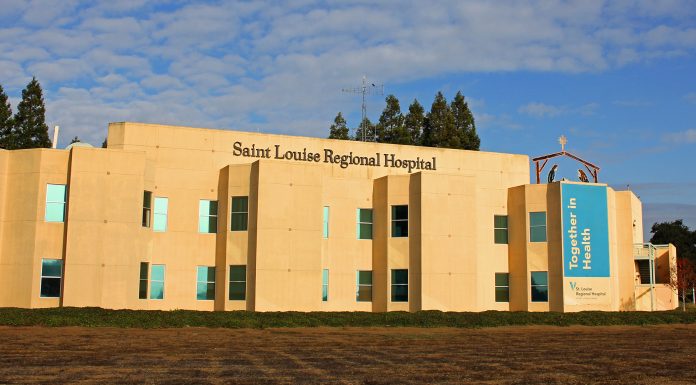
The Registered Nurses Professional Association (RNPA) announced on Christmas Eve it had reached a tentative agreement with Santa Clara County on a new multi-year contract for nurses in the county hospital system.
Report: Morgan Hill’s property values booming
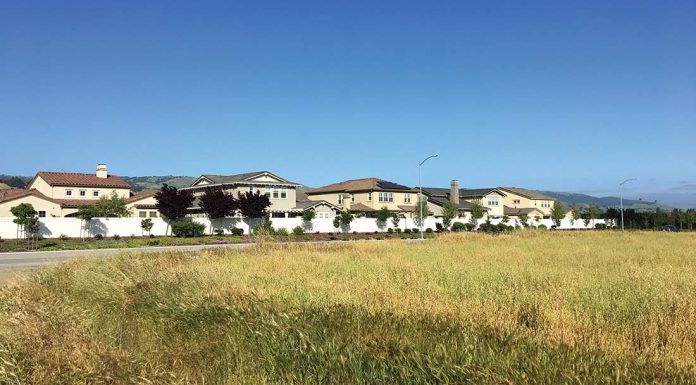
Morgan Hill helped spearhead a record-setting year for property values in Santa Clara County, according to data released by Assessor Larry Stone on July 2.
The annual assessment roll hit $516 billion, a 6.79 percent increase over the prior year, according to Stone. The assessment...

