The last time I wrote this column, I argued that “faith at its best does not teach us to fear our neighbors. It teaches us to see them.” I’ve been thinking about that word—see—quite a bit lately.
More precisely, I’ve been wondering: What is the difference between seeing our neighbors and watching them? That question is not abstract in South County.
Morgan Hill says it operates 50 fixed automated license-plate-reading cameras from Flock Safety. Gilroy uses the same technology; FindingFlock.com estimates the Gilroy camera count at 53 as of Aug. 16, 2026.
There are obvious reasons police departments value these systems. They can help identify stolen or wanted vehicles and provide evidence in criminal investigations.
So this is not a column about sinister cameras or bad police officers. It is about power, and about what happens when a new kind of power becomes ordinary.
We often speak about data as though numbers arrive innocent, objective and untouched by the world around them. But a datum can be accurate without being neutral.
A camera may correctly record that a particular license plate passed a particular intersection at 8:17 on Tuesday morning. Yet that fact does not float above society. Someone decided where the camera would be placed, what would be recorded, how long the information would be retained, who could search it, what other information it could be compared against and what consequences might follow.
And the person behind that plate has a social location too.
Being watched does not mean the same thing to everyone. A person with secure legal status, substantial institutional trust and little history of harmful encounters with government may barely notice a camera.
Someone whose family has experienced racial profiling, immigration enforcement, political repression or institutional betrayal may experience the same technology very differently.
That does not mean one person is objective and the other merely fearful. It means data are collected and interpreted inside a social world shaped by race, class, immigration status, geography, power and history.
California’s attorney general has warned that license-plate data can reveal sensitive details about where people live, work, associate, worship, seek medical care and travel. Flock itself acknowledged this year that some California law-enforcement camera networks had inadvertently been accessible to out-of-state agencies during periods in 2025, and says it has since strengthened safeguards.
There is no evidence that Morgan Hill or Gilroy was among those affected agencies. That distinction matters. So does the fact that stronger safeguards became necessary. And this is where faith has something to say.
In the Bible, in Genesis, Hagar—displaced, vulnerable and alone in the wilderness—names God as “the God who sees me.” She has not merely been detected. She has been seen in her suffering.
Biblical seeing moves toward recognition, compassion and responsibility. Surveillance moves differently. It converts what can be observed into information that can be stored, searched and used. That does not make surveillance inherently wrong. But it should make us morally attentive.
A license plate is not a person. But neither is it merely a number once it carries something of a person’s movements through a social world. So yes, we should ask who may search the data? For what purposes? Who reviews its use? What happens when safeguards fail? And how will the public know?
Those are not anti-police questions. Accountability is one of the ways trust becomes worthy of being given. I still believe faith should teach us to see our neighbors.
So watch out—not only for the cameras, but for what can happen to us when watching becomes easier than seeing. Our cameras may recognize every license plate in town. The harder question is whether we still recognize one another.
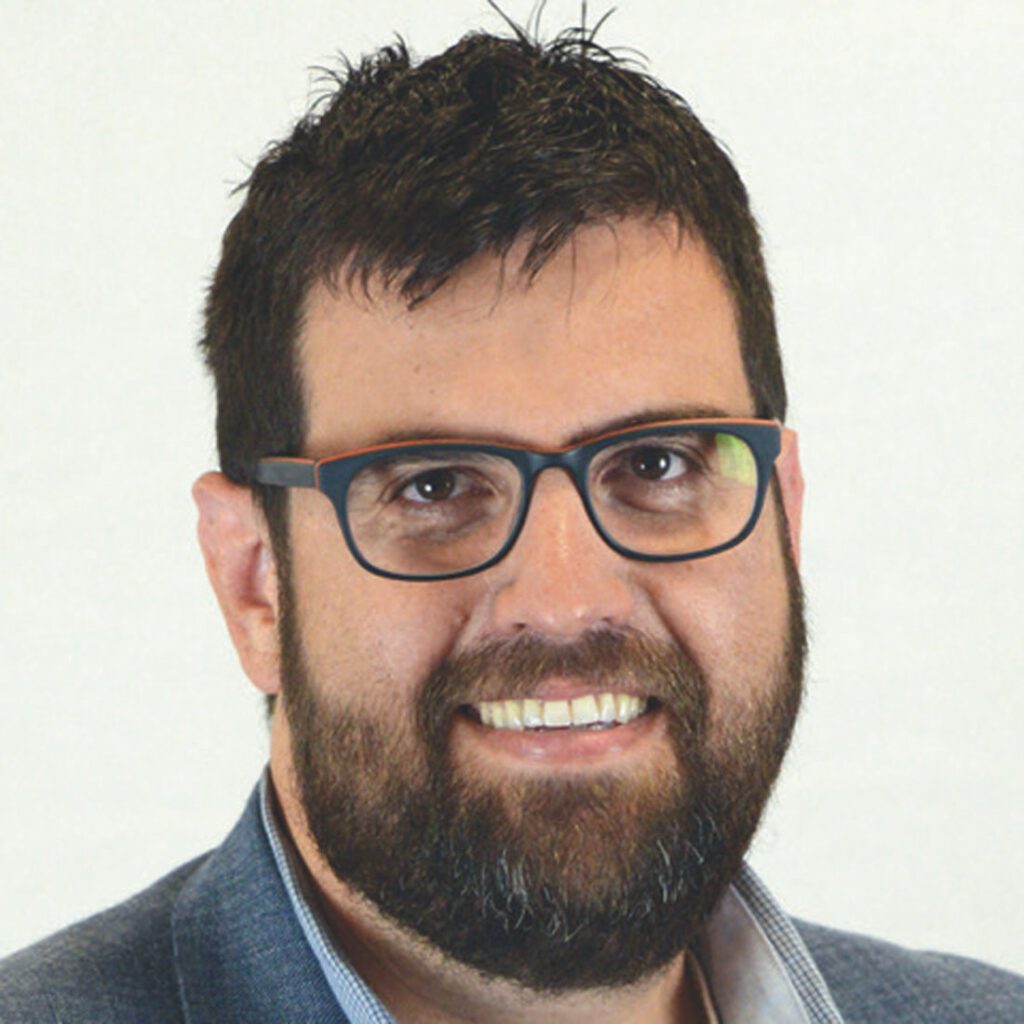
Anthony Suárez-Abraham serves as Associate Pastor at Advent Lutheran Church in Morgan Hill and teaches theology and religious studies at Saint Mary’s College of California. He is a member of the Interfaith Clergy Alliance and can be reached at an*****@*************an.org.