“Let justice roll down like waters, and righteousness like an ever-flowing stream” (Amos 5:24).
Deep in the founding scriptural pillars of the Abrahamic religions (Judaism, Christianity and Islam) the Prophet Amos writes a powerful lament for the Hebrew Nation.
Before becoming a Prophet, Amos was a simple shepherd and fig tree farmer, a servant of God. He was called to serve as God’s mouthpiece for humanity.
It was a time of tremendous darkness for the Hebrew people, about 760 years before the life of Jesus of Nazareth. Amos lived not far from Jesus’ birthplace of Bethlehem. There were warnings of war, famine and the scattering of God’s people.
Amos spoke as if he were giving a final command to someone about to walk off a cliff, not seeing where they are going: stop, turn around, you are headed for your death and the death of generations to come!
God’s people were paying lip-service to following God’s Law to “love your neighbor as yourself”; failing to remember to welcome the stranger in their midst, because they were once strangers in Egypt; dismissing the need to produce food and livelihood according to God’s order.
Rather than taking action to care for one another as one would want to be cared for, they just talked about it!
For this selfish behavior, Amos believed they would soon become extinct themselves. They needed to repent and turn around, to turn toward God, the Creator of all land, all creatures, all people—loving them with mercy and justice.
In the 20th century the United States saw the suffering of God’s children. Many failed to prosper, not because of anything they themselves had done but because people in leadership failed to obey God’s command to love all people.
They even failed to live into the self-evident truths of the Founding Fathers of the United States. Another prophet found himself on the world stage, proclaiming Amos’ truth to a new generation who sought self-fulfillment instead of God’s fulfillment of the dignity of every human being.
“We will not be satisfied until justice rolls down like waters and righteousness like a mighty stream,” preached Martin Luther King, Jr., in his profound “I Have a Dream” speech on Aug. 28, 1963.
Just as Amos called out the continued disparity of “the rich become richer while the poor become poorer,” when he warned those who were cheating at the market: “skimping on the measure, boosting the price and cheating with dishonest scales, buying the poor with silver and the needy for a pair of sandals, selling even the sweepings with the wheat.”
Wealthy people literally fixed the scales when weighing the hardworking poors’ grain to sell, leaving the poor to work harder to make up a deficit they could never attain. Often this turned working farmers and their families into slaves to pay their debts or starve.
This unjust treatment of humanity remains in our world today, right here in our region. Agricultural workers are the hardest workers of us all—toiling in the hot sun, doing back-breaking work, all in the hopes of creating food that you and I will eat.
The land itself is threatened by those in power attempting to build data centers and federal ICE facilities on agricultural land. Many hard-working farmers have no voice to speak for themselves as injustice threatens to crush them.
Untold numbers of our diligent neighbors live in fear of going out to the fields. Hiding for the safety of themselves and their families, they stay home. All of our faiths teach us to care for our communities because they also care for us.
Interfaith clergy come together to pray in vigils for those who die in ICE detention centers. Each fourth Sunday of the month, at 3pm, we gather to pray for justice, in front of the proposed ICE facility on Holsclaw Road in Gilroy.
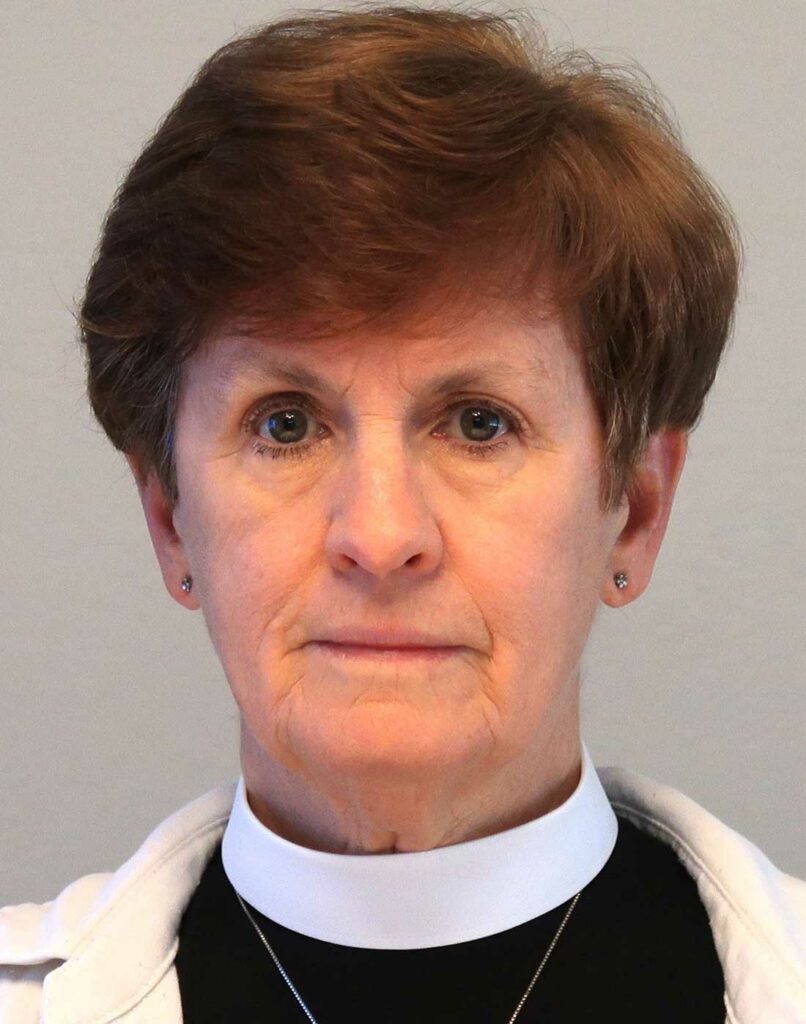
The Rev. Mary B. Blessing, a longtime resident of Morgan Hill, is the Episcopal Priest of the Episcopal Diocese of El Camino Real. She is an active member of Interfaith Clergy Alliance of South County.