


Have you ever thought about how one small action can affect the whole world?
There is a beautiful saying: “When a flower is picked, the stars are shaken.” It reminds us that everything is connected. Even a small action can have effects far beyond what we can see.
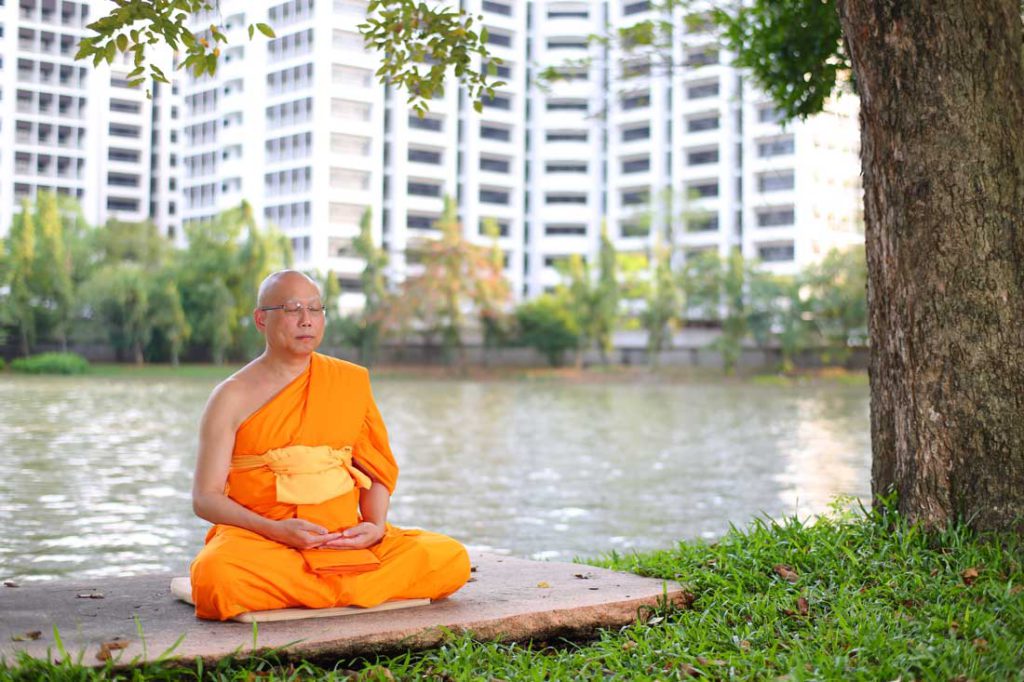
In Buddhism, we can understand this connection through the world around us, our own body and mind, and the world of living beings. These are not separate worlds. They affect one another all the time.
Polluted air can harm our bodies. When our bodies are tired or unhealthy, our minds may become stressed or easily upset. When anger fills our minds, we may speak harshly or act without kindness.
Our actions then affect other people, animals and the environment.
The process also works in a positive way. A healthy environment supports healthy bodies. A healthy body can help us think more clearly. A peaceful mind helps us make wiser choices and treat others with kindness.
What is pulling the strings?
Most Venerable Dhammajayo, my master, has used the image of human beings as puppets controlled by merit and sin. This teaching invites us to look deeply at what influences our thoughts, words and actions.
We can understand this image in everyday life. When we allow greed, anger or harmful habits to control us, we may act without thinking about the consequences. It is as if something inside us is pulling the strings.
On the other hand, when we develop kindness, honesty, generosity and wisdom, these good qualities can guide our choices.
People may use different words for goodness and wrongdoing, depending on their beliefs. But we can all understand the difference between actions that bring care and understanding, and actions that cause harm.
We are not powerless puppets. By becoming more aware of our minds, we can learn to pause, examine our intentions, and choose a better response.
You are what you take in
We often hear the saying, “You are what you eat.” The food we eat becomes part of our bodies. In the same way, what we take in through our eyes, ears, nose, tongue, body and mind shapes our mental lives.
If we constantly watch violence, listen to angry words or fill our minds with fear and hatred, these experiences can influence our thoughts and behavior. But when we listen to wise teachings, appreciate nature and spend time with kind people, we give our minds better conditions to grow.
Today, greed, anger and delusion can influence human choices. The desire for more can lead us to take too much from nature. Anger can create conflict, while a lack of understanding can prevent us from seeing the consequences of our actions. These problems affect people, animals and the environment.
Climate change and pollution require practical solutions and cooperation. Yet lasting progress also depends on the intentions and values behind our choices.
The urgent need to train the mind
In my previous articles, I wrote about finding happiness within the mind and discovering peace in a world of conflict. Both teachings lead to one important point: a more peaceful world begins with a more peaceful mind.
Meditation helps us pause, understand our thoughts and respond to difficult situations with greater wisdom. Instead of reacting immediately with anger or fear, we learn to choose our words and actions more carefully.
Luang Por Dhammajayo has emphasized the importance of inner peace and meditation as a way to inspire peace in society. Imagine a million people coming together to meditate with one shared intention: peace for all living beings. Such a gathering could become a powerful symbol of people from many backgrounds joining together for peace.
Meditation alone cannot solve every conflict or environmental problem. But a peaceful mind can guide us toward wiser choices, greater compassion and more responsible actions.
Begin with yourself
We do not need to wait for others to make a difference. We can begin today. Pause before speaking in anger. Treat others with kindness. Care for nature. And set aside a few minutes each day to practice meditation.
Every thought, word and action can create either suffering or peace. When we care for our minds, we become better able to care for other people, animals and the environment we share. The world is not separate from us. We are all connected.
Let us begin with one peaceful mind at a time and work together to create a more peaceful world for all living beings.
Phrakrubhavavides (Manikanto Bhikkhu) is the senior Abbott of the Dhammakaya Meditation Center Silicon Valley. An ordained Buddhist Monk for 33 years, he is an active member of the Interfaith Clergy Alliance and can be reached at ob*****@*****il.com.