

Guest view: Enjoy Freedom Fest at home

It all begins with a broadcast of the Patriotic Singers on July 3 at 6pm. Then, we move into the grand celebration on July 4. At 10am, we will bring you a full live celebration, which will include: over 200 horses, 300 band members and singers, a dozen classic cars, two dozen marching groups and floats, along with special messages from local first responders and essential workers.
Religion: Summer and creation

Summer is my favorite season. Everything feels rich and lush. The days are long and the sunshine warms my soul. I see the beauty of so many flowers with vibrant colors. The sky seems a little bluer to me. Everywhere around me I am...
Guest view: Budget invests in South County

The County of Santa Clara provides the services that hold the fabric of our society together, but are often invisible to the majority of our 1.9 million residents. My colleagues and I on the Santa Clara County Board of Supervisors recently approved the fiscal year 2017-18 $6.5 billion budget. For South County, I’m pleased to announce that we are funding some key projects including a new Urgent Care Center, a new Animal Shelter, funding for services provided by the South County Youth Task Force and the Fire Safe Council, as well as expansion of the Santa Clara Valley Wine Trail.The County’s $6.5 billion budget provides residents with vital medical services, public health protection, behavioral health care, food safety, environmental protection, child and adult protective services, senior services, family reunification, assistance to those in need, homelessness prevention and treatment, transportation, park and recreation, libraries, emergency response to disasters, the criminal justice system and scores of other services. Many of these are expected by our residents and taken for granted. However, they require a lot of work from a committed workforce of 20,000 employees including social workers, doctors, nurses, park rangers, engineers, firefighters, accountants, librarians, deputy sheriffs and so many more.A new 12,000-square-foot Urgent Care Center will soon be built within recently-vacated space in the existing Gilroy Valley Health Center, located at 7475 Camino Arroyo in Gilroy. The center will offer walk-in style urgent care, including night and weekend hours, and will serve up to 20,000 patients annually. Construction will begin later this year with plans to open the doors in summer 2018. The project is estimated to cost $5 million and will be funded with existing 2012 Measure A revenue.As an animal lover, I’m especially excited to announce that a new County Animal Shelter is on the way. It will be located at the Sig Sanchez County Government Center at Highland Avenue in San Martin. The new shelter will be approximately 34,600 square feet. It will feature multiple kennel and cage animal holding spaces, as well as spaces for administration, veterinary medicine, adoption, food preparation, laundry and storage. It will be able to house up to 90 cats, 70 dogs and multiple livestock on a daily basis. This shelter will cost $26 million, and is anticipated to open in late 2020.Public safety has always been my top priority. I was able to secure $266,000 of funding for the South County Youth Task Force after state budget cuts eliminated their funding. In just four years, the task force has helped to reduce juvenile arrests by an amazing 46 percent by reducing delinquent behaviors and preventing recruitment of youth into gangs. The task force has successfully reduced gang violence overall in Gilroy, Morgan Hill and San Martin.The Loma fire of the summer of 2016 gave many of us a renewed appreciation for fire services. We know that prevention is key. The Santa Clara County Fire Safe Council is a nonprofit organization dedicated to protecting communities at risk from wildfire. It is funded by private donations as well as local government agencies. The county is funding a new fully equipped tool trailer to perform hazardous fuel reduction and evacuation route clearing.Since we helped launch the Santa Clara Valley Wine Trail in 2013, it has been enormously popular with residents and visitors alike. The Wineries of Santa Clara Valley recently asked for my help after they identified the need to expand the Wine Trail (with increased signage) to provide better access to the wineries located inside the 29-mile Wine Trail loop. These new signs are scheduled to be installed in time for California Wine Month in September as well as Fall Passport Weekend in October.These new projects and services are just a few of the many ways that Santa Clara County government is providing what I like to call “Real Life Help” to South County residents every day.Supervisor Mike Wasserman was elected to the Santa Clara County Board of Supervisors in November 2010, and re-elected in 2014. He represents District 1, which includes Gilroy, San Martin, Morgan Hill, Los Gatos, Monte Sereno and portions of San Jose.
Guest view: Teach your children about fire early
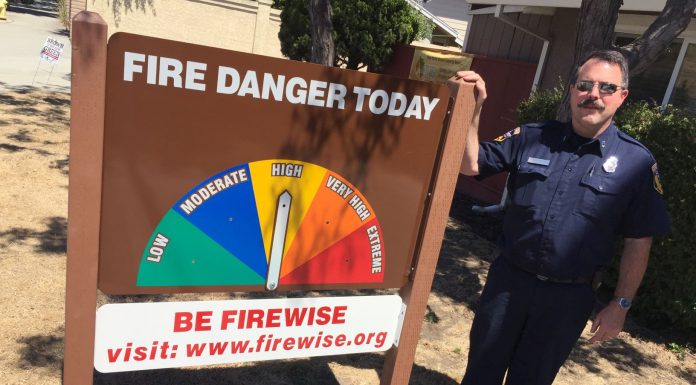
This guest view is part of a periodic series of opinion pieces on tips to prepare for wildfire season, which started May 1 in Santa Clara County.As our children enjoy the end of the school year and our open spaces transition into their seasonal amber waves, we encourage you to teach your children about fire safety. Curiosity is a vital part of a healthy childhood and children are naturally curious about fire. Last year, thousands of children “played” with matches. Only, they didn’t learn anything…Fire is the leading cause of death in the home for young children in the U.S. Tragically, one third of the children who died in home fires last year set the fires that killed them. Burns are also a major cause of accidental death for young children in our country, many of whom are burned when playing with matches or lighters.What’s most tragic about these deaths is that almost all of them could have been prevented. Teach your children about fire so that they, and you, don’t get burned.Teaching Your Child About Fire: ‘What is fire?’Fire is a strong natural force, like wind, water or electrical power, which produces heat. Like all energy sources, fire is a tool we use in our everyday lives: cooking food, heating homes, powering cars, and lighting candles are just a few examples of ways we use fire as a tool.Fire can be extremely dangerous, because the heat it produces can quickly get out of control if not handled properly. Because of this danger to people and property, only adults should use fire.Fire is useful, but it is not magic. It is powerful, but it is practical when used wisely. It is a fascinating process, but it’s also a part of everyday life. Fire is not a toy, and young children should never be allowed to use it like one.How do I know that my child is curious about fire?He may ask you questions, or he may stare at the fire, or point to or try to touch matches and lighters, or he may run to the window when fire trucks race by. But why wait for signs? Whenever you use fire, teach your child about it.What if my child has already begun experimenting with fire?Calmly, but firmly, explain that this is not an acceptable way to learn about fire. Explain—but do not overemphasize—the seriousness and danger of playing with fire and immediately begin teaching your child about the safe way to learn about fire. Someone said that if I burn his fingertips he’d learn the dangers…This is simply incorrect. It’s also child abuse. Burning your child will only injure him or her. It will not teach him or her anything positive about fire. It may even give him the dangerous idea to use fire in anger.Fire Marshal Dwight Good serves the Morgan Hill Fire Department and South Santa Clara County Fire Protection District and the CalFire Santa Clara Unit. He has 24 years of fire service experience. He can be contacted at [email protected].

