




Districts drawn for new city elections system
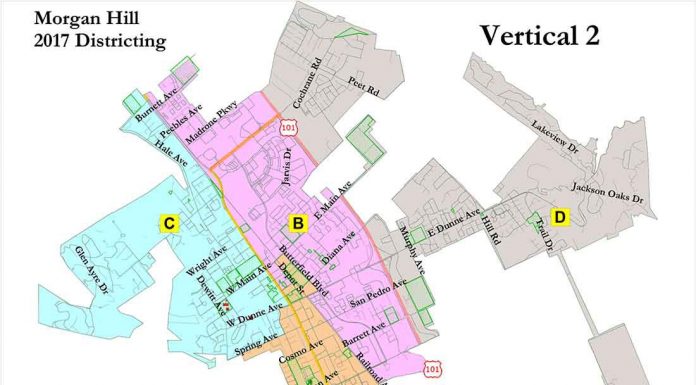
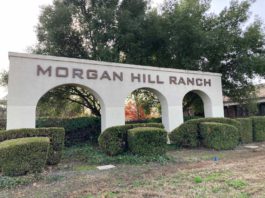
The next time Morgan Hill residents vote in a municipal election, they will only select a single choice for city council among candidates who reside within the newly established voting district where they live.As of Sept. 6, there are now four city council districts in Morgan Hill—equal in population—each to be represented by a single councilmember who lives inside that district. At the Sept. 6 meeting—after a series of public meetings and workshops and perusing more than a dozen draft maps created by a professional demographer and Morgan Hill citizens—the council approved a four-district map that will apply until the 2020 U.S. Census.This is a stark change from the way local voters have elected council members since the city was incorporated in 1906. Until now, councilmembers have always served the city on an at-large basis, and voters have typically voted for two councilmembers in each regular election (roughly every two years).Earlier this summer, the council begrudgingly approved the new by-district election system in response to a demand letter threatening a lawsuit under the California Voting Rights Act.Although councilmembers dislike the new system, they approved a district map that considers traditional specific neighborhood interests and protects the voting rights of all minority groups.“We tried to keep communities of interest and neighborhoods together. It’s not perfect, and it’s going to be really hard now to get good qualified candidates to run for city council,” Mayor Pro Tem Larry Carr said.The map approved by the council keeps current councilmembers (not including the mayor) in separate districts. Demographer Doug Johnson, who the city hired to help guide the council and the public through the districting process, said this is a common practice among agencies required to draw new districts because it respects the electorate’s desire to be able to choose the incumbents.The by-district system will start with the November 2018 election, when the seats occupied by Councilmembers Rich Constantine and Caitlin Jachimowicz will be on the ballot.Constantine’s district, labeled “District B” on the map, cuts a swath down the middle of Morgan Hill from the northern to the southern city limits. Jachimowicz’ district, known as “District D,” occupies the eastern side of Morgan Hill.The seats occupied by Councilmembers Larry Carr and Rene Spring will be elected within the new districts starting with the November 2020 election.“District A,” where Carr resides, goes from a corner of downtown Morgan Hill southwest past West Middle Avenue. “District C,” where Spring lives, occupies northwest Morgan Hill.The mayor’s seat will continue to be elected at large under the new system.Three of the districts contain at least a small geographic portion of downtown Morgan Hill, a neighborhood where councilmembers say many different interests for residents from all over the city coincide.In May, the council received a demand letter from Oakland law firm Goldstein, Borgen, Dardarian & Ho, alleging that the city’s traditional at-large system violates the CVRA because it limits the influence of minority groups.The firm was hired by local Latino residents Armando Benavides, Sally Casas and Brenda Cayme. Benavides has previously run for Morgan Hill City Council and the Morgan Hill Unified School District Board of Trustees. In 2012, he was also involved in the effort to force MHUSD to switch from an at-large to a by-district system.Cayme has previously run for MHUSD trustee as well.By approving the change, the council aimed to protect the city from a potentially costly civil rights lawsuit. But it also forced the city to fast track the process of notifying the public and creating four new districts equal in population, without gerrymandering.Residents were encouraged to use online mapmaking tools provided by Johnson’s company, National Demographics Corporation, to draw districts for the council’s consideration. Six residents submitted such maps. The map ultimately approved by the council was proposed by NDC.“I continue to be disappointed that a couple of disgruntled people who have not been able to win an election in Morgan Hill have forced this on us,” Carr added. “I don’t think district elections will improve representation for anyone in Morgan Hill, and it will bring some unintended consequences we will have to work through.”
Rivas leads effort to combat growing retail theft problem

Nearly four months after forming a bipartisan select committee and two hearings later, Assembly Speaker Robert Rivas announced legislation Feb. 15 to combat shoplifting and organized retail theft—just beating a legislative deadline to introduce new bills.
The Hollister Democrat joined Democratic Assemblymembers Rick Zbur of...
Former sheriff’s captain convicted of bribery in gun permit scandal

A Superior Court jury on July 17 found former Santa Clara County Sheriff’s Capt. James Jensen guilty of felony bribery and conspiracy charges in connection with a gun permit bribery scandal.
The same jury acquitted co-defendant Harpaul Nahal, a Santa Clara attorney, of both charges...
Supervisors buy land for affordable housing projects

Santa Clara County supervisors approved a quartet of housing projects March 22 that will convert existing properties into more than 300 affordable housing units.
The board unanimously approved the purchase of four properties—two in San Jose, one in Morgan Hill and one in Santa Clara—that...
Downtown traffic mitigation on Jan. 19 council agenda

UPDATE: The City Council on Jan. 19 voted 3-2 (with councilmembers Yvonne Martinez Beltran and Rene Spring in dissent) to approve the following city staff recommendation:
Approve the proposed Traffic Mitigation Plan Implementation Schedule to supportthe Monterey Road Lane Reduction Program;
Approve the re-design of...
Santa Clara County Sheriff Laurie Smith will not seek re-election
Facing corruption probes and a potential trial that could expel her from office, Santa Clara County Sheriff Laurie Smith said Thursday she will not run for reelection and will retire when her sixth term ends in January.
Smith, who was the first woman to be...
Meet the candidates: MHUSD Trustee Area 2

Running for the Morgan Hill Unified School District Trustee Area 2 seat are James Dill and incumbent John Horner.
Horner is running for his second four-year term on the MHUSD Board of Trustees. His professional experience started out as an engineer and manager in the...
UPDATED: Council moves to district elections

Editor's note: A previous version of this story reported the mayor's seat will continue to be elected by the voters at large under the chosen district-based system. City Attorney Don Larkin clarified this has not yet been determined. The council will determine how the mayor will be elected under the district system in the coming weeks.Starting November 2018, voters in Morgan Hill will begin electing their city councilmembers in a district-based election process. That’s a sharp change from the current and long-standing at-large system where every eligible voter within the city limits can choose who they want to represent the entire community.The sitting council unanimously approved this change at the June 7 meeting, not because they wanted to but because they’re certain it’s the only way to avoid a costly lawsuit that would force them to alter the election system anyway. In fact, councilmembers think the district-based system will have the opposite of its intended effect, and will make it more difficult for voters to gain adequate representation.Morgan Hill is now following a similar path as other nearby jurisdictions that have switched to by-district voting, prompted by threats from attorneys who claim the at-large system violates the California Voting Rights Act.The at-large system results in “vote dilution” and prevents under-represented groups such as Latino voters from “influencing the results of elections,” reads a May 2 letter to Morgan Hill City Manager Steve Rymer from the law firm Goldstein, Borgen, Dardarian & Ho.City Attorney Don Larkin recommended the council switch to a district-based election system at the June 7 meeting, based on the high improbability that the city could keep its current system in the face of legal challenges now that it has been threatened.“The California (VRA) has a strong preference for district elections,” Larkin told the council. “If someone can show there is polarization (of minority voters), they can sue… No city has ever successfully defended itself from claims of minority polarization” under the CVRA.Under a by-district or district-based election system, each elected official—in this case a city councilmember—must reside within the designated councilmember area boundary within the city limits, and is elected only by the voters in that area.City staff and councilmembers will spend the next three months conducting public meetings trying to get as much community input as possible as they establish four or five (depending on whether the mayor’s office remains elected at large) new council districts within the city limits. The council will likely consult with a demographer to help draw the city up into four districts of equal populations.The next public meeting on the matter will take place 7 p.m. June 21 at council meeting chambers, 17575 Peak Ave., the focus of which, Larkin said, is to begin gathering input from the community.This outreach is the most crucial part of the process, according to councilmembers who devoted the bulk of the June 7 discussion to determining the best methods to reach every voter in Morgan Hill.“I suggest we start now with informing the community,” Councilmember Caitlin Jachimowicz said.Between June 21 and Aug. 23 will be three more public hearings devoted to the task of dividing up the city into four council districts. A council subcommittee or citizens advisory committee (which one is yet to be determined) will oversee the drawing of draft district maps from June 29 to July 7. Draft maps will be published July 14.The district-based election system will roll out for the November 2018 election, in which the seats occupied by Councilmembers Rich Constantine and Jachimowicz will appear on the ballot. Councilmembers Larry Carr and Rene Spring will continue to serve the city at large until their seats next appear on the ballot in November 2020, after which those seats too will be elected within their respective new district.The council has not determined if the mayor will continue to be elected at large under this system, but it is currently leaning that way, Larkin said.Another option is to make the mayor’s office essentially a fifth council seat elected from within a city district equal in size and representation to those designated to the other four seats on the body.Attorney Mike Baller, who signed the May 2 letter from Goldstein, Borgen, said the council will not meet its requirements under the CVRA if it keeps the mayor’s seat elected at large.“If the city is trying to shield itself from being sued, this plan (an at-large elected mayor) will not do it,” Baller said.Under the current system, the mayor’s seat is up for election by the voters every two years, but the seat is equal in voting power to the other four councilmembers, who face election every four years. In many other cities, the office of mayor is assigned to a sitting council member, by a majority of the council as a whole, often on a rotating basis.Council: No other choiceCouncilmembers at the June 7 meeting had no praise for the new system, and were sharply critical of the May 2 letter signed by attorneys with the Goldstein, Borgen firm. All four councilmembers present—Mayor Steve Tate was absent—declared their only choice was to switch to a by-district system.The May 2 letter is “rubbish,” said Councilmember Rene Spring.“I’m all for being an inclusive city, but (this) will set wrong expectations, and it’s probably unlikely it will lead to the results those pushing the changes are hoping for,” Spring said. “I don’t think it will raise the inclusiveness. That will come with great candidates stepping up.”Jachimowicz added, “Going to district elections does not mean more people will have a voice…A law firm will get a large sum of money from the city.”Larkin explained to the council that the May 2 letter, titled “Demand for Compliance with California Voting Rights Act,” started a 90-day timeframe during which the city cannot be sued as long as the council chooses to change to a district-based system. Because the council made that decision June 7, any damages, fees and other costs claimed by the attorneys are capped at $30,000.Larkin said these costs could include the drafting of the demand letter and any oversight the firm might conduct to ensure the city is drawing adequate district maps.The letter from Goldstein, Borgen states the firm represents “Latino citizens and voters of the City of Morgan Hill.” It does not specify who these clients are.“Based on our review of election returns and demographic information… it is clear that disproportionately few Latinos, and other candidates favored by non-Latino voters, have been successful in winning election to the Morgan Hill City Council,” the letter states, in part. “For instance, none of the five current members of the City Council (including the mayor) is a Latino.”Morgan Hill attorney Armando Benavides, who unsuccessfully ran for seat on the council in the 2016 election, was one of three local voters who expressed support for the council’s change to a by-district system. Benavides, who is Latino, declined to say if he is one of the clients represented by Goldstein, Borgen. Benavides was an advocate for MHUSD board of trustees’ change in 2015 to a by-district election system.“It’s a better opportunity for all the community’s needs to be considered, because each councilmember has a particular district they have to account for,” Benavides said of the council’s June 7 decision.
City Council inches toward new districts
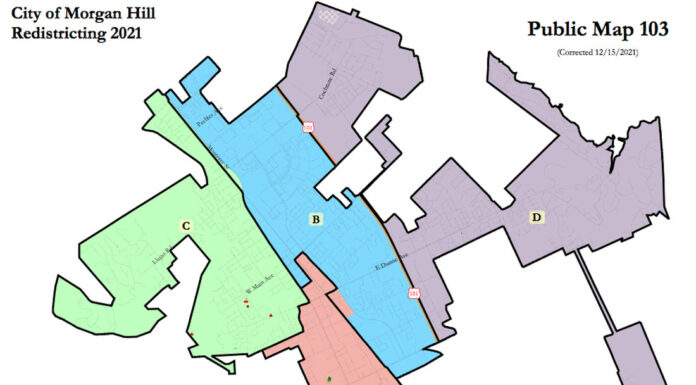
The Morgan Hill City Council has narrowed down its potential new district boundaries to a choice of five draft maps, but officials disagree on whether all of them would stand up to state laws regulating the electoral redistricting process.
In recent months, the council and...
Initiative targets California housing statutes

A series of housing laws signed by Gov. Gavin Newsom in recent memory has prompted an organized group of city officials from throughout the state to gather signatures for an initiative they say will help bring land-use decisions back to local jurisdictions.
The “Our Neighborhood...

