




LOHS alum among eight veterans to be honored
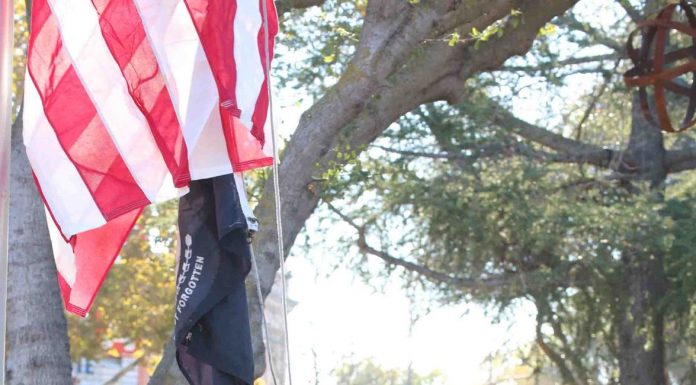
Live Oak High School alumnus Eddie Bowers, who served in the U.S. Army during the Vietnam War, was one of eight servicemen named as a recipient of the Veteran of the Year Award.
Morgan Hill man wins gold medal in global games
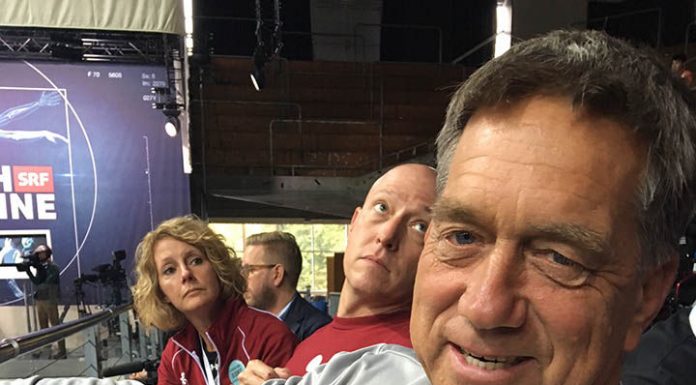
Morgan Hill’s Mark Muhn is the world’s fastest paraplegic cyclist, and he has the gold medal to prove it.Muhn and his wife Carol traveled to Zurich, Switzerland in early October so Mark could compete in the inaugural Cybathlon, an international athletic competition for physically disabled individuals using assistive technologies.Muhn, who has been paralyzed from the chest down since a skiing accident crushed his spinal cord in 2008, competed in the “Functional Electrical Stimulation bike race”—one of six events at the Oct. 8 Cybathlon. He came in first place, beating his closest competitor by more than a minute on the 750-meter course. It was about a three-minute race.“I was the oldest person there,” said Mark Muhn, 59. “There were a lot of young guys.”More than 60 teams from around the world competed at the 2016 Cybathlon in a total of six events including the bike race, plus other futuristic-sounding competitions such as the Powered Exoskeleton race and the Brain-Computer Interface race.These disabled athletes use highly advanced technologies—typically in the experimental stages—to gain mobility. In Muhn’s case, he has a surgically implanted electrical stimulation system that allows him to contract and coordinate his leg muscles enough to stand up, ride a three-wheeled bicycle and even walk a short distance.Two “pulse generators” implanted in his abdomen connect to a series of electrodes up and down his back and legs, and more than 60 feet of wires that send electric shocks directly to his muscles and nerves—all surgically installed under his skin.“The electrodes excite the nerves and move the muscles,” Mark Muhn summarized.Muhn is a test subject for the system, which was developed by researchers at Case Western Reserve University and the Department of Veteran’s Affairs before the Cybathlon was even a thought. He looked into having the surgery back in 2012, after voraciously pursuing every kind of therapy that offered him a hope of walking again after his injury.He entered the program wanting to stand and “maybe walk.” By 2015, “I surpassed my goals,” said Muhn, who walked about 300 feet last year.Needless to say, the 12-hour, life-changing surgery was worth the commitment.“The choices are, sit in a wheelchair forever, or try something that will get you standing up, and possibly walking,” Muhn said.One recent afternoon, Mark and Carol offered a demonstration of his system at their west Morgan Hill home, where they have lived for about 16 years. Mark’s practice bike—a three-wheeled Catrike brand—stands on a trainer in the family’s living room, allowing him stationary exercise. The system connects to a portable receiver box—about the size of a brick—which he attaches when he wants to move his legs. With the system off, Muhn can barely wiggle his big left toe—the extent of his lower body movement.When he turns the system on with the push of a button, Muhn can stand up, ride a bicycle or walk a short distance. While training for the Cybathlon, Muhn rode laps at the Morgan Hill Courthouse parking lot on the weekends.He typically gets around on a hand-powered electric wheelchair. The owner of Muhn & Sons commercial construction company, on the job Mark Muhn operates heavy machinery equipped with hand controls.Muhn is quick to hype up the technology. “I get on the bike and push a button, and aim it down the track,” Muhn said humbly. “The technology is really what won the gold medal.” When he arrived at the Cybathlon, Muhn was immediately in awe of the variety of assistive systems used by other athletes.Life-changingCarol Muhn described how much the couple’s life has changed since Mark received the implants. Chiefly, the program has expanded Mark’s options.“It gives us a little more freedom to try new things,” said Carol, an eighth-grade science teacher in San Jose. “He looks healthier because of this program. It’s inspiring—his health, his determination.”The couple has been married for nine years, and have 10 grown children between them. Carol and Mark took a few days to go sightseeing together while in Switzerland for the Cybathlon.The scientist who developed Muhn’s system said one of its advantages over other forms of therapy is its ability to build and keep muscle mass.“As you can imagine, after a spinal cord injury, your muscles atrophy,” said Ronald Triolo, Professor of Orthopedics and Biomedical Engineering at Case Western Reserve. “So people who receive our systems need to accomplish those maneuvers. We instrumented a system with a bike that measures where the pedals are, and communicates that to an external controller that delivers to an implanted stimulator, and that delivers energy to his nerves. That way he gets the right muscles contracting at the right time.”The implanted stimulator is what sets this project apart from other assistive systems, explained Triolo, who is the principal investigator, scientist and engineer for the system used by “Team Cleveland” at the Cybathlon.Systems that use surface-only stimulation are not as effective because the current has to traverse layers of skin and fat, Triolo explained. With the surgical implants used by Muhn and other participants in the motion study, “We can be very specific, more precise and more repeatable.”Triolo said his team has installed the implant system on about 30 people in the last 15 years or so. He couldn’t begin to estimate the overall cost for a single patient—which starts at about $25,000 for the equipment only. He noted that Case Western Reserve and the VA deserve the credit for funding and supporting the project.Team Cleveland actually brought two “pilots” for the 2016 Cybathlon FES bike race in Zurich—Muhn and Michael McClellan of Rocklin, Triolo said. McClellan had been testing faster than Muhn on the bike during training, but Cybathlon organizers determined at the last minute that McClellan had too much “voluntary motion” in his hips and asked him to step aside.“Both gentlemen worked very hard and pushed each other as they trained,” Triolo said.
Students weigh transfer options at college fair

Gavilan College students searched out their university options Thursday at College Transfer Day.
County releases its 2015 Crop Report

The Santa Clara County Consumer and Environmental Protection Agency (CEPA) has released its 2015 crop report, which shows nursery, mushrooms and bell peppers continue to be the top money-making crops locally.
Nov. 19 event to raise funds for Tara Romero statue

Friends and family of Tara Romero, the Morgan Hill teen slain in a 2011 drive-by shooting on the south end of town, will host a fundraiser to complete a public art project in honor of her and other children who have died too soon.The fundraiser will take place 3 to 8 p.m. Nov. 19 at GVA Café, 17400 Monterey Road in downtown Morgan Hill. The event will feature live music and a DJ from Studio 22, as well as an art display, raffle prizes and more.Romero’s parents have commissioned an artist to create a bronze bust depicting the teen’s likeness, to adorn city grounds as a permanent reminder of the impact of violence, urging local youth and other passersby to commit to a peaceful environment. The city council in December unanimously approved placing the statue—which will stand about 6 feet tall—at the demonstration garden at the Peak Avenue civic center campus, between City Hall and council chambers.Romero died in a Nov. 4, 2011 drive-by shooting at the intersection of Cosmo and Del Monte avenues in southwest Morgan Hill. Five young men drove slowly by the intersection when at least one of the occupants opened fire on Romero and a group of her teen friends, who were standing in the area waiting for a ride home.Romero was pronounced dead at the scene. Three of her friends—also her classmates at Sobrato High School where Romero was a freshman—were injured by the gunfire.The occupants of the vehicle were arrested shortly after the shooting; four of them have been to trial on murder and attempted murder charges. Three were convicted earlier this year, and one was found not guilty by the jury. The fifth suspect is awaiting trial.According to police reports and testimony at the trial, the suspects were associated with the Norteno street gang and perpetrated the shooting for gang-related purposes. The victims were not associated with gang activity, and were mistakenly targeted by the shooters, according to trial testimony.
Photos: Halloween in downtown Morgan Hill
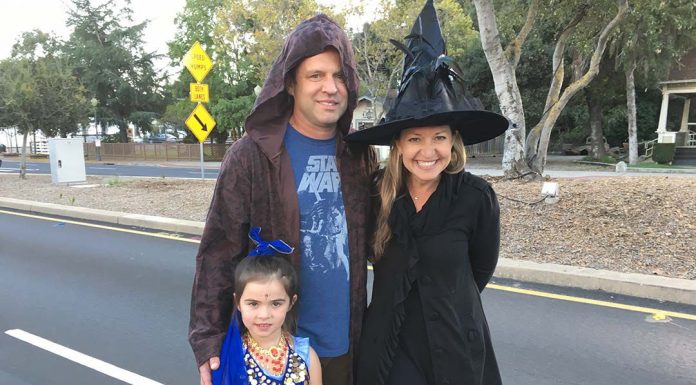
Hundreds of miniature superheroes, villains, Disney characters, princesses, animals, pirates, magicians, zombies, monsters and more—along with their grownup caretakers—descended on downtown Morgan Hill for the annual Safe Trick or Treat event on Halloween eve. The event was sponsored by the Morgan Hill Downtown Association and the City of Morgan Hill.
MH family-run nursery honored on 25th anniversary

Morgan Hill-based Cal Color Growers was one of two companies honored by the Family Business Association of California for celebrating 25 years as family-owned businesses.
Community Solutions spotlights domestic violence with annual play
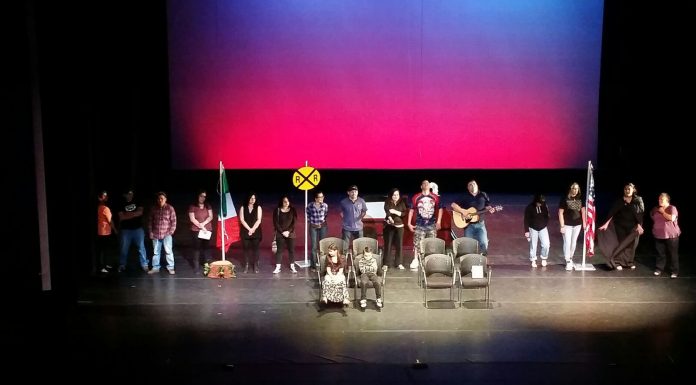
In its omnipresent efforts to bring awareness to domestic violence, Community Solutions—which was created to provide support services to the victims of such acts—will continue its tradition of taking to the big stage with its series entitled “Historias de Mi Madre.”
Local Rotarians raise $33k at annual golf outing

With more than 120 participants, the Rotary Club of Morgan Hill raised more than $33,000 for local charities Oct. 7. during its 22nd annual golf classic at Eagle Ridge Golf Club in Gilroy.
San Martin town hall meeting: Funding on the way for new animal shelter?
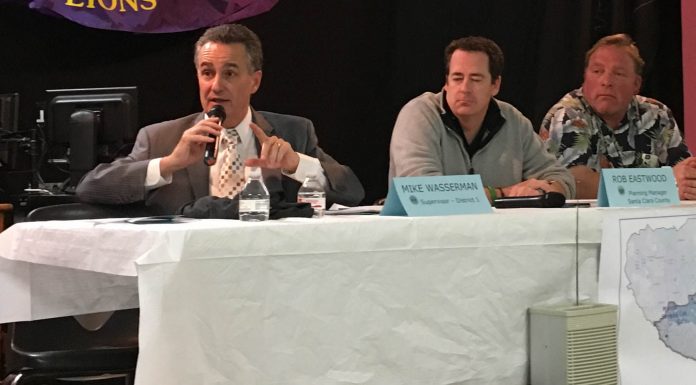
Even in rural, unincorporated San Martin, imminent growth is increasingly an issue among residents, but they’re excited about at least one forthcoming project that recently reached a crucial planning stage.Santa Clara County Supervisor Mike Wasserman announced at an Oct. 21 San Martin Neighborhood Alliance town hall meeting that a committee he serves on has recommended funding for a new San Martin Animal Shelter—an effort that has been in the process for several years.The Housing, Land Use, Environment and Transportation (HLUET) committee Oct. 20 unanimously agreed the county should fund a new shelter, which is estimated to cost more than $20 million. The committee sent their recommendation to the full five-member elected board of supervisors, which will consider approval at an upcoming meeting.Partial funding for construction of the new facility could come from at least two key potential sources, according to the HLUET meeting staff report: a September 2017 lease revenue bond for a new county jail project and one-time funds from an upcoming county general fund budget.The current budget already includes $4 million for the design of the facility at the county’s former courthouse complex on Highland Avenue. A 2009 county study identified the need for up to a 32,600-square-foot new animal shelter in order to “safely and effectively care for the increased number of animals anticipated and to provide expanded services of an updated” facility, the Oct. 20 staff report continued.The existing shelter currently operates at maximum capacity, with excess animals often placed in foster care or with rescue organizations. The current space also has limited ability to handle stray or abandoned livestock.“A new, expanded facility...in San Martin could become a regional shelter with the capacity to fully serve both the unincorporated areas and the cities of Morgan Hill and Gilroy,” reads the Oct. 20 staff report.Morgan Hill and Gilroy contract with the county to house stray pets at the existing San Martin shelter.The board of supervisors has not scheduled a meeting date in which to consider funding the new shelter’s construction.“My desire is to get it to the board as soon as possible so we can keep the project moving forward,” Wasserman said.Lists of concernsSMNA President Trina Hineser said Wasserman’s announcement, which came toward the end the Oct. 21 meeting at the San Martin Lion’s Club, was the “highlight” of the session. More than 200 attendees erupted in applause as soon as the supervisor informed them of the HLUET committee’s endorsement.But Hineser added SMNA members felt Wasserman didn’t give the definitive answers they were seeking to questions about the growing impact of development in San Martin—including a slew of large-scale projects on the horizon in the rural hamlet.“Supervisor Wasserman’s presence was greatly appreciated, however the answers provided to community questions lacked substance,” SMNA President Trina Hineser said after the meeting. She said many of Wasserman’s answers to community questions were “passed off” as not the county’s responsibility, or residents were urged to contact a different agency with their concerns.Specifically, a request to hold a joint meeting with other South County agencies on the California High Speed Rail project, and questions on updates to the county’s “local serving” ordinance were met with such disregard, Hineser said.Joining Wasserman on the panel of county representatives at the front of the meeting hall were Santa Clara County Planning Commissioner Marc Rauser and County Planning Director Rob Eastwood.The Oct. 21 meeting agenda consisted of SMNA board members and residents asking the panelists questions about what they see as an encroachment on their bucolic lifestyle, and how to prevent the coming development from clogging up traffic, depleting or contaminating water sources, producing more garbage, creating more noise and visual impacts and impacting public safety.Among the approaching large projects that concern San Martinians are the state’s High Speed Rail project, which will cut through San Martin no matter which alignment alternative officials choose next year; a 124-space RV park at California Avenue and Monterey Road; and the South Valley Islamic Center’s Cordoba Center mosque and community center, on Monterey Road just north of the proposed site of the RV park.Wasserman explained numerous times throughout the meeting that these projects are in various stages of early planning. Environmental studies are yet to begin on the HSR and SVIC projects.An underlying issue among the local residents is the county’s update of its local serving ordinance. The ordinance was updated last year to exclude religious institutions—such as the Cordoba Center—from a requirement that they must serve a portion of the nearby residents, according to county staff.The county planning commission approved this change about a year ago, but it still doesn’t sit well with some residents in San Martin.Rauser said the amendments to the local serving ordinance were made for the “protection of religious organizations.”“‘Local serving’ implies someone has to check the residence (of those attending) at the door,” Rauser said. “That’s not something the county wants to do. We don’t need any case law. It’s pretty clear” in the federal law that protects religious institutions.Any privately owned projects such as the mosque and RV park will be held to the same standards regarding “scale, use and intensity” as any other applicant in the county’s unincorporated areas, Eastwood explained.The planning commission will consider further amendments to the county’s local serving ordinance Nov. 17, in order to address questions on “how mixed uses would be addressed,” according to a county staff report.Wasserman referred a number of questions—such as how to report illegal dumping and any potential building code violations—to the county’s code enforcement office. These violations are “complaint driven,” Wasserman said. The county is in the process of hiring two more code enforcement officers to pick up some of the burden of existing staff.Hineser and other residents also expressed frustration at the county’s alleged lack of acknowledgment of San Martin’s autonomy.Specifically, board members of the SMNA nonprofit take issue with the planning commission and supervisors’ disregard, in some instances, of input relayed to them by the San Martin Planning Advisory Committee. Wasserman and Rauser explained that decisions by those bodies have to stand up to existing laws and ordinances, sometimes in spite of the community’s expressed preferences.

