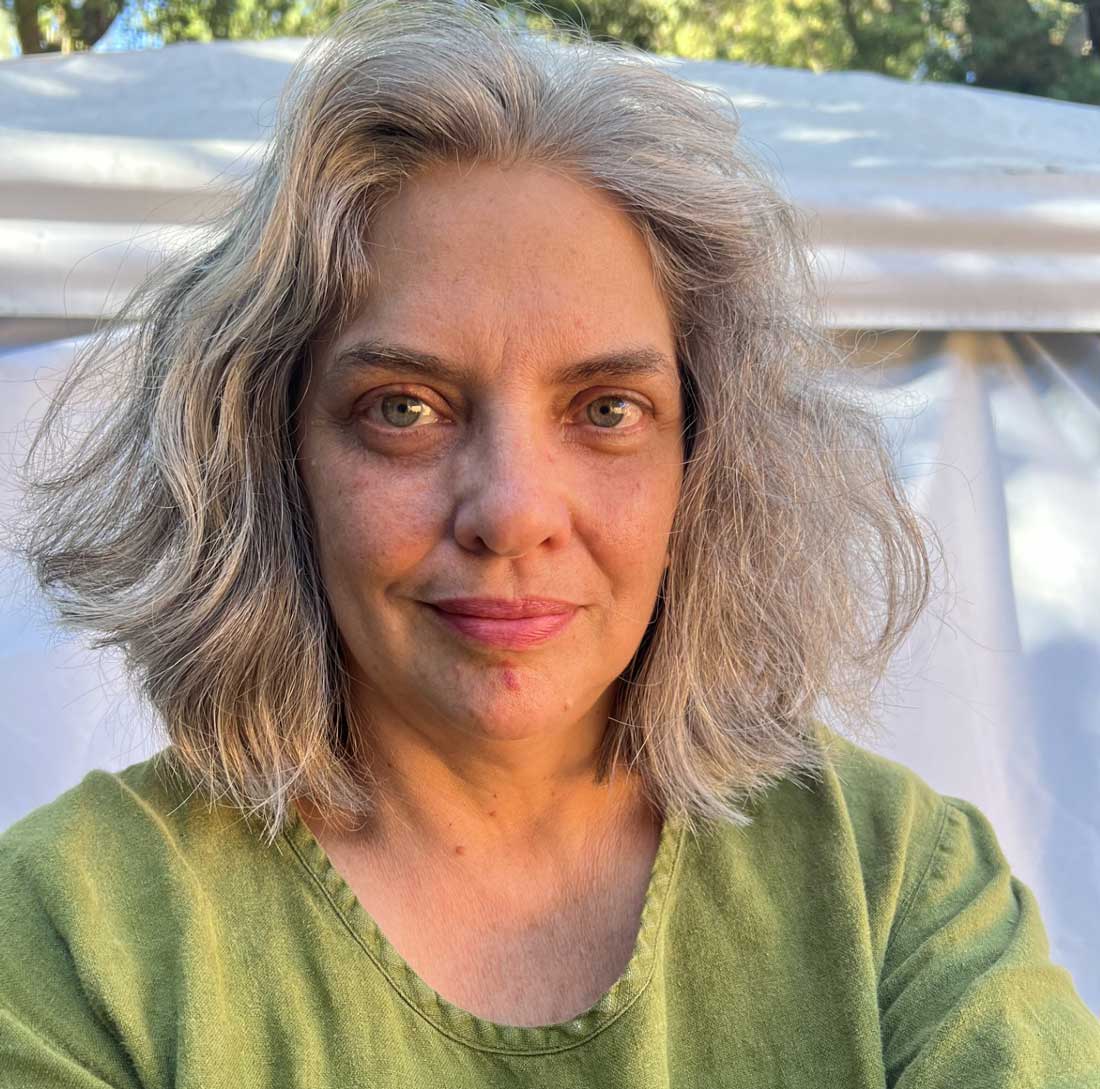
For years, Morgan Hill resident Eelia Haney set five alarms to get herself out of bed. She fell asleep in class, sometimes for only 15 or 30 seconds at a time—microsleeps she wouldn’t even notice until she came to. It took doctors 14 years to figure out why.
Now Haney, 56, is going back to school—something she says she couldn’t manage for years while living with undiagnosed, and later poorly controlled, narcolepsy.
Last month, the U.S. Food and Drug Administration approved a new medication—the first designed to target the biological root cause of type 1 narcolepsy, rather than simply manage its symptoms.
For Haney and others who live with the condition, the approval marks the end of a nearly three-decade wait for a treatment aimed at what actually goes wrong in the brain.
“It’s not just being extra tired,” Haney said. “There’s so much more to it than just excessive daytime sleepiness.”
Narcolepsy type 1 is caused by the loss of neurons that produce orexin, a brain chemical that regulates the sleep-wake cycle. Without it, patients experience overwhelming daytime sleepiness, as well as cataplexy (sudden muscle weakness), hallucinations and paralysis. Haney describes her own cataplexy as feeling like “spaghetti limbs.”
Diagnosis often takes years. Haney said she began having symptoms as a teenager but wasn’t diagnosed until she was 42, and was misdiagnosed with bipolar disorder along the way because of the hallucinations tied to her condition.
“A lot of the doctors that I saw didn’t know” the full range of narcolepsy symptoms, Haney said.
Her diagnosis finally came after a frightening moment behind the wheel: She fell asleep while driving her daughter home from a concert and woke to the car hitting rumble strips, her daughter screaming beside her.
She got a sleep study soon after, which showed she entered REM sleep within minutes of falling asleep—a hallmark of type 1 narcolepsy.
Julie Flygare, president and CEO of the national nonprofit Project Sleep, said Haney’s story mirrors that of many narcolepsy sufferers, including her own. Flygare was diagnosed with type 1 narcolepsy with cataplexy while in law school, after roughly six years of unexplained symptoms.
She founded Project Sleep in 2013, and the organization now runs education, scholarship and storytelling programs, including Rising Voices, the program that trained Haney to speak publicly about living with narcolepsy.
Flygare said long diagnostic delays like Haney’s are a common experience. The average time to diagnosis is 8-15 years, she said, and delays of more than 25 years aren’t unusual—and those that receive a diagnosis at all are the lucky ones, she said.
“They believe that the majority of people never get diagnosed,” Flygare said. “It can be misdiagnosed for things like depression. It depends on the presentation, how the patient describes it to other people.”
Symptoms are often also mistaken for epilepsy or schizophrenia, she said, particularly when hallucinations tied to sleep are described to doctors without context.
Stigma plays a role as well. Flygare pointed to persistent pop-culture portrayals of narcolepsy played for laughs, even in modern television.
“I thought narcolepsy was a joke too, before I was diagnosed,” she said. “But I was quickly realizing in the first few months, it wasn’t a joke at all. It is a serious chronic condition.”
Until now, available treatments consisting largely of stimulants have been used to manage narcolepsy’s symptoms without addressing the underlying loss of orexin signaling. Scientists have understood since the late 1990s that the disorder stems from a near-total loss of orexin-producing neurons, work that traces back to Stanford research on a colony of dogs with a hereditary form of the disorder.
But developing a drug to restore that signaling proved too difficult at the time, and companies abandoned the research.
The new treatment developed by Takeda Pharmaceuticals, named ORZEYFUL, works as an orexin agonist, designed to stimulate the same brain receptors that orexin would normally activate. Flygare, who participated in a phase 2 clinical trial of the drug, described the effect as feeling less anxious and more clear-headed when the medication was working.
“It was nice to feel a clarity,” she said.
Takeda estimates the drug will be available to U.S. patients in November, pending scheduling review from the U.S. Drug Enforcement Administration, a step required for new controlled substances. China and Japan have also approved the drug in recent weeks, according to Flygare, and regulatory review in Europe is expected to follow.
For Haney, the appeal is straightforward: more hours in the day that actually feel usable. Her current daytime medication doesn’t last long and can’t be taken repeatedly throughout the day, she said, leaving her fading by mid-afternoon.
“I don’t want to end my day at 3 or 4 (o’clock),” she said. “I’d like to extend my day a little longer—for myself, socially, and also for work or school.”
Flygare said the emotional response to the drug’s approval, among people who’ve lived with narcolepsy for decades, has been immediate.
“People around the world have been like, ‘Oh my god, I didn’t know if I would live to see the day that this would happen,’” she said. “There is so much hope.”