It may be making the community healthier, but the $27.6-million
Centennial Recreation Center is not so healthy for other recreation
facilities, and most importantly, the city’s bottom line.
MORGAN HILL
It may be making the community healthier, but the $27.6-million Centennial Recreation Center is not so healthy for other recreation facilities, and most importantly, the city’s bottom line.
The year-old CRC was one of the reasons the Recreation and Community Services Department exceeded its 2006-07 fiscal year budget by $208,742, according to the annual report presented to the Parks and Recreation Commission last week. The city council is slated to look over the report at its meeting Wednesday.
With a $5 million budget, 16 full-time staff and dozens of part-time/seasonal employees at the Morgan Hill Community and Cultural Center, the Aquatics Center and the Centennial Recreation Center, the department had a shortfall because none of the three brought in enough in user fees to pay for themselves. The CCC recovered 58 percent, the AC 60 percent and the CRC, 87 percent.
Not to worry, said former Mayor Dennis Kennedy, who was around to see the department’s disbandment in the early 1990s to cut costs.
“I’m not surprised that there’s somewhat of a budget shortfall,” he said, “but I don’t think it’s a reason to be alarmed or concerned.”
With the opening of the CRC in October 2006, the city faced “a time of transition, uncertainty, and growth,” the report states. As it turned out, the city fell 5 percent shy of its goal to recover 69 percent of the department’s operating expenses through user fees. The CRC may have taken business away from the other two centers is one conclusion, department Director Steve Rymer told the commissioners, referring to “fluctuations among facilities.”
At the Aquatics Center, “revenues declined dramatically and participation rates have dropped.” As result, the center exceeded its budget by $347,592 and the department recovered 26 percent less than the budgeted 60 percent.
The shortfall was caused by “unrealistic revenue projections during the development of the fiscal year 2006-07 budget, loss of swim club rental revenue, and lower than projected season pass sales and the corresponding concessions/retail sales,” the report states.
To help bridge the financial gap, the department was negotiating with Pacific Swimming to hold swim meets, Rymer said. A recent meet was attended by hundreds of people, who booked hotel and motel rooms and spent thousands of dollars on swimming gear, he said.
The Community and Cultural Center’s class and participation rates have declined since 2006 and city officials anticipated the CRC’s advent would be “fiscally challenging.” It was just that, as the facility came in $25,857 over budget and it cost the city $443,393 more to operate the CCC than what it brought in through user fees.
On the surface, the 57,000-square-foot CRC was successful in its first year. The so-called “crown jewel” of the city’s recreation facilities was operated under a partnership agreement by the city and YMCA of Santa Clara Valley had higher than anticipated membership sales and had lower expenses than projected, the report states. As result, the city recovered 87 percent of the $1.6 million operating cost.
But CRC’s immediate future doesn’t look promising as membership decreased by 40 to 8,068 total members in October, the first monthly drop-off since the facility opened. Also, as a number of annual memberships are set expire to expire this month, that number is expected to drop further, according to the report.
Nevertheless, Martin Cheek, a newly appointed Parks and Recreation commissioner who will also serve as liaison to the Bicycle and Trails Advisory Committee, pointed out it was about more than dollars and cents when it comes to recreational facilities.
“You can’t look at it just in terms of the budget,” he said, because facilities such as the CRC “add to quality of life” in the community.
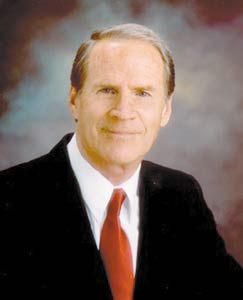
Kennedy was of the same opinion and even took it a step further.
“I think that we need to subsidize the parks and recreation programs,” he said. “I don’t think it’s realistic that they are ever going to pay their own way. The question is how big that subsidy should be.”
Hedy Chang, a former city council member, said she was “not at all” surprised the department was over-budget. Chang, who now serves as vice president of the Medical Board of California, said making sure that facilities pay for themselves was “a basic problem” that she and her colleagues didn’t resolve.
“You really can’t anticipate recreational facilities to break even … and to this point I don’t see it being addressed properly,” she said.