Habitat for Humanity Silicon Valley’s plans to build six
single-family homes in Morgan Hill are on hold until several issues
with neighboring homeowners are resolved, according to the
nonprofit’s executive director.
MORGAN HILL
Habitat for Humanity Silicon Valley’s plans to build six single-family homes in Morgan Hill are on hold until several issues with neighboring homeowners are resolved, according to the nonprofit’s executive director.
A zoning amendment and a modified development agreement for the homes was heard by the Morgan Hill Planning Commission on Nov. 13, which didn’t take action and instead directed Habitat representatives to resolve the issues. Several homeowners expressed concern that the new homes were “being shoved at high density” rates, as one put it, and its owners wouldn’t be required to join the homeowners’ association, which could lead to unkempt properties, littering and other violations, they said. The homeowners also said the new homes could affect their home prices and obstruct views of El Toro Mountain.
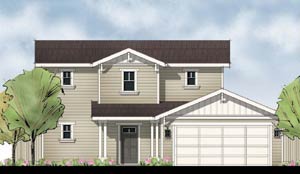
Habitat for Humanity is seeking to subdivide the half-acre parcel on the eastside of Cory Avenue near San Luis Way into six divisions and build one two-bedroom, three three-bedroom and two four-bedroom detached models, with private yard spaces and two-car garages, said Robert Freiri, executive director of the San Jose-based Habitat for Humanity Silicon Valley. The homes would be priced to sell to households earning between 30 percent and 50 percent of the area’s median income, which was $81,958 in 2000, according to the U.S. Census. The home prices would be lower than even Below Market Rates homes.
The proposed homes would be built into a community that already includes two 100-percent affordable developments and two open market rate developments, said Vince Burgos of Development Process Consultants, Habitat’s liason to the city.
The commission directed Habitat to work with the homeowners to resolve the issue, and the nonprofit has been setting up meetings to do that, Burgos said.
“Habitat is being completely cooperative with whatever the city wants,” Burgos said. “I made it real clear that we’ll do whatever it takes to satisfy that criteria.”
At the meeting, Jennifer Simmons of Habitat for Humanity also said the organization was looking into the issue. The commission didn’t take action and so the fate of the six units remains under review. The planning commission has to approve the proposal before it goes before the city council for a final vote.
“The main thing for our neighbors to know is we have quality families going into quality homes,” Freiri said.
Habitat for Humanity, a nonprofit affordable housing developer that requires homeowners invest “sweat equity” to build their homes from the ground to qualify for various subsidies, has built 38 homes countywide thus far and has plans for 12 more, not including Morgan Hill, Freiri said.
To qualify for Habitat for Humanity homes, potential homebuyers undergo a thorough screening process, and “even though they may or may not be members of the homeowners association, they’ll have to keep their homes in good shape,” Freiri said.
Habitat for Humanity acquired the half-acre parcel from developer Barton Properties several years ago, when Barton had “challenges with getting units built,” Freiri said. Burgos said the developer completed the open market houses and walked away before completing the required BMRs. The developers couldn’t be reached by press time, but a number of private developers have recently complained to the city that they are losing money on BMRs as building costs have skyrocketed and they are unable to recoup the losses from selling homes at lower prices as required by Morgan Hill residential control system, commonly known as Measure C, which requires that 20 percent of each development are BMRs.
Habitat for Humanity originally planned to build attached condominiums, but “codes had changed and the design wasn’t valid,” Freiri said. Habitat then submitted the proposal currently before the planning commission.
“We were brought in and offered an opportunity to get the property out of the developer’s hands,” Freiri said.