After years of courting downtown merchants and enticing Cochrane
Commons retailers with tax breaks, the city is turning its eyes to
those other shopping centers in town.
After years of courting downtown merchants and enticing Cochrane Commons retailers with tax breaks, the city is turning its eyes to those other shopping centers in town.
The Morgan Hill City Council approved a shopping center strategy in mid-June that, among other things, will consider throwing money toward some new signs or parking lot improvements, loaning money to businesses for tenant improvements and facade upgrades and reducing city fees for struggling centers including Cochrane Plaza and Vineyard Town Center.
Many of these programs have been available to businesses in the downtown area, roughly Butterfield Boulevard to Del Monte Avenue and Dunne to Main avenues. This assistance has not gone unnoticed by the other shopping center owners, according to the report.
From the end of 2008 to the beginning of 2009, Morgan Hill saw a mass exodus of sorts, with the loss of Circuit City and Mervyns to bankruptcy and the closure of Ross, dd’s Discounts and Courtesy Chevrolet. The collective blow to the city’s sales tax coffers for the last fiscal year, which ended June 30, is estimated to be about $538,450, or a 7.8 percent drop from the year before, according to Interim Finance Director Kevin Riper. The city projects sales tax for the current fiscal year is expected to be half a percent, or $25,000, less than last year’s, Riper said.
Vineyard Town Center owner John Kent said that while his center is nearly full, his tenants are struggling and not consistently paying rents, according to a city report. He’s lowered rents, preferring to keep retail spaces filled rather than wait for full price if a tenant leaves.
“The (city) should also keep in mind that there’s also important commercial areas outside (that area),” Kent said. With the new shopping center strategy, the city is.
The city will devote Redevelopment Agency dollars in loans to retail tenants seeking to improve their spaces, and is considering financial assistance to pay for signs and other perks for the centers.
But it’s not a one-size-fits-all approach, Business Assistance and Housing Services Director Garrett Toy said.
“Each (of the) centers have different needs. Some may not need anything. Others may need some help,” he said. For example, Tennant Station is doing just fine.
Cochrane Plaza owner Mac Morris told the city that operating expenses for his center are exceeding income from rents, and he blames Cochrane Commons, according to the report.
The city helped nurture Cochrane Commons into being with more than $11 million in tax breaks. Morris is requesting a grant, not a loan, from the city to pay for new signs and parking lot improvements and suggested the city modify its sign program to allow for a Cochrane Plaza freeway sign akin to the one allowed at the new center.
Toy said he disagreed with the notion that the city has coddled the downtown and Cochrane Commons, the newest center in town that planners aspire to reach 650,000 square feet of retail and restaurant revenue-generators.
Toy said while it’s true that Cochrane Commons had an adverse impact on Cochrane Plaza, Target was already threatening to leave Morgan Hill altogether because the location wasn’t a good fit for the national retail giant anyway.
“And that would have had a huge impact on the community,” he said. “Cochrane Commons was all about sales tax leakage, and capturing that.”
For Councilwoman Marby Lee, the question was more of whether the city should step in to help ailing businesses, and if the city helps a certain group, whether it should help others.
Councilman Greg Sellers said, “The concern we always need to have with these types of financial transactions is, what’s the precedent, what’s the need, and can it be met by the private sector?”
As for the downtown, Sellers said there are two big differences between that area and the rest of the city’s retail centers.
“It plays a much more significant community function and, we’ve made a huge public investment in the downtown. It makes sense for us to make sure that that investment is a sound one and is protected and is enhanced.”
Mauricio Quijano is the Morgan Hill resident that the city’s past strategies have catered to. He likes the small-town charm of Morgan Hill with its quaint downtown and the fact that there aren’t big signs in front of each shopping center.
“Signs may be a way to attract people, but something huge … diminishes the quality of the place,” he said outside Nob Hill Foods Wednesday afternoon. Quijano said he likes the ambiance of Vineyard Town Center, gesturing to the full-grown trees and simply-styled strip mall.
Quijano said he has a routine, and rarely ventures outside the town center or Trader Joe’s, and only visits Target in Cochrane Commons when his children beg to go there.
San Martin resident Maria Rojas and northeast Morgan Hill resident Francisco Alvarez agreed that more clothing stores in town would be nice.
“I used to come here more often when there was the Mervyns,” Rojas said while standing in the Big 5 Sporting Goods lot at Cochrane Plaza Wednesday afternoon. “Now, it’s nothing. It would be nice to have more.”
Wal-Mart’s August opening in Cochrane Plaza has neighboring businesses excited. Ross is opening July 18 in the Morgan Hill Plaza Shopping Center at Dunne and Monterey.
“All we can hope for is that we’ll get some flow from them. We’re crossing our fingers,” said Barbara Petro, owner of the Cochrane Plaza furniture and accessories store Consignment Living.
Petro said the city should have been more nurturing of Cochrane Plaza when it saw businesses leave for Cochrane Commons.
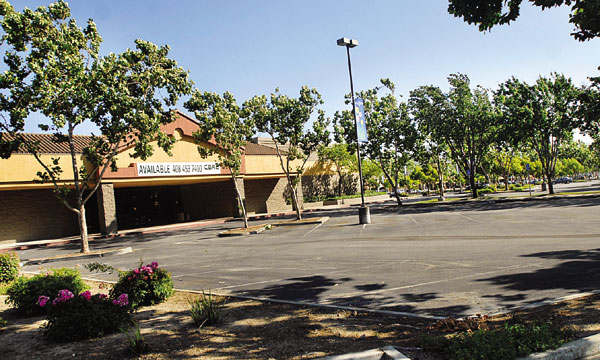
“It should not have become what it became,” she said, looking out over a mostly empty center, with a few patrons entering and exiting the Game Stop, Subway and Panda Express across the center from her empty store.
“If there are no anchors, then there’s no shopping here,” Petro said.
The city is not just playing fair in seeking to help tenants. When retail does well, so do city coffers. And for the city in this economy, a penny spent could mean a penny earned.
While actual sales tax revenues for individual businesses are considered proprietary information and the city doesn’t release them, Toy did say that Wal-Mart will likely be among the top five local sales tax revenue producers, while Ross will probably be in the top 40.