



Lee Preps For First City Council Term

Graphic designer attributes her success to walking precincts and
Locals lend a hand to fire victims
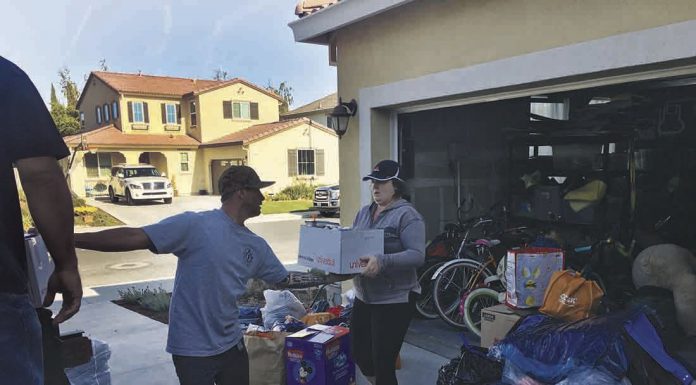
When a South County fire department put out a call for donations for victims of the recent North Bay fires, firefighters were welcomed with an outpouring from area residents.On Monday, Oct. 16, staff of the Gilroy Fire Department Local 2805 carried two truckloads of donated hygiene supplies, clothing, food and other donations to North Bay locations, according to Gilroy firefighter Chris Teresi.On the way to their first drop-off point in Petaluma, the convoy—with one trailer already loaded with donated supplies—stopped at the home of Carrie and Peng Lim in northwest Morgan Hill. The couple had a garage full of donated items for the fire victims, collected from students and families of the Charter School of Morgan Hill, Carrie Lim said.Teresi said shortly after the IAFF Local 1165 Firefighter Union posted on social media that it was accepting donated items, the firefighters were flooded with support. At one point, there was a line of cars outside the Gilroy Fire Department’s Chestnut Street station with residents dropping off donations. The generosity came from as far away as Monterey, Teresi said.“Everybody wanted to do something,” said Teresi, who noted that the convoy of supplies was transported by truck and trailers donated by George Chiala Farms in Morgan Hill.As of Oct. 15, four major fires in Napa and Sonoma counties—the Tubbs, Pocket, Nuns and Oakmont Fires—had burned more than 94,000 acres, destroyed more than 3,300 homes and killed 40 people, according to authorities.The emergency has drawn resources from all over the state to help extinguish the blazes, help with the cleanup and recovery effort and control traffic and crowds. Convoys of military vehicles and fire engines have been seen traveling north on U.S. 101 through South County since last week.This past weekend, two officers from the Morgan Hill Police Department—Cpl. Scott Martin and Officer Eric Adams—were deployed to the North Bay area to help with the public safety response, according to Sgt. Carson Thomas. In general, the officers’ duties during the emergency include “help prevent looting, safeguard homes and assist with evacuations,” according to a Morgan Hill Police Department Facebook post.Wildfires impact air quality, healthThe fires have also resulted in significant air quality impacts in Morgan Hill and South County. The Bay Area Air Quality Management District has issued “Spare The Air” alerts and health advisories for several days, starting last week and continuing at least until Oct. 18, according to the district’s website.The health advisories are asking residents to stay indoors and avoid extensive outdoor activity until the air clears up. Elderly people and residents with existing health conditions—such as asthma, COPD, emphysema and heart disease—are particularly vulnerable, according to the BAAQMD website.During Spare The Air alerts, residents are advised not to contribute to the diminished air quality by burning wood, mowing grass and even barbecuing.The alerts and advisories have extended all the way past Morgan Hill, but the impact is expected to wane by the end of this week. The five-day BAAQMD air quality forecast for Santa Clara Valley shows the air returning to “good” on Oct. 20 and 21. Until then, the air quality is expected to be in the “moderate” range.But these forecasts can change quickly, depending on the direction of the wind and the amount of new smoke in the air. For example, a new wildfire in the Santa Cruz mountains west of Morgan Hill, which started burning Oct. 17, could add to the harmful particles in the air here, according to BAAQMD spokesman Aaron Richardson.“Things are really blowing around today,” Richardson said Oct. 17. “It’s worse than we expected initially.”Richardson added that authorities are hopeful that a low-pressure weather front moving into the area by Thursday will “clear things out.”The most harmful particles in the air that emanate from heavy wood smoke are too small to see with the naked eye. Authorities are generally concerned when there is an abundance of particles that are 2.5 microns or smaller, or about one-seventh the width of a human hair, Richardson explained.“They’re small enough that they’re inhalable, and can penetrate deep into the respiratory system, and even the bloodstream,” Richardson said. “They can bypass the body’s defense mechanisms, and penetrate really deeply.”Compounding the risk is the possibility that “other chemicals” burning within the offending fires might also get into the air. “If there are other chemicals, they can attach to these fine (smoke) particles and get carried deep into the body. With a fire like this (in the North Bay), it’s hard to tell what those chemicals would be,” Richardson added.He also noted that for most people, adverse health effects are likely only during long-term exposure to fine smoke particles and other contaminants in the air. Recent reports of poor air quality are only a short-term concern in the Bay Area, Richardson noted.“Given that, the truth is there are short-term effects, especially for people with existing health conditions,” he said. “They’re even linked, in some cases, to heart attacks.”
Coming up: Relay For Life

Put your walking shoes on: Relay For Life of Morgan Hill returns May 18-19 at Morgan Hill Community Park.


Varela: Anderson Reservoir likely to reach capacity soon
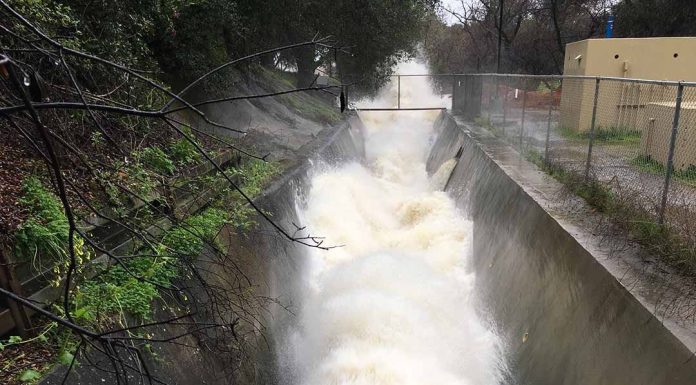
Santa Clara Valley Water District Chair of the Board of Directors John Varela released the letter below to the public in response to continued rains that have caused Anderson Reservoir in Morgan Hill to fill beyond the storage limit set by the state Division of Safety of Dams. The reservoir was at about 87 percent of its total capacity as of Feb. 9.Varela's letter reads: Dear Neighbors,Since Anderson Dam was built in 1950, the reservoir has reached its capacity in ten separate years, most recently in 2006. When Anderson Reservoir is full, it produces quite a visual spectacle as water flows down the spillway, yet it also can result in flood risks along Coyote Creek.Given the discovery of seismic vulnerabilities, Santa Clara Valley Water District has operated the dam under a storage restriction since 2009. Anderson Dam is under the regulatory jurisdiction of the California Division of Safety of Dams and, because we operate a small hydroelectric facility at the dam, the Federal Energy Regulatory Commission also regulates the dam. Currently, these regulatory agencies have set a reservoir elevation restriction equivalent to 68 percent of capacity, or 61,810 acre-feet of water.Agencies set these storage elevation restrictions understanding that reservoirs cannot physically be kept below a restricted level at all times; for example, they understand that storms produce rainfall runoff into reservoirs that will temporarily increase the amount of water in them. These agencies have not requested the water district do anything beyond releasing water from the dam's existing outlet as quickly as possible, to help bring water levels back down.Anderson's outlet has been 100% open since Jan. 9, releasing water into Coyote Creek at a rate of more than 400 cubic feet per second. But, with the many wet storms that have occurred one after another, the rate of flow into the reservoir has at times exceeded the rate of water we are releasing from the outlet. As a result, the water level in the reservoir has risen, and with more storms in the forecast, we project that the reservoir could be full in the next few days.The water district will continue to release water from the dam's outlet until the water level falls below the restricted level. Depending on the amount of rainfall inflow from future storms, this could take 4 to 9 weeks.There is a concern if a massive earthquake of 7.25 on the Richter Scale (larger than the Loma Prieta earthquake we had in 1989) were to occur within two kilometers of the dam while the reservoir is full. This would be an earthquake of a magnitude larger than any that has ever been recorded on the nearby Calaveras Fault. While earthquakes cannot be predicted with any precision, the chance of such an earthquake occurring in the next few weeks is very remote.Should people be worried? Keep in mind that this is the same dam that has performed well in numerous earthquakes, including the 1989 Loma Prieta quake, since it was built in 1950.What would happen if a massive quake did occur? There's a chance that the dam could be damaged, but the chance of immediate dam failure is exceedingly remote. It is possible that we would have several days or weeks to reduce the water level with emergency pumps before any further damage could compromise the integrity of the dam.This situation reminds us of the importance of completing the project to rehabilitate Anderson Dam. Due to the existing seismic safety restriction on Anderson, it is likely that we will need to release more than 30,000 acre-feet of water to the Bay this year that could have otherwise been stored for future use-that's enough water to supply 60,000 households for an entire year. Our project team and expert consultants are working diligently to complete the design of this major project so that the reservoir can be fully utilized as soon as possible. Currently, we anticipate beginning construction in 2020 and completing by 2024.For any questions surrounding seismic matters or the Anderson Dam Seismic Retrofit Project, please feel free to call Hemang Desai at 408-630-3017 or Katherine Oven at 408-630-3126.For any questions surrounding Anderson's water storage, flows, or releases, please feel free to call Aaron Baker directly at 408-630-2135 or Garth Hall at 408-630-2350.Sincerely,John L. VarelaChair/Board of Directors
How to beat the heat

As temperatures continue to hover in the 90s after peaking a triple digits earlier this week, one of the hottest places to stay cool this summer is the Morgan Hill Aquatics Center. But the swim facility that boasts three pools, water slides, fountains and geysers isn’t just for members every day, as the center welcomes day visitors and, on at least one day in August, free admission for residents.

