




Santa Clara Valley Wineries earn gold at competition

Getting to the Sweepstakes round at the largest wine competition in North America takes a wine that outshines and outlasts 5,700 entries from more than 1,000 wineries in North America, Mexico and Canada.
The San Francisco Chronicle is not only the first official wine competition...
Live Oak girls soccer finishes up-and-down season

After three rough losses to open the season, Live Oak High School girls soccer regrouped and got rolling. The Acorns were basically in every game, even against powers like Valley Christian and Gilroy. Yet it was a bit of an up and down campaign.
“Overall...
Morgan Hill celebrates ‘Coach’ Green with Britton Gym renaming

Longtime Morgan Hill coach and educator Jim Green’s ability to motivate and mentor young students and athletes throughout his 45-year-plus career was evident in the turnout of generations of supporters who packed the visitors’ side of Britton Gymnasium for a June 2 ceremony renaming...
VTA bus route changes coming to South County
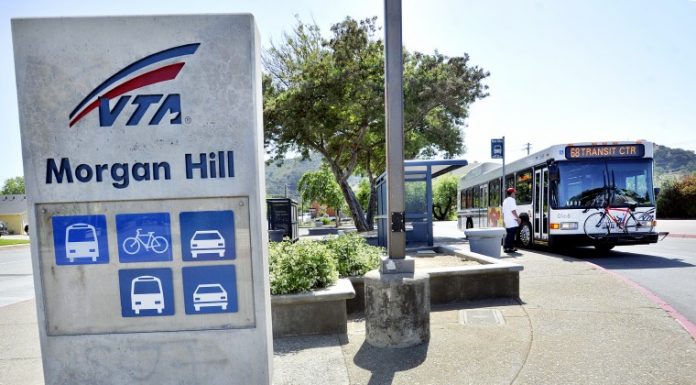
South County commuters will be moderately affected by the proposed changes to the Santa Clara Valley Transportation Authority’s bus route system, which is reviewed every 10 years for a scratch redesign.
Longtime Gilroy rec supervisor dies unexpectedly
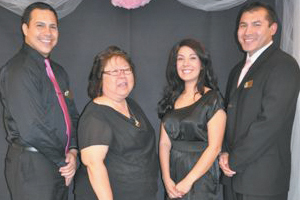
A handful of employees in the City of Gilroy Recreation
Poppy’s to remember Capt. Phil Harris
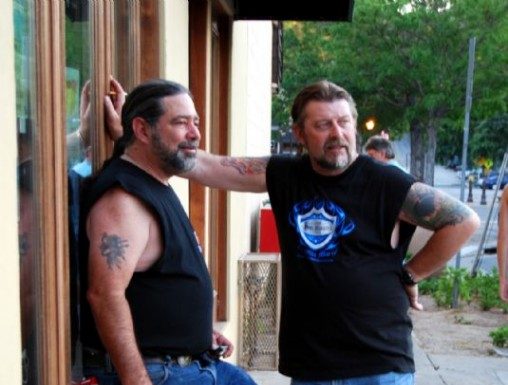
Phil Harris, the fishing boat captain whose adventures off the
Morgan Hill man wins gold medal in global games
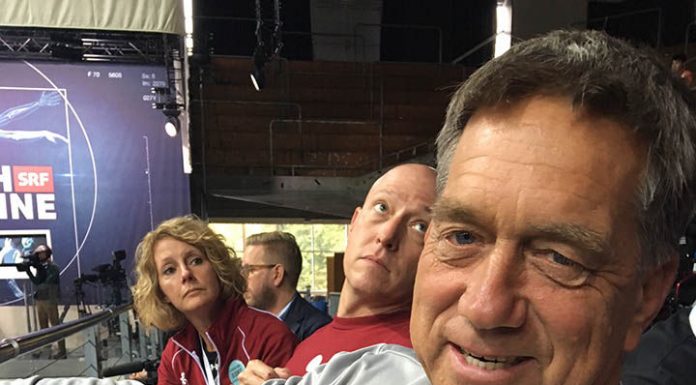
Morgan Hill’s Mark Muhn is the world’s fastest paraplegic cyclist, and he has the gold medal to prove it.Muhn and his wife Carol traveled to Zurich, Switzerland in early October so Mark could compete in the inaugural Cybathlon, an international athletic competition for physically disabled individuals using assistive technologies.Muhn, who has been paralyzed from the chest down since a skiing accident crushed his spinal cord in 2008, competed in the “Functional Electrical Stimulation bike race”—one of six events at the Oct. 8 Cybathlon. He came in first place, beating his closest competitor by more than a minute on the 750-meter course. It was about a three-minute race.“I was the oldest person there,” said Mark Muhn, 59. “There were a lot of young guys.”More than 60 teams from around the world competed at the 2016 Cybathlon in a total of six events including the bike race, plus other futuristic-sounding competitions such as the Powered Exoskeleton race and the Brain-Computer Interface race.These disabled athletes use highly advanced technologies—typically in the experimental stages—to gain mobility. In Muhn’s case, he has a surgically implanted electrical stimulation system that allows him to contract and coordinate his leg muscles enough to stand up, ride a three-wheeled bicycle and even walk a short distance.Two “pulse generators” implanted in his abdomen connect to a series of electrodes up and down his back and legs, and more than 60 feet of wires that send electric shocks directly to his muscles and nerves—all surgically installed under his skin.“The electrodes excite the nerves and move the muscles,” Mark Muhn summarized.Muhn is a test subject for the system, which was developed by researchers at Case Western Reserve University and the Department of Veteran’s Affairs before the Cybathlon was even a thought. He looked into having the surgery back in 2012, after voraciously pursuing every kind of therapy that offered him a hope of walking again after his injury.He entered the program wanting to stand and “maybe walk.” By 2015, “I surpassed my goals,” said Muhn, who walked about 300 feet last year.Needless to say, the 12-hour, life-changing surgery was worth the commitment.“The choices are, sit in a wheelchair forever, or try something that will get you standing up, and possibly walking,” Muhn said.One recent afternoon, Mark and Carol offered a demonstration of his system at their west Morgan Hill home, where they have lived for about 16 years. Mark’s practice bike—a three-wheeled Catrike brand—stands on a trainer in the family’s living room, allowing him stationary exercise. The system connects to a portable receiver box—about the size of a brick—which he attaches when he wants to move his legs. With the system off, Muhn can barely wiggle his big left toe—the extent of his lower body movement.When he turns the system on with the push of a button, Muhn can stand up, ride a bicycle or walk a short distance. While training for the Cybathlon, Muhn rode laps at the Morgan Hill Courthouse parking lot on the weekends.He typically gets around on a hand-powered electric wheelchair. The owner of Muhn & Sons commercial construction company, on the job Mark Muhn operates heavy machinery equipped with hand controls.Muhn is quick to hype up the technology. “I get on the bike and push a button, and aim it down the track,” Muhn said humbly. “The technology is really what won the gold medal.” When he arrived at the Cybathlon, Muhn was immediately in awe of the variety of assistive systems used by other athletes.Life-changingCarol Muhn described how much the couple’s life has changed since Mark received the implants. Chiefly, the program has expanded Mark’s options.“It gives us a little more freedom to try new things,” said Carol, an eighth-grade science teacher in San Jose. “He looks healthier because of this program. It’s inspiring—his health, his determination.”The couple has been married for nine years, and have 10 grown children between them. Carol and Mark took a few days to go sightseeing together while in Switzerland for the Cybathlon.The scientist who developed Muhn’s system said one of its advantages over other forms of therapy is its ability to build and keep muscle mass.“As you can imagine, after a spinal cord injury, your muscles atrophy,” said Ronald Triolo, Professor of Orthopedics and Biomedical Engineering at Case Western Reserve. “So people who receive our systems need to accomplish those maneuvers. We instrumented a system with a bike that measures where the pedals are, and communicates that to an external controller that delivers to an implanted stimulator, and that delivers energy to his nerves. That way he gets the right muscles contracting at the right time.”The implanted stimulator is what sets this project apart from other assistive systems, explained Triolo, who is the principal investigator, scientist and engineer for the system used by “Team Cleveland” at the Cybathlon.Systems that use surface-only stimulation are not as effective because the current has to traverse layers of skin and fat, Triolo explained. With the surgical implants used by Muhn and other participants in the motion study, “We can be very specific, more precise and more repeatable.”Triolo said his team has installed the implant system on about 30 people in the last 15 years or so. He couldn’t begin to estimate the overall cost for a single patient—which starts at about $25,000 for the equipment only. He noted that Case Western Reserve and the VA deserve the credit for funding and supporting the project.Team Cleveland actually brought two “pilots” for the 2016 Cybathlon FES bike race in Zurich—Muhn and Michael McClellan of Rocklin, Triolo said. McClellan had been testing faster than Muhn on the bike during training, but Cybathlon organizers determined at the last minute that McClellan had too much “voluntary motion” in his hips and asked him to step aside.“Both gentlemen worked very hard and pushed each other as they trained,” Triolo said.
Charlie Palmer sees potential in Morgan Hill’s food, wine scene
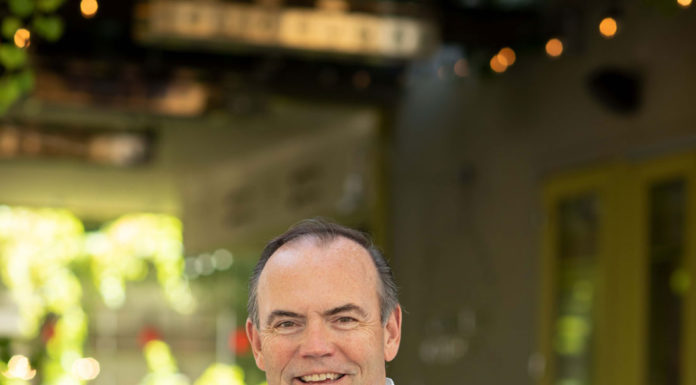
For many, the name Charlie Palmer is immediately associated with his eponymous steak houses—and his Michelin star gem Aureole—in Manhattan.
But, it’s also synonymous with Sonoma Wine Country and Dry Creek Kitchen, a pioneering restaurant that helped establish Healdsburg’s status as an international culinary destination.
His...

