At a time when the name of God is too often used to inflame fear, sanctify division, bless political resentment or lend sacred over to violence, people of faith are called to offer something better to public life: humility, deeper understanding and a renewed commitment to our neighbors.
Many of us have grown used to hearing religion involved in civic life as a badge of belonging or a tool of exclusion. Sacred language is used to harden identities, deepen suspicion and draw lines between “us” and “them.”
Faith, which should enlarge our moral imagination and deepen our reverence for life, is too often reduced to rhetoric in the service of resentment or power.
But faith at its best teaches us to see our neighbors. It reminds us that no political party, ideology or nation can fully contain the Holy. It calls us beyond the temptation to imagine that God belongs more fully to people who look like us, vote like us, pray like us or believe as we do. If our faith makes us smaller, harsher or less capable of compassion, then something has gone wrong in the way we are carrying it into public life.
Since coming to Advent Lutheran Church in Morgan Hill a few short months ago, one of the gifts I’ve appreciated has been seeing how relationships across faith traditions can strengthen the civic fabric of a community.
In a time when religion is often reduced to stereotype or suspicion, those relationships have reminded me that difference does not have to become division. We do not have to agree on everything to care for one another, learn from one another and work together for the well-being of the places we share.
That work begins with humility. None of us sees the whole picture. None of us loves perfectly. None of our traditions are served when we use them to avoid self-examination or justify contempt.
Humility deepens conviction, allowing us to speak honestly from our own beliefs while recognizing that our neighbors also carry histories, hopes and sacred commitments that deserve understanding rather than reduction.
That is why religious literacy matters so much now. Religious literacy is not merely the ability to name holy days or summarize another tradition’s beliefs. It also requires a willingness to understand enough about one another’s communities that fear does not get the final word.
It means learning how our neighbors make meaning, how they pray, what they cherish, what wounds they carry and what values call them into public life.
In a diverse society, this kind of understanding is not optional. It is part of what makes peaceful and respectful civic life possible.
Without it, suspicion grows easily. Stereotypes deepen. People become symbols rather than human beings. With it, we become better equipped to resist manipulation, reject easy narratives of threat and recognize one another as fellow citizens and neighbors rather than rivals in a permanent cultural struggle.
This is not a call for watered-down religion or vague niceness. It is not a plea to set aside deep convictions. On the contrary, strong faith should make us more truthful, more merciful and more responsible in how we inhabit a shared community. It should make us better listeners. Better stewards of our words. Better partners in the hard, necessary work of living together across differences.
The common good is not built by slogans. It is built slowly, through trust, through habits of respect, through relationships sturdy enough to bear disagreement without collapsing into contempt. It is built when neighbors choose curiosity over caricature, service over suspicion and courage over cynicism.
In moments like this, people of faith face a choice. We can mirror the anger and fragmentation of the wider culture, or we can offer a different kind of witness. We can model what it looks like to take belief seriously without turning it into a blunt instrument.
We can show that conviction and humility are not enemies. We can help create communities where difference is not erased, but engaged with honesty, dignity and care.
Faith should make us better neighbors. In a divided time, that may be one of the most important public gifts religion can offer.
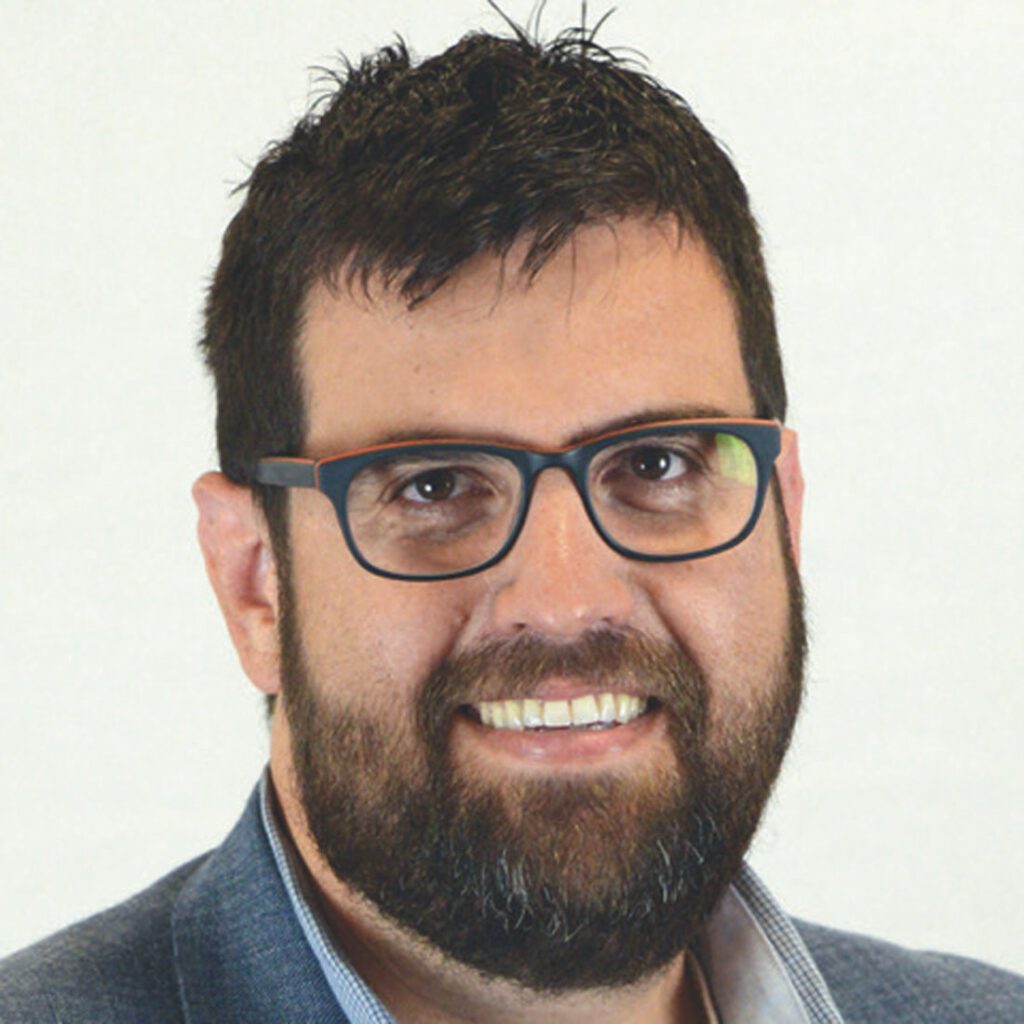
Anthony Suárez-Abraham serves as vicar at Advent Lutheran Church in Morgan Hill, is a member of the Interfaith Clergy Alliance, and teaches theology and religious studies at Saint Mary’s College of California in Moraga. He can be reached at an*****@*************an.org.