


Something new is happening in some Catholic, Lutheran and Episcopal congregations: the Feast of Creation in Christ. We are churches that follow a “liturgical year” with seasons of Advent, Christmas, Epiphany, Lent, Easter and Pentecost, as well as any number of special feast days and feast Sundays.
Now we also have a Feast of Creation in Christ. Some evangelical churches are also observing a Creation Sunday this year.
The observance began in 1989 when Eastern Orthodox Ecumenical Patriarch Dimitrios I proclaimed Sept. 1 as World Day of Prayer for Creation. Updating our church year calendars to include this has been under development for some time and is now being more widely adopted.
The Feast or Season of Creation in Christ can be celebrated all of September, up to and including the feast day of St. Francis of Assisi, Oct. 4. Or, it could be a single Sunday, usually the first Sunday in September or, this year, on Oct. 4.
This is a day in which we praise the Triune God as Creator and commemorate the great mystery that everything was created through Christ. The Feast of Creation also invites us to pray, act and renew our commitment to caring for the Earth and protecting the environment.
Caring well for creation is not an optional political issue but an essential part of a life in Christ, and of good stewardship. In my congregation’s worship services, we pray each Sunday of the year for the well-being of creation; and we look forward to a particular day (Oct. 4 this year) in which we offer thanks and blessing for the gift of creation and our ability to participate in its well-being.
We care best for what we love. St. Francis of Assisi, the patron saint of ecology, treated every part of the natural world like family. He famously wrote and spoke of “Brother Sun” and “Sister Moon,” and would have called our pets “Sister Dog” and “Brother Cat.”
Those parts of creation that people feared were not excluded by him: according to legend, he invited “Brother Wolf” to live peaceably with the people of the town of Gubbio if they would feed him.
The story goes that the wolf offered Francis his paw in agreement. Thereafter he went door to door and the people fed him. They even mourned him when he died of natural causes after some years.
Francis felt at home wherever he was in creation, preaching the gospel not only to people but also to birds and animals. Francis was the first to create a “nativity scene” using real animals and people to invite people to contemplate the birth of Jesus.
Jorge Bergoglio took the name of Francis when he became Pope in 2013, serving as Pope Francis I until his death last year. In the spirit of Francis, in 2015 he wrote an important encyclical entitled “Laudato sí, On Care for Our Common Home.”
There will be even more attention given to the famous saint this year, for Oct. 4, 2026 marks the 800th anniversary of the death of St. Francis. He was important in the life of the church and the world for many reasons. Through his devotion and life people saw a human who in his own time and place imitated Christ.
Part of his conversion and calling was when he heard Christ saying to him at San Damiano church: “Repair my church.” Francis renounced a life of privilege and founded an order of people who lived in poverty and simplicity to more deeply identify with Christ in the sick and those in poverty, and so that there was nothing for them to defend with violence.
During the Fifth Crusade, Francis traveled from Italy to Egypt and there met with the Sultan of Egypt. While Francis had hoped that the Sultan would convert to Christianity (he did not), their meeting became an early example of respectful engagement, dialogue and appreciation among leaders and people of different faiths.
Francis had mystical experiences of identification with Christ in his life of prayer and service. His life was not perfect, for he, like all humans, was both flawed and beloved; yet his life is a window through which we can better understand the grace of God alive in the world.
Like St. Francis, we live in a place of great natural beauty and diversity. I wonder: What part or experience of the natural world brings you awe? What draws you into deeper communion with the creator and all creation? What inspires your commitment to care for this amazing world we share? What will you do in response?
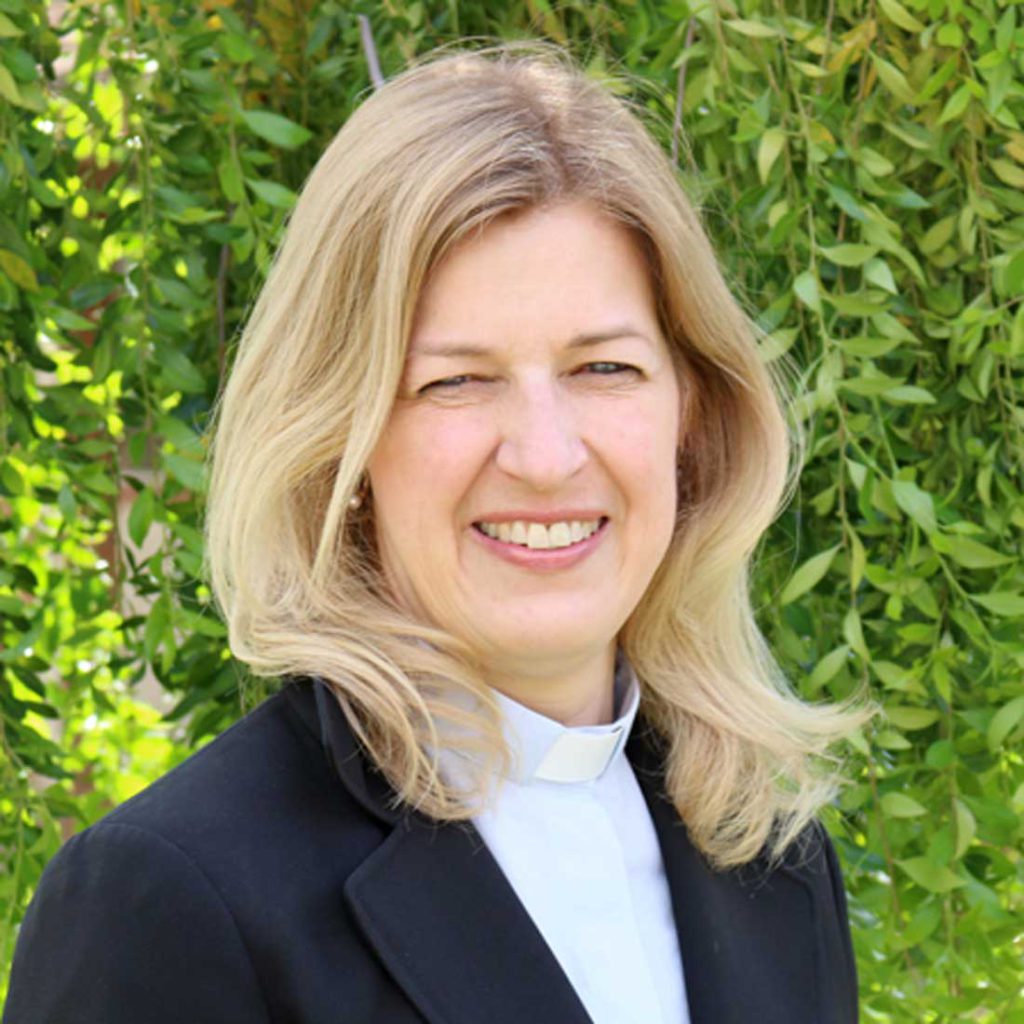
Rev. Anita R. Warner (pa*****@*************an.org) serves as Pastor of Advent Lutheran Church in Morgan Hill and is a founding member of the Interfaith Clergy Alliance.